
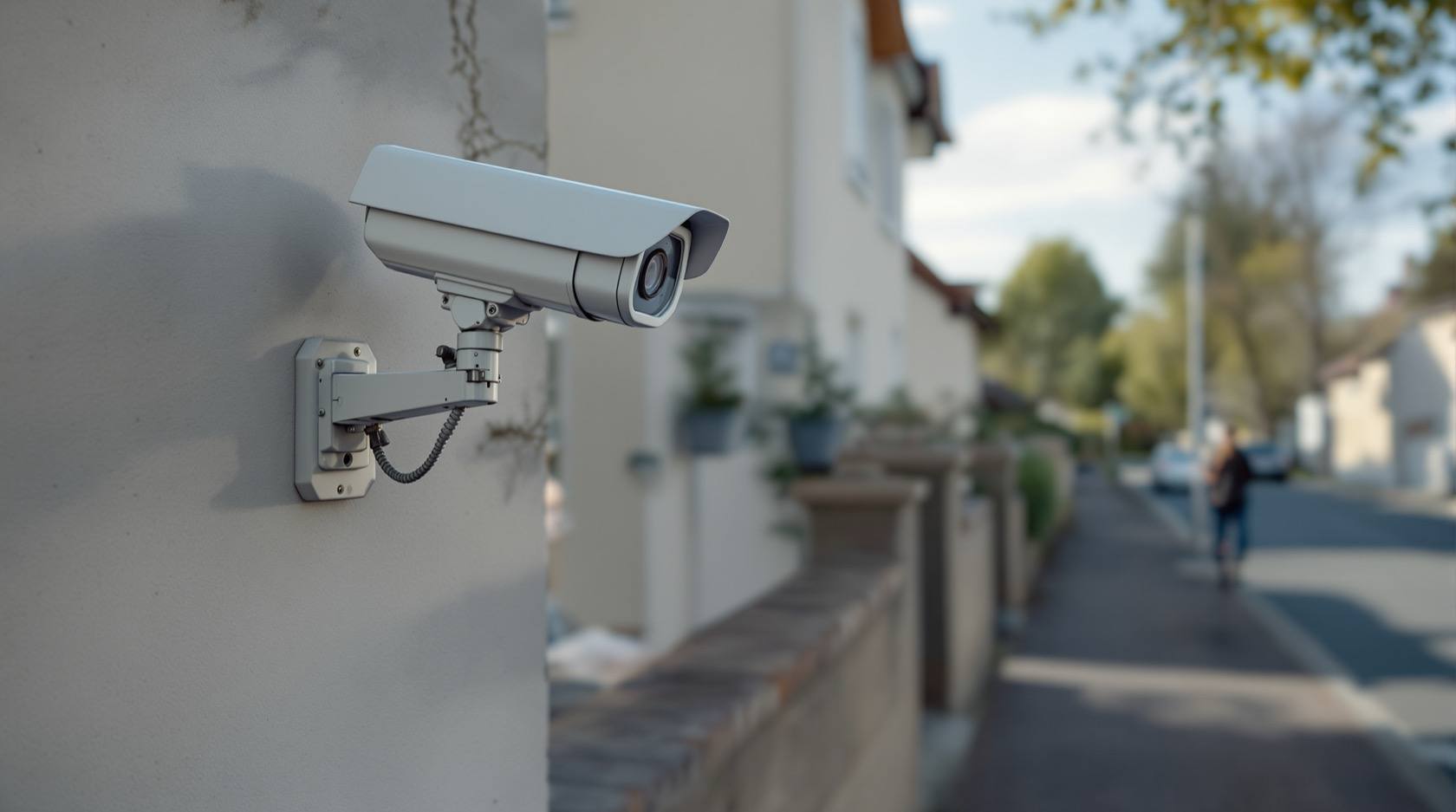
Public Footpath Camera Restrictions in India (2026): Your Camera, the Public's Street
You can put a camera on your own gate, but the footpath and road outside are public space full of people who never agreed to be filmed. Here is how to point your camera fairly, capture the least public space you need, and stay a good neighbour.
Most home, shop and society cameras end up seeing some public space. The camera sits on your wall, but the footpath, the lane and the road in front of it belong to everyone — and are full of people walking past who never agreed to be filmed. That is the quiet tension at the heart of public footpath camera restrictions in India: you are allowed to protect your own gate, but the moment your lens sweeps the street, you are capturing the faces, movements and routines of strangers.
The good news is that this is navigable. You do not have to choose between a useful camera and being fair to the people outside. With the right angle, a bit of privacy masking, clear notice and a neighbourly attitude, you can protect your frontage while capturing the least public space possible. This guide sits inside Studio Matrx's security and fire regulations hub and the wider security and fire regulations guide for India.
Scope & how to read this. This is practical privacy and compliance literacy, not legal advice or authoritative code. Rules vary by state and city — municipal bye-laws, police advisories and society rules differ and change over time — so always confirm the current position with the Authority Having Jurisdiction (your municipal body, local police, a housing-society committee, or a lawyer or Data Protection Officer) before you act.
The core tension: your property, the public's street
Putting a camera on your own building is broadly accepted. Pointing it at a public footpath is where the picture changes. A person walking past your gate has not consented to being recorded. They are not visiting you, not doing business with you, not on your land — they are simply using a public path. When your camera captures them, you are collecting information about identifiable people, and that is where privacy law enters.
Under the Digital Personal Data Protection Act, 2023 (DPDP Act), a recognisable image of a person is their personal data, and recording it is a form of processing. The Act is built around a few plain ideas: have a clear and legitimate purpose, collect no more than you genuinely need, be transparent that you are collecting it, and do not misuse it. A camera that films the whole street "just in case" struggles against every one of those ideas. A camera that watches your own gate, catching only the sliver of footpath a visitor must cross, sits far more comfortably.
There is a domestic-use dimension too — a purely personal household camera is treated differently from a business or a large society scheme — but the moment your camera routinely captures the public and neighbours, the fair-and-proportionate expectations apply in spirit regardless. The safe posture is to assume the people on the footpath have a reasonable expectation not to be systematically watched, and to design your camera around that.
The proportionality rule: capture the least public space you need
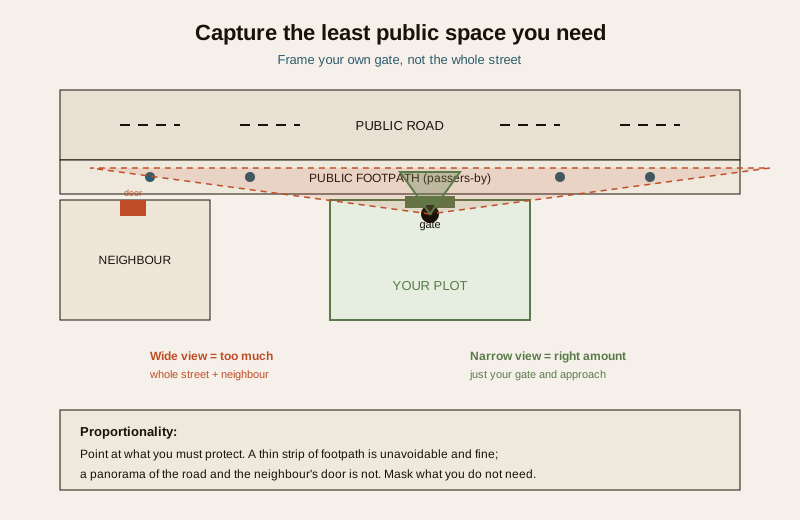
Proportionality is the single most useful idea to hold on to. It simply means: capture the smallest amount of public space that still protects what you are trying to protect. Your goal is your gate, your door, your frontage, your parked vehicle — not the entire road.
In practice that means:
- Frame your own frontage, not the whole street. Set the camera so that your gate and the approach to it fill the picture. A little footpath at the edge is unavoidable and fine; a wide panorama of the road, the bus stop and the shops opposite is not.
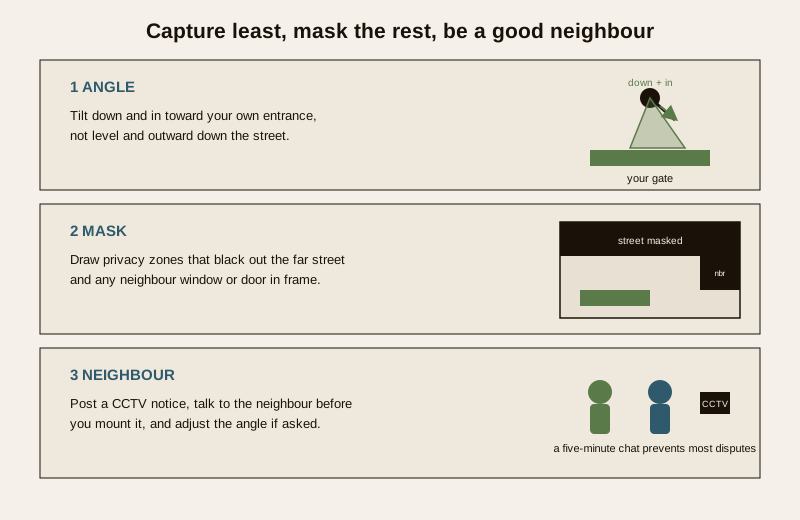
- Angle down and in. A camera tilted downward toward your entrance sees the ground people stand on at your gate. A camera aimed level and outward sees far down the street and into buildings across the road. Down-and-in is almost always the more proportionate choice.
- Do not surveil a neighbour. Their front door, their windows, their balcony, their driveway and their garden are places they expect privacy. A camera that watches a neighbour's home is the fastest route to a genuine dispute — and it fails the proportionality test outright.
- Blank out what you do not need. Most modern cameras and recorders offer privacy masking — you draw a box over part of the image and that area is permanently blacked out, never recorded. Use it to mask the far pavement, the road, or a neighbour's window that unavoidably falls in frame. Our CCTV privacy masking guide for India walks through how to set these zones.
Masking is the quiet hero of footpath-facing cameras. Where the mounting position forces some public space into view, you do not have to record it. Draw a privacy zone over the parts of the street you have no business watching, keep the view on your own entrance, and you have turned an over-broad camera into a proportionate one.
What is generally expected: notice, restraint and not shaming people
Beyond angle and masking, three habits keep a footpath-facing camera fair.
Post visible notice. A simple, plain sign near the gate — that CCTV is in operation on the premises — respects the people being recorded and reflects the transparency spirit of the DPDP Act. It removes the worst version of this, which is secret filming of the public. Notice does not entitle you to record the whole street; it is the courtesy that goes with recording the small area you legitimately do.
Do not misuse the footage. Footage of passers-by exists to help you if something happens at your property. It is not a resource for tracking a neighbour's comings and goings, timing a delivery worker, or keeping tabs on who visits the house across the road. Use it for your security purpose and nothing else.
Never publicly share or shame people caught on the footpath. Posting clips of strangers on the street, a WhatsApp group, or social media — to shame, accuse or entertain — is where a private security camera turns into a public harm. It can expose you to real legal and reputational risk and it is simply unkind. If there is a genuine crime, the footage goes to the police, not to the internet. Our CCTV privacy guide for India covers handling, retention and sharing in more depth.
The sensitive cases: neighbours, schools, hospitals and shops
Some situations deserve extra care because the privacy expectation is higher or the public presence is heavier.
- Pointing at a neighbour. This is the most common flashpoint. Even if your camera is on your wall, aiming it at a neighbour's door, windows or yard is intrusive and a frequent source of complaints and disputes. Reposition, angle away, or mask their property out. In shared buildings, the CCTV in apartments guide for India explains how camera placement is handled between flats and common areas.
- A school or hospital gate, a clinic, a place of worship. People arriving at these places, especially children and patients, have a strong expectation of privacy. A home or shop camera that ends up staring at a school gate or a hospital entrance across the road should be re-angled or masked so it does not.
- Any place people expect privacy. A changing area, a public toilet block, the inside of a home opposite — if your lens can see into it, mask it out. There is no security case that justifies watching those.
- A shop camera on the street. A shopfront camera watching the pavement outside is common, but the same rules apply: keep it on your own entrance and display window, post notice, and mask the wider street and the shops on either side. A busy commercial footpath carries a large number of uninvolved people, so proportionality matters even more.
Be a good neighbour. Most camera disputes are not really about law — they are about someone feeling watched. A five-minute conversation with the neighbour before you mount a camera, and a willingness to adjust the angle, prevents almost all of them. Show them the view on the app. Fairness that people can see beats fairness they have to take on trust.
Local rules, society bye-laws and disputes
There is no single national rulebook that dictates exactly where a private camera may point, which is precisely why local checks matter. Several layers can apply on top of the DPDP Act's privacy expectations:
- Municipal and police guidance. Some cities and police jurisdictions issue advisories on private CCTV, and rules can differ from place to place and change over time. If a camera overlooks a busy public area, a quick check with the local police station or municipal body is worthwhile.
- Housing-society bye-laws. A society or RWA usually has its own rules about cameras in and around the building, including those facing the street, the compound wall and shared approaches. Society-level schemes go through the committee — see the housing society CCTV approval guide for India — and where the camera watches a gate or barrier, the gate and boom barrier approval guide for India is relevant too.
- Neighbour and civil disputes. If a neighbour objects to being filmed, the practical route is to listen, adjust and mask — not to dig in. Unresolved disputes can escalate to the society, the police or a lawyer, and the person who over-captured the public rarely comes out well.
| Situation | Who to ask | Reasonable expectation |
|---|---|---|
| Home camera catching some footpath | Yourself, then a neighbour chat | Frame your gate, mask the far street |
| Camera visibly overlooking a neighbour | The neighbour, then the society | Re-angle or mask their property out |
| Society or compound-wall cameras | The society committee / RWA | Approved scheme, notice, defined purpose |
| Shop camera facing a public pavement | Local police / municipal body | Own entrance and window only, post notice |
| Near a school, hospital or place of worship | Local authority; re-angle first | Mask sensitive gates, minimise capture |
| Any doubt about what is allowed locally | Municipal body, police, or a lawyer | Confirm the current local position |
Because these rules vary by state and city and change, treat the table as a starting point for the right conversation, not a final answer.
A footpath-facing camera done right
If a camera of yours sees any public space, run through this before you consider it settled.
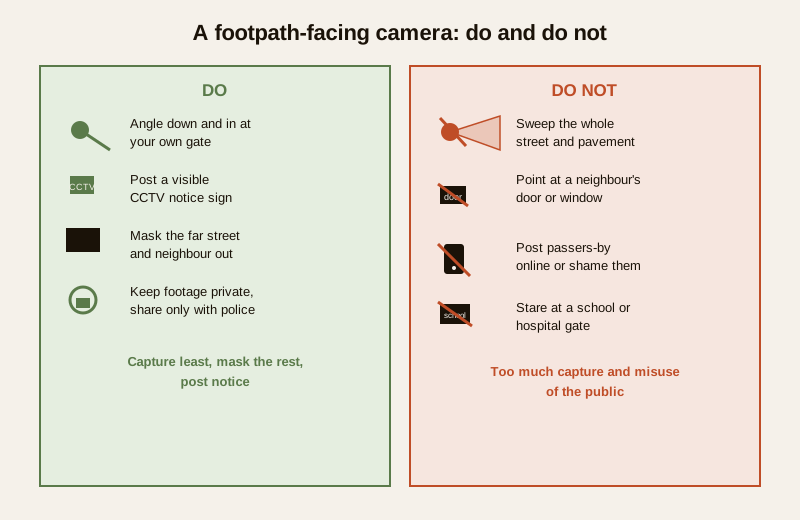
- Purpose is clear and narrow — protecting your own gate, door, frontage or vehicle, not watching the neighbourhood.
- The frame is your frontage — your entrance fills the picture; only a thin strip of footpath is unavoidably included.
- Angled down and in — tilted toward your ground-level entrance, not level and outward down the street.
- Public space is masked — a privacy zone blacks out the far pavement, the road, and any neighbour's window or door in view.
- No neighbour or sensitive gate in view — no neighbour's door, window or yard; no school, hospital or clinic entrance across the road.
- Notice is posted — a visible CCTV-in-operation sign at the gate.
- Footage stays private — used only for your security purpose, shared with police if there is a genuine incident, never posted online.
- You have checked locally — society bye-laws, and municipal or police guidance where the camera overlooks a busy public area.
Do not do this
- Do not cover the whole street. A camera panning the full road, the opposite pavement and the shops beyond fails proportionality and unsettles everyone.
- Do not point at a neighbour. Their door, windows, balcony and yard are off-limits; re-angle or mask them out.
- Do not stare at a school, hospital or place of privacy. Re-angle or mask sensitive gates and any view into a home opposite.
- Do not skip notice. Secret filming of the public is the worst version of a footpath camera.
- Do not post passers-by online. No shaming clips, no social-media posts of strangers on the street — give genuine crime footage to the police instead.
- Do not treat footage as a neighbourhood-watch tool. It is for your property, not for tracking who comes and goes around you.
Where to go next and who to ask
Getting a footpath-facing camera right is mostly about angle, masking and manners. If you want to go deeper on any part of it:
- For the full picture of where cameras should and should not point, see where not to install CCTV in India.
- For how to handle, store and share what your cameras capture, read the CCTV privacy guide for India.
- To black out the public area you do not need, use the CCTV privacy masking guide for India.
- For cameras in shared buildings and between flats, see CCTV in apartments in India.
And when you are unsure whether a specific camera is allowed where you live, ask the people who actually set the rules: your housing society or RWA committee, your municipal body, the local police station, or a lawyer or Data Protection Officer for a genuine legal question. Because the position varies by state and city and changes over time, confirm the current local rules before you rely on anything here.
Key takeaways
- Your property, the public's street. You may camera your own building, but the footpath and road are public space full of people who never consented — filming them is processing their personal data under the DPDP Act.
- Proportionality is the rule. Capture the least public space needed to protect your own gate and frontage; do not sweep the whole street, a neighbour's home, or a sensitive gate across the road.
- Angle down and in, and mask the rest. Tilt toward your entrance, and use privacy masking to black out the far pavement, the road and any neighbour or sensitive area in view.
- Notice, restraint, no shaming. Post a visible CCTV sign, use footage only for your security purpose, and never post passers-by online — give genuine crime footage to the police.
- Check locally and be neighbourly. Municipal, police and society rules vary and change; a friendly conversation and a willingness to adjust the angle prevent almost every dispute.
- This is not legal advice. For a real question about a specific camera, confirm with your society, municipal body, local police, or a lawyer or Data Protection Officer.
References
- Digital Personal Data Protection Act, 2023 — a recognisable image of a person is personal data; collect it only for a clear, legitimate purpose, with notice, and no more than needed. Verify the current text and rules before relying on it.
- Reasonable expectation of privacy — people using a public footpath, and neighbours in their own homes, have privacy expectations that a private camera must respect; seek qualified legal advice for a specific situation.
- Municipal bye-laws, police advisories and housing-society rules — local requirements on private CCTV vary by state and city and change over time; confirm the current position with the relevant Authority Having Jurisdiction.
This is an educational overview, not legal advice. Where a camera you own overlooks a public footpath, street or a neighbour, the fair and lawful answer depends on your exact facts — capture the least public space you need, mask the rest, post notice, and confirm the current local rules with your society, municipal body, police, or a lawyer before you rely on anything here.
Export this guide
Related Guides — Deep-dive reading
Security and Fire Regulations Guide for India (2026): Know the Rules and How to Navigate Them
There is no single national rulebook you can read off. This is the map of the whole regulatory landscape for home, housing-society and commercial security and fire systems in India, and a calm way to navigate it: who sets the rules, who approves what, and how to stay on the right side of them.
SecuritySecurity Privacy Assessment for Indian Homes
Getting the privacy side of home security right: camera placement ethics and limits, notice and consent, the extra caution audio demands, and treating footage as personal data you store, retain and delete responsibly under India's DPDP Act 2023 direction.
SecurityVideo Door Phone Privacy in India (2026): Aiming, DPDP and Good Neighbours
A door phone films everyone who visits, waits or passes by. This guide covers where to point it, what the DPDP Act asks of you, how long to keep footage, and how to be a good neighbour.
SecurityRelated Tools — Try Free
CCTV Placement Compliance Checker
A quick DPDP-grounded privacy and safety self-check for where a camera is pointed — flags the items to fix.
ComplianceApartment Video Door System Planner
Enter flats, entrances, floors and guard desk for a first-pass building intercom plan — door stations, indoor monitors, guard station, the right architecture and an indicative cost band.
Building PlannerCCTV Blind-Spot Checker
The dead zone under a wall- or pole-mounted camera, from mounting height, downward tilt and vertical field of view.
Blind Spot