
Security and Fire Regulations Guide for India (2026): Know the Rules and How to Navigate Them
There is no single national rulebook you can read off. This is the map of the whole regulatory landscape for home, housing-society and commercial security and fire systems in India, and a calm way to navigate it: who sets the rules, who approves what, and how to stay on the right side of them.
Most people meet India's security and fire rules only when something forces them to: a housing-society renovation that needs a sign-off, a new commercial floor that will not get its occupancy certificate, a camera a neighbour objects to, or a fire drill that reveals the building was never really compliant. At that point the first, disorienting discovery is that there is no single book to open. The rules come from several different places at once, they are set and enforced locally, they differ from one city to the next, and they change over time. This guide exists to replace that disorientation with a map.
The good news is that the landscape, though scattered, has a shape. Once you can see the handful of domains the rules fall into, recognise who the deciding authorities are, and understand the general order in which approvals happen, the whole thing becomes navigable. You do not need to become a fire engineer or a lawyer. You need enough compliance literacy to ask the right questions, engage the right professional, and know which door to knock on. That is exactly what this guide, the warm front door to our whole regulatory file, sets out to give you.
Scope and how to read this. This is practical compliance literacy, not legal advice or authoritative code. Requirements vary by state and city and change over time, so always confirm the current position with the Authority Having Jurisdiction (the fire service, the municipal body, the police or PSARA controlling authority, the electrical inspectorate, or a licensed professional) before you act. Nothing here is a ruling you can rely on in place of your local authority.
The one lesson that makes everything else easier
Before any specific rule, absorb the meta-lesson, because it saves the most grief: there is no national rulebook you can just read off and be done. What applies to your particular building depends on several moving things at once. It depends on the building's use or occupancy, whether it is a home, a housing society, an office, a shop, a school or a hospital. It depends on its height and size, since a low independent house, a mid-rise apartment block and a genuine high-rise are governed very differently. And it depends on where it stands, because the state and the city, through their own Acts and building bye-laws, set and enforce the detail.
Above all it depends on the Authority Having Jurisdiction, usually shortened to the AHJ. This is the official or body legally empowered to approve, inspect and enforce in your area, and their reading of the rules is the one that counts. Two identical buildings in two cities can face different requirements, and the same building can face new requirements a few years later. So the honest answer to almost every specific compliance question is the same: it depends on your building and your city, and you confirm it with the AHJ. Treat anyone who gives you a confident nationwide number without asking about your building or your city with healthy suspicion.
The four domains: the big picture
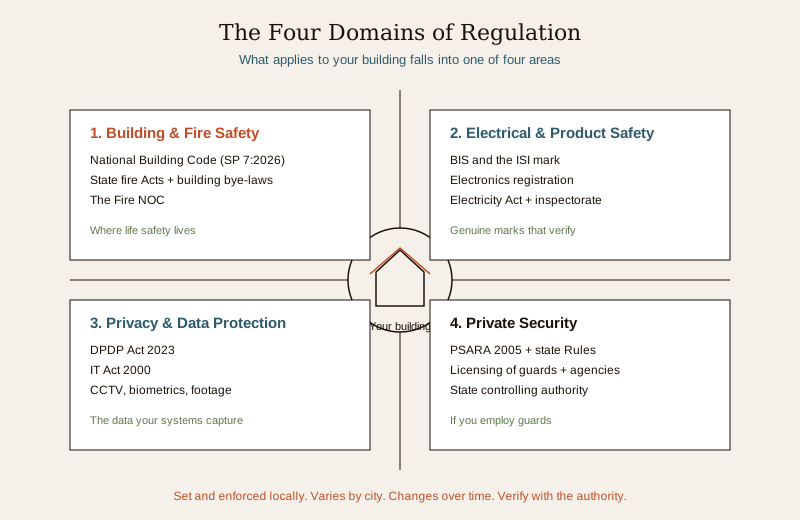
Almost every rule you will meet for home, housing-society or commercial security and fire systems falls into one of four domains. Learn these four and the landscape stops feeling random.
One: building and fire safety
This is the biggest and most important domain, because it is where life safety lives. The reference framework is the National Building Code of India, whose current edition is published as SP 7:2026. The National Building Code is a recommendatory model code, not directly enforceable on its own; it becomes binding where a state or municipal body adopts it through their building bye-laws. So the real, enforceable rules for you are your city's building bye-laws and your state's Fire Prevention and Life Safety Act (the name varies by state), read alongside the National Building Code. These govern the fire-safety provisions a building must have, escape routes, detection and alarm, firefighting arrangements, and the approvals around them. For most buildings above a certain scale, this domain also produces the single most talked-about approval, the Fire No Objection Certificate.
The exact requirements, what is needed at what height and use, are set by the code and your fire service, and must be verified locally rather than assumed. Our companion guides go into the detail: see the National Building Code security and fire safety requirements for how the code frames things, and the fire NOC process in India for the approval itself.
Two: electrical and product safety
Security and fire systems are largely electrical, and India has a distinct framework for electrical safety and for the products themselves. On the safety side, the Electricity Act and the associated Central Electricity Authority safety regulations, together with the state electrical inspectorate, govern how installations must be carried out and inspected. On the product side, the Bureau of Indian Standards runs the country's standards system: the familiar ISI mark shows conformity to an Indian Standard, and a compulsory registration scheme covers many electronic goods. For a buyer, this domain is why a genuine, verifiable standards mark matters, especially on anything wired in, outdoor or life-critical. Our security product certification guide is the plain-language companion here.
Three: privacy and data protection
The newest domain, and the one most homeowners underestimate, covers the personal data your security systems capture. A CCTV camera, a video doorbell or a biometric lock records people, and that footage and those fingerprints are personal data. India's framework here is the Digital Personal Data Protection Act, 2023, alongside the older Information Technology Act. In plain terms, when your cameras or biometrics capture other people, in shared spaces, at boundaries, of staff or visitors, you take on responsibilities around notice, purpose, security and retention of that data. This is felt most sharply in housing societies and commercial premises. Our CCTV privacy guide for India walks through what this means in practice.
Four: private security regulation
If you employ security guards or engage a security agency, a fourth domain applies: the Private Security Agencies (Regulation) Act, 2005, usually called PSARA, together with the state PSARA Rules. This licenses private security agencies and sets standards for the guards they supply, their training, verification and conduct. It is administered by a controlling authority in each state, often linked to the police. For a homeowner it rarely bites directly, but for a housing society or a commercial premises hiring guards, using a properly licensed agency is part of doing this correctly.
Who the authorities are: who approves what
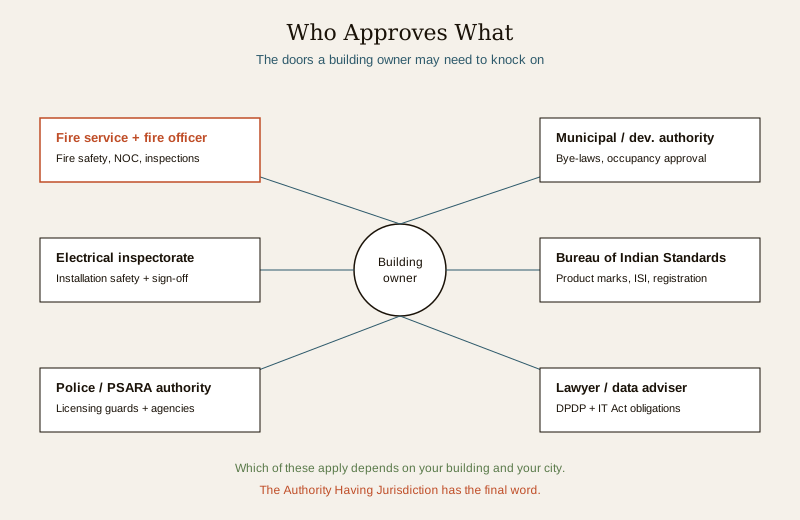
Because the rules are enforced locally, the practical question is less "what does the law say" and more "whose approval do I need, and who do I ask." Different domains have different authorities, and part of navigating compliance is simply knowing which door leads where. The table below is a map of the usual players. Which of them you actually deal with depends entirely on your building and city, so treat it as orientation, not a checklist to complete blindly.
| Authority | Broadly responsible for | You typically deal with them when |
|---|---|---|
| State or city fire service and fire officer | Fire safety provisions, fire NOC, inspections | Building above a certain scale, new construction, renewals, complaints |
| Municipal corporation or development authority | Building bye-laws, building and occupancy approvals | Building, altering or changing use of a premises |
| State electrical inspectorate | Electrical installation safety and inspection | Significant electrical installations and their sign-off |
| Police or PSARA controlling authority | Licensing of private security agencies and guards | Employing guards or engaging a security agency |
| Bureau of Indian Standards | Product standards, the ISI mark, electronics registration | Choosing and verifying certified security and fire products |
| Lawyer or Data Protection Officer or adviser | Data-protection obligations under DPDP and the IT Act | CCTV, biometrics and footage that capture other people |
The AHJ has the final word. This table names the usual roles, but the authority empowered in your area, and their current requirements, are what actually govern you. Where a specific approval, figure or timeline matters, confirm it directly with the relevant authority rather than relying on a general description, including this one.
How to approach compliance sensibly
Faced with all this, the temptation is either to panic or to ignore it. Neither serves you. There is a calm, orderly way to approach compliance that works for a home, a housing society or a commercial premises alike. It is less about memorising rules and more about following a sensible order.
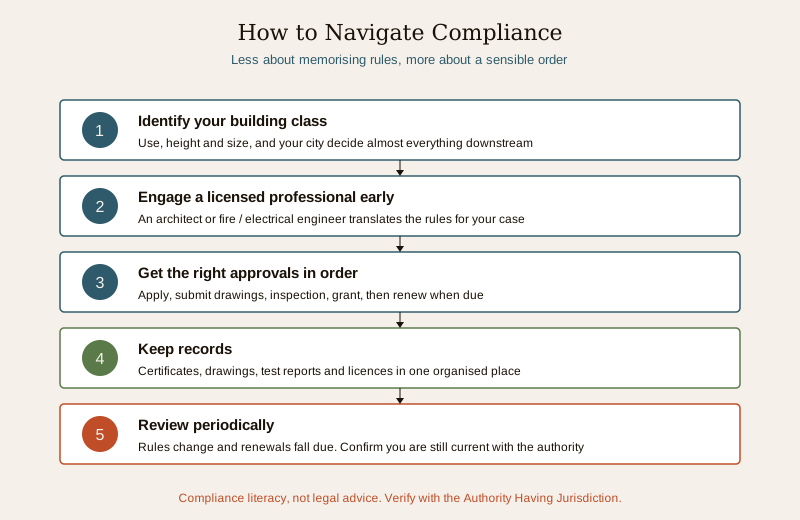
First, identify your building class. Almost everything downstream depends on your building's use, height and size, and your city. A standalone home, a mid-rise apartment block, a high-rise and a commercial floor sit in different regulatory places. Knowing where yours sits tells you roughly which domains and authorities apply. Our guides on residential building fire safety requirements and high-rise fire safety requirements help you place your building.
Second, engage a licensed professional early. For anything beyond the trivial, a licensed architect, a fire-safety consultant or a chartered electrical engineer is not a cost to avoid but the person who translates the rules for your specific building and city, prepares drawings and applications correctly, and deals with the authorities in their own language. Engaging them early, before design is fixed, is far cheaper than retrofitting after a rejection.
Third, get the right approvals in the right order. Approvals tend to follow a sequence: building approval, then the fire and electrical sign-offs, then the occupancy or completion certificate that says the building may be used. Doing them out of order, or skipping one, is how projects stall. Your professional will map the actual sequence for your case; the general shape is apply, submit drawings, inspection, and grant, with renewals due periodically for things like the fire NOC.
Fourth, keep records. Approvals, certificates, drawings, test reports, agency licences and inspection notes are worth keeping in one organised place. When a renewal, a sale, an insurance claim or a complaint arises, being able to produce the paperwork is half the battle. Our fire safety inspection guide covers the periodic testing and record-keeping side.
Fifth, review periodically. This is the step everyone forgets. Rules change, editions are superseded, renewals fall due, and a building that was compliant when built can drift out of compliance as it is altered or as requirements tighten. Put a periodic review on the calendar, at least when anything material changes and otherwise on a regular cycle, and confirm you are still current with your authority.
This is compliance literacy, not legal advice. The point of this guide is to help you navigate, not to give you a ruling. It tells you the domains, the authorities and the general order of things so you can ask good questions and engage the right people. It does not, and cannot, tell you the exact requirement for your building, because that is set locally, varies by city, and changes. For that, and for anything with legal or life-safety consequences, engage a licensed professional and confirm with the Authority Having Jurisdiction.
Where the rest of the file goes
This overview is the front door. Behind it, the compliance file goes deeper, organised into acts that follow the domains above: the building and fire-safety rules and the National Building Code, the fire NOC and inspection processes, the product and electrical safety marks, and the privacy and private-security frameworks. Whichever door your situation points you to, start from the sub-hub and follow the thread that matches your building and your question.
- Building and fire safety: the National Building Code requirements, residential and high-rise fire safety, and the fire NOC process.
- Approvals and upkeep: the fire safety inspection guide for periodic testing and records.
- Products and privacy: the security product certification guide and the CCTV privacy guide.
- And the regulations sub-hub itself, the map to the rest of the compliance file.
Key takeaways
- There is no single national rulebook. What applies depends on your building's use, height and size, and your city, and the deciding authority is the local one. Anyone offering a confident nationwide answer without asking about your building is guessing.
- The landscape has four domains — building and fire safety (the National Building Code SP 7:2026, adopted via state and municipal bye-laws and state fire Acts, and the fire NOC), electrical and product safety (BIS, the ISI mark and electrical rules), privacy and data protection (DPDP Act 2023 for CCTV and biometrics), and private-security regulation (PSARA for guards and agencies).
- Know who approves what. The fire service, the municipal body, the electrical inspectorate, the police or PSARA authority, BIS, and a data-protection adviser each own a piece. Knowing which door to knock on is half of compliance.
- Approach it in order — identify your building class, engage a licensed professional early, get approvals in sequence, keep records, and review periodically.
- Verify locally, always. Rules vary by state and city and change over time. Confirm the current position with the Authority Having Jurisdiction before you act. This is compliance literacy, not legal advice.
References
- National Building Code of India — the model code for building and fire safety, current edition published as SP 7:2026, recommendatory until adopted through state and municipal building bye-laws. Verify the current edition and its adoption in your city via the Bureau of Indian Standards and your local body: https://www.services.bis.gov.in/
- State Fire Prevention and Life Safety Acts and municipal building bye-laws — the enforceable local rules and the source of the fire NOC and building approvals; names and requirements vary by state and city, so verify with your state fire service and municipal corporation.
- Digital Personal Data Protection Act, 2023 (DPDP) and the Information Technology Act, 2000 — the framework governing personal data captured by CCTV, video doorbells and biometric systems; consult a lawyer or data-protection adviser for obligations that apply to you.
- Private Security Agencies (Regulation) Act, 2005 (PSARA) and state PSARA Rules — licensing of private security agencies and guards, administered by a state controlling authority; engage only a properly licensed agency.
- Bureau of Indian Standards (BIS) — the national standards body responsible for Indian Standards, the ISI mark and the registration of covered electronic products; use the BIS portal to verify a mark or standard: https://www.services.bis.gov.in/
This is an educational overview of India's security and fire regulatory landscape and how to navigate it, not legal advice, authoritative code, or a ruling you can rely on. Requirements vary by state and city and change over time. Always identify your building class, engage a licensed professional, and confirm the current position with the Authority Having Jurisdiction before acting.
Export this guide
Related Guides — Deep-dive reading
Fire System Approval Process in India (2026): Getting Your Fire Systems Signed Off
The systems side of fire compliance, explained for homeowners and RWAs. How the alarms, sprinklers, hydrants, pumps and emergency lighting in a building get designed to the fire scheme, installed by a competent agency, tested, commissioned, inspected and certified as part of the fire approval.
SecurityResidential Building Fire Safety Requirements in India (2026): Homes and Housing Societies
A plain-language literacy guide to the fire and life-safety expectations that scale with a home's size, from an independent house to group housing, and how flat owners, RWAs and builders share the duty of keeping people able to escape.
SecuritySecurity Product Certification Guide (2026): Reading the Marks That Prove a Device Is Safe and Genuine
How a homeowner tells a genuinely certified, fit-for-purpose security product from an uncertified one, and why it matters most for life-safety and anything electrical or outdoor. A plain-language buyer's guide to the marks and standards you will actually meet in India, and how to verify one is real.
SecurityRelated Tools — Try Free
Apartment Video Door System Planner
Enter flats, entrances, floors and guard desk for a first-pass building intercom plan — door stations, indoor monitors, guard station, the right architecture and an indicative cost band.
Building PlannerCCTV Placement Compliance Checker
A quick DPDP-grounded privacy and safety self-check for where a camera is pointed — flags the items to fix.
CompliancePre-Possession Inspection Checklist
Inspect your flat before registration — 10 categories, 70+ checkpoints across legal, carpet area, structure, finishes, and deviations.
Homebuyer Checklist