
Housing Society CCTV Approval in India (2026): Getting the Committee's Nod
Common areas are shared property, so a camera there — or one that overlooks a corridor or a neighbour's door — needs the society's sanction, not a quiet solo install. Here is how a society and an individual resident each get approval fairly.
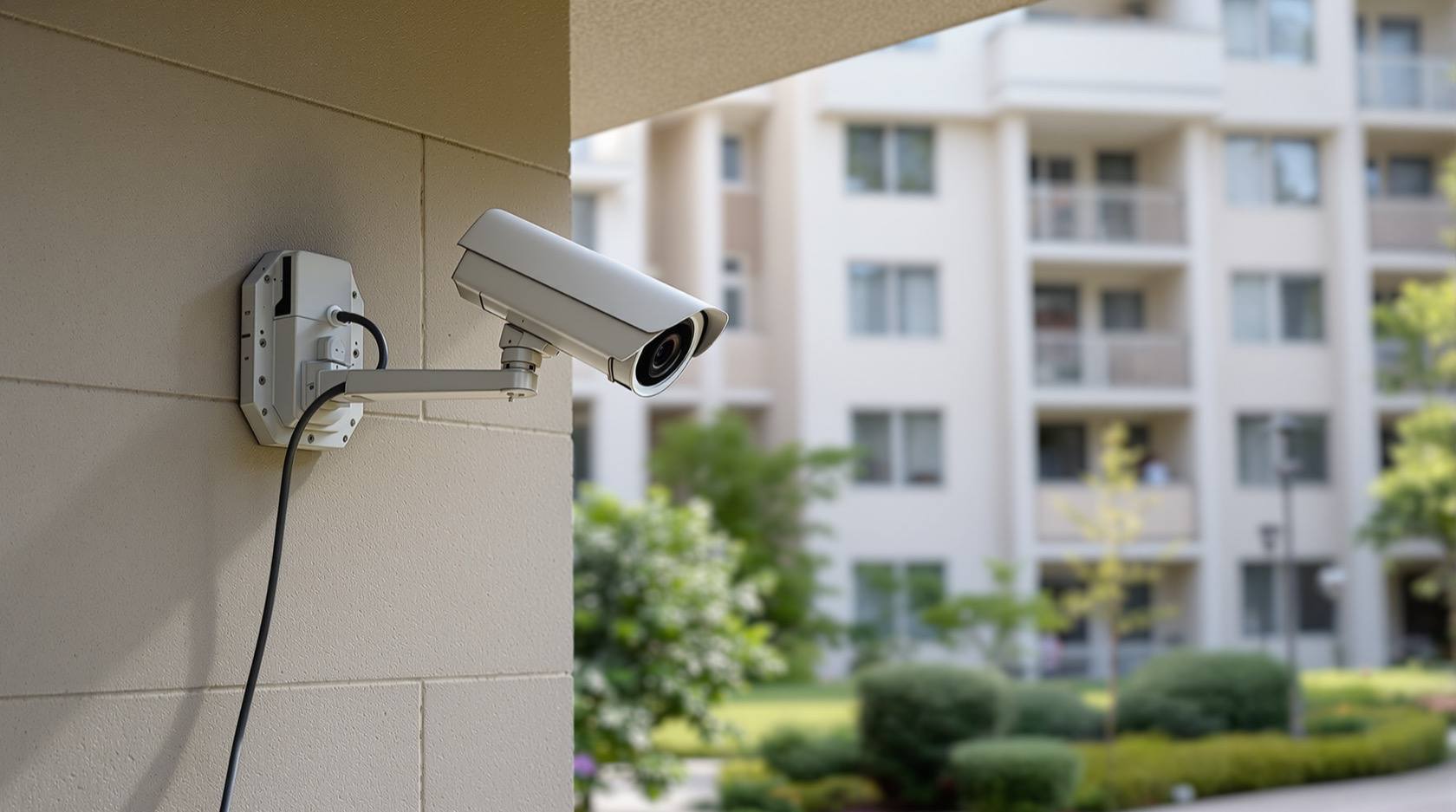
Nobody owns the lobby. That single fact is why a camera in a housing society is different from a camera inside your own flat. The corridor, the lift, the parking, the gate, the compound wall — these are shared property, held in common by every member. Point a lens at any of them, or at a neighbour's door, and you are collecting other people's comings and goings on space that is not yours alone to decide about. That is precisely why housing society cctv approval exists: it turns a private decision that affects everyone into a shared, recorded, accountable one.
This guide is the "getting permission" companion to the housing society CCTV policy guide. The policy guide is about what the rules should say once cameras are in; this one is about how you get the go-ahead to install them in the first place — for the society putting up common-area cameras, and for an individual resident who wants a camera at their door. It sits inside the wider security and fire regulations hub.
Scope & how to read this. This is practical compliance literacy, not legal advice or authoritative code. Society bye-laws, cooperative and apartment-ownership laws, and data-protection rules vary by state and city and change over time — always confirm the current position with your society's registered bye-laws, the managing committee, and where needed a lawyer or your society's data protection point of contact before you act.
Why approval matters at all
It is tempting to think a camera is your own business. In a shared building, it usually is not. Three things make approval the honest default rather than an optional courtesy.
- Shared property, shared consent. Common areas belong to the members collectively. Fixing anything to a common wall, drilling into shared structure, running cable through shared conduit, and — most of all — recording people who use that shared space is a decision that belongs to the body that governs the common property, typically the managing committee and, for bigger questions, the general body.
- Accountability for personal data. Camera footage of identifiable people is personal data. The Digital Personal Data Protection Act, 2023 (DPDP Act) frames the collection of personal data around a clear purpose, notice to the people affected, and someone answerable for how the data is handled. A society that installs cameras by resolution — with a named custodian, a retention rule and posted signage — can show it acted responsibly. A resident who quietly points a camera down a shared corridor cannot.
- Fairness and disputes. An approval on record is your best protection when a neighbour objects later. "The general body sanctioned this, here is the resolution and the coverage map" ends an argument that "I just put it up" only inflames.
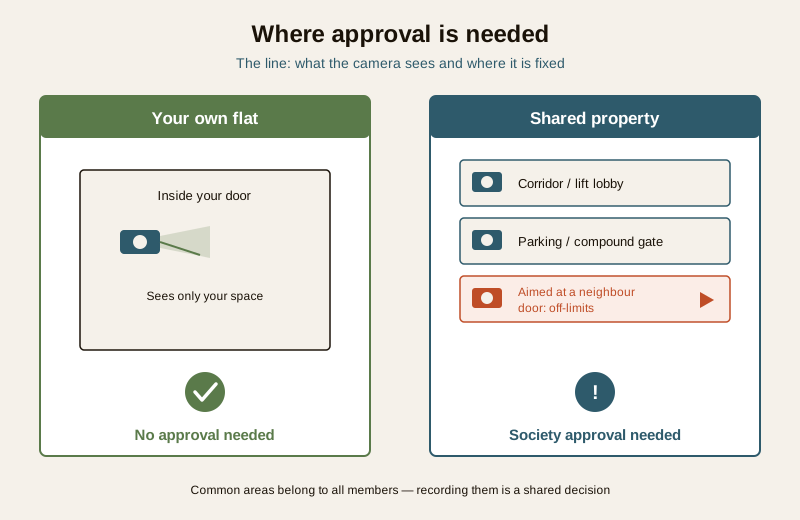
There is a simple line that does most of the work: a camera strictly inside your own flat, seeing only your own space, is yours to decide. A camera that sees, reaches into, or is mounted on shared or a neighbour's space needs the society's approval. Everything below follows from that line. For where the line falls in practice, the CCTV in apartments guide and the CCTV in common areas guide go deeper.
The society route: from proposal to resolution
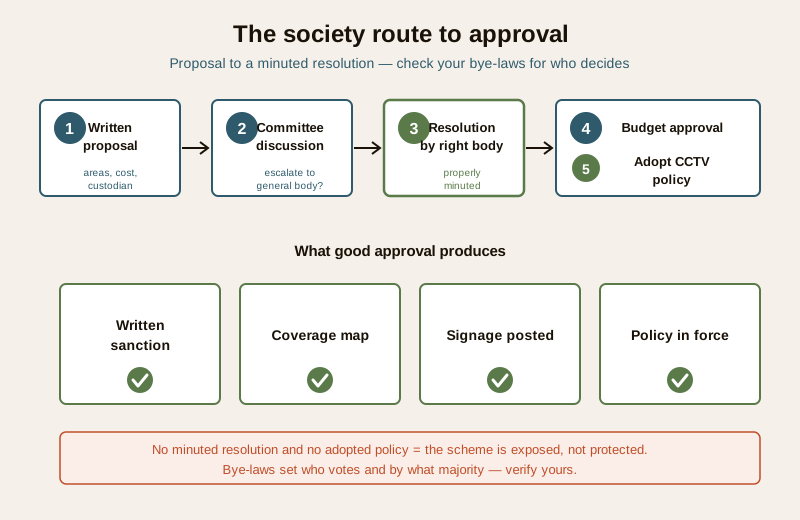
When the society itself wants to cover common areas — the gate, lobbies, lifts, parking, perimeter — the approval flows through the association's normal decision-making. Bye-laws differ, so treat this as the general shape and check your own registered bye-laws for who decides what and by what majority.
Step 1 — A written proposal
Someone — often the secretary, a security sub-committee, or a resident who raised the concern — puts a proposal on paper. A good proposal answers the questions the members will ask anyway: which areas, why, how many cameras roughly, indicative cost, who will hold the footage, how long it is kept, and who can view it. Vague proposals get bounced; specific ones get approved.
Step 2 — Discussion and a committee view
The managing committee discusses it. Small operational decisions may sit within the committee's own powers; anything touching a meaningful budget, a levy on members, or a broad new surveillance scheme usually needs to go up to the general body. Your bye-laws set that threshold — do not guess it.
Step 3 — A resolution by the right body
The decision is taken by resolution — a formally minuted vote of the managing committee or the general body, as your bye-laws require, at a properly convened meeting with proper notice. The resolution should record the scope (which areas), the budget approved, and the decision to adopt a CCTV policy. A resolution is not a formality; it is the document that makes everything after it legitimate.
Step 4 — Budget approval
Cameras, cabling, a recorder, storage and ongoing maintenance cost money that comes from members' funds. Approving the spend — from the security head, a sinking fund, or a special contribution — is part of the same decision and belongs in the minutes.
Step 5 — Adopt a CCTV policy
Approval to install should come bundled with approval of how it will be run. That is the CCTV policy: coverage map, purpose, the named custodian of footage, retention period, who may access recordings and on what request, signage, and no-go areas. Do not write it from a blank page — the housing society CCTV policy guide walks through every clause. Adopting the policy in the same resolution keeps installation and governance together, which is exactly what the DPDP Act's accountability expects.
The resident route: your door, your camera, their permission
Now the individual case. You want a camera at your flat's entrance, or a doorbell camera, or a small dome watching your parked scooter. Whether you need permission depends entirely on what the camera sees and where it is fixed.
- Strictly inside your flat, seeing only your own space — your living room, your balcony that overlooks nothing shared. No society approval needed. This is your home.
- In the corridor, on the common wall, or pointing at the shared landing, lift lobby, parking or a neighbour's door — you need the managing committee's permission first. You are fixing to shared structure and recording shared space and other members. That is not a solo call.
Even inside your own flat, a camera or doorbell that captures the corridor or the neighbour's doorway opposite drifts onto shared and private ground. The fair move is to angle it down onto your own threshold, mask what spills over, and — if it unavoidably sees a neighbour — talk to them and to the committee rather than hope nobody notices. The where not to install CCTV guide is blunt about the lines you should not cross: never a neighbour's window, balcony, or private door, and never a bathroom or any private interior.
If you are a tenant, add one more permission on top: your landlord's, and often the society's too, since you are altering the premises and the common area. The security guidance for tenants covers that layer.
A resident's approval request that gets a yes
Committees say yes to requests that are easy to say yes to. Put in writing: exactly where the camera goes, exactly what it will see (a photo of the intended view helps), that it will not record audio of the corridor, that footage stays with you and is not shared casually, and that you will remove it if the general body ever adopts a society-wide scheme that replaces it. A small, considerate ask beats a wide, defensive one.
What a good approval produces
Whichever route you take, a sound approval leaves behind the same four artefacts. If you have these, you are on solid ground; if you are missing them, you are not really approved, you have just started.
| Artefact | Society route | Resident route |
|---|---|---|
| Written sanction | Minuted resolution of committee or general body | Written permission letter or approved application from the committee |
| Coverage map | Plan marking every camera and what each sees, no-go areas shaded | A note or sketch of your single camera's field of view |
| Signage | "CCTV in operation" notices at entries to covered common areas | A small notice at your door if the view reaches shared space |
| Policy / undertaking | Adopted CCTV policy (custodian, retention, access) | A short undertaking on retention, no misuse, and removal on request |
Defer to your bye-laws and the right authority. Who must approve, what majority is needed, and whether a matter is a committee or a general-body decision are all set by your society's registered bye-laws and the applicable cooperative or apartment-ownership law of your state — which vary and change. When a decision is contested or costly, confirm the correct process with your bye-laws and, if needed, a lawyer, rather than relying on habit or a strong personality in the group.
Handling disputes fairly
Cameras generate two classic disputes. Handle both by process, not by volume.
A neighbour objects to an approved or proposed camera. Hear them out; their objection is usually about a specific view, not the whole idea. Can the camera be re-angled, or the sensitive area masked, so it still serves the security purpose without staring at their door? Bring it back to the committee, minute the concern and the resolution of it. Most objections dissolve once the person sees the actual field of view and that their private space is excluded.
A resident installs in a common area without permission. This is the hard one, and it is common. The fair path is graduated: a quiet word first, then a written request from the committee to either regularise it (apply and get it approved, adjusted if needed) or remove it, and only then a formal step under the bye-laws if they refuse. Resist the urge to rip it down or retaliate — an unapproved camera is a governance problem to be corrected calmly, not a battle to be won. The goal is a compliant, mapped, signposted camera or no camera, reached without a feud.
An approval checklist for both routes
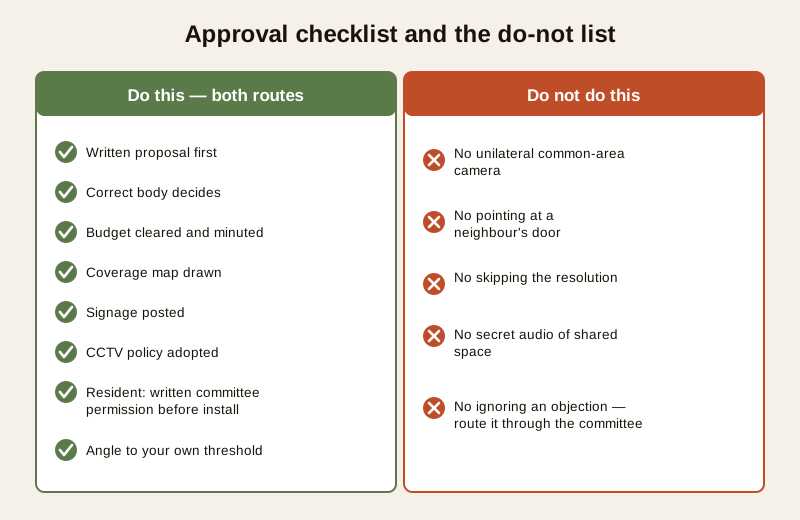
Society installing common-area CCTV
1. Draft a written proposal (areas, purpose, indicative cost, custodian, retention).
2. Discuss in committee; escalate to the general body if bye-laws require.
3. Pass a resolution by the correct body, properly minuted.
4. Approve the budget in the same decision.
5. Adopt a CCTV policy — coverage, custodian, retention, access, signage, no-go areas.
6. Install to the approved map; post signage; keep the records.
Resident wanting a camera at their door or in shared space
1. Check the view: strictly your own space needs no approval; anything shared or a neighbour needs permission.
2. If shared: apply to the committee in writing, with the intended view and an undertaking.
3. Get written permission before installing.
4. Angle to your own threshold; mask what spills onto shared or private space; no shared-area audio.
5. Post a small notice if the view reaches common space; be ready to align with any future society scheme.
The "do not do this" list
- No unilateral common-area cameras. Never fix a camera to shared structure or aim it at shared space on your own say-so.
- No pointing at a neighbour. Their door, window, balcony and private space are off-limits — mask or re-angle.
- No skipping the resolution. A society scheme without a minuted resolution and an adopted policy is exposed, not protected.
- No secret audio of shared space. Recording corridor conversations is a step further into privacy than video; leave it off.
- No ignoring an objection. Route every concern through the committee and minute how it was resolved.
When to get help
- The governance question — which body must approve, what majority, is this a committee or general-body matter? — is answered by your registered bye-laws and the applicable state cooperative or apartment law. When it is contested or expensive, a lawyer who works with housing societies is worth the fee.
- The data-protection question — custodian, retention, access, notice, whether your scheme meets the DPDP Act's expectations? — belongs with whoever your society names as its data protection point of contact, guided by the housing society CCTV policy guide.
- The installation itself — mounting, cabling and mains work — goes to a licensed installer and, for any electrical work, a qualified electrician; hardware must never block a corridor, stair or fire-escape route.
For the broader map of what applies to home and society security in India, start at the security and fire regulations hub.
Key takeaways
- Common areas are shared property. A camera there, or one reaching a neighbour, needs the society's sanction — never a solo install.
- The society route runs on a resolution. Proposal, discussion, a properly minuted committee or general-body vote, budget approval, and an adopted CCTV policy.
- The resident route turns on the view. Strictly your own space needs no approval; anything shared or a neighbour needs the committee's written permission first.
- Good approval leaves artefacts — written sanction, coverage map, signage, and a policy or undertaking. Missing them means you are not really approved.
- Settle disputes by process, not volume — re-angle or mask, minute the concern, and regularise an unapproved camera calmly rather than retaliating.
- This is not legal advice. Bye-laws and data-protection rules vary by state and change; confirm with your bye-laws and, where needed, a lawyer.
References
- Digital Personal Data Protection Act, 2023 — a society's camera footage of identifiable people is personal data; collect it for a clear purpose, with notice and a named custodian, and only as much as needed. Verify the current text and rules before relying on it.
- Your society's registered bye-laws and the applicable state cooperative-society or apartment-ownership law — these set who approves CCTV, by what majority, and whether a matter is a committee or general-body decision. They vary by state and change; read the current version.
- Managing committee and general body minutes — a properly convened, minuted resolution is the record that makes a common-area installation legitimate; keep it with the coverage map and the adopted policy.
This is an educational overview, not legal advice. Society bye-laws, cooperative and apartment laws, and data-protection rules vary by state and city and change over time — confirm the current position with your registered bye-laws, your managing committee, and where needed a qualified lawyer before you act.
Export this guide
Related Guides — Deep-dive reading
Housing Society CCTV Policy in India (2026): Writing the Rules Everyone Signs Up To
Cameras in a housing society are only as fair and lawful as the written policy behind them. Here is how a committee or RWA drafts, approves and publishes a CCTV policy that satisfies the DPDP Act, settles disputes, and earns resident trust.
SecurityCCTV in Common Areas in India (2026): The RWA Privacy Playbook
Shared-space cameras at the gate, lobby, lift and parking are normal and useful. The hard part is governance and proportion. Here is how a housing society runs common-area CCTV lawfully, fairly and with residents' dignity intact.
SecuritySecurity Privacy Assessment for Indian Homes
Getting the privacy side of home security right: camera placement ethics and limits, notice and consent, the extra caution audio demands, and treating footage as personal data you store, retain and delete responsibly under India's DPDP Act 2023 direction.
SecurityRelated Tools — Try Free
CCTV Camera Coverage & Count Calculator
Estimate how many CCTV cameras you need, the NVR channels, storage in TB for your retention period, and an indicative all-in cost with GST.
CCTV CalculatorCCTV Placement Compliance Checker
A quick DPDP-grounded privacy and safety self-check for where a camera is pointed — flags the items to fix.
ComplianceCCTV Lens & Field-of-View Calculator
Focal length, sensor and resolution to field-of-view angle, scene width and DORI detect/observe/recognise/identify distances.
Lens & FoV