
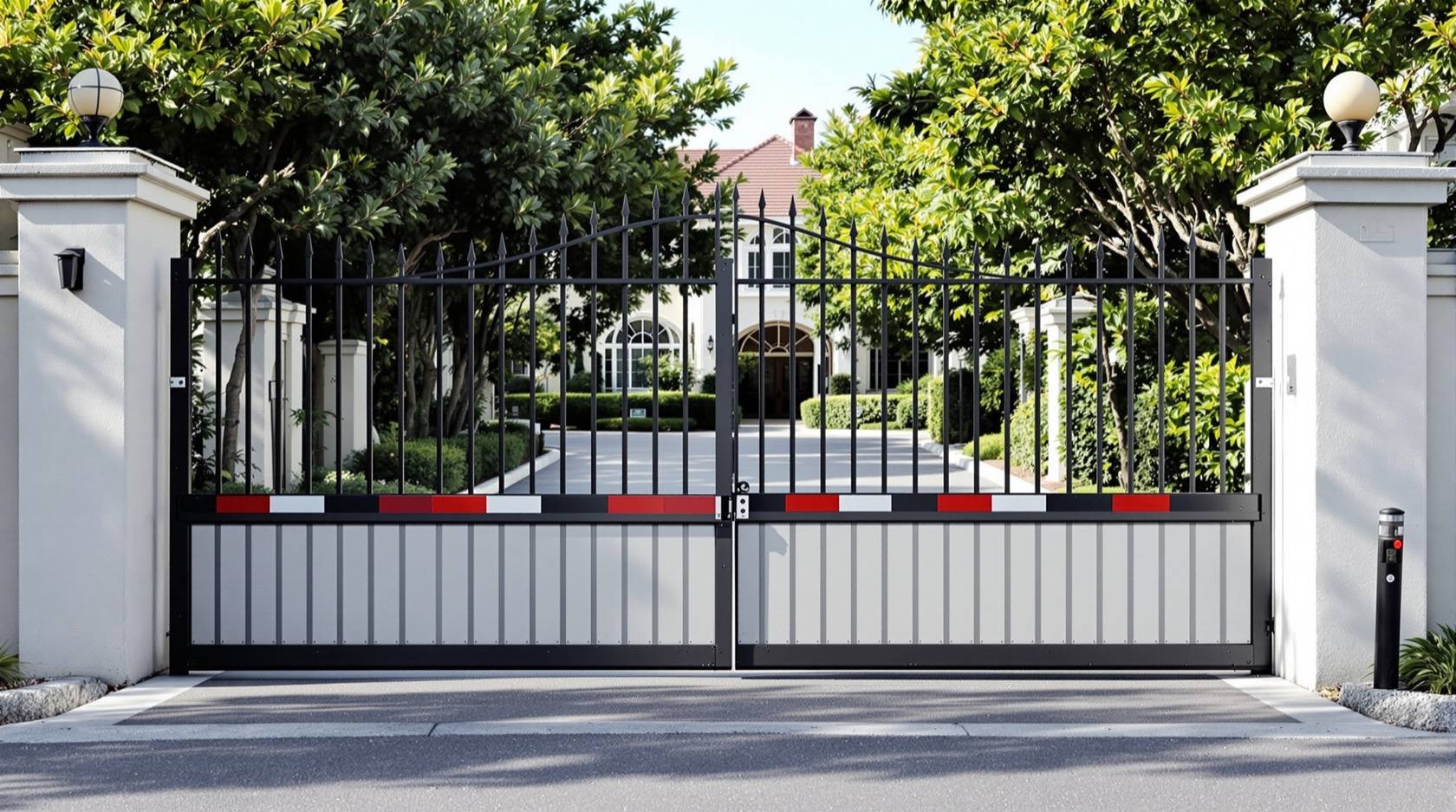
Gate and Boom-Barrier Approval in India (2026): Controlling the Entrance, Lawfully
How a society or building gets an automatic gate or boom barrier approved and installed the right way in India: whose permission you need, why a public road cannot be barricaded on a whim, and the one line you never cross, blocking the fire path or emergency access.
The entrance is where a building meets the world. It is the one point every resident, visitor, delivery rider, ambulance and fire engine has to pass through, and it is also the point a society most wants to control. So the automatic gate and the boom barrier have become the default upgrade for almost every housing society and commercial complex in India. They are genuinely useful: they slow down intruders, log who comes in, and give the guard a manageable choke point instead of an open road. But they are also heavy powered machines sitting on the boundary between your private property and public space, and that combination is exactly why they need approval and care, not just a purchase order and a mason.
This guide is about doing it properly: who has to say yes before a gate or barrier goes up, why a society cannot simply barricade a road it does not own, the safety features these machines must have so they never crush a child or trap a car, and the one thing that is never negotiable, that the entrance must always stay open for a fire tender and for people escaping. It is written for homeowners, committee members and residents who want the convenience without the liability. It is compliance literacy, not a legal ruling, and the right local authority always has the final word.
Scope & how to read this. This is practical compliance literacy, not legal advice or authoritative code. Requirements vary by state and city and change over time, always confirm the current position with the Authority Having Jurisdiction (the fire service, the municipal body, the traffic police, or a licensed professional) and with your own society bye-laws before you act. For the wider picture see the security and fire regulations overview.
Why a gate or barrier is not a free-for-all
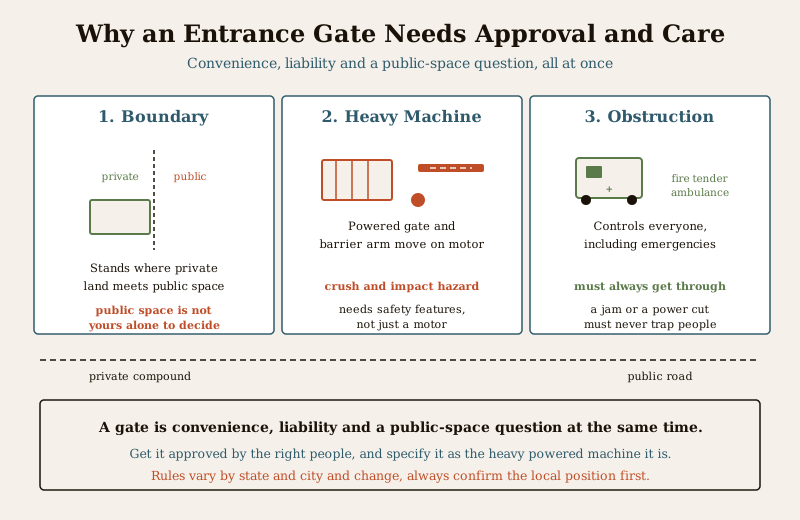
Three things make an entrance gate different from an ordinary purchase, and each one is a reason approval and care matter.
First, it sits on a boundary. A gate at your society entrance stands where private land meets a public or shared road. What you do inside your compound is largely yours to decide; what you do to the road, the footpath or the flow of traffic outside is not. The moment a gate or barrier reaches out and affects public space, other people and other authorities have a legitimate say.
Second, it is a heavy powered machine. A sliding gate can weigh several hundred kilograms and moves under motor power. A boom barrier drops a rigid arm across a lane. These are real crush and impact hazards. A gate that closes on a child, a barrier arm that drops on a two-wheeler, a motor that keeps pushing against an obstruction, these are not far-fetched, they are the exact accidents that safety features exist to prevent. Treating a powered gate like a decorative fence is how people get hurt.
Third, it can obstruct. An entrance controls the movement of everyone, including the people you least expect to need it in a hurry, an ambulance, a fire tender, residents fleeing a fire. A gate or barrier that jams, that has no way to open in a power cut, or that narrows the entrance below what an emergency vehicle needs, turns a security feature into a trap.
Who has to approve it, and it depends on where it sits
There is no single national permit for a society gate. What approvals apply depends almost entirely on one question: does the gate or barrier affect only your own private common area, or does it reach into public space? Use the table below as a starting map, then confirm the specifics with your society and your local authority, because the rules and the naming vary by state and city.
| Situation | Who typically needs to approve or be consulted | The general idea |
|---|---|---|
| Gate or barrier entirely within private common land, at the compound entrance | The society managing committee, and usually the general body (GBM) by resolution | A shared common-area change spends common money and affects all members, so it goes through the society's own decision process and bye-laws |
| Gate or barrier that sits on, narrows, or opens onto a public road or footpath | The municipal corporation or development authority, and often the traffic police or local body, in addition to the society | You are affecting public space and public movement, which needs the sanction of the authority that owns and regulates that space |
| A gate or barricade across a public through-road or a public right of way | The municipal body and police, by specific sanction, if it is permitted at all | A society generally cannot close or barricade a public road or block a public right of way on its own authority |
| Anything that touches the building's fire-safety approval or the entrance width | The fire service and fire officer, alongside the above | The fire installation and access are signed off by the fire authority and must not be compromised |
The single most important line in that table is the third one. A society or a group of residents generally cannot barricade a public through-road, or block a public right of way, on its own decision. Roads and footpaths that are public belong to and are regulated by the local authority, not the society, and putting a gate across one without sanction is exactly the kind of act that draws complaints, notices and orders to remove it. If your entrance road is genuinely internal and private, the society's own approval carries most of the weight. If it is public, or if a public road passes through or beside your compound, you must engage the municipal body and the police, and accept that permission may be conditional or refused. When in doubt about whether a road is public or private, ask the municipal body, do not assume.
The society side: committee and general body
For a gate on genuinely private common land, the approval that matters most is internal. A common-area installation is typically proposed to and passed by the managing committee, and because it spends common funds and affects every member, significant changes usually go to the general body meeting for a resolution. Get it minuted. A properly recorded resolution, following your registered bye-laws and your state's cooperative or apartment-ownership law, is what protects the committee and gives the decision legitimacy. Skipping this is how a well-meaning gate becomes a dispute at the next meeting. See the gate access control guide for how the access side is usually run day to day.
The public side: municipal body, traffic police, local authority
The moment the gate or barrier touches public space, a whole second set of permissions comes into play, and they are not yours to waive. The municipal corporation or development authority regulates what may be built on or over a public road or footpath. The traffic police care about anything that affects vehicle movement, queuing onto a public road, or sight lines. A gate that causes vehicles to stack up onto a public carriageway while the guard checks them is itself a traffic problem the police can act on. Approaching these authorities early, with a clear drawing of what you propose, is far better than building first and defending later.
Defer to the authority, not to the loudest resident. Whether a particular gate or barrier is allowed, where it may sit, and whether a public road may be gated at all, is decided by the municipal body, the traffic police and the fire service under local rules that vary by city and change over time. A committee resolution cannot override them. Confirm the current local position in writing before you install.
The one line you never cross: fire and emergency access
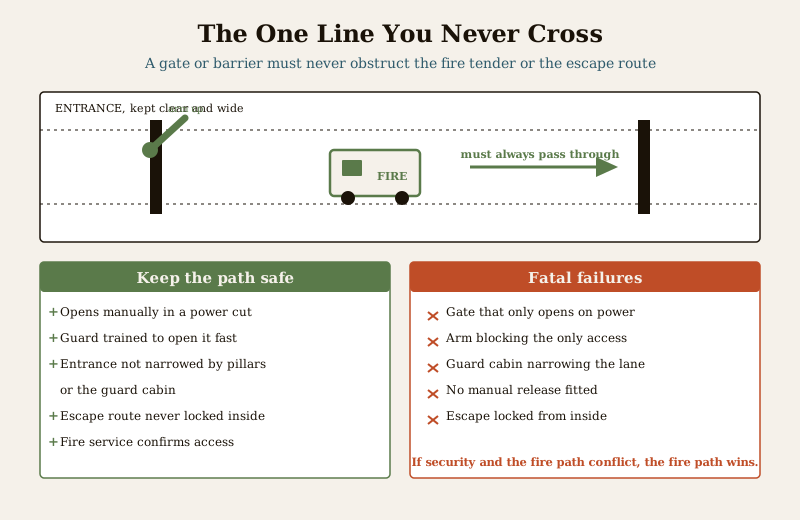
Everything else in this guide is negotiable, subject to approval, a matter of getting the right permission. This is not. A gate or boom barrier must never obstruct fire-tender access or emergency egress, and there is no security benefit that justifies compromising it.
That means, in practice, several things at once. The entrance must stay wide enough and clear enough for a fire tender to enter, the required fire-service access to the building must not be narrowed or blocked by the new gate, its pillars or the guard cabin. The gate must be openable immediately in an emergency, including in a power cut, so a manual release and a guard who knows how to use it are essential, not optional. And the path people use to escape must never be locked in a way that traps them inside. A gate that can only be opened by an app, a motor or a controller that fails in a fire or a power cut is a fatal design. This is governed by the National Building Code of India (current edition SP 7:2026), your state fire rules and the fire officer, and it is verified, not assumed. For the detail on keeping the approach clear, see the fire-tender access guide.
Life-safety is not a feature you trade. No gate, barrier, access-control policy or security concern ever justifies a locked, jammed or narrowed emergency route. Keep the fire path clear, keep the gate manually openable in a power cut, and have the fire service confirm the entrance still meets access requirements. If a security measure and the fire path ever conflict, the fire path wins, every time.
Safety features these machines must have
Because a powered gate or barrier is a real hazard, it must be specified and installed with proper safety features, not stripped down to the cheapest motor and arm. You do not need to be an engineer to insist on the essentials.
- Obstacle detection. The gate or barrier must sense something in its path, a car, a person, a child, and stop or reverse rather than crush it. Photocells, safety edges and force limiting are the common means. A barrier arm should stop and lift if a vehicle is under it.
- Safe closing force. A powered gate should not slam shut with unlimited force. Force limiting, so it stops when it meets resistance, is a core safety requirement, not a luxury setting.
- Manual release in a power cut. There must be a simple, reliable way to open the gate or lift the barrier by hand when the power is off, and the guard must know how to use it. This is both a safety and an emergency-access requirement.
- Warning and visibility. Flashing lights or a warning signal when the gate is moving, clear markings, and good lighting at the entrance so drivers and pedestrians see the moving arm or gate. A barrier arm should be visible and marked.
- No trapping children or vehicles. The design and installation must avoid gaps that can catch a limb, and the detection must cover the zones where a child or a two-wheeler could be caught. This is a real, documented category of accident, take it seriously.
- Proper installation and earthing. These are mains-powered machines fixed outdoors. Competent electrical installation, correct earthing and weather protection are part of the safety picture, not an afterthought, and follow the same general electrical-safety expectations as any outdoor powered equipment.
For the machine-specific detail on how each type works and what to specify, the automatic gate systems guide and the boom barriers guide go deeper than a single overview can.
How the process generally works
Every society is different, but a sound approach follows the same shape. Do it in this order and you avoid most of the disputes and notices that ill-planned gates attract.
1. Establish what the entrance actually is. Private internal road, or public road or public right of way. This determines which approvals you need. Ask the municipal body if you are not sure.
2. Propose it properly. Prepare a clear proposal, what, where, why, a drawing, an idea of cost, and the safety features and installer you intend to use. Circulate it to residents.
3. Get society approval. Take it through the managing committee and, for a significant common-area spend, the general body, and record the resolution as your bye-laws require.
4. Get the public-authority permissions where they apply. If the gate touches public space, engage the municipal body and the traffic police early, and if a public road is involved, do not proceed without their sanction.
5. Confirm the fire path with the fire service. Make sure the entrance still meets fire-tender access and egress requirements, and that the gate is manually openable in a power cut.
6. Use a competent installer. Choose an experienced, qualified installer who fits the required safety features, does the electrical work and earthing correctly, and can demonstrate the manual release and obstacle detection working.
7. Document everything. Keep the resolution, the permissions, the drawings, the installer's details, the safety-feature checklist and the maintenance schedule. This record protects the society and speeds up the next inspection.
The approvals and safety checklist
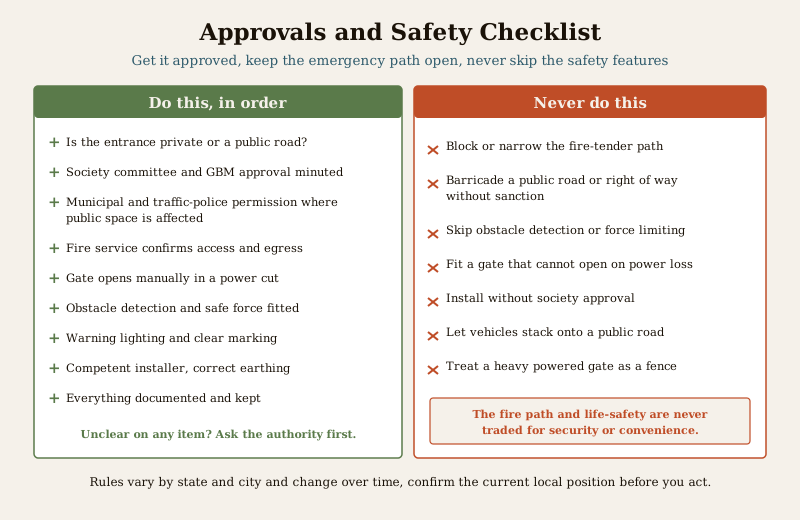
Before an automatic gate or boom barrier goes in, run this list. If any item is unclear, stop and ask the relevant authority, do not build first and hope.
Approvals and safety checklist
- Is the entrance a private internal road, or does it touch a public road, footpath or right of way? Confirm with the municipal body if unsure.
- Is the society approval in place and minuted, committee and, for a major spend, the general body, per your bye-laws?
- Where public space is affected, are the municipal and traffic-police permissions obtained in writing?
- Has the fire service confirmed the entrance still meets fire-tender access and egress requirements?
- Does the gate or barrier open manually and immediately in a power cut, and does the guard know how?
- Are obstacle detection and safe closing force fitted and tested?
- Is there warning lighting, clear marking and good visibility at the entrance?
- Is the electrical installation and earthing done by a competent installer, with weather protection?
- Is everything, approvals, drawings, installer, safety checklist, maintenance, documented?
Never do this
- Never block, narrow or obstruct the fire-tender path or the emergency escape route.
- Never barricade a public through-road or block a public right of way without proper sanction.
- Never skip obstacle detection, force limiting or the manual release.
- Never fit a gate that cannot be opened in a power cut.
- Never install a common-area gate without proper society approval.
- Never let queuing at the gate push vehicles back onto a public road.
Who to ask, and when to get help
For the internal decision, your registered bye-laws and your state's cooperative or apartment-ownership law govern how the society approves and funds a common-area gate, so read them and record the resolution. For anything touching public space, the municipal corporation or development authority and the traffic police are the authorities to approach, and a public road generally cannot be gated without their sanction. For the entrance width, access and the manual-open requirement, the state fire service and the fire officer have the final word under the National Building Code (SP 7:2026) and state fire rules. For the machine itself, a competent, experienced installer who fits and demonstrates the safety features is essential, and for the electrical side, a licensed electrician. If a dispute or a legal question arises, or if you are unsure whether you may gate a particular road, a lawyer or the local authority, not a WhatsApp poll, is the source of the answer.
Key takeaways
- A gate or barrier sits on a boundary, is a heavy powered machine, and can obstruct — which is exactly why it needs approval and genuine safety care, not just a purchase.
- Who approves it depends on where it sits — a genuinely private common-area gate goes through the society committee and general body; anything touching a public road or footpath also needs the municipal body and traffic police, and a public through-road generally cannot be barricaded without sanction.
- The fire and emergency path is never negotiable — the entrance must stay clear and wide enough for a fire tender, the gate must open manually in a power cut, and the escape route must never be locked from inside. If security and the fire path conflict, the fire path wins.
- Insist on the safety features — obstacle detection, safe closing force, manual release, warning and marking, no trapping of children or vehicles, and competent electrical installation.
- Follow the process and document it — propose, get society approval, get public-authority permission where it applies, confirm the fire path, use a competent installer, and keep the record.
Where to go next
- Security and fire regulations overview — the wider map of approvals, standards and authorities this gate question sits inside.
- Security and fire regulations guide — how fire and security rules generally apply to a building in India.
- Automatic gate systems and boom barriers — the machine-specific detail on how each type works and what to specify.
- Gate access control — how the entrance is run and who is let through day to day.
- Fire-tender access — the non-negotiable requirement to keep the emergency approach clear.
- Housing society CCTV approval — the parallel approval process for the cameras that often go up with the gate.
References
- The society's registered bye-laws and the applicable state cooperative societies or apartment-ownership law — govern how a managing committee and general body approve and fund a common-area installation such as an entrance gate; follow the recorded-resolution process and confirm the current requirements with your registrar or society counsel.
- The municipal corporation or development authority and the local traffic police — regulate what may be placed on or over a public road or footpath and anything affecting vehicle movement; a public through-road or public right of way generally cannot be gated or barricaded without their sanction. Confirm the local position before installing.
- National Building Code of India (current edition SP 7:2026), the state Fire Prevention and Life Safety rules, and the fire officer — govern fire-tender access, entrance width and emergency egress; a gate or barrier must not compromise them, and must be openable in a power cut. Verify the current edition and local rules with the fire service.
- A competent gate and barrier installer and a licensed electrician — responsible for fitting the required safety features (obstacle detection, force limiting, manual release, warning and marking) and for correct installation, earthing and weather protection of the powered equipment.
This is educational compliance literacy about approving and safely installing entrance gates and boom barriers in India, not legal advice, an engineering specification or a code ruling. Requirements vary by state and city and change over time. Always confirm the current position with your society bye-laws, the municipal body, the traffic police, the fire service and a competent installer before you act, and never compromise fire-tender access or emergency egress.
Export this guide
Related Guides — Deep-dive reading
Security and Fire Regulations Guide for India (2026): Know the Rules and How to Navigate Them
There is no single national rulebook you can read off. This is the map of the whole regulatory landscape for home, housing-society and commercial security and fire systems in India, and a calm way to navigate it: who sets the rules, who approves what, and how to stay on the right side of them.
SecurityBoom Barrier Not Operating (2026): Diagnose a Stuck or Dead Parking Gate Arm
A calm, ordered diagnostic path for a facility or security team when an apartment, office or parking boom barrier will not raise or lower, is stuck up or down, or will not respond — starting with the manual release so a jammed arm never traps a vehicle or blocks a fire lane, then power, trigger, safety loop and mechanical causes, and a clear line between safe checks and technician-only work.
SecurityVisitor Vehicle Management in India: A Professional Guide
The everyday weak point of every society and office gate is not the resident's car — it is the visitor, the cab, the delivery rider and the contractor who must be let in without opening the whole park to anyone. This is the process, not just the hardware: verify at the gate before the boom lifts, park visitors away from resident bays, and never jam the gate a fire tender needs.
SecurityRelated Tools — Try Free
Apartment Video Door System Planner
Enter flats, entrances, floors and guard desk for a first-pass building intercom plan — door stations, indoor monitors, guard station, the right architecture and an indicative cost band.
Building PlannerBuilding Plan Approval Roadmap
Step-by-step building plan approval process by city with documents, timelines, and fees.
ArchitectAIEmergency-Egress Checker
A life-safety self-check that access-controlled doors on escape routes still let people out in an emergency.
Egress Check