

Plot Loan vs Home Loan (India): LTV, Tenure, Tax and the Composite Loan Explained (2026)
If you are buying land, a plot loan is not the same product as a home loan - it usually funds only the land at a lower loan-to-value, runs a shorter tenure, is restricted to approved non-agricultural residential plots, and often carries a build-within-N-years condition. This guide compares plot loan, home loan and the composite (plot-plus-construction) loan, explains the tax-benefit difference, and helps you pick the right product for your situation.
If you are buying a piece of land rather than a finished house, the loan you need is probably not a home loan. Banks and housing-finance companies sell a separate product for land - a "plot loan" or "land loan" - and it behaves differently on almost every axis that matters: how much they will lend, how long you get to repay, what kind of plot qualifies, whether you get any tax break, and whether you are quietly signing up to start building within a fixed number of years. Buyers who assume "a loan is a loan" often get a nasty surprise at sanction: a smaller amount, a shorter tenure, and a bigger down payment than they planned for.
This guide sits inside the Home Finance hub and the buying-land hub, and it explains the three products a land buyer actually chooses between - a pure plot loan, a home loan, and the composite (plot-plus-construction) loan - so you can walk into your lender knowing which one fits. For the legal and transactional side of buying the land itself, read how to buy a residential plot in India. For how a home loan works in general, start from how home loans work and the wider home-loan types guide.
Read this as an explainer, not as advice. This guide helps you understand how these products differ so you can ask your bank the right questions. It is not financial or tax advice. Every number below - loan-to-value, tenure, tax deduction, the build-within period - is indicative, varies between lenders, and changes over time (RBI repo and lending norms, annual budget, each lender's own policy). Your actual sanction, rate, eligibility and EMI come from the BANK or housing-finance company. Anything to do with tax deductions must be confirmed with a CA or tax advisor, and your overall plan with a financial planner. Never treat a figure here as fixed - confirm your terms with the lender in writing before you commit.
Key takeaways
- A plot loan funds only the land, usually at a lower loan-to-value than a home loan, so you put in a larger down payment.
- Plot loans typically run a shorter maximum tenure than home loans, which raises the EMI for the same amount.
- Only approved, non-agricultural, residential plots inside municipal or development-authority limits are usually financed - agricultural land generally is not.
- A pure plot loan generally gives NO income-tax deduction. Tax benefits usually attach only once you build a house and the borrowing is treated as a home loan - confirm the specifics with a CA.
- Many plot loans carry a "build within N years" clause. Miss it and the loan can be repriced to a plot-loan rate or otherwise penalised.
- If you intend to buy land and build, a composite loan combines both into one sanction and can preserve the construction-linked tax and tenure benefits.
The three products a land buyer chooses between
Most people picture two options - buy a ready house on a home loan, or buy land. But once you are buying land there are really three loan shapes, and picking the wrong one costs you money and flexibility.
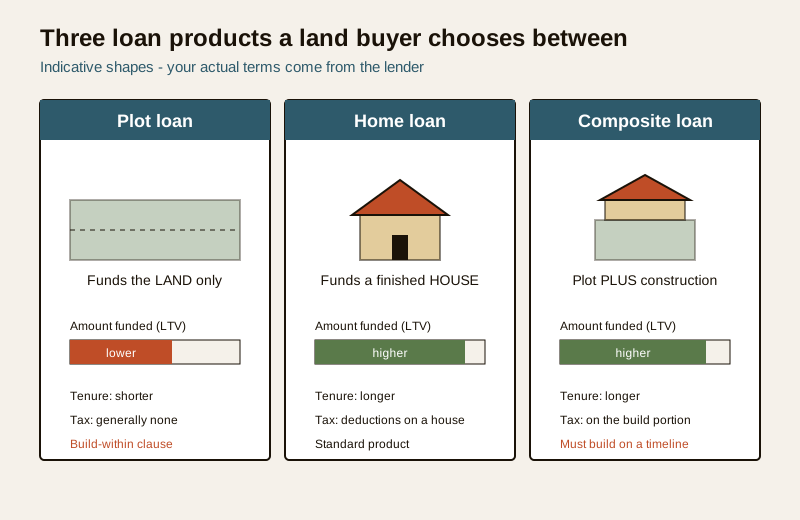
Plot loan (land loan). This funds the purchase of a plot of land and nothing else. The lender takes the land as security. Because bare land earns no rent, can sit idle, and is harder to value and resell than a built home, lenders treat it as higher risk - so they lend a smaller share of the value, over a shorter period, and restrict it to plots they consider safe (approved residential layouts, clear title, inside authority limits).
Home loan. This funds the purchase of a ready or under-construction house or flat, or the construction of a house on land you already own (a self-build home loan). It is the lender's flagship product: the highest loan-to-value, the longest tenure, and the one that carries the well-known income-tax deductions. For building on your own land, the closely related self-build construction loan is the guide to read.
Composite loan (plot plus construction). This is a single loan that funds BOTH the plot purchase and the construction of the house on it, released in stages - a lump sum for the land, then tranches as your build reaches each stage. Because a house will exist at the end, a composite loan is usually underwritten more like a home loan: higher combined loan-to-value, longer tenure, and access to the construction-linked tax benefits. The catch is that you commit up front to building, and to a timeline.
How plot loan, home loan and composite loan compare
The differences are easiest to see side by side. Treat every cell as indicative and directional, not as your quoted terms - the exact loan-to-value band, tenure cap and conditions are set by each lender and change with policy.
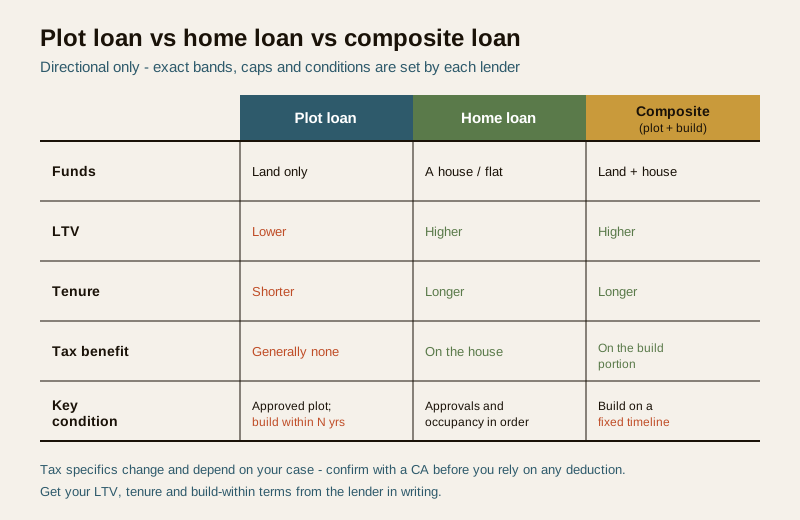
| Feature | Plot loan (land only) | Home loan (buy or build a house) | Composite loan (plot plus construction) |
|---|---|---|---|
| What it funds | Purchase of a residential plot only | Purchase of a ready or under-construction house, or building on land you own | Plot purchase AND construction of the house on it |
| Loan-to-value (share funded) | Lower - you fund a bigger down payment | Higher - the lender funds a larger share | Higher, similar to a home loan, because a house results |
| Maximum tenure | Shorter | Longer | Longer, like a home loan |
| Income-tax deduction | Generally none on a pure plot loan | Deductions on interest and principal once the house is complete and occupied | Available on the construction-linked portion once the house is complete |
| Eligible property | Approved, non-agricultural residential plots inside authority limits | Residential house or flat with clear title and approvals | Approved plot plus a sanctioned building plan |
| Key condition to watch | Often a "build within N years" clause | Occupancy and approvals in order | Construction must start and finish within the lender's timeline |
| EMI effect | Higher, because shorter tenure and lower amount | Lower per rupee, because of the longer tenure | Similar to a home loan overall |
A few of these deserve unpacking, because they are where land buyers get caught.
Loan-to-value: why the down payment is bigger for a plot
Loan-to-value (LTV) is the share of the property value a lender is willing to finance; the rest is your down payment. Lenders keep the LTV on a pure plot loan lower than on a home loan because bare land is harder to value and to sell if the loan goes bad. In practice that means a land buyer needs a noticeably larger amount of cash up front for the same ticket size than a home buyer does. Plan your down payment around the plot-loan LTV, not the home-loan one, or you will fall short at the last moment. Also remember stamp duty, registration and legal fees sit on TOP of the down payment and are not usually funded by the loan - the stamp-duty guide and the stamp-duty calculator help you size that.
Tenure and EMI: shorter rope, higher instalment
Plot loans usually carry a shorter maximum tenure than home loans. Tenure is the single biggest lever on your monthly instalment: stretch a loan over more years and the EMI falls; compress it and the EMI rises. So even at a similar interest rate, a plot loan's shorter tenure pushes the EMI up relative to a home loan of the same amount. Run both scenarios before you commit - use the EMI calculator with the plot-loan tenure your lender quotes, and check your eligibility and affordability so the higher EMI still fits your income. For a deeper read on eligibility drivers, see the eligibility guide and, because your rate depends on it, your CIBIL score.
What plot qualifies: approved, non-agricultural, residential
This is the filter that surprises people. Lenders generally finance a plot loan only for a residential plot that is:
- Approved by, and inside the limits of, a municipal corporation or a development or town-planning authority.
- Non-agricultural in its permitted land use - agricultural land is usually NOT financed for a plot loan, and buying farmland to build on can require conversion first. See how to buy a residential plot for the land-use and conversion side.
- Held on clear, marketable title with the approvals and records in order.
Many lenders also decline plots that are purely for investment with no intent to build, or that sit outside their serviceable geography. If your plot is agricultural, a gram-panchayat layout, or otherwise irregular, expect the plot loan to be harder to get - which is a signal worth heeding about the plot itself.
The tax-benefit difference - the big one
This is where plot loan and home loan diverge most, and where buyers lose money they did not need to lose.
A pure plot loan - money borrowed only to buy land, with no house built - generally gives NO income-tax deduction. The familiar home-loan deductions (broadly, a deduction on the interest you pay and a deduction on principal repayment, under the sections people refer to as 24(b) and 80C, with additional relief such as 80EEA in some windows) are tied to a HOUSE. No house, no deduction on the borrowing.
The usual route to the tax benefit for a land buyer is to build. When you construct a house on the plot and the borrowing is treated as a home loan - either by taking a composite plot-plus-construction loan from the start, or by converting the plot loan once you begin building - the construction-linked deductions typically become available once the house is complete and you take possession. The interest you paid during the earlier period is often claimable in instalments after completion rather than upfront. The exact sections, limits, conditions and timing change with the annual budget and depend on your situation.
Confirm the tax specifics with a CA. The sections, the limits, whether the property is self-occupied or let out, and how pre-completion interest is treated all affect what you can actually claim - and the rules change. Do not plan your finances around a deduction until a CA or tax advisor confirms it for your case. Our home-loan tax benefits guide explains the framework, and the tax-benefit calculator lets you model it - both as an explainer, not as advice.
The "build within N years" clause
Read this clause before you sign anything. Many plot loans and composite loans require you to START and often COMPLETE construction within a fixed number of years of taking the loan - the "build within N years" condition. It exists because the tax and lending treatment of the borrowing depends on a house eventually being built.
If you miss the deadline, the consequences vary by lender and can include: the loan being repriced to a higher plot-loan rate, the loss of any construction-linked tax treatment you were counting on, or other penalties spelled out in your agreement. If you genuinely intend to build soon, this clause is fine and the composite loan is often the cleaner route. If you are buying land mainly to hold, be honest about that up front - a product built around a construction deadline may be the wrong fit, and you should ask the lender exactly what happens if you do not build in time.
Which loan for your situation
Match the product to your actual plan, not to whichever is easiest to get.
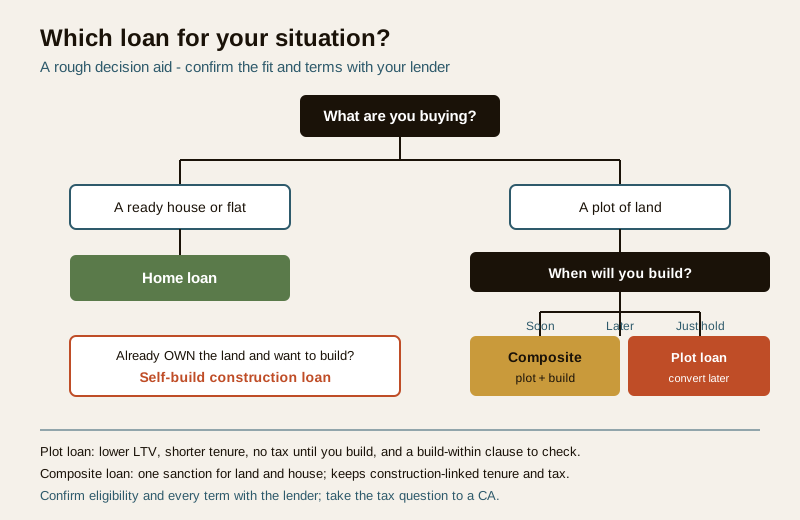
| Your situation | Product that usually fits | Why | Watch out for |
|---|---|---|---|
| Buying a ready or under-construction house or flat | Home loan | Highest LTV, longest tenure, standard tax deductions | Approvals and occupancy in order |
| Buying an approved plot AND building soon | Composite (plot plus construction) loan | One sanction covers land and build; preserves tenure and construction-linked tax | Commit to a build timeline; staged release |
| Buying an approved plot to build later, timing unclear | Plot loan now, convert or refinance when you build | Funds the land while you plan | Lower LTV, shorter tenure, no tax yet, build-within clause |
| Already own the land, want to build on it | Self-build home / construction loan | Funds construction against land you hold | See the construction-loan guide |
| Buying land purely as an investment, no plan to build | Plot loan, eyes open | It is the only fit, but the least generous | No tax benefit; build-within clause may penalise you |
If your plan is "land now, house within a couple of years", the composite loan is usually the most efficient - you avoid a second round of paperwork and keep the construction-linked tax and tenure treatment. If it is genuinely "just the land for now", accept the plot loan's tighter terms and revisit the financing when you are ready to build. And if you already own the plot, you are in construction-loan territory, not plot-loan territory.
Before you decide - a short checklist
- Ask the lender, in writing, for the LTV, maximum tenure, rate and every condition - including the build-within period and what happens if you miss it.
- Size your down payment against the PLOT-loan LTV, and budget stamp duty, registration and legal fees separately, on top.
- Run the EMI at the quoted plot-loan tenure with the EMI calculator, and confirm it fits your affordability.
- If you will build, ask specifically about the composite loan and how it changes tenure, LTV and tax versus a pure plot loan.
- Take the tax question to a CA before you rely on any deduction, and the overall plan to a financial planner.
- Do the land's own due diligence regardless of the loan - a plot the bank will not finance is telling you something. Read how to buy a residential plot.
The short version: a plot loan is a deliberately more cautious product than a home loan - less money, less time, tighter rules on the plot, and no tax break until a house exists. The composite loan bridges the two when you plan to build. Confirm every term with the lender and the tax with a CA before you count on it.
References
- Reserve Bank of India (RBI) - master directions and guidelines on housing and loans-against-property, and the repo / external-benchmark lending-rate framework that influences loan pricing. rbi.org.in
- Income-tax provisions on housing-loan deductions (the sections commonly referred to as 24(b), 80C and 80EEA) - indicative only; sections, limits and conditions change with the annual Finance Act. Confirm with a CA. incometax.gov.in
- National Housing Bank (NHB) - regulator of housing-finance companies; guidance on housing and plot financing. nhb.org.in
- Individual lender product pages and sanction letters - the definitive source for your loan-to-value, tenure, rate, eligible property and build-within condition. Always read your own agreement.
- Studio Matrx guides: how home loans work, home-loan types, self-build construction loan, home-loan tax benefits, how to buy a residential plot.
Interactive · Explore your EMI
₹50.0 L loan @ 8.5% for 20 years
At 20-year tenure
₹43,391/month
Drag the tenure slider to highlight a different bar.
Export this guide
Related Guides — Deep-dive reading
Home Construction Loan for Self-Build in India: Stage-Wise Disbursement, Pre-EMI and Moratorium Explained (2026)
How a home construction loan works when you build your own house on a plot you own or buy - stage-wise (tranche) disbursement tied to construction milestones, pre-EMI during the build versus full EMI after completion, the approved-plan and estimate requirement, the moratorium, and how it converts to a regular home loan on completion.
Home FinanceHome Loan Tax Benefits - Section 80C and 24(b) in India (2026)
How a home-loan borrower may claim income-tax deductions on principal, interest, stamp duty and first-time-buyer benefits - explained in plain language, with the limits and regime rules that keep changing left for your CA to confirm.
Home FinancePlot Due Diligence in India: The Complete Pre-Purchase Check (2026)
Before you pay a rupee for a plot, run the full pre-purchase check with your lawyer and a licensed surveyor - legal title, revenue records, planning approvals, physical survey and financial dues. This guide walks through each pillar, gives you a checklist and tells you when to walk away.
Buying LandRelated Tools — Try Free
Stamp Duty Calculator — All Indian States
Stamp duty + registration charges for all 28 states and 8 UTs — gender concessions, urban/rural variants, metro cess built in.
Stamp DutyConstruction Approval Checklist — 24-Stage Tracker
Track every approval, permit, and NOC from land title to occupancy certificate across 24 stages.
ApprovalsHome Loan Affordability Calculator
Max eligible home loan and property price from your income, FOIR, LTV, tenure, and interest rate — with Section 24(b) + 80C tax savings.
Loan Eligibility