

Home Construction Loan for Self-Build in India: Stage-Wise Disbursement, Pre-EMI and Moratorium Explained (2026)
How a home construction loan works when you build your own house on a plot you own or buy - stage-wise (tranche) disbursement tied to construction milestones, pre-EMI during the build versus full EMI after completion, the approved-plan and estimate requirement, the moratorium, and how it converts to a regular home loan on completion.
Buying a ready flat and building your own house are two very different money problems, and banks treat them differently. When you buy a finished home, the seller wants the full price on registration, so the loan pays out in one shot. When you build on a plot you already own or are buying, there is no finished asset yet - the house rises over many months - so a home construction loan pays out in stages that follow your construction, not in a single lump sum. Understanding that difference is the whole game. It changes what you must submit, how you pay during the build, and how much discipline the project demands from you.
This guide explains a self-construction loan in plain language so you can walk into a bank knowing how it behaves. It is part of the home-finance journey - read how home loans work for the fundamentals, home-loan types to see where the construction loan sits among the variants, and plot loan versus home loan if you are still deciding whether to buy bare land, a ready home, or build.
Scope and a plain disclaimer. This is an explainer to help you understand how construction finance works and brief the right people. It is not financial, legal or tax advice. Your actual interest rate, eligibility, sanction amount, EMI, disbursement schedule and every charge are set by your BANK or lender and vary by lender, profile and property. Rates move with the RBI repo rate and each lender's EBLR; rules and tax sections change with the annual budget. Confirm the binding numbers with your bank, tax specifics with a CA or tax advisor, and cash-flow planning with a financial planner. Never treat a figure or term here as fixed.
Key takeaways
- A home construction loan releases money in tranches tied to construction milestones - foundation, plinth, slabs, finishing - not as one lump sum. The bank inspects and values your site before each release.
- During construction you usually pay pre-EMI, which is interest only on the amount disbursed so far. Full EMI - principal plus interest on the whole loan - starts after completion or when the moratorium ends.
- You must submit an approved building plan and a detailed cost estimate up front; the sanction and each tranche are pegged to these.
- On completion the loan typically converts to a regular home loan and full EMIs begin. There is no separate re-application if you follow the schedule.
- It demands discipline: build roughly to schedule and keep every bill and photograph, because slow progress delays your tranches and can raise your total interest.
How a construction loan differs from a purchase loan
A purchase loan values a completed property and disburses once, on registration. A home construction loan cannot do that, because on day one you have a plot and a plan, not a house. So the lender sanctions a total amount against your approved plan and estimate, then releases it in slices as the building physically comes up. Each slice is called a tranche or a disbursement, and it is "construction-linked": money follows milestones.
Two practical consequences flow from this. First, the bank stays involved throughout the build - it sends a valuer or engineer to inspect the site and confirm that a stage is genuinely complete before releasing the next tranche. Second, you carry the plot and the early stages partly from your own pocket, because most lenders release their share only after you have put in your own contribution (your margin or down payment) and shown real progress. Plan that cash flow before you start; the down-payment planning guide explains how to size and stage your own contribution.
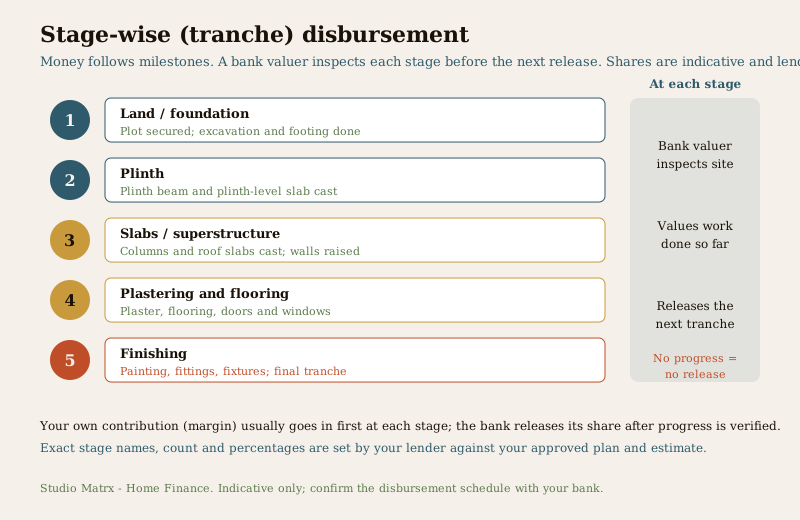
Stage-wise (tranche) disbursement, milestone by milestone
The heart of a construction loan is the disbursement schedule. The bank breaks your total into tranches mapped to visible construction stages, and releases each only after an inspection confirms the stage is reached. The exact split and the percentages are set by your lender against your estimate - the table below is an indicative shape, not a rule.
| Construction stage | What must be visibly complete | Indicative share released* |
|---|---|---|
| Land or foundation | Plot secured; excavation and footing or foundation done | First slice, after your margin is in |
| Plinth | Plinth beam and plinth-level slab cast | Next tranche on inspection |
| Superstructure - ground slab | Ground-floor columns and roof slab cast | Released after valuation |
| Brickwork and upper slab | Walls raised; first-floor or roof slab cast | Released after valuation |
| Plastering, flooring, joinery | Internal and external plaster, flooring, doors and windows | Later tranche |
| Finishing | Painting, fittings, fixtures, final finishes | Final tranche, often part-held |
*Shares and stage names vary by lender and are pegged to your sanctioned estimate. Your bank sets the exact schedule; treat these as illustrative.
Before each release the bank's valuer visits, checks the work against your approved plan and estimate, and values the construction done so far. Money moves only when the milestone is genuinely met. This protects the bank - it never lends far ahead of the asset - and it protects you from over-drawing, but it means a stalled site means a stalled loan. To budget the stages themselves, run your build through the house construction cost calculator so your estimate to the bank is realistic rather than optimistic.
The approved-plan and estimate requirement
A construction loan cannot be sanctioned on a sketch. Lenders require a building plan sanctioned by your local authority (the municipal or panchayat approval), a detailed stage-wise cost estimate, and clear title to the plot. The sanctioned area and the estimate anchor everything - the total loan, the tranche percentages, and what the valuer checks at each inspection. If you deviate significantly from the approved plan, tranches can be held. If you are still buying the plot, the how to buy a residential plot guide walks the title, approvals and registration you will need in hand before the bank will lend against it.
Because the loan is estimate-driven, an honest, complete estimate matters. Under-estimating to look affordable leaves you short mid-build; over-estimating can inflate margin you must fund yourself. Build the number carefully and keep the supporting figures.
Pre-EMI during the build versus full EMI after completion
This is the part homeowners most often misunderstand. During construction you have not drawn the whole loan - only the tranches released so far - so you do not pay a full EMI yet. Instead most lenders charge pre-EMI: interest only, calculated on the cumulative amount disbursed to date. As each tranche is released, your pre-EMI steps up, because the outstanding drawn balance grows. Crucially, pre-EMI pays no principal - the loan is not reducing during the build.
Once construction is complete and the full loan is drawn, the regular EMI begins: principal plus interest on the whole sanctioned amount, amortised over your chosen tenure. The timeline below shows the shift.
| Phase | What you pay | What it covers | Effect on principal |
|---|---|---|---|
| Tranche 1 released | Pre-EMI on tranche 1 only | Interest on the small drawn amount | No principal repaid |
| Mid-build (several tranches) | Pre-EMI on the running total drawn | Interest on the growing drawn balance | No principal repaid |
| Full loan disbursed | Pre-EMI at its peak (or full EMI if moratorium ended) | Interest on the whole drawn amount | No principal repaid yet |
| After completion | Full EMI | Principal plus interest, over the tenure | Principal starts reducing |
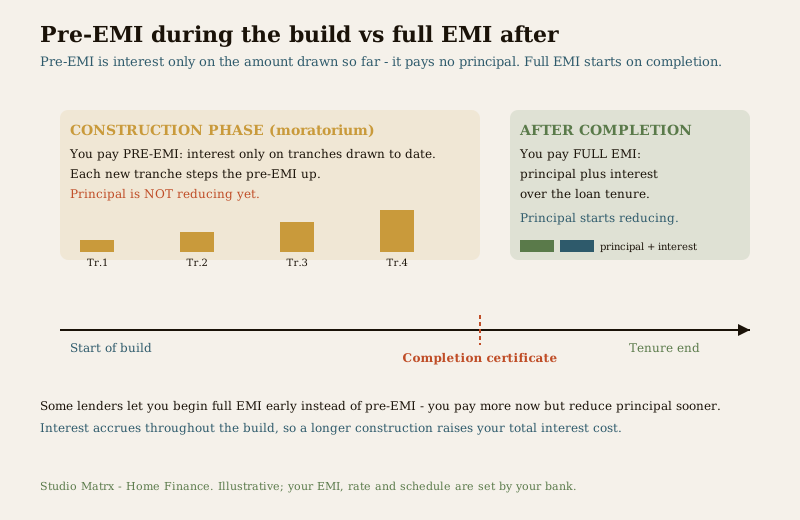
Some lenders let you opt to start full EMI earlier instead of pre-EMI - paying more now but chipping at principal sooner. Whether that suits you depends on your cash flow during the build, when your own contribution is committed, and your appetite to carry two housing costs (rent plus loan) at once. Run the scenarios on the EMI calculator and, if the choice is finely balanced, talk it through with a financial planner.
The moratorium
A construction loan usually comes with a moratorium - a window during the build when you are not required to pay principal, only pre-EMI (or, in some structures, nothing at all, with the interest accruing). The moratorium is meant to cover the construction period, often capped at a set number of months by the lender. It gives you room while you have no house to live in yet, but it is not free time: interest still accrues on what you have drawn, and a longer build means more interest overall. Treat the moratorium as breathing space, not as a reason to let the project drift.
Converting to a regular home loan on completion
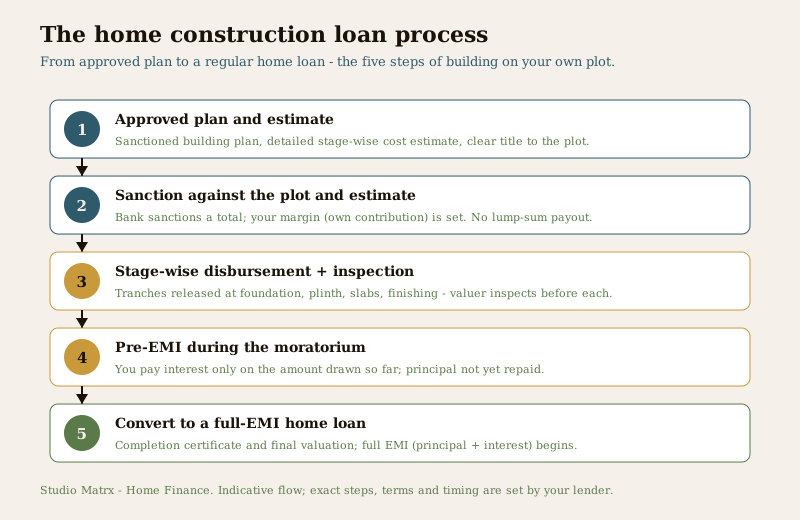
When the house is finished, you submit the completion certificate (and often occupancy proof), the bank does a final valuation, and the loan converts to a regular home loan. The full EMI - principal plus interest over the remaining tenure - begins. In most cases this is a smooth internal transition rather than a fresh application: the same account, now fully drawn and repaying principal. This is also the point at which your interest and principal repayments become clearly documented, which matters for claiming income-tax deductions - Sections 80C, 24(b) and, where eligible, 80EEA are named generally here because their limits and eligibility change with the budget, so confirm what you can claim with a CA.
The discipline it demands
A construction loan rewards a builder who runs the project tightly and punishes drift.
- Build roughly to schedule. Tranches are milestone-linked, so slow progress delays releases and stretches your interest-only period. A build that overruns quietly grows your total interest cost.
- Keep every bill, receipt and photograph. Inspections and valuations go faster, and your paperwork supports both the tranches and your later tax claims.
- Do not deviate from the approved plan. Unapproved changes can stall a tranche and create legal and valuation problems.
- Fund your own contribution on time. Most tranches release only after your margin is visibly in the work; a cash gap on your side stalls the bank's side.
- Watch the moratorium clock. Interest accrues throughout; the sooner you finish, the sooner full EMIs start reducing principal and the less interest you pay in total.
For a wider view of the money before you commit, the cost-and-budget hub collects the calculators, and buying-land covers the plot side if you are building from scratch.
References
- Reserve Bank of India - guidelines on housing and construction finance, and the external benchmark lending rate (EBLR) linked to the repo rate. Rates are indicative and change.
- Your lender's home-construction / self-construction loan product terms and disbursement schedule - the binding source for tranches, pre-EMI, moratorium and conversion.
- Income-tax provisions on home-loan interest and principal (Sections 24(b), 80C and, where eligible, 80EEA) - named generally; limits and eligibility change with the annual budget. Confirm with a CA.
- Local municipal or panchayat building-plan sanction and completion-certificate procedures for your area.
Interactive · Explore your EMI
₹50.0 L loan @ 8.5% for 20 years
At 20-year tenure
₹43,391/month
Drag the tenure slider to highlight a different bar.
Export this guide
Related Guides — Deep-dive reading
How Home Loans Work in India: The Full Journey from Apply to EMI (2026)
A plain-language map of the home-loan journey end to end - what a home loan is, the players, the key terms, how interest and EMI work, the application-to-disbursement steps, and the levers you actually control - with a loan-journey table and a key-terms glossary.
Home FinancePlot Due Diligence in India: The Complete Pre-Purchase Check (2026)
Before you pay a rupee for a plot, run the full pre-purchase check with your lawyer and a licensed surveyor - legal title, revenue records, planning approvals, physical survey and financial dues. This guide walks through each pillar, gives you a checklist and tells you when to walk away.
Buying LandHome Loan Prepayment and Foreclosure in India: A Plain Guide (2026)
How paying extra into your home loan works - part-prepayment versus full foreclosure, whether to cut your EMI or your tenure, why prepaying early saves the most, and the honest trade-off against investing the money instead.
Home FinanceRelated Tools — Try Free
Home Loan EMI Calculator — 2026
Monthly EMI, total interest, tax savings, and year-by-year amortization across 10 bank rates.
EMI CalculatorInterior Budget Planner
Live room-wise and component-wise cost breakdown in ₹ with contingency, GST, and PDF summary.
Budget CalculatorStamp Duty Calculator — All Indian States
Stamp duty + registration charges for all 28 states and 8 UTs — gender concessions, urban/rural variants, metro cess built in.
Stamp Duty