

Types of Home Loans in India: Purchase, Plot, Construction, Renovation and More (2026)
A plain-language map of the home-loan varieties by purpose - ready and under-construction purchase, plot or land loans, self-build construction loans, renovation, extension, composite, balance transfer and top-up, NRI and bridge loans - with a big comparison table and a which-loan-for-which-situation guide.
"Home loan" sounds like one product, but lenders in India run a whole family of them, each built for a different situation. The loan that funds a ready flat is not the one that funds a bare plot, and neither is the money you draw in stages while you build your own house. The label on the product decides how much a lender will fund, over how many years, and often at what rate - so picking the right type is the first real decision in the borrowing journey, well before you compare interest rates.
This guide is the map of that family. It sorts the loans by PURPOSE - what each pays for - and points you to the deeper guides where a variety deserves its own read. It does not quote your rate, eligibility or EMI: those are set by the lender against your profile. Treat everything here as the shape of the market, not a quote.
Scope and a plain disclaimer. This is an explainer to help you understand the choices and ask the right questions. It is not financial, tax or legal advice. Every rate, loan-to-value ratio, tenure cap, tax section and subsidy slab below is INDICATIVE and CHANGES - with the RBI repo rate, the annual budget, and scheme windows that open and close. Your actual rate, sanction amount, eligibility and EMI are decided by the BANK or housing finance company; confirm tax specifics with a CA or tax advisor and planning with a financial planner. Never treat a figure here as a quote. Confirm everything with your lender before you commit.
Key takeaways
- A home loan is a family of products sorted by purpose. The right TYPE - purchase, plot, construction, renovation and so on - is chosen before you shop for a rate.
- Loan-to-value (how much of the cost the lender funds) and tenure differ sharply by type. A ready-flat purchase loan is the most generous; a plot or renovation loan is usually shorter and funds a smaller share.
- A self-build is funded by a construction loan that releases money in stages against work done, not as one lump sum.
- Balance transfer moves an existing loan to a cheaper lender; a top-up borrows extra against the same property. Both are refinancing moves, not fresh purchases.
- You can borrow from a bank or a housing finance company (HFC), and special segments - affordable housing under PMAY, and offers for women borrowers - can lower the effective cost. Confirm every number with the lender.
Two ways the market is sorted: purpose and lender
Hold two ideas. First, loans are sorted by PURPOSE - the thing the money buys - which is the useful axis for choosing and how this guide is organised. Second, every one of them can come from two kinds of lender: a bank (governed by the RBI) or a housing finance company, an HFC (a specialist home lender). We return to that difference near the end, because it changes who might say yes to a trickier profile, not what the product is called.
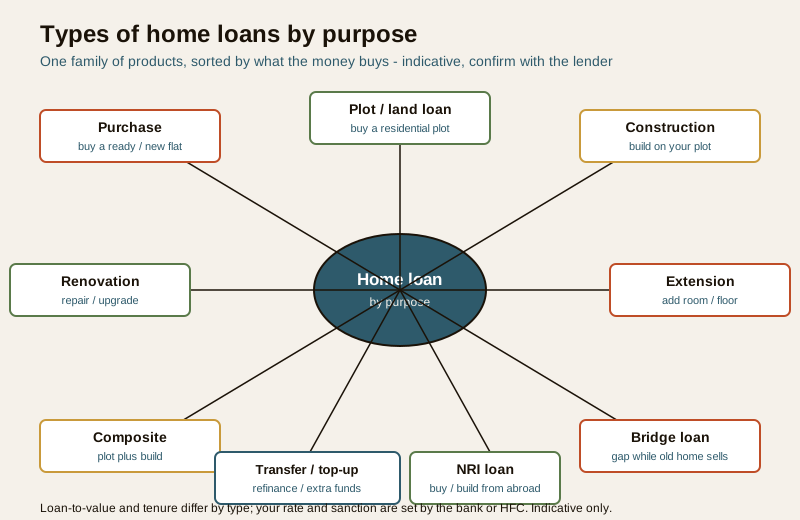
Home purchase loan (ready or under-construction)
This is the classic product and what most people mean by "home loan": money to BUY a home you did not build - a ready flat, a resale house, or a new flat still under construction from a builder. It funds the purchase price and is secured against the property itself.
Two sub-flavours matter. For a READY property, the full sanction is usually disbursed in one go to the seller at registration. For an UNDER-CONSTRUCTION flat, the loan is released in stages linked to the builder's construction milestones, and you typically pay interest only on the amount drawn so far (often called pre-EMI) until the full loan is disbursed. Purchase loans generally offer the most generous loan-to-value and the longest tenures of any type, because a finished home is the safest thing a lender can hold. To see how much of the price you must bring yourself, run the numbers in the EMI calculator and read the anchor guide, how home loans work in India.
Plot or land loan
A plot loan (also called a land loan) funds the purchase of a residential PLOT - bare land you intend to build on - rather than a built home. It is a distinct product because land is riskier collateral: it earns nothing and can sit unbuilt for years. So lenders usually fund a smaller share of the cost, offer a shorter tenure, and may expect you to begin construction within a set window. Many also lend only against approved, non-agricultural residential plots inside municipal or development-authority limits.
The tax treatment differs too - a bare plot loan does not carry the same income-tax deductions until a house stands on it. Because the differences are large and easy to get wrong, this variety has its own guide: read plot loan vs home loan in India before you assume a plot can be financed like a flat.
Home construction loan (self-build)
If you own the plot and want to BUILD your own house, the product is a home construction loan. Unlike a purchase loan, the money is not handed over at once. The lender sanctions a total against your cost estimate and approved plan, then RELEASES it in stages ("tranches") as the work reaches agreed milestones - foundation, slab, walls, finishing - often after a valuer visit. You usually pay interest only on the amount drawn until construction finishes and full EMIs begin.
This staged design is why a self-build needs its own guide: construction loan for self-build in India walks through the tranche schedule, documents and estimate. To sanity-check your budget first, the house construction cost calculator gives a starting figure.
Composite loan (plot plus construction)
What if you want to buy a plot AND build on it together? That is the composite loan - a single sanction that funds the land purchase and the construction. The land portion is typically disbursed up front, the construction portion released in tranches as the house goes up. Lenders usually expect you to start building within a defined period, and the tax benefits kick in once the house is complete. It can be simpler than juggling a separate plot loan and construction loan, but the conditions are stricter; treat the plot loan vs home loan and construction loan guides as the deep reads for the two halves.
Home improvement or renovation loan
A home improvement loan funds REPAIRS and upgrades to a house you already own - waterproofing, re-wiring, new flooring, a kitchen or bathroom redo, painting, plumbing. It is secured against the same home, but because it funds work rather than a purchase, the amounts are usually smaller and the tenure shorter. Some lenders offer it stand-alone; others as a top-up on your running home loan (see below). Renovation interest can attract its own income-tax treatment under the house-property rules - named generally here, because limits change - so keep it distinct from the original loan and confirm the position with a CA.
Home extension loan
Closely related, a home extension loan funds ADDING to an existing house - a new room, an extra floor, a granny flat. It differs from a renovation loan in that you are increasing built-up area rather than refreshing what exists, which usually means an approved plan and sometimes a valuer visit, like a small construction loan. LTV and tenure sit between a renovation loan and a full construction loan. Confirm that your local approvals allow the extra floor or area before you borrow against it.
Balance transfer and top-up loan
These two are not about buying anything - they are about MANAGING a loan you already have. A balance transfer moves your outstanding home loan to a new lender offering a lower rate or better terms; the new lender pays off the old loan and you continue with them. A top-up loan borrows EXTRA against the same property, over and above your existing balance, often at home-loan-like rates and usable for renovation or other needs - frequently taken alongside a balance transfer.
Both are refinancing moves with their own costs (processing fees, legal and valuation charges) that can eat the saving if the remaining tenure is short. The dedicated guide, home loan balance transfer in India, shows how to work out whether a switch actually pays; run the arithmetic in the EMI calculator before you move.
NRI home loan
An NRI home loan is a purchase, plot or construction loan taken by a Non-Resident Indian (or a Person of Indian Origin) to buy or build residential property in India. The product is broadly the same, but the rules differ: eligibility, documentation (income proof from abroad, a power of attorney for someone in India to act for you), the accounts used for repayment, and sometimes a shorter maximum tenure tied to age or visa. The property types an NRI may buy are governed by separate regulations too. Because the compliance is specialised, an NRI borrower should confirm current requirements with the lender and, where money crosses borders, a tax advisor.
Bridge loan
A bridge loan is a short-term product for a timing problem: you have found a new home but your OLD one has not sold yet, and you need funds to close the new purchase in the gap. It "bridges" the two transactions and is repaid when the old property sells. Bridge loans are short in tenure and, because they carry more risk, usually cost more than a regular home loan. Enter one only with a clear exit - a firm plan and timeline to sell the existing home.
The comparison at a glance
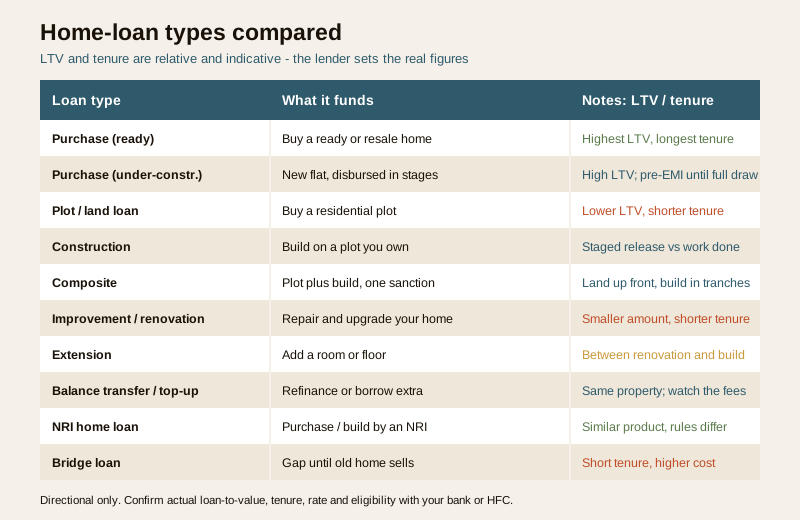
The table below is the same picture in words. The LTV and tenure columns are RELATIVE and indicative only - a way to see which products fund more and run longer, not a quote.
| Loan type | What it funds | Relative LTV / tenure (indicative) | Read more |
|---|---|---|---|
| Home purchase (ready) | Buying a ready or resale home | Highest LTV, longest tenure | How home loans work |
| Home purchase (under-construction) | A new flat, disbursed in builder stages | High LTV; pre-EMI until full draw | How home loans work |
| Plot / land loan | Buying a residential plot | Lower LTV, shorter tenure | Plot loan vs home loan |
| Home construction | Building on a plot you own | Staged release; funds build cost | Construction loan |
| Composite | Plot purchase plus construction, one sanction | Land up front, build in tranches | Plot loan vs home loan |
| Home improvement | Repairs and upgrades to your home | Smaller amount, shorter tenure | Balance transfer / top-up |
| Home extension | Adding a room or floor | Between renovation and construction | Construction loan |
| Balance transfer | Moving a loan to a cheaper lender | Same balance, new terms | Balance transfer / top-up |
| Top-up | Extra borrowing on the same property | Adds to the existing loan | Balance transfer / top-up |
| NRI home loan | Purchase / build by an NRI or PIO | Product similar; rules differ | How home loans work |
| Bridge loan | The gap while your old home sells | Short tenure, higher cost | How home loans work |
Who lends: banks versus HFCs
Any of the products above can come from a BANK (regulated by the RBI) or a HOUSING FINANCE COMPANY - an HFC, a specialist home lender. For a straightforward salaried buyer of a ready flat, banks are often the first stop and can be keenly priced. HFCs frequently take a more flexible view of trickier profiles - self-employed income, plot and construction cases, a home in a smaller town - and may sanction where a bank hesitates, sometimes at a slightly higher rate.
| Feature | Bank | Housing finance company (HFC) |
|---|---|---|
| Regulator | RBI | NHB / RBI framework |
| Typical strength | Sharp pricing, salaried buyers | Flexibility on tricky profiles |
| Rate benchmark | Usually external (repo/EBLR) | May use an internal benchmark |
| Good to compare on | All-in cost and reset terms | Willingness to sanction plus cost |
Neither is "better" in the abstract: get a written offer from at least one of each, compare the all-in cost (rate plus fees), and check how the rate resets. Your record with the bureaus (CIBIL and others) shapes what either offers, and home loan eligibility explained shows how they size your sanction.
Special segments: affordable housing and women borrowers
Two segments can lower the effective cost for those who qualify. AFFORDABLE HOUSING loans - and, when the window is open, an interest subsidy under a scheme such as PMAY - target first-time buyers of modestly priced homes within defined income and area limits; the subsidy and slabs are set by the scheme and CHANGE as it is revised or paused, so confirm the current status. The dedicated guide, PMAY subsidy explained, covers who qualifies. Separately, many lenders offer a small rate concession to WOMEN BORROWERS, often when a woman is the owner or co-owner - one reason a joint application can help. These are eligibility-driven and time-bound; treat any headline as indicative and verify it with the lender.
Which loan for which situation
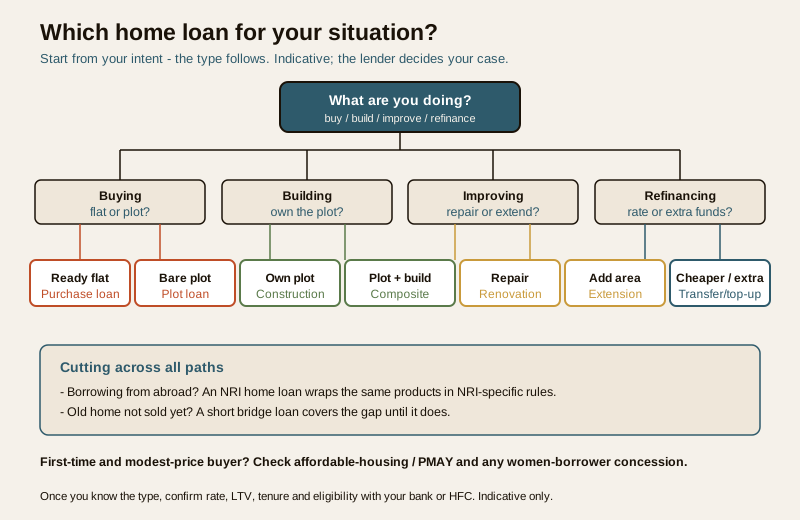
Read the tree top-down by intent. Buying a finished home points to a purchase loan; a plot to a plot loan; owning a plot and building to a construction loan; wanting both together to a composite loan; upgrading what you own to a renovation or extension loan; and already holding a loan but wanting a better rate or extra funds to a balance transfer or top-up. Once you know the type, the how home loans work anchor and the home loan eligibility guide take you into the mechanics, and the cost and budget hub collects the calculators so you can put real numbers to it.
References
- Reserve Bank of India (RBI) - housing-loan policy, loan-to-value norms and the external benchmark lending rate (repo/EBLR) framework. rbi.org.in - indicative and revised over time.
- National Housing Bank (NHB) - regulation and refinance of housing finance companies. nhb.org.in.
- Pradhan Mantri Awas Yojana (PMAY) / Ministry of Housing and Urban Affairs - affordable-housing scheme and any subsidy window; status and slabs change. pmaymis.gov.in.
- Income-tax rules on house-property loans (deductions such as Section 80C, 24(b), 80EEA) - named generally; limits change, confirm with a CA. incometax.gov.in.
- Studio Matrx calculators - the EMI calculator, loan eligibility and house construction cost calculator to run your own numbers.
Interactive · Explore your EMI
₹50.0 L loan @ 8.5% for 20 years
At 20-year tenure
₹43,391/month
Drag the tenure slider to highlight a different bar.
Export this guide
Related Guides — Deep-dive reading
Plot Loan vs Home Loan (India): LTV, Tenure, Tax and the Composite Loan Explained (2026)
If you are buying land, a plot loan is not the same product as a home loan - it usually funds only the land at a lower loan-to-value, runs a shorter tenure, is restricted to approved non-agricultural residential plots, and often carries a build-within-N-years condition. This guide compares plot loan, home loan and the composite (plot-plus-construction) loan, explains the tax-benefit difference, and helps you pick the right product for your situation.
Home FinanceHome Construction Loan for Self-Build in India: Stage-Wise Disbursement, Pre-EMI and Moratorium Explained (2026)
How a home construction loan works when you build your own house on a plot you own or buy - stage-wise (tranche) disbursement tied to construction milestones, pre-EMI during the build versus full EMI after completion, the approved-plan and estimate requirement, the moratorium, and how it converts to a regular home loan on completion.
Home FinancePMAY Home Loan Subsidy Explained: Credit-Linked Help for First-Home Buyers (2026)
A plain-language look at how the Pradhan Mantri Awas Yojana interest subsidy works on a home loan, who the income categories are meant for, and why you must confirm the current rules on the official portal or with your lender.
Home FinanceRelated Tools — Try Free
Stamp Duty Calculator — All Indian States
Stamp duty + registration charges for all 28 states and 8 UTs — gender concessions, urban/rural variants, metro cess built in.
Stamp DutyBathroom Renovation Cost Calculator
Cost to renovate an existing bathroom with a replace-vs-keep model — demolition, re-waterproofing, tiles, fittings and the money saved by keeping items.
Bathroom CalculatorHome Loan Affordability Calculator
Max eligible home loan and property price from your income, FOIR, LTV, tenure, and interest rate — with Section 24(b) + 80C tax savings.
Loan Eligibility