
The Most Expensive Interior Mistakes Homeowners Make
The errors that cost lakhs to fix — ranked by what they actually drain from your wallet
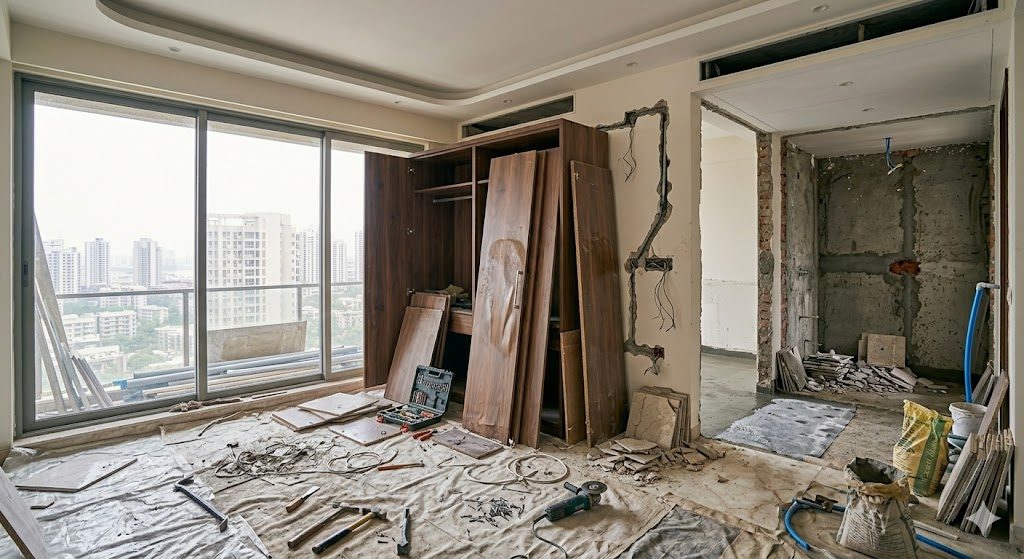
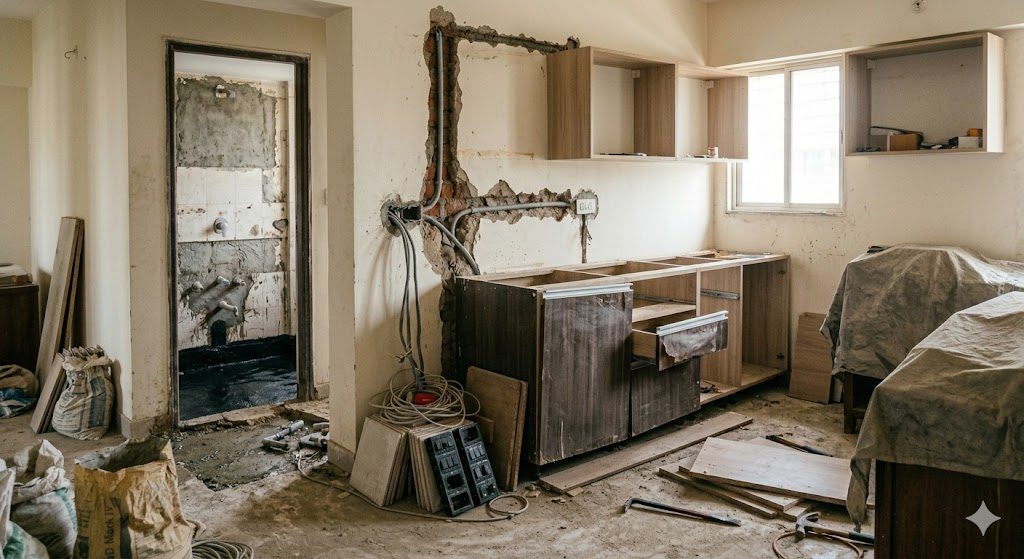
A Whitefield couple budgeted ₹14 lakh for their 3BHK interiors and spent it down to the last rupee. Eighteen months later they were handing a different contractor ₹3.4 lakh — not for anything new, but to undo what the first one did: rip out a swollen wardrobe carcase in the utility, re-do a leaking common bathroom that was never properly waterproofed, and chase open three walls to add the power points nobody planned for the entertainment unit. The interiors did not get better. They got repaired. The ₹3.4 lakh bought them back to the standard they thought they had already paid for.
That is the quiet tragedy of Indian interiors: the most expensive money you spend is rarely on the beautiful things. It is on fixing the boring things you got wrong. A mistake costs you twice — once when you make the cheap choice, and again, far more, when a finished, furnished, lived-in home has to be torn into to put it right.
This guide ranks interior mistakes by exactly one thing — the rupee cost to rectify them after the fact — so you can see, in cold numbers, which errors are the real wallet-drainers and which preventive rupees buy you out of them.
Why a cost-ranked list, and how it differs from the others
There is no shortage of "interior mistakes" lists. We have written some of the best of them ourselves. The difference here is the ranking axis.
If you want the broad catalogue of regrets, read the 25 interior mistakes Indian homeowners regret — the pillar that names every common error. If you want to understand which finishes look fine on handover and then age into eyesores, read expensive interior choices that age poorly. And if you want the underlying logic of false economy — why the cheapest quote becomes the dearest home — read why cheap interiors get expensive later.
This page is the cost-ranked companion to all three. We do not re-list generic mistakes. We take the financially serious ones and attach a 2026 rupee figure to the rectification — the actual bill to undo and redo — then sort them into a league table. The order is deliberately uncomfortable, because the mistakes people obsess over (paint colour, a trendy cabinet handle) sit near the bottom, while the ones they wave away on site (waterproofing, the advance cheque, the electrical layout) sit at the top.
All figures below assume a 2BHK–3BHK of 900–1,400 sqft carpet in a metro or large Tier-1 city, 2026 labour and material rates, and a finished, occupied home — because rectification almost always happens after move-in, when access, protection, dust control, and partial demolition all add cost that a fresh fit-out never carries.
The money-loss league table
Here is the full league table. "Cost to rectify" is the realistic 2026 spend to put the mistake right in an occupied home, including demolition, debris, protection, and re-finishing — not the cost of doing it right the first time, which is always a fraction of this.
| Rank | The mistake | Why it costs so much to fix | Typical ₹ to rectify | How to prevent |
|---|---|---|---|---|
| 1 | No milestone contract / full advance paid | Money already left your account; abandoned site means you pay a second contractor from scratch | ₹1,00,000 – ₹8,00,000 | Stage payments to milestones; never pay >20–30% upfront |
| 2 | Skipping / poor waterproofing | Seepage damages adjacent walls, ply, paint and a neighbour's ceiling; fix means breaking finished surfaces | ₹1,50,000 – ₹6,00,000 | Membrane + slope + ponding test before tiling |
| 3 | Over-customisation that kills resale | Buyer discounts the price; you eat the loss at sale or rip out to make it generic | ₹1,00,000 – ₹5,00,000 (lost value) | Keep one room "weird", rest neutral and reversible |
| 4 | Wrong plywood grade in wet zones | Swollen carcase cannot be repaired; whole unit is dismantled and rebuilt | ₹80,000 – ₹3,00,000 | BWP/BWR (IS 710 / IS 303) in kitchen, bath, utility |
| 5 | Electrical decided too late | Walls are painted/tiled; adding points means chasing, patching, repainting | ₹60,000 – ₹2,50,000 | Lock the points plan before plaster/POP |
| 6 | Wrong flooring for the zone | Lifting and relaying finished flooring is destructive and dusty | ₹60,000 – ₹2,50,000 | Match flooring to wet/wear/traffic per room |
| 7 | False ceiling before AC/electrical | Re-cut the ceiling to route ducts, drops and wiring; re-finish | ₹50,000 – ₹2,00,000 | Sequence services first, then ceiling |
| 8 | Ignoring storage | Retrofit lofts/units into a finished home + ongoing clutter cost | ₹40,000 – ₹1,50,000 | Plan storage against an inventory, not a guess |
| 9 | Cheap hardware that fails | Failed hinge/channel tears the board; carcase damaged, not just the part | ₹40,000 – ₹1,50,000 | Branded hinges/channels (the 3–5% that protects 100%) |
| 10 | Buying furniture before layout | Wrong-sized pieces resold at a loss; rebuy correctly | ₹30,000 – ₹1,20,000 | Finalise the layout, then buy to dimensions |
| 11 | No written BOQ | Scope disputes, overbilling, "extra" claims with no baseline | ₹50,000 – ₹2,00,000 | Itemised, rate-fixed BOQ signed before work |
| 12 | No contingency | Forced mid-project compromises or a high-interest top-up loan | 12–18% of the overrun | Hold 12–15% reserve, untouched until needed |
| 13 | Trend-chasing finishes | Re-do dated surfaces years early to feel current again | ₹40,000 – ₹1,50,000 | Trends in soft, cheap layers only |
| 14 | Skipping the designer on a complex job | Self-managed coordination errors stack across trades | ₹50,000 – ₹3,00,000 | Pay for design/PM on multi-trade jobs |
The pattern is unmistakable. The most expensive interior mistakes are not aesthetic — they are structural, contractual, and sequential. They are the decisions made early, cheaply, and invisibly, that only present their bill once the home is finished and full.
The top of the table, in detail
1. Paying a full advance with no milestone contract — ₹1,00,000 to ₹8,00,000
This is rarely listed as an "interior mistake" because it is not about interiors at all — it is about money discipline. And that is exactly why it tops the league. Every other mistake on this list costs you the price of materials and labour to fix. This one can cost you everything you have already paid, with nothing to show for it.
The pattern is depressingly common: a persuasive contractor asks for 50–70% upfront "to book materials and lock the rate", work starts, then stalls. Funds are diverted to another site, the contractor disappears or goes insolvent, and you are left with a half-built home and a second contractor who quotes from zero — because no one will warranty another's incomplete work.
The fix cost is whatever you cannot recover plus the cost to complete with someone new. On a ₹14 lakh job where ₹6 lakh was paid and ₹2 lakh of value delivered, the loss is ₹4 lakh — before the new contractor's premium for taking over a messy site.
The prevention is free and absolute: a written contract with payments released against completed, inspected milestones, never against promises. A first tranche of 20–30% is normal; anything more is the contractor's cash-flow problem becoming your risk. This is the single highest-ROI discipline in the entire project, and it is why a written BOQ and contract sits at the centre of every prevention diagram below.
2. Skipping or skimping waterproofing — ₹1,50,000 to ₹6,00,000
Waterproofing is the cruelest line to cut because the saving is tiny and visible-on-the-quote, while the failure is enormous and invisible-until-it-soaks. A proper membrane, slope, and ponding test on bathrooms and the utility adds perhaps ₹20,000–₹40,000 to a fit-out. Skipping it saves that. The seepage it prevents does not.
When a bathroom leaks, water does not stay in the bathroom. It tracks into the shared wall, blooms across the adjoining bedroom's paint, swells the back of an abutting wardrobe, and — in an apartment — drips into the flat below, turning a private repair into a society dispute and a neighbour's claim. The fix is brutal: break the tiled floor and skirting, re-lay the membrane, re-tile, re-plaster and repaint the affected walls on both sides, replace damaged ply, and sometimes compensate downstairs. ₹1.5–6 lakh is the honest band, and the upper end is common in older buildings.
The cheapest waterproofing is the one you do once, before the tiles go down. The most expensive is the one you do after the leak — because by then you are not buying waterproofing, you are buying back a finished home.
3. Over-customisation that kills resale — ₹1,00,000 to ₹5,00,000 of lost value
This one is invisible until the day you sell. Bespoke interiors feel like value while you live in them, but the market prices the next buyer's taste, not yours. A bar wall where a family wants a study, a child's themed room baked into joinery, a colour-soaked kitchen that only suits one palette — each is a discount the buyer mentally applies, or a rip-out you fund to make the home "show-ready" and neutral.
On a metro apartment, agents routinely report that heavily personalised interiors fetch ₹1–5 lakh less than a clean, neutral fit-out of the same quality, or cost that much to de-personalise before listing. The prevention is the "80/20 rule of personality": keep 80% of the home neutral, reversible, and broadly appealing, and confine the bold, personal, irreversible moves to 20% — ideally in soft, swappable layers rather than built-in joinery.
4. Wrong plywood grade in wet zones — ₹80,000 to ₹3,00,000
This is the classic false economy, covered in depth in why cheap interiors get expensive later, and it earns its place near the top because the failure mode is total, not partial. Commercial MR (moisture-resistant) plywood, or worse, particle board, in a kitchen base unit, a bathroom vanity, or the utility/washing-machine zone will absorb humidity and splash over 2–4 years. The board swells, delaminates, and bows. You cannot sand or patch a swollen carcase — it is dismantled and rebuilt.
| Wet-zone unit | Cheap board used | Right spec | Extra cost to do right | Cost to rip out + rebuild later |
|---|---|---|---|---|
| Kitchen base cabinets | MR ply / particle | BWP IS 710 | ₹12,000 – ₹20,000 | ₹1,00,000 – ₹2,50,000 |
| Bathroom vanity | MR ply | BWR / WPC / marine | ₹4,000 – ₹8,000 | ₹25,000 – ₹60,000 |
| Utility / washing zone | Particle / MR | BWP / WPC | ₹6,000 – ₹12,000 | ₹40,000 – ₹1,00,000 |
The arithmetic is savage: a ₹15,000 saving on board grade buys a ₹1–3 lakh rebuild. Specify BWP (IS 710) in every zone that meets water, get the grade stamp and a written guarantee, and read why cheap hardware destroys expensive interiors alongside it, because grade and hardware fail together.
The middle of the table — the sequencing and planning errors
5. Electrical points decided too late — ₹60,000 to ₹2,50,000
Electrical is cheap when it is just conduit and wire in an open wall, and ruinous once the wall is plastered, painted, or tiled. The mistake is treating the points plan as a detail to "finalise later" — by which time later means chasing channels into finished surfaces.
A finished home cannot absorb new points quietly. Each added point means cutting a chase, laying conduit, plastering, sanding, and repainting the wall — often the whole wall, because patch-paint never matches. Add the entertainment-unit cluster, bedside USB points, the geyser line you forgot, the chimney point, and the modular-kitchen appliance circuit, and a "small addition" becomes a ₹60,000–₹2,50,000 re-wiring exercise with repainting across rooms. Lock the points plan against an appliance and furniture layout before plaster goes up.
6. Wrong flooring for the zone — ₹60,000 to ₹2,50,000
Flooring is the largest single finished surface in the home, which is exactly why getting the zone wrong is so expensive to undo. Glossy vitrified tile in a bathroom is a slip hazard; soft engineered wood in a high-traffic living room scratches and dents; cheap matte tiles in a kitchen stain and pit. Lifting and relaying flooring in an occupied home means moving everything out, demolishing the bed, dust everywhere, and re-laying — a destructive, ₹60,000–₹2,50,000 job depending on area and material.
7. False ceiling before AC and electrical planning — ₹50,000 to ₹2,00,000
This is a pure sequencing error and one of the most avoidable on the list. The false ceiling is closed before the AC drain slope, copper runs, duct paths, and ceiling-light wiring are finalised — so when the AC or lighting is fitted, the ceiling is re-opened, re-cut, re-taped, and re-painted. Our biggest false-ceiling mistakes guide covers the failure modes in detail; the cost discipline is simple: services first, ceiling last.
8 & 9. Ignoring storage, and cheap hardware — ₹40,000 to ₹1,50,000 each
Under-providing storage shows up as both a retrofit bill and a permanent clutter tax. Retrofitting lofts, a utility cabinet, or wardrobe internals into a finished home means custom-fitting around existing finishes — pricier than building it in. See why wardrobes become inefficient for the planning side.
Cheap hardware earns its rank because its failure is not isolated. A ₹120 channel that seizes or a ₹40 hinge that pulls out does not just need replacing — it rips the screw holes out of the board, splits the carcase edge, or drops a heavy shutter that cracks the panel. You replace the part and repair the unit. Branded soft-close hinges and channels are 3–5% of joinery cost and protect the other 95%.
The bottom of the table — real, but recoverable
These still cost money, but they are recoverable without tearing into the structure of the home.
| Mistake | Why it is lower-cost to fix | Typical ₹ to rectify |
|---|---|---|
| Buying furniture before layout | Resell wrong pieces, rebuy correctly — no demolition | ₹30,000 – ₹1,20,000 |
| Trend-chasing wall finishes | Re-paint or re-laminate a surface layer | ₹40,000 – ₹1,50,000 |
| Wrong paint sheen/colour | Re-coat — labour + paint only | ₹15,000 – ₹60,000 |
| Curtain/blind mistakes | Re-stitch or replace soft furnishings | ₹10,000 – ₹50,000 |
The lesson is not that these do not matter — it is that they are the right place to take risks. Keep your experiments in the cheap, reversible, soft layers, and your discipline in the expensive, irreversible, structural ones.
The two contract mistakes that quietly enable all the others
Two errors do not appear as visible defects, yet they sit behind most of the expensive fixes above: no written BOQ and no contingency.
A missing Bill of Quantities means there is no agreed baseline of what was promised at what rate. Every "this wasn't included" becomes a dispute you lose, because you cannot point to a line. Overbilling, quietly downgraded materials, and ₹50,000–₹2,00,000 of "extras" all live in the gap where a BOQ should be.
A missing contingency means the first surprise — and there is always a surprise — forces a bad choice: cut quality somewhere, abandon a planned feature, or take an expensive top-up loan mid-project. We cover the discipline fully in contingency and provisional sums, but the rule is simple: hold 12–15% of your budget back, name it "do not touch", and only release it against genuine, unforeseen need. Skipping the designer on a genuinely complex, multi-trade job belongs in the same family — you save a fee and pay it back many times over in coordination errors no single tradesman owns.
For where to put your money instead of these traps, see smart budget allocation for Indian homes, and to see the costs that never make it onto a quote at all, read the hidden costs of home renovation.
What prevention actually costs — and what it buys you out of

The most striking thing about this entire league table is how cheap the prevention is. Almost every six-figure rectification is bought off by a four-figure — sometimes zero-rupee — discipline.
| Preventive action | What it costs | What it avoids | Rough return |
|---|---|---|---|
| Milestone-linked contract | ₹0 | ₹1–8 L abandoned advance | effectively infinite |
| Written, itemised BOQ | ₹0–25,000 | ₹1–4 L disputes/overbilling | 8–40x |
| Hold 12–15% contingency | ₹0 (your reserve) | ₹1–5 L forced loan/compromise | high |
| BWP ply + branded hardware | +₹25,000–40,000 | ₹1–4.5 L rip-out + rebuild | 5–18x |
| Services before false ceiling | ₹0 (sequencing) | ₹50k–2 L re-cut + re-finish | high |
| Full waterproofing + ponding test | ₹20,000–40,000 | ₹1.5–6 L seepage repair | 7–30x |
Total prevention spend across the whole project sits around ₹50,000–₹1 lakh, most of it material upgrades you would consider anyway. Total losses avoided run ₹4.5 lakh to ₹23.5 lakh. There is no other line in your interior budget with that return.
How to budget against these mistakes, in order
1. Write the contract first. Before any money moves, fix the scope, the rate, the timeline, and a milestone payment schedule capping the advance at 20–30%. This single step neutralises the most expensive mistake on the list.
2. Demand an itemised BOQ. Every item, quantity, grade, and rate on paper, signed. No BOQ, no advance. Sanity-check the totals with the BOQ calculator so you know what a fair line looks like.
3. Specify wet-zone materials in writing. BWP (IS 710) ply and branded hardware wherever water or weight lives — kitchen, bath, utility — with the grade stamp and a written guarantee.
4. Sequence the services before the surfaces. Lock the electrical points plan and the AC/duct routing against a furniture layout, then close walls and ceilings. Never the other way around.
5. Prove the waterproofing. Membrane, correct slope, and a 24–48 hour ponding test before any tiling. Photograph it. This is non-negotiable.
6. Buy furniture last, to dimensions. Finalise the layout, then buy pieces sized to it — never the reverse.
7. Ring-fence 12–15% contingency. Name it, hold it, and refuse to spend it on upgrades — only on genuine surprises.
8. Reality-check the whole budget. Run your numbers through the cost reality check before you commit, so the plan is grounded in 2026 rates, not optimism.
DesignAI turns this discipline into a document. Feed it your plan and room list, and it drafts an itemised BOQ and a budget allocation that flags the high-risk, high-rectification-cost lines — the wet-zone materials, the points plan, the contingency reserve — before you sign anything. It is the cheapest way to make sure none of the mistakes in the league table above quietly enter your home through an unwritten scope.
References
1. Construction Industry Development Council (CIDC) — standard schedules and labour productivity norms used to benchmark rectification labour, 2024–25.
2. Central Public Works Department (CPWD) — Delhi Schedule of Rates and analysis of rates, reference rates for civil, waterproofing, and finishing items.
3. Bureau of Indian Standards — IS 710 (marine/BWP plywood) and IS 303 (MR/BWR plywood) grade definitions for moisture exposure.
4. National Building Code of India (NBC) 2016, Part 9 — plumbing and water-supply provisions informing waterproofing and wet-zone detailing.
5. Real Estate (Regulation and Development) Act (RERA), 2016 — buyer protections and the basis for written contracts and staged, milestone-linked payments.
6. Building Materials and Technology Promotion Council (BMTPC) — material durability and failure-mode guidance for plywood, flooring, and finishes in Indian climates.
Read this beside its companions: the 25 interior mistakes Indian homeowners regret, expensive interior choices that age poorly, why cheap interiors get expensive later, smart budget allocation for Indian homes, and the hidden costs of home renovation.
Export this guide
Related Guides — Deep-dive reading
The Design Decisions With the Biggest Cost Consequences
A cost-leverage map of Indian home interiors — the handful of decisions that swing your total budget the most, so you spend your attention where a single choice has an outsized rupee impact.
Cost & MoneyBathroom Renovation Guide India: Process, Cost & Mistakes (2026)
How to renovate an existing bathroom in an Indian home, step by step — assessment, demolition, waterproofing, plumbing and electrical upgrades, tiling and fixtures — with a realistic line-item rupee budget, a stage-by-stage timeline, and the mistakes that ruin the flat below.
BathroomsThe Trade-Offs Every Homeowner Has to Make
No one gets everything — every home is a stack of compromises. This is about the sacrifices: the cost-quality-time triangle, the recurring homeowner trades, and how to make your cuts on purpose instead of having them forced by a blown budget.
Planning Your ProjectRelated Tools — Try Free
False Ceiling Cost Estimator
Live ₹/sqft across 8 ceiling types — POP, gypsum, designer, metal, PVC, wooden — with cove and spot lighting for 20 Indian cities.
Cost CalculatorFull-Room BOQ — Living, Bedroom, Kitchen, Bath
Room-wise BOQ across living, bedrooms, kitchen, utility, and bathrooms with line-item pricing.
Full-Room BOQHome Building & Interior Cost Calculator — 20 Cities
Construction + interior costs for 20 Indian cities across kitchen, wardrobes, flooring, painting, ceiling.
Cost Calculator