
Why Most Wardrobes Become Inefficient
How a wall of identical shelves wastes half your storage — and the zoning that fixes it
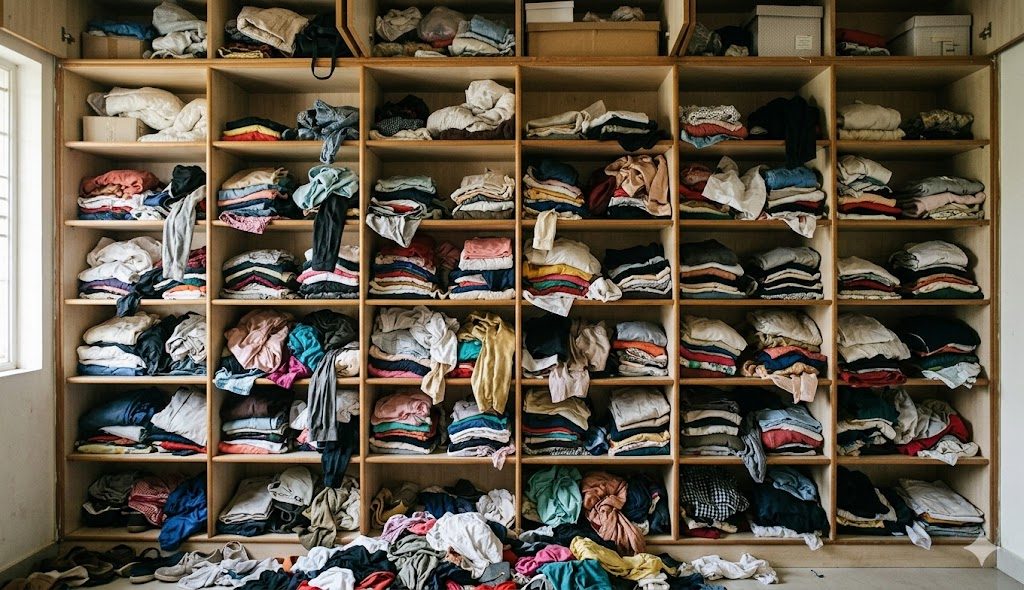
Walk up to most Indian wardrobes and you will find the same thing: a wall of identical shelves, clothes crushed into stacks, the top shelf unreachable, the bottom one a forgotten heap. The wardrobe is full and yet nothing is findable. This is not a size problem — it is a planning problem. A wardrobe built as one repeated shelf wastes roughly half its usable volume.
The fix is zoning: matching the internal layout to how clothes are actually stored and how the human body actually reaches. This guide explains why wardrobes fail and how to plan one you will still love in five years. It is a deep-dive companion to our 25 interior mistakes homeowners regret.
The core mistake: shelves instead of zones
Shelves seem efficient because they look full. But folded stacks crush, hide the items underneath, and waste the vertical air between shelves. Hanging, drawers, and zoned compartments store far more per cubic foot in a usable way.
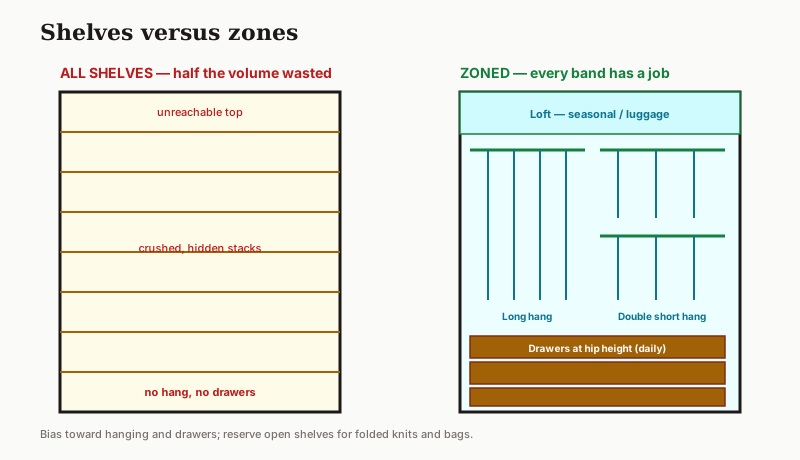
A well-zoned wardrobe assigns every band of height a job:
| Zone | Height band | Stores |
|---|---|---|
| Loft | Above 1850 mm | Seasonal, luggage, rarely used |
| Long hang | 1450–1850 mm | Dresses, coats, long kurtas |
| Double short hang | Two rails, 950–1850 mm | Shirts, folded trousers, daily wear |
| Drawers | 600–1000 mm (hip height) | Daily items, innerwear, accessories |
| Base | Below 600 mm | Shoes, boxes, low-frequency |
Reach zones: design for the body
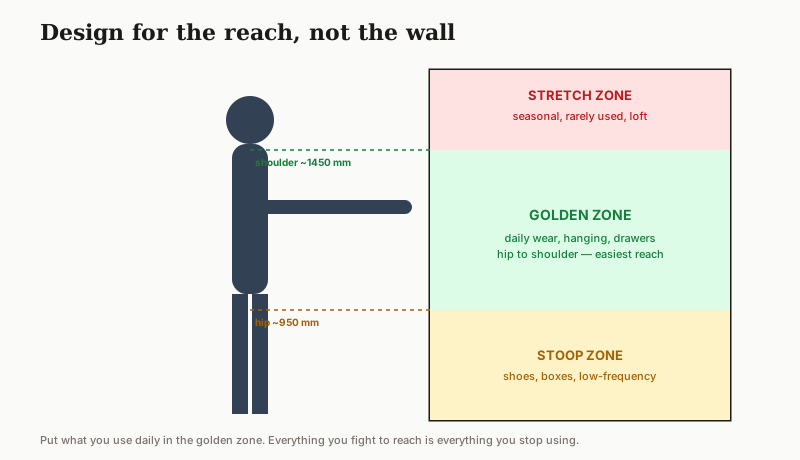
Anthropometrics divide a standing person's reach into bands. The "golden zone" between hip and shoulder is where daily items belong. Forcing daily clothes to the top or bottom guarantees frustration.
The hanging math
Hanging needs are usually underestimated. A rough rule: count the garments that must hang (shirts, dresses, formal wear) and allow 25–30 mm of rail per shirt and 50 mm per heavy item. Most homeowners need far more hanging rail and far fewer flat shelves than a default wardrobe provides.
Internal fittings that earn their place
The difference between a good wardrobe and a great one is the fittings: pull-out trouser racks, soft-close drawers, a pull-down hanger for the loft, dividers, and a mirror. They cost more per running foot but multiply usable capacity.
A wardrobe is not storage volume — it is accessible storage volume. The cubic feet you cannot reach or cannot see do not count.
The fix, in order
1. Inventory what you store: hang vs fold vs drawer, daily vs seasonal.
2. Zone by height: daily in the golden zone, seasonal in the loft.
3. Bias toward hanging and drawers over open shelves.
4. Add fittings that convert dead volume into reachable storage.
5. Size the rail and drawers to your actual garment count.
Prevent it: Size your storage need with the Wardrobe Storage Capacity Calculator, choose finishes with the wardrobe finish ideas guide, and plan the bedroom around it with the Furniture Layout Designer.
References
- Panero, J. and Zelnik, M. (1979) Human Dimension and Interior Space. New York: Whitney Library of Design.
- Ching, F.D.K. (2014) Interior Design Illustrated. 3rd edn. Hoboken, NJ: John Wiley & Sons.
- Grandjean, E. (1973) Ergonomics of the Home. London: Taylor & Francis.
Part of the Studio Matrx Mistakes & Pitfalls series.
Export this guide
Related Guides — Deep-dive reading
Wardrobe & Closet Planning for Indian Homes
Walk-in vs built-in, the double-rod trick that doubles capacity, internal zoning for sarees to suitcases, sliding vs hinged shutters, and finish costs
Room PlanningStorage Planning Before Interior Design
Why storage must be planned first — audited, budgeted and given its floor area — before a single layout, colour or sofa is chosen. The homeowner's plan-it-first master guide for Indian homes.
StorageStorage Design for Small Apartments
How to build real storage into a 1RK, 1BHK or 2BHK builder flat from the layout stage — not by buying more boxes, but by designing for height, dead space and double-duty furniture.
StorageRelated Tools — Try Free
Wardrobe Storage Capacity Calculator
India-specific garment math — sarees, lehengas, kurtas, shirts, shoes. Pick a layout (2-door → walk-in), see live fill and saturation gauges.
Capacity CalculatorStorage Capacity Calculator
Calculate optimal wardrobe and storage volume for your home by family size and usage.
Volume CalculatorInterior Layout Planner — Printable Graph Grid
Printable graph grid to sketch room layouts to scale before committing to furniture placement.
Layout Tool