
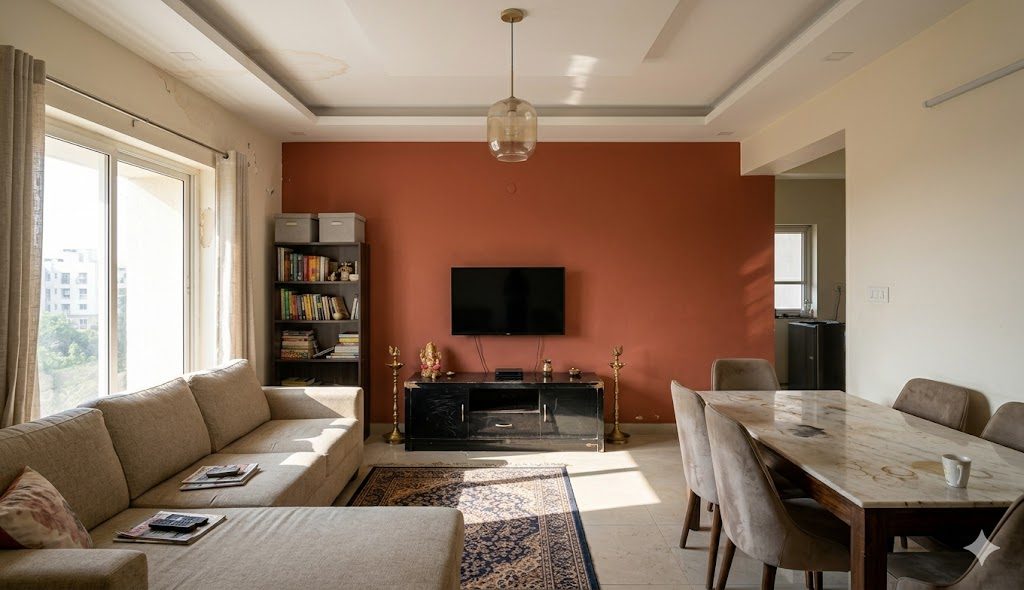
Expensive Interior Choices That Age Poorly
The premium finishes that look dated, scratched, or tired within a few years
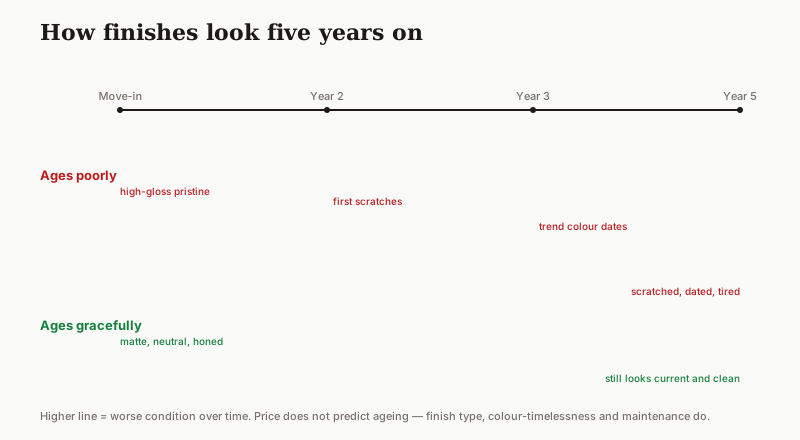
Not every regret is about saving money. Some of the most regretted interiors are expensive — premium finishes chosen for impact that look tired, scratched, or dated within a few years. Cost is not the same as longevity. A finish ages well when it hides wear, stays in style, and is easy to maintain; it ages poorly when it shows every mark, chases a trend, or needs constant care.
This guide separates the choices that age gracefully from the expensive ones that do not. It is a deep-dive companion to our 25 interior mistakes homeowners regret.
What makes a finish age badly
Three properties predict poor ageing, regardless of price:
- It shows everything. High-gloss surfaces and dark solids reveal every fingerprint, scratch, and water spot.
- It is tied to a moment. A colour or pattern that is "in" this year reads as dated the moment the trend passes.
- It demands maintenance. Delicate marbles, untreated brass, and certain veneers need care most homeowners will not keep up.
The usual suspects
| Expensive choice | Why it ages poorly | Ages-well alternative |
|---|---|---|
| High-gloss laminate / lacquer everywhere | Scratches and fingerprints show daily | Matte or suede finish in high-touch zones |
| Ultra-trendy feature colour | Dates in 2–3 years | Neutral base, trend in cheap-to-swap accents |
| Delicate white marble on counters | Stains and etches from Indian kitchen use | Honed granite, quartz, or treated stone |
| Untreated brass / copper everywhere | Tarnishes unevenly | Lacquered or intentionally-aged metal, used sparingly |
| Wall-to-wall bold wallpaper | Overwhelms and dates | One accent wall, timeless base |
| Glass-heavy showy joinery | Smudges, chips, feels fragile | Glass as a considered accent, not the default |
The 80/20 rule for longevity
The reliable strategy: spend on a timeless, durable base for 80% of the space, and reserve trends and drama for the 20% that is cheap and easy to change — cushions, art, a single accent wall, lighting fixtures.
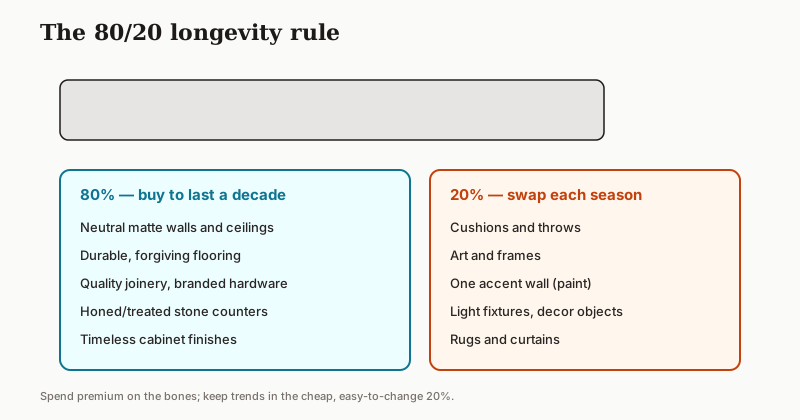
Buy the bones to last a decade and the accents to last a season. Reverse that, and you pay premium prices to look dated.
The fix, in order
1. Choose matte and mid-tones for everything you touch daily.
2. Keep the base neutral and timeless; spend trends only on swappable accents.
3. Pick forgiving, low-maintenance stones and metals for Indian use.
4. Test how a finish ages and cleans before committing in bulk.
Prevent it: Compare durability and lifecycle with the Material Decision Framework and Material Quality Checklist, and read engineered wood lifecycle costing and wardrobe finish ideas.
References
- Ching, F.D.K. (2014) Interior Design Illustrated. 3rd edn. Hoboken, NJ: John Wiley & Sons.
- Pile, J. and Gura, J. (2013) A History of Interior Design. 4th edn. London: Laurence King Publishing.
- Fitzgerald, O. (2018) Materials for Interior Environments. 2nd edn. Hoboken, NJ: John Wiley & Sons.
Part of the Studio Matrx Mistakes & Pitfalls series.
Export this guide
Related Guides — Deep-dive reading
How to Design a Home That Ages Well
Designing for the next 20 years — timeless layout, durable materials, and graceful evolution
Home PlanningThe Design Decisions With the Biggest Cost Consequences
A cost-leverage map of Indian home interiors — the handful of decisions that swing your total budget the most, so you spend your attention where a single choice has an outsized rupee impact.
Cost & MoneyLift Cabin Material Selection Guide (India): Steel, Glass, Wood, Laminate and Stone
A practical decision framework for choosing your home lift cabin material — compared on look, durability, maintenance, weight, cost and best-fit home style.
Home Lifts & AccessibilityRelated Tools — Try Free
Material Compare — Side by Side
Compare materials side-by-side: granite vs quartz vs marble, laminate vs acrylic vs PU, and more.
ComparisonMaterial Decision Framework (M-Score)
Score 30+ Indian construction materials across cost, durability, climate fit, maintenance, and sustainability.
MaterialsDesign Style Finder Quiz
Answer 10 visual questions to discover your Indian interior style profile with materials and colours.
Interactive Quiz