
Interior Wall Paint: The Complete Guide for Indian Homes
Everything under the colour — the layers beneath the paint, the five types to choose from, why sheen matters more than you think, how much you actually need, and the order of work that separates a job that lasts from one that peels.
Paint is the finish almost every Indian home reaches for — it is the cheapest way to transform a room, the easiest to change when you tire of it, and the most forgiving of all the wall finishes. It is also the one most people get slightly wrong, not in the colour they pick but in everything around it: the prep beneath it, the type of paint, the sheen, and the order of the work. Get those right and a paint job looks crisp for years; get them wrong and even an expensive litre peels, patches and fades within a season.
This is the complete guide to interior wall paint for Indian homes. It is the deep dive under the master wall-finishes guide — the one finish most rooms will actually use. We will go under the colour to the layers that carry it, sort the five paint types and where each belongs, settle the sheen question, work out exactly how much paint your room needs, and lay out the correct order of work. By the end you will be able to brief a painter — or pick up a roller yourself — and know precisely what "done properly" looks like.
The anatomy of a painted wall
A painted wall is not one thing; it is a stack of layers, and the colour you see is only the top two of them. Understanding the stack is the difference between a wall that looks flawless and one that shows every trowel mark and patch.
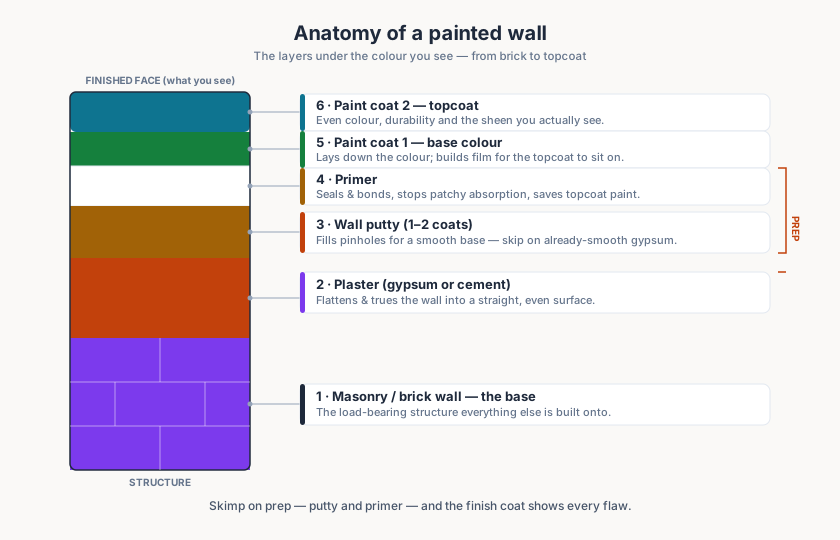
From the structure outward: the masonry (brick or block) is trued up by plaster — gypsum or cement — which gives you a flat, plumb wall. On top of that goes wall putty, usually one or two coats, which fills the fine pinholes and micro-scratches plaster leaves behind and creates a smooth, non-absorbent base (a good gypsum plaster is smooth enough that you can sometimes skip it). Then a coat of primer seals that base so it does not drink your topcoat unevenly, and helps the paint bond and cover in fewer coats. Only then come the two coats of paint — the first laying down colour, the second evening it out and delivering the final sheen and durability.
The lesson every experienced painter will tell you: the finish is made in the prep, not the paint. Skip the putty and primer to save a few hundred rupees and you will see the shortcuts through the topcoat — patchy sheen, visible joints, colour that soaks in darker over repairs. The paint is the easy, quick part; the layers beneath it are where the quality lives.
The five types of interior paint
"Interior paint" is not one product but a ladder of them, from cheap-and-cheerful to premium-and-permanent. Knowing where each rung sits saves you both from overpaying for a guest bedroom and from under-speccing a hallway that takes daily abuse.
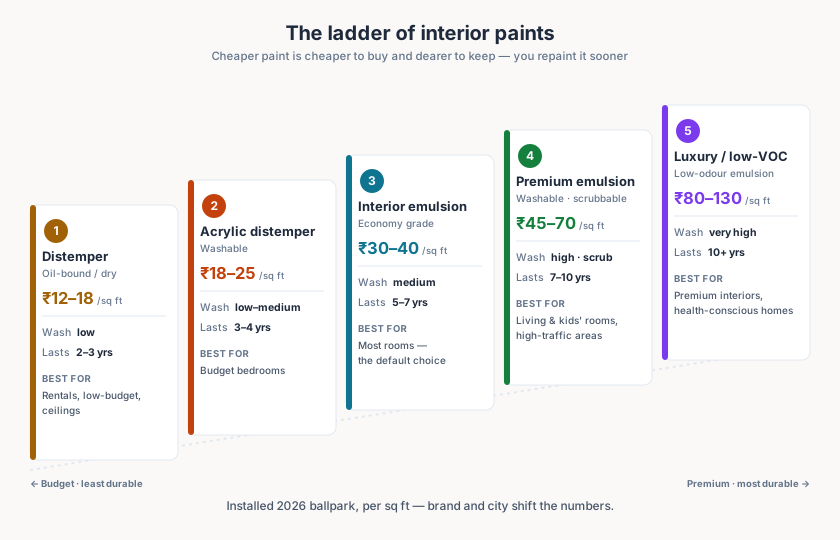
- Distemper (₹12–18/sq ft installed) — the budget floor. Cheap, breathable, easy to apply, but barely washable and good for only 2–3 years. Fine for rentals, ceilings, and rooms you will redo soon.
- Acrylic (washable) distemper (₹18–25) — a step up in durability and light washability; a sensible economy choice for bedrooms on a tight budget.
- Interior emulsion (₹30–40) — the default for most Indian homes. Water-based acrylic, cleanable, holds colour well, and lasts 5–7 years. If you are unsure, this is the right starting point for the majority of rooms.
- Premium washable emulsion (₹45–70) — genuinely scrubbable, richer colours, better stain resistance, 7–10 years. Worth it for living rooms, children's rooms, kitchens and hallways — anywhere hands, food and traffic hit the wall.
- Luxury / low-VOC emulsion (₹80–130) — the top rung: the most washable and durable, very low odour and low volatile-organic-compound emissions (better indoor air, gentler for children, asthmatics and the newly renovated). Lasts a decade-plus.
The rule of thumb: match the paint to how the wall is used, not to the room's importance. A formal drawing room that no one touches can wear an economy emulsion; a modest passage that everyone brushes past wants a washable premium one.
Sheen: the choice most people get wrong
Ask a homeowner to choose paint and they will agonise over colour and ignore sheen entirely — yet sheen (the amount of light the dry paint reflects) affects how the wall looks, how well it hides flaws, and how easily it cleans, every single day.
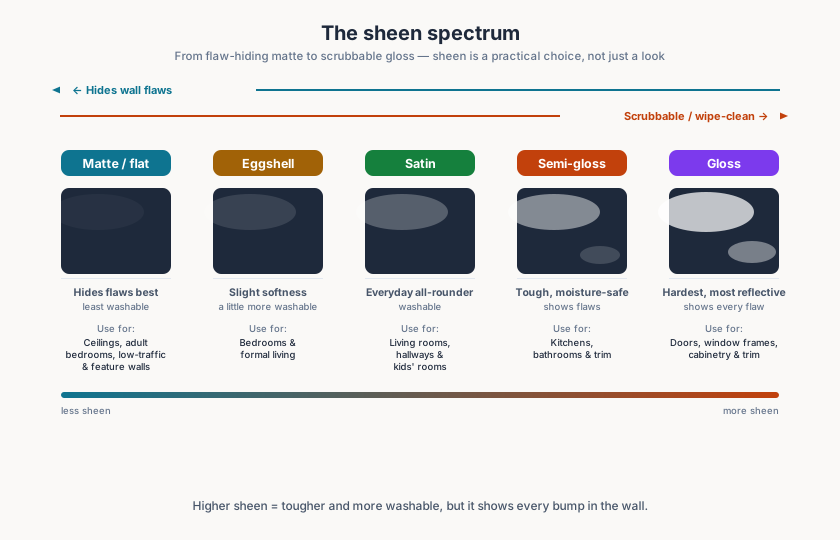
There is one governing trade-off: the flatter the sheen, the better it hides imperfections; the glossier the sheen, the better it scrubs clean — but the more it shows every bump. Walking up the spectrum:
- Matte / flat — hides wall imperfections best, the most forgiving of poor prep, but the least washable. Ideal for ceilings, adult bedrooms, low-traffic walls and feature walls where you want a soft, chalk-velvet look.
- Eggshell — a whisper of softness, slightly more wipeable. Good for bedrooms and formal living rooms.
- Satin — the everyday all-rounder: washable, still forgiving, subtle glow. The safe default for living rooms, hallways and children's rooms.
- Semi-gloss — tough and moisture-resistant, but it announces every flaw in the wall. Reach for it in kitchens, bathrooms and on trim.
- Gloss — the hardest, most reflective, most scrubbable — and the most unforgiving of a wavy surface. Reserve it for doors, window frames, railings and cabinetry, not broad walls.
The practical shortcut: matte for walls you want to look flawless, satin for walls you need to wipe, semi-gloss or gloss for trim and wet zones. A single room often uses two — matte on the walls, gloss on the doors and frames.
How much paint you'll need
Nothing wastes money like buying paint by guesswork — either three trips back to the store, or two unopened 4-litre tins going hard in the store-room. The maths is simple once you see it laid out.
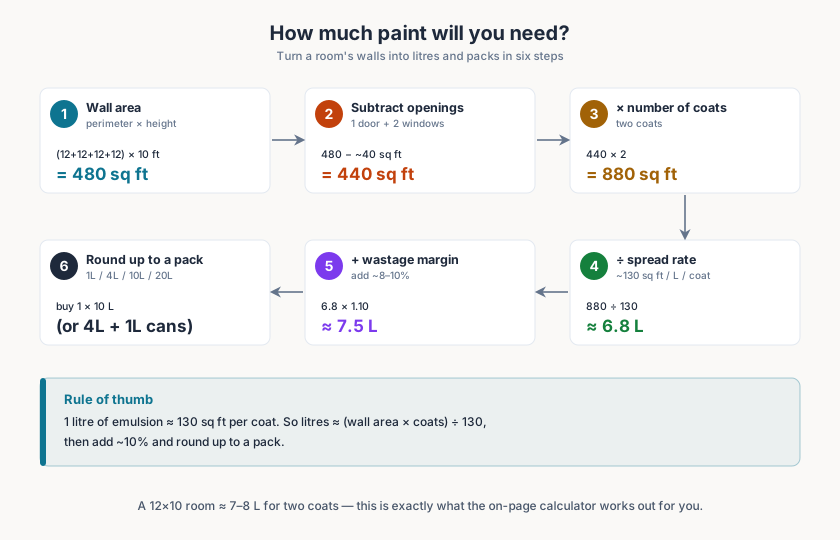
The chain runs: wall area (perimeter × height) → minus openings (doors and windows) → × number of coats → ÷ spread rate (about 120–140 sq ft per litre per coat for emulsion) → + ~10% for wastage → round up to pack sizes (1L / 4L / 10L / 20L). For a typical 12 × 10 ft room at 10 ft high, that is roughly 440 sq ft of wall after openings, ×2 coats ÷ 130 ≈ 6.8 litres, ≈ 7.5 with margin — so one 10-litre pack, or a 4-litre plus a couple of 1-litre tins.
You do not have to do this by hand. The interactive estimator on this page works out the litres, the packs to buy and the all-in cost — paint, putty, primer and labour — for your exact room, paint type, brand tier and city. For a whole-house, multi-room estimate use the full paint calculator, and to see your shortlisted colours on a wall before you commit, the paint visualiser.
Doing it right: the order of work
A good paint job is 70% preparation and 30% painting, and the sequence is not negotiable — every skipped step shows up later as a peel, a patch or a fade.
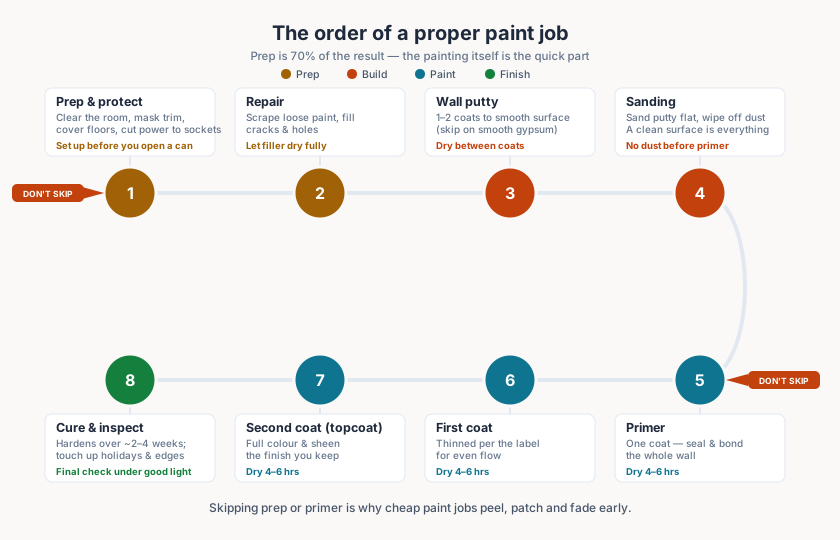
1. Prep & protect — clear the room, mask the trim, cover the floor, and switch off power to the sockets you will paint around.
2. Repair — scrape loose old paint, fill cracks and holes, and let the filler dry hard.
3. Wall putty — one or two coats to smooth the surface (skip only on already-smooth gypsum), drying between coats.
4. Sanding — sand the putty flat and wipe every speck of dust off; a clean, smooth surface is the whole game.
5. Primer — one sealing, bonding coat; let it dry 4–6 hours.
6. First coat — thinned per the label; dry 4–6 hours.
7. Second coat — full colour and sheen; dry 4–6 hours.
8. Cure & inspect — the film keeps hardening for 2–4 weeks; in raking light, touch up any thin "holidays" and edges.
The two steps people skip to save time — prep and primer — are exactly the two that decide whether the job lasts. A cheap paint applied over proper prep will outlast an expensive one slapped onto a dusty, un-primed wall.
Colour, brands and the honest cost
Colour is the fun part, and the one place your taste rules — but a couple of principles help. Test shortlisted shades as large swatches on the actual wall and look at them at different times of day, because Indian daylight is intense and a colour that charms at the store can glare at noon; our guides to colour theory, earthy Indian palettes and Vastu colours go deeper. As for brands, the mainstream ranges are more alike than their marketing suggests: the tier (economy / premium / luxury) matters far more than the badge, and a premium line from any major maker will outperform an economy line from another.
On cost, be honest about the whole number, not the tin price. A repaint of a standard room is rarely just paint — it is putty, primer, sandpaper, masking, and above all labour, which is often the largest single line. That is why the ₹15/sq ft distemper and the ₹40/sq ft emulsion feel much closer once painted: the labour is nearly the same. Spend the marginal rupees on a better paint rather than cutting the prep, because the prep is what you cannot redo without starting over.
That is interior paint, end to end — the layers beneath, the five types, the sheen, the quantity and the sequence. When paint is not the answer — a wet wall, a statement feature, an outdoor face — step back up to the master wall-finishes guide and let the wall's job point you to the right finish.
Interactive · Wall paint quantity + cost
7.1 L paint · ₹14,558 all-in
Estimated all-in cost
₹0
427 sq ft painted · 1×4L + 3×1L + 1×0.5L to buy
Cost breakdown
Export this guide
Related Guides — Deep-dive reading
Acrylic vs Cast Iron Bathtub: Which Is Better? (India, 2026)
A fair, India-first head-to-head between an acrylic bathtub and an enamelled cast-iron one — weighed on the factors that actually decide it here: slab load and handling, heat retention, durability, warmth to touch, repairability, price and installation — with a clear verdict by home type and budget.
BathroomsWaterproof Bathroom Paint in India: Anti-Fungal, Washable Emulsions for Walls & Ceilings
Which paint survives above the tile line — the moisture-resistant, anti-fungal, washable emulsions that stop peeling and black mould on Indian bathroom walls and ceilings. Sheen, prep, low-VOC and ₹/litre, brand-neutral.
BathroomsEpoxy Grout vs Cement Grout for Tiles in India: Which to Specify (2026)
A plain-English guide to tile grouts for Indian homes: what grout does, how cementitious grout compares with epoxy grout on cost, stain and water resistance, hygiene and durability, and exactly where each one belongs - kitchens, bathrooms, pools, dry rooms and more.
Building MaterialsRelated Tools — Try Free
Home Colour Studio
Colour every room — living, bedroom, dining, kitchen, bathroom — surface by surface in any HEX/RGB/CMYK colour, or from 80+ curated Indian shades.
Colour StudioDoor Paint Calculator
Estimate paint and primer litres and cost to paint your doors by size, number of doors, coats and paint type.
Door CalculatorPainting Prep & Quality Checklist
Painting audit — 10 categories, 65+ checkpoints across surface prep, putty, primer, emulsion coats, enamel, external, ceilings, defects, final QC.
Painting QC