
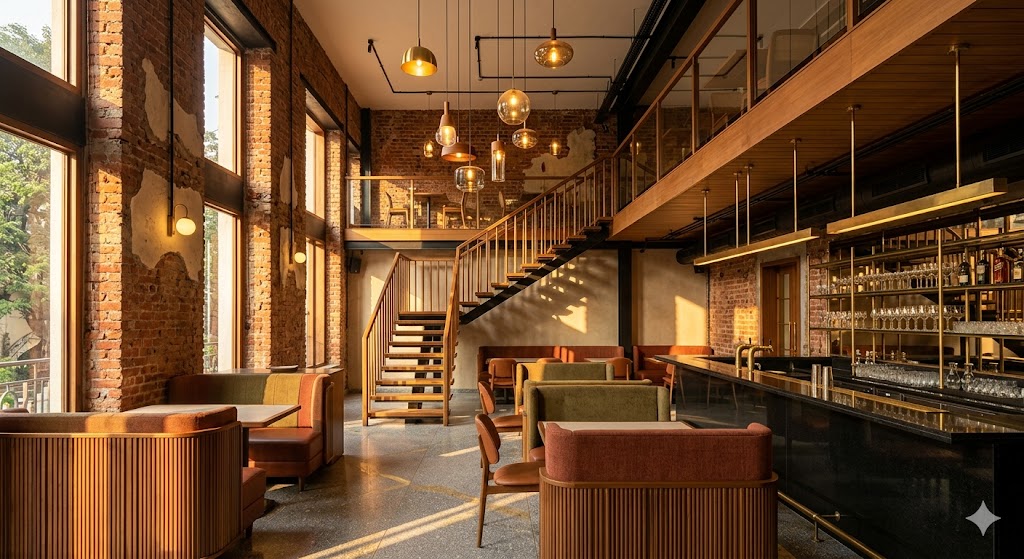
Interior Architecture as a Discipline — A Student's Working Reference
Distinct from Interior Design · Distinct from Architecture · A Real Discipline for the Right Student
Interior architecture is a real discipline — not "advanced interior design" and not "less than architecture." IA designs the structural and spatial bones of interior space: walls, ceilings, floors, light, materials, atmosphere. It works within existing building shells, often as adaptive reuse or heritage retrofit, often at mid-scale (restaurants, retail, workplaces, boutique hospitality).
This guide is the working reference for Indian students considering interior architecture as a discipline. It covers what IA is (and isn't), how it differs from interior design and from architecture, the education pathways in India, eight Indian practitioners, eight project typologies, six career pathways, and a 10-piece portfolio framework.
If you think about the lived experience inside spaces more than building envelopes — but want spatial design depth beyond curating furniture and decor — interior architecture is your discipline. Indian market is large (~5,000-8,000 practitioners) and growing fast across hospitality, corporate workplace, retail, healthcare, and adaptive reuse.
For complementary depth see Architecture Software Learning Path, Architecture Thesis Topics, Career Pathways After B.Arch, B.Des Interior Design Student Track.
This is an evergreen guide — discipline distinctions are stable. Last verified: May 2026 · Next verify: May 2028.
What Interior Architecture Is
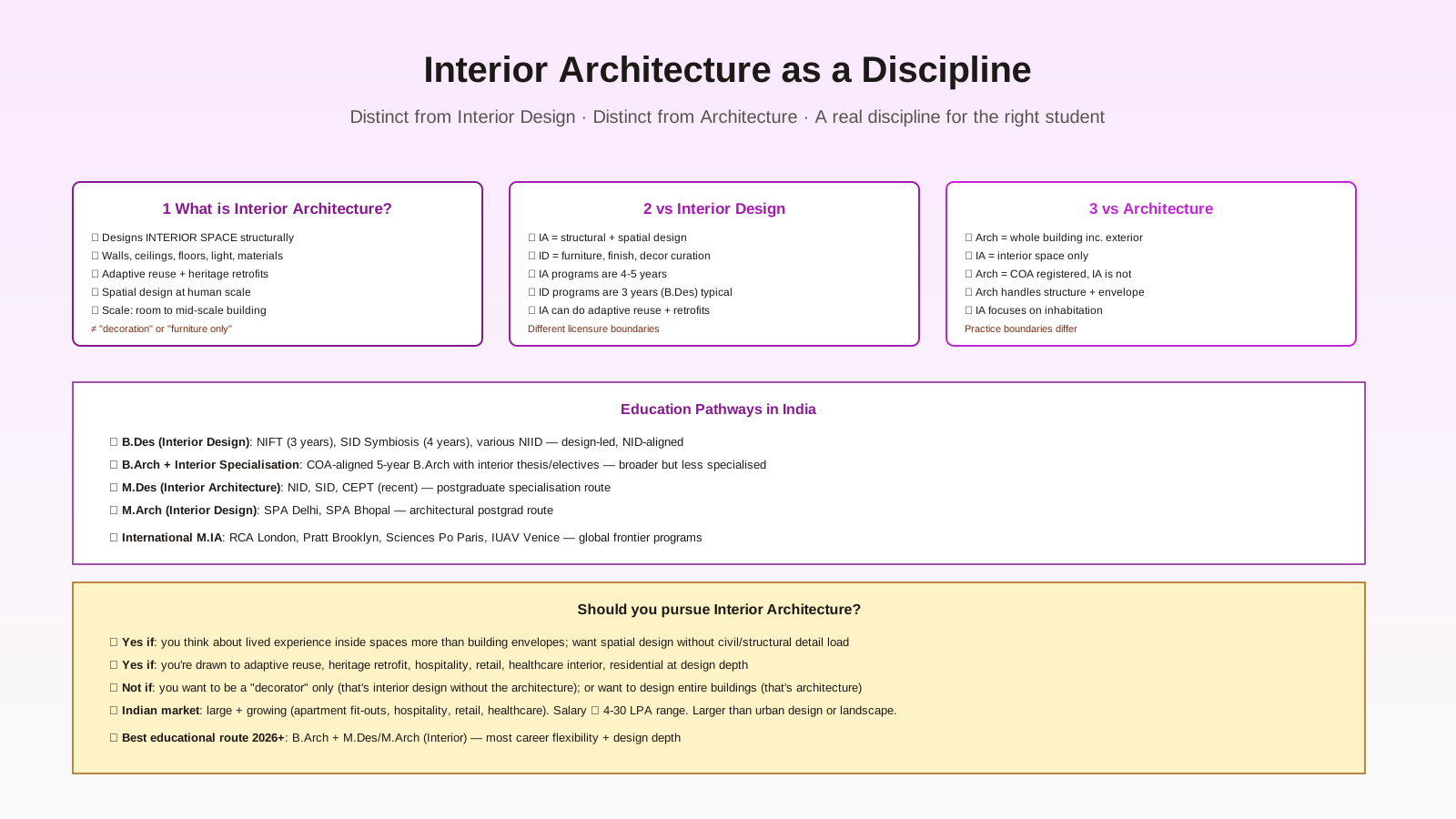
Interior architecture designs interior space at structural + spatial depth:
- Walls, ceilings, floors as design elements — not just surfaces to decorate
- Spatial reorganisation — moving non-load-bearing walls, redefining circulation
- Adaptive reuse + heritage retrofit — taking existing structures and reinhabiting them
- Materials + light + atmosphere — the "feel" of interior space
- Scale: room to mid-scale building (restaurant, retail, mid-rise office, apartment + heritage)
What IA is NOT
- "Decoration" or "furniture only" — that's interior design (closer to decorative arts)
- Designing entire buildings — that's architecture (whole building inc. exterior + structure + site)
- "Less than architecture" — IA is a discipline with its own depth, methodology, and craft
IA vs Interior Design vs Architecture
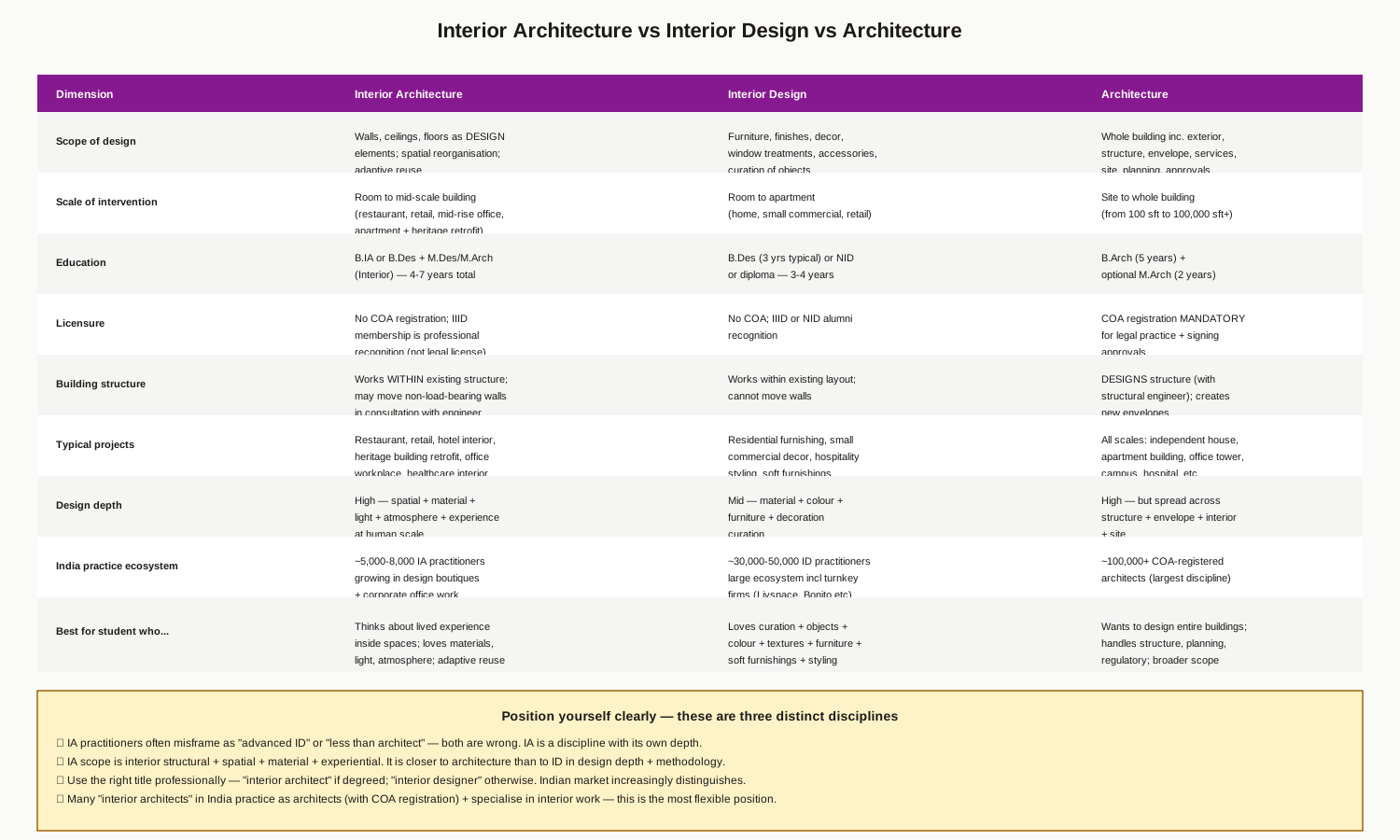
| Dimension | Interior Architecture | Interior Design | Architecture |
|---|---|---|---|
| Scope | Walls, ceilings, floors as DESIGN; spatial reorg; adaptive reuse | Furniture, finishes, decor, accessories, curation | Whole building inc. exterior + structure + envelope + site + approvals |
| Scale | Room to mid-scale building | Room to apartment | Site to whole building |
| Education | B.IA or B.Des + M.Des/M.Arch (Interior) — 4-7 yrs | B.Des 3 yrs / NID / diploma | B.Arch 5 yrs + optional M.Arch |
| Licensure | No COA; IIID membership | No COA; IIID + NID | COA registration MANDATORY |
| Structure | Works within existing; may move non-load-bearing walls | Within existing layout only | Designs structure (with engineer) |
| India ecosystem | ~5,000-8,000 practitioners | ~30,000-50,000 (incl. turnkey) | ~100,000+ COA-registered |
Position yourself clearly
- IA practitioners often misframe as "advanced ID" or "less than architect" — both are wrong. IA is a discipline with its own depth.
- IA scope is interior structural + spatial + material + experiential. Closer to architecture than to ID in design depth + methodology.
- Use the right title professionally — "interior architect" if degreed; "interior designer" otherwise. Indian market increasingly distinguishes.
- Many "interior architects" in India practice as architects (with COA registration) + specialise in interior work — this is the most flexible position.
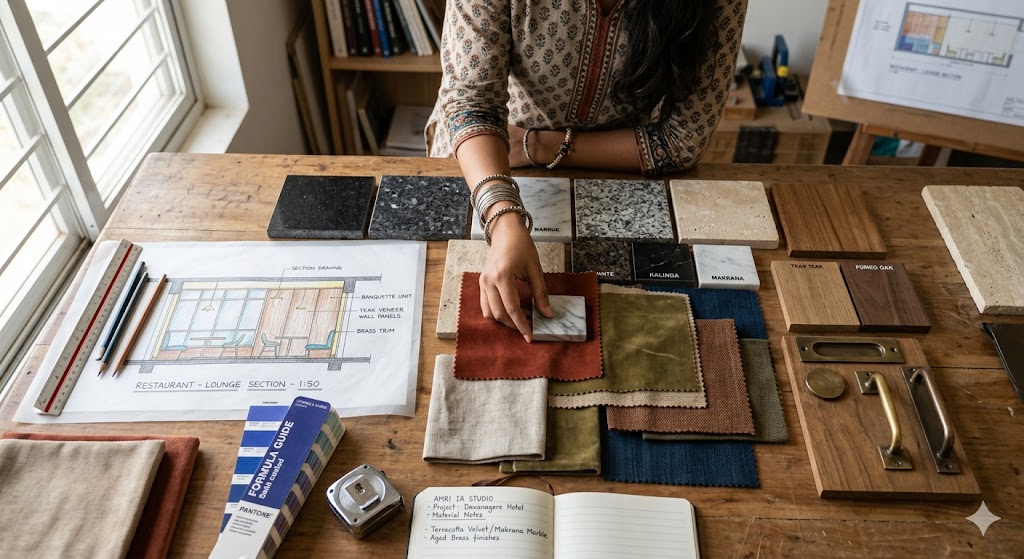
Education Pathways in India
| Route | Duration | Where | Best for |
|---|---|---|---|
| B.Des (Interior Design) | 3-4 years | NIFT, SID Symbiosis, NIID, etc. | Design-led entry, NID-aligned |
| B.Arch + Interior Specialisation | 5 years | COA-aligned schools with interior electives | Broader but less specialised |
| M.Des (Interior Architecture) | 2 years | NID, SID, CEPT (recent) | Postgraduate specialisation |
| M.Arch (Interior Design) | 2 years | SPA Delhi, SPA Bhopal | Architectural postgrad route |
| International M.IA | 1-2 years | RCA London, Pratt Brooklyn, Sciences Po Paris, IUAV Venice | Global frontier programs |
Best educational route 2026+ for most students: B.Arch + M.Des/M.Arch (Interior) — most career flexibility + design depth + COA registration option.
Eight Indian Practitioners
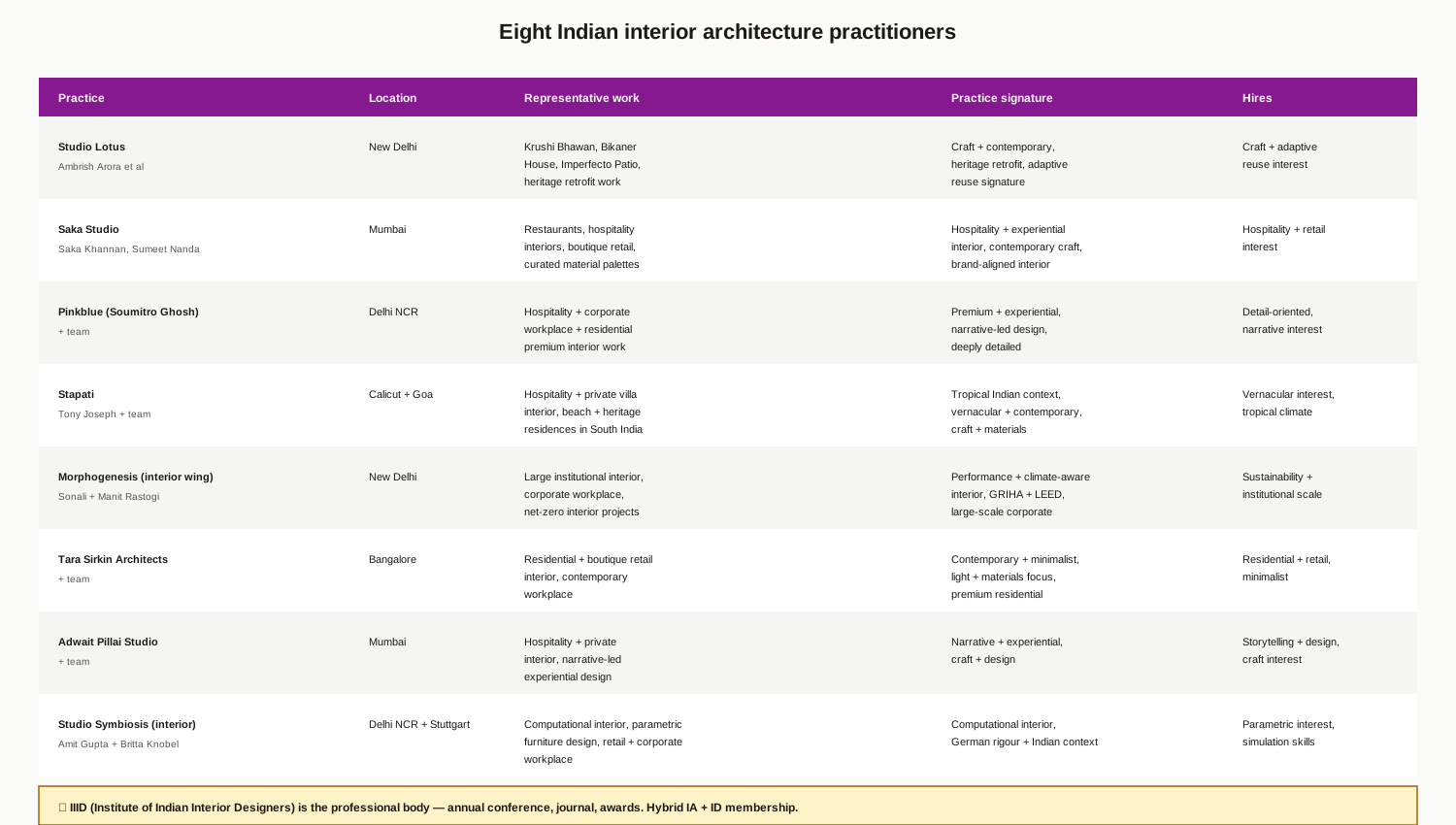
1. Studio Lotus (Delhi) — Krushi Bhawan, Bikaner House, Imperfecto Patio. Craft + contemporary + heritage retrofit signature.
2. Saka Studio (Mumbai) — Restaurants, hospitality, boutique retail. Hospitality + experiential + brand-aligned.
3. Pinkblue (Delhi NCR) — Soumitro Ghosh. Premium + experiential + narrative-led design.
4. Stapati (Calicut + Goa) — Tony Joseph. Tropical Indian context, vernacular + contemporary craft.
5. Morphogenesis (interior wing) (New Delhi) — Performance + climate-aware interior, GRIHA + LEED, institutional scale.
6. Tara Sirkin Architects (Bangalore) — Contemporary + minimalist, premium residential.
7. Adwait Pillai Studio (Mumbai) — Narrative + experiential, hospitality + private + storytelling.
8. Studio Symbiosis (interior) (Delhi NCR + Stuttgart) — Computational interior, parametric furniture, German rigour + Indian context.
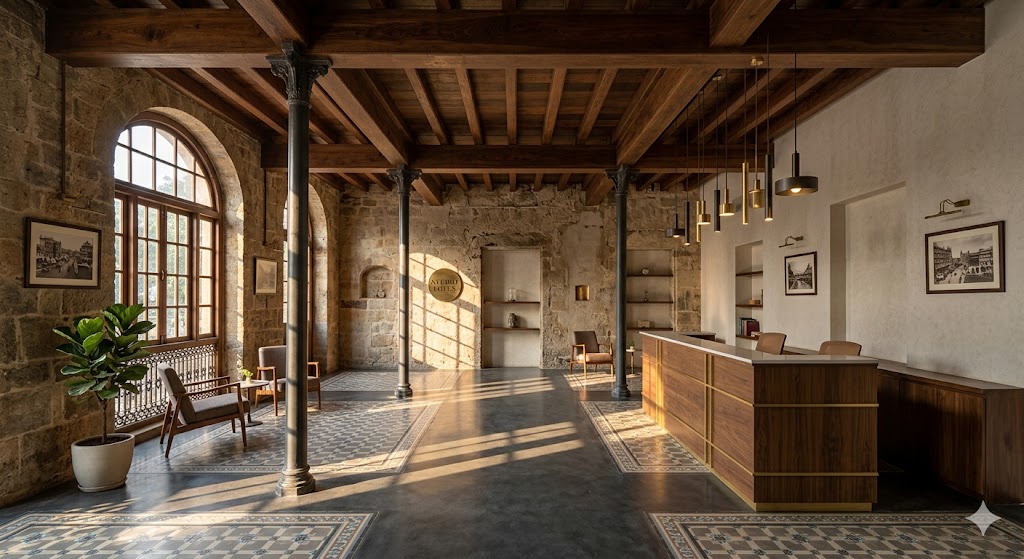
IIID (Institute of Indian Interior Designers) is the professional body — annual conference, journal, awards. Hybrid IA + ID membership.
Eight Project Typologies
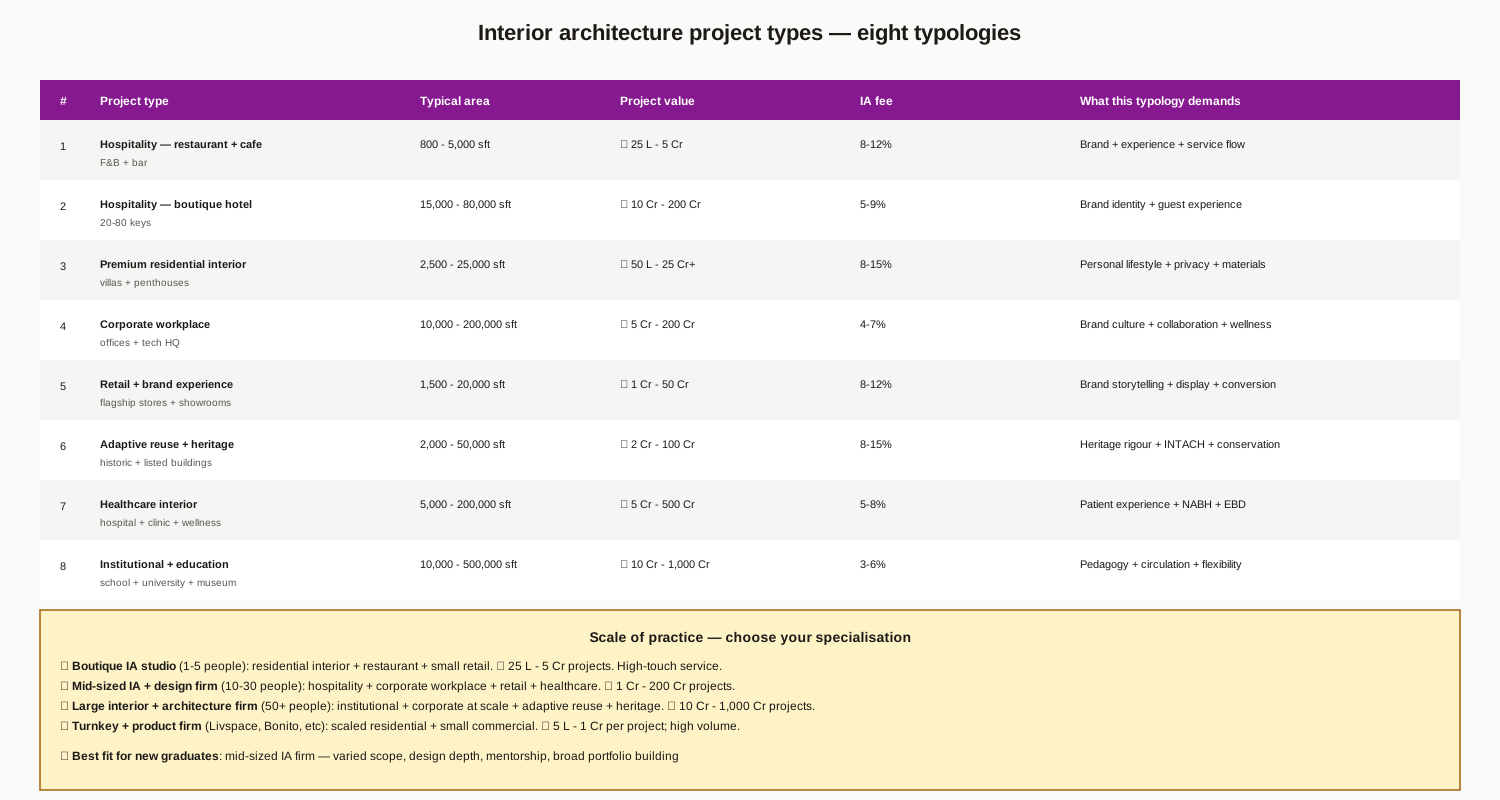
| # | Type | Area | Value | IA fee |
|---|---|---|---|---|
| 1 | Hospitality — restaurant + cafe | 800-5,000 sft | ₹ 25 L - 5 Cr | 8-12% |
| 2 | Hospitality — boutique hotel (20-80 keys) | 15,000-80,000 sft | ₹ 10 Cr - 200 Cr | 5-9% |
| 3 | Premium residential | 2,500-25,000 sft | ₹ 50 L - 25 Cr+ | 8-15% |
| 4 | Corporate workplace | 10,000-200,000 sft | ₹ 5 Cr - 200 Cr | 4-7% |
| 5 | Retail + brand experience | 1,500-20,000 sft | ₹ 1 Cr - 50 Cr | 8-12% |
| 6 | Adaptive reuse + heritage | 2,000-50,000 sft | ₹ 2 Cr - 100 Cr | 8-15% |
| 7 | Healthcare interior | 5,000-200,000 sft | ₹ 5 Cr - 500 Cr | 5-8% |
| 8 | Institutional + education | 10,000-500,000 sft | ₹ 10 Cr - 1,000 Cr | 3-6% |
Practice scale specialisation
- Boutique IA studio (1-5 people): residential + restaurant + small retail. ₹ 25 L - 5 Cr projects. High-touch service.
- Mid-sized IA + design firm (10-30 people): hospitality + corporate workplace + retail + healthcare. ₹ 1 Cr - 200 Cr.
- Large interior + architecture firm (50+ people): institutional + corporate at scale + adaptive reuse. ₹ 10 Cr - 1,000 Cr.
- Turnkey + product firm (Livspace, Bonito, etc): scaled residential. ₹ 5 L - 1 Cr per project; high volume.
Best fit for new graduates: mid-sized IA firm — varied scope, design depth, mentorship, broad portfolio building.
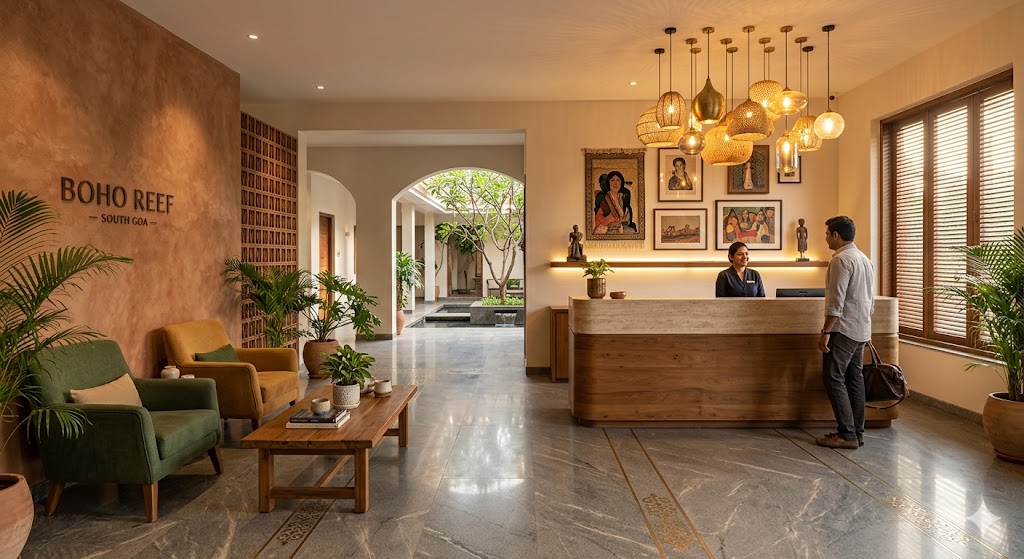
Six Career Pathways
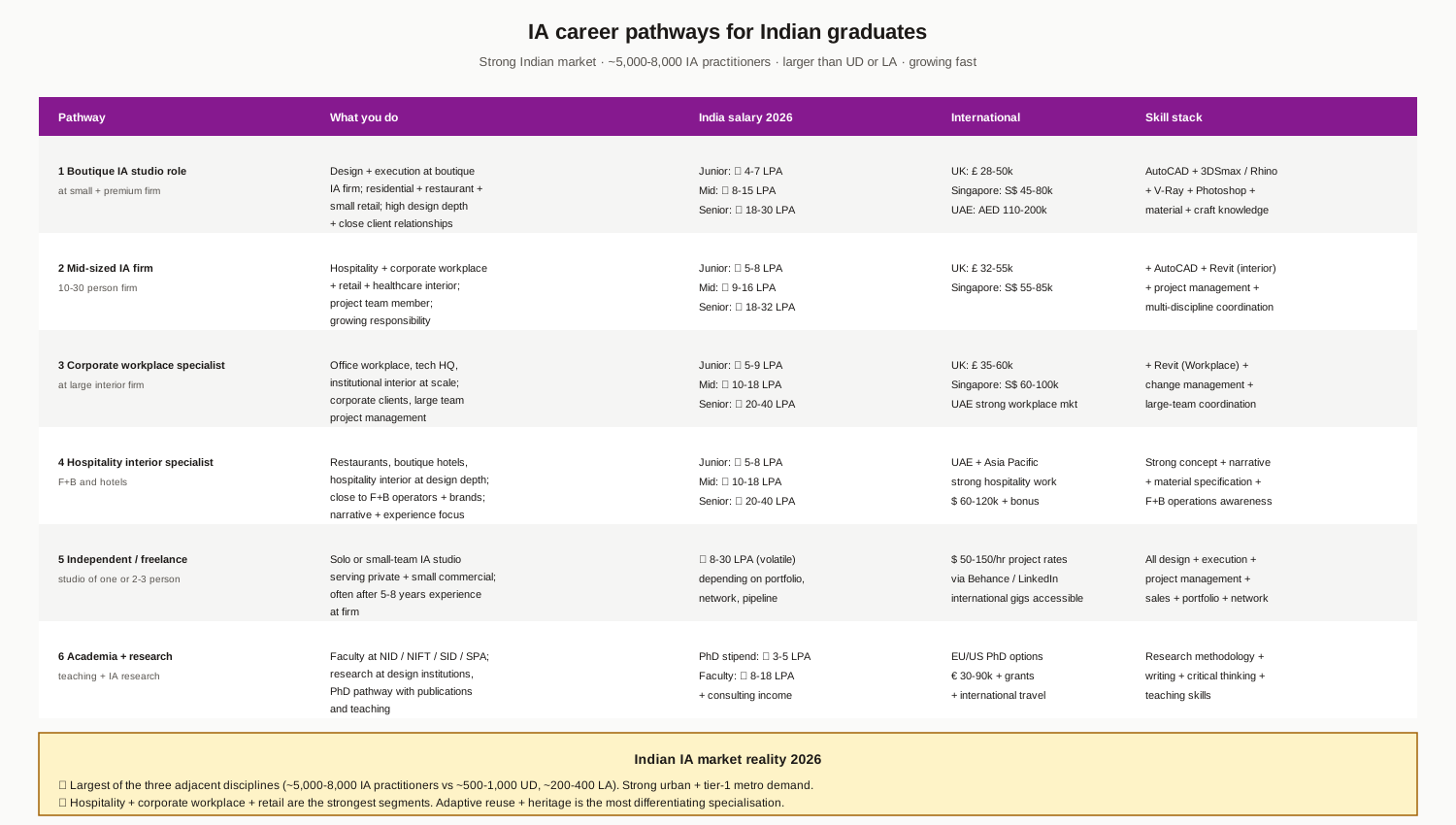
| Pathway | India salary (2026) | International |
|---|---|---|
| 1 Boutique IA studio | ₹ 4-30 LPA | UK £28-50k, Singapore S$45-80k, UAE AED 110-200k |
| 2 Mid-sized IA firm | ₹ 5-32 LPA | UK £32-55k, Singapore S$55-85k |
| 3 Corporate workplace specialist | ₹ 5-40 LPA | UK £35-60k, Singapore S$60-100k, UAE strong workplace market |
| 4 Hospitality interior specialist | ₹ 5-40 LPA | UAE + APAC strong hospitality; $60-120k + bonus |
| 5 Independent / freelance | ₹ 8-30 LPA (volatile) + intl. gigs | $50-150/hr project rates |
| 6 Academia + research | PhD ₹3-5L; Faculty ₹8-18 LPA + consulting | EU/US € 30-90k + grants |
India IA market reality 2026
- Largest of the three adjacent disciplines (~5,000-8,000 IA practitioners vs ~500-1,000 UD, ~200-400 LA)
- Strongest segments: Hospitality + corporate workplace + retail
- Most differentiating specialisation: Adaptive reuse + heritage
- Growth tailwinds: Bengaluru/Hyderabad/Mumbai tech expansion (corporate workplace), hospitality recovery, urban premium residential
Portfolio for Entry-Level IA Hire
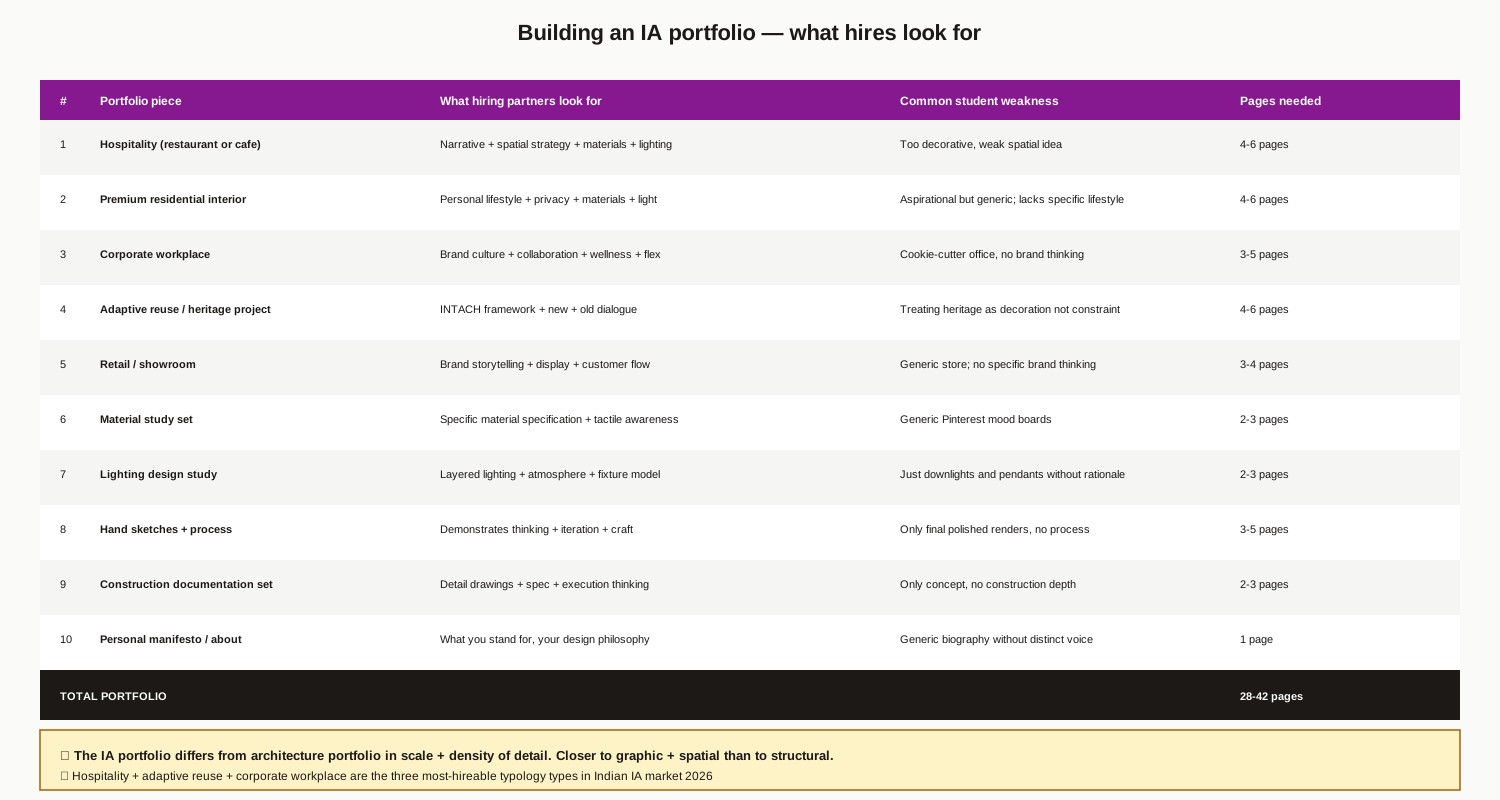
Ten pieces, 28-42 pages total:
1. Hospitality (restaurant or cafe) — narrative + spatial strategy + materials + lighting (4-6 pages)
2. Premium residential interior — personal lifestyle + privacy + materials + light (4-6 pages)
3. Corporate workplace — brand culture + collaboration + wellness + flex (3-5 pages)
4. Adaptive reuse / heritage — INTACH framework + new + old dialogue (4-6 pages)
5. Retail / showroom — brand storytelling + display + customer flow (3-4 pages)
6. Material study set — specific material specification + tactile awareness (2-3 pages)
7. Lighting design study — layered lighting + atmosphere + fixture model (2-3 pages)
8. Hand sketches + process — demonstrates thinking + iteration + craft (3-5 pages)
9. Construction documentation set — detail drawings + spec + execution thinking (2-3 pages)
10. Personal manifesto / about — what you stand for, your design philosophy (1 page)
The IA portfolio differs from architecture portfolio in scale + density of detail. Closer to graphic + spatial than to structural. Hospitality + adaptive reuse + corporate workplace are the three most-hireable typology types in Indian IA market 2026.
Pre-Specialisation Checklist
1. Aptitude check — do you think about lived experience + atmosphere + materials more than building envelopes?
2. Field test — visit 5+ Indian IA project sites (restaurants, retail, hospitality); sketch on site
3. Studio thesis or project in interior scope to confirm interest
4. Material + craft knowledge — start a material library: textures, finishes, samples
5. Software stack — AutoCAD + Sketchup + 3DSmax/Rhino + V-Ray + Photoshop
6. Hand sketching practice — atmospheric perspective sketches at human scale
7. Internship at IA firm — 3-6 months at one of the named practices confirms fit
8. IIID student membership — gives access to professional network
9. Reading list — at minimum: Tadao Ando, Peter Zumthor, John Pawson, Bawa, Doshi monographs
Where to Go Next
- For B.Des Interior Design pathway: B.Des Interior Design Student Track
- For thesis topics: Architecture Thesis Topics — many families translate to IA scope
- For software learning: Architecture Software Learning Path, Architectural Visualization
- For career planning: Career Pathways After B.Arch
- For Internship preparation: Architecture Internship Readiness
- For specific typologies in homeowner context: Modular Kitchen Design Guide, False Ceiling Design Guide, Wardrobe Finish Ideas
References
1. IIID (Institute of Indian Interior Designers). Professional body, journal, conferences.
2. Pile, J. (2009). A History of Interior Design. John Wiley & Sons.
3. Brooker, G. & Stone, S. (2007). Form and Structure — The Organisation of Interior Space. AVA Publishing.
4. Massey, A. (2008). Interior Design Since 1900. Thames & Hudson.
5. Plunkett, D. (2013). Construction and Detailing for Interior Design. Laurence King.
6. Zumthor, P. (2006). Atmospheres. Birkhäuser.
7. Pallasmaa, J. (2012). The Eyes of the Skin — Architecture and the Senses. Wiley.
8. Doshi, B.V. (2019). Balkrishna Doshi — Architecture for the People. Vitra Design Museum.
9. Bawa, G. + Robson, D. (2002). Geoffrey Bawa — The Complete Works. Thames & Hudson.
10. INTACH (2014). Charter for the Conservation of Unprotected Architectural Heritage. (For adaptive reuse work.)
Author's note: Interior architecture in India is the most accessible specialisation for B.Arch graduates who want spatial design depth without the regulatory load of full architecture practice. The market is large, demand is growing across hospitality + workplace + retail, and the design depth available is comparable to architecture (but at smaller scale). The student who positions clearly as "interior architect" — distinct from "interior designer" decorator and from "architect" who does interiors as side work — captures a real disciplinary identity that the Indian market increasingly recognises.
Disclaimer: IA discipline distinctions and educational pathways are largely stable; this guide refreshes every 24 months. Indian education programmes (NIFT, SID, NID, SPA, CEPT) update curriculum periodically — verify current programme structure with institutions. Career salary benchmarks are 2026 indicative. The "interior architect" title is professional positioning, not a legal designation in India (unlike COA-registered "architect"). Studio Matrx, its authors and contributors are not responsible for educational or career decisions based on this guide.
Interactive · Interior Architect vs Interior Designer
False ceiling design · 70% IA · 30% ID
IA does (70%)
Specifies plenum depth, ductwork coordination, drop heights, fire-rating.
ID does (30%)
Designs the visible language — grids, coves, reveal patterns, paint colours.
Why this split
Below-ceiling layout interacts with HVAC, lighting, sprinkler — needs MEP-literate IA. Surface design is ID's voice.
IA = Interior Architect (often a licensed architect specialising in interiors). ID = Interior Designer (CIDA / NID / SPA / IIID grads). Most Indian appointments split this 50/50 via a single firm — but the split above is the canonical role allocation.
Export this guide
Related Guides — Deep-dive reading
B.Des Interior Design — The Student Track
The 2026 Reference for the Indian B.Des Interior Aspirant — How It Differs from B.Arch, the Top Schools (NID · Pearl · Symbiosis · NIFT · Sushant), the Four-Year Curriculum, the Software Stack, FF&E and Materials Vocabulary, Studio Discipline, Portfolio Building, Internship Pathways, Career Trajectories, and the Long-Horizon Practice Map
Student FoundationsCase-Study Analysis — How to Read an Architectural Project
Module 7 of the Student Foundations Track — Selecting Case Studies that Match Your Design Problem, Five-Layer Analysis Framework (Site, Programme, Form, Material, Detail), Data Collection Methods, How to Apply Findings to Your Own Studio Project, the Citation Discipline, and a Twelve-Test Pre-Submission Diagnostic for Indian B.Arch Students
Student FoundationsHeritage Documentation & Measured Drawing Studio
The 2026 Working Reference for the Indian B.Arch Year-3/Year-4 Heritage Documentation Studio — Three-Stage Process (Preliminary Survey, Detailed Measurement, Drawing Production), Eight Typologies (Haveli, Temple, Vernacular Cluster, Urban Precinct, Industrial, Colonial, Stepwell, Single Element), Tools (Tape to Total Station to Photogrammetry), Drawing Conventions, INTACH and ASI Frameworks, and the Conservation Career Pathway
Student FoundationsRelated Tools — Try Free
Cross-Ventilation Analyzer
Estimate airflow and air changes per hour (ACH) from room size, window areas, layout, and local wind — with NBC 2016 Part 8 compliance check.
Ventilation CalculatorApartment Interior Planning Checklist
51-item checklist across structural, ceiling, lighting, furniture, storage, electrical, kitchen, bathroom.
ChecklistHealing View Impact Calculator
Evidence-Based Design dashboard quantifying the recovery impact of nature view + daylight factor on analgesic use, length of stay, and HCAHPS patient-experience uplift. Calibrated against Ulrich 1984 (Science), Park & Mattson 2008, and the CHD EBD evidence base.
EBD Calculator