
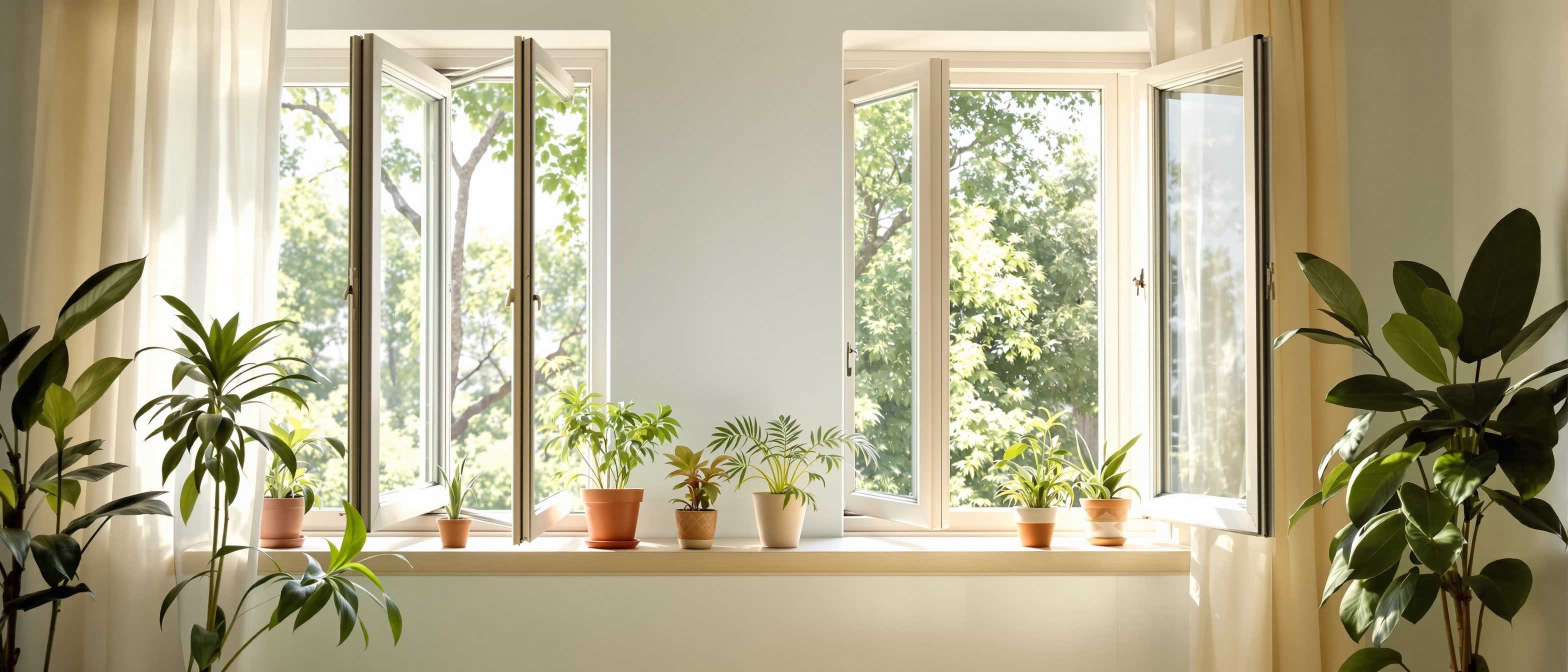
Understanding Cross Ventilation
The single most important everyday way to keep an Indian home fresh, cool and healthy — explained plainly: air in one opening, out another, and the layout that makes or breaks it.
On a humid June afternoon in a Chennai flat, Priya opens the one big window in her living room hoping for relief. A little air stirs near the sill, the curtain twitches — and then nothing. The far side of the room stays as thick and warm as before, the smell of last night's cooking still hangs in the corner, and within an hour she reaches for the air conditioner she had hoped to leave off. She is doing everything she was told: window open, fan on. Yet the room will not breathe.
The problem is not the window. It is that there is only one of them. Air, like water, will not flow unless it has somewhere to go. A single opening mostly lets a puff in and straight back out again, stirring a small eddy by the sill while the rest of the room sits still. The fix is almost embarrassingly simple, and it is the most powerful free tool any Indian home has for staying cool, dry and healthy.
Cross ventilation — fresh air drawn in through one opening and pushed out through another — is the single most effective everyday technique for a fresh, healthy home, and it costs nothing once the openings are in the right places.
1. What cross ventilation actually is
Cross ventilation means moving air across a space: in through one opening (the inlet) and out through another (the outlet) on a different part of the room. The moving air does three things your health quietly depends on. It carries away stale air — the carbon dioxide you breathe out, the moisture from cooking and bathing, the fumes from cleaning products and fresh paint. It removes heat that has built up in walls, furniture and bodies. And it lowers humidity at skin level, which is what actually makes you feel cooler even when the thermometer barely moves.
Contrast that with a single open window. Air can only enter and leave through the same gap, so most of the room never sees fresh air at all. You get a thin skin of movement near the opening and a large, stagnant dead zone beyond it — exactly the corner where damp, smells and stuffiness collect. This is why "I opened a window and it made no difference" is so common: one window is barely ventilation at all.
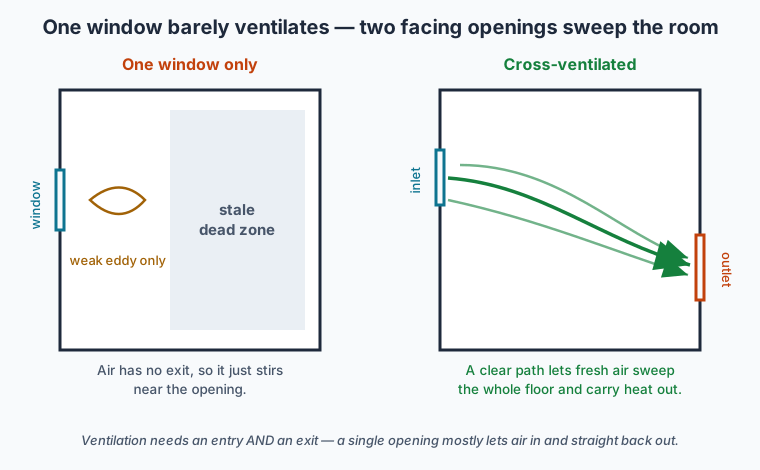
Figure 1: With one opening, fresh air has no exit and most of the room stagnates. Give it an inlet and an outlet and the whole floor gets swept.
The World Health Organization's guidance on indoor air stresses that effective ventilation — actually exchanging indoor air for outdoor air — is fundamental to reducing exposure to indoor pollutants, dampness and the conditions that breed mould. A path in and out is what makes that exchange happen. — WHO, Guidelines for Indoor Air Quality (dampness and mould; household air).
2. Why air moves: pressure, not magic
Air crosses a room because of a pressure difference between the two openings. When wind hits the face of your building, it pushes against that side (high pressure) and curls away on the far and side walls (low pressure). Open a window on the high-pressure face and another on a low-pressure face, and air naturally rushes from high to low — straight through your room. Even on a still day, warm indoor air rising and escaping high openings while cooler air is drawn in low (the stack effect) creates a gentler version of the same flow.
This is why wind direction matters. In much of India the most useful breeze is the south-west monsoon wind and the cooler evening sea or land breeze; the ideal inlet faces roughly into that prevailing wind and the outlet sits on the opposite or downwind side. You do not need to guess — reading your site's prevailing wind is a small, worthwhile exercise covered in our Site Planning guide on wind analysis, and you can sketch the airflow for your own room layout with the cross-ventilation analyzer.
3. Inlet and outlet: not the same job
The two openings play different roles, and a small trick makes a real difference to how brisk the breeze feels.
The speed of air through a room is governed by the smaller of the two openings. If you make the inlet smaller than the outlet, air is squeezed as it enters and accelerates — like a thumb over a hose — giving a faster, more noticeable indoor breeze. A large inlet with a small outlet does the opposite: air enters lazily and backs up. For everyday comfort cooling, a useful rule of thumb is inlet area equal to or slightly smaller than outlet area.
Placement matters as much as size. An inlet placed low (window sill height) directs the fast-moving air across the zone where people sit and sleep, where you actually feel it. An outlet placed high lets the hottest, most humid air — which has risen to the ceiling — escape. Together, low-in and high-out gives you both a felt breeze and genuine heat removal.
| Goal | Make the inlet... | Make the outlet... |
|---|---|---|
| A faster, felt breeze | smaller, at sitting/sleeping height | larger, anywhere on the opposite/downwind wall |
| Flush out ceiling heat & humidity | low on the windward wall | high — clerestory, ventilator, stairwell top |
| Cool a sleeping body at night | at bed level, facing the breeze | high and on the far wall |
| Clear cooking smoke fast | near the source, low | high and close, plus an exhaust fan |
4. Opposite walls beat adjacent walls
The golden arrangement is inlet and outlet on opposite walls. Air takes a short, straight route and sweeps almost the entire room evenly — the strongest, most reliable cross-flow you can get. This single decision does more for comfort than any gadget.
When opposite walls are not possible — a corner room, a flat with windows on only two sides — adjacent walls still work, just less completely. Air entering one wall and leaving through the wall next to it hugs the near corner and curves out, leaving the far corner sluggish. You can rescue that dead corner by aiming a pedestal or ceiling fan to nudge air into it, or by adding a louvre that throws the incoming stream deeper into the room.
The one arrangement to avoid is both openings on the same wall. With no pressure difference between them, you get almost no flow — the most common and most disappointing mistake in Indian flats, where a builder puts two windows side by side on the only external wall and calls it ventilation.
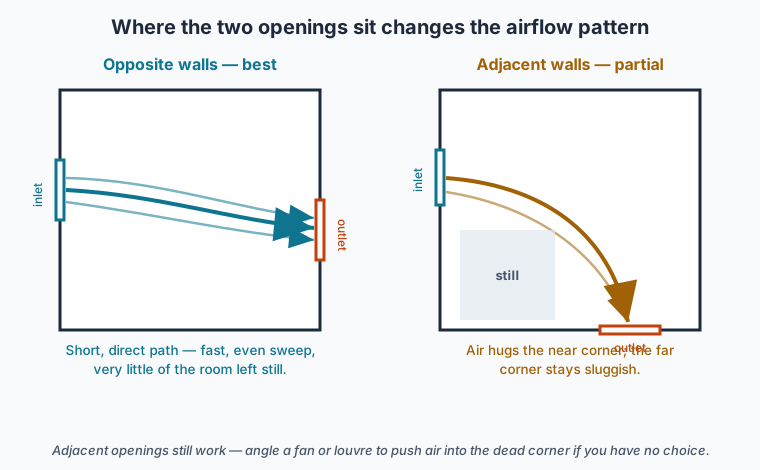
Figure 2: Opposite walls give the cleanest, fastest sweep. Adjacent walls work but leave a quieter corner; same-wall openings barely move air at all.
5. The whole path counts — doors, ventilators and louvres
Here is the idea most people miss: cross ventilation is not about a single room, it is about an unbroken path through the home. The inlet might be a bedroom window and the outlet a kitchen window two rooms away — but only if the air can actually travel between them. Every door, every solid partition along that route is either a gate or a wall.
This is where India's traditional building wisdom shines. The ventilator (roshandaan or jaali panel) set high above a door or window is precisely a permanent, secure outlet that keeps air moving even when you have locked up for privacy or gone out. A louvred door or a transom gap above an internal door lets the breeze cross from room to room without leaving every door wide open. Modern flats that strip these out for a flush, sealed look quietly sacrifice their own ventilation.
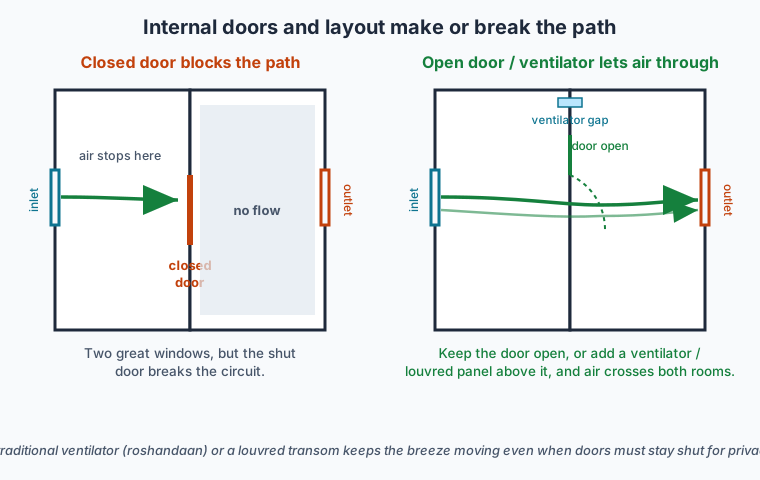
Figure 3: Two excellent windows are wasted if the door between them is shut. Keep it open, or borrow air through a ventilator or louvred transom above it.
The National Building Code of India treats natural ventilation as a design requirement, not an afterthought — specifying minimum openable areas and the role of cross-ventilation and ventilators in keeping habitable rooms healthy. For the engineering detail — opening-area ratios, IS code numbers and free-area calculations — see the technical reference linked below. — National Building Code of India (NBC), Part 8, building services.
6. Room by room: how to actually do it
| Room | Best inlet | Best outlet | The common trap |
|---|---|---|---|
| Living room | Low window on the breeze side | Window/ventilator on the opposite wall | A sofa pushed against the only outlet |
| Bedroom | Window at bed level on the windward side | High vent or window on the far wall | A tall wardrobe blocking the cross-path |
| Kitchen | Low window or door near the prep area | High window + exhaust fan close to the hob | Sealing the kitchen "to keep smells in" — it traps them |
| Bathroom | Door undercut / louvre | High extract vent or openable top window | No outlet at all, so damp lingers and mould grows |
| Stairwell / lobby | Low entry door or window | High opening or skylight at the top | Treating the stair only as circulation, not as a chimney for hot air |
A few practical moves that cost little:
- Open windows in diagonal or opposite pairs, not just whichever is nearest.
- Crack the doors between the inlet room and the outlet room, or fit a ventilator/louvre so air can cross without you having to.
- At night in the hot-dry interior, open up after sunset to flush the day's heat from masonry, then close at dawn before the heat returns — the classic Indian rhythm.
- During the monsoon, keep a smaller cross-flow running even in rain (sheltered openings, ventilators) to carry off the damp that breeds mould.
7. The mistakes that quietly kill the breeze
Most ventilation failures are not about the building at all — they are about how the room is furnished and used. The table below is the short list worth checking tonight.
| Do | Don't |
|---|---|
| Place openings on opposite (or at least adjacent) walls | Put both openings on the same wall |
| Keep the floor between inlet and outlet clear | Park a sofa, bed or wardrobe across the airflow path |
| Make the inlet equal to or smaller than the outlet for a brisk breeze | Assume a bigger window automatically means more flow |
| Keep internal doors open, or add ventilators/louvres | Shut every door and wonder why the back rooms are stuffy |
| Put the outlet high to release ceiling heat | Block high ventilators with false ceilings or boxed-in storage |
| Open up at night/early morning in summer; close at peak heat | Leave west windows wide open through the afternoon glare |
The single most overlooked culprit is furniture. A breeze that has a perfect inlet and outlet will still die if a heavy bed, a full-height wardrobe or a stacked bookshelf stands squarely in its path. Air takes the easy route; give it a clear lane at sitting and sleeping height and it will use it.
8. Why this is a health technique, not just comfort
It is tempting to think of cross ventilation as merely "feeling cooler." It is far more. Steady fresh-air exchange dilutes the carbon dioxide that builds up in a closed bedroom overnight and leaves you groggy. It carries off the moisture that, left to linger in our humid coasts and long monsoons, condenses into the damp and mould linked to coughs, allergies and asthma. It removes cooking fumes, paint and furniture off-gassing, and the fine particles that drift in — and, in cleaner-air seasons and locations, it lets the outdoors do the cleaning that an expensive purifier does indoors. Better sleep, easier breathing, fewer headaches, a calmer nervous system: these are the real returns on getting the air moving.
None of it requires money — only attention to where the openings are, what the doors do, and what the furniture is blocking. Cross ventilation is the closest thing a home has to free, continuous medicine for its air.
Sources & further reading
- World Health Organization — WHO Guidelines for Indoor Air Quality: Dampness and Mould and Household Air Pollution guidance.
- Bureau of Indian Standards / Ministry of Housing — National Building Code of India (NBC), Part 8 (Building Services), provisions on natural ventilation and ventilators.
- Bureau of Indian Standards — IS 3362 / SP 41, handbook on functional requirements of buildings (lighting and ventilation).
- Energy Conservation Building Code (ECBC), Bureau of Energy Efficiency — passive design and natural ventilation provisions for the Indian climate.
- Givoni, B., Man, Climate and Architecture — foundational text on wind, pressure and ventilation in buildings.
- CIBSE — AM10: Natural Ventilation in Non-domestic Buildings (principles of wind- and stack-driven flow).
If this opened the door, walk through the rest of the cluster: Natural ventilation strategies for Indian homes lays out the fuller menu of techniques beyond cross-flow, Indoor air quality explained covers what you are actually clearing out, and the pillar on what makes a home healthy puts fresh air alongside light, quiet and calm. For the engineering numbers and code detail, see the technical reference on cross ventilation in Indian homes; to read your own site's breeze, start with understanding wind analysis.
Export this guide
Related Guides — Deep-dive reading
Understanding Wind Analysis for a Comfortable Home
How to read your site's breeze and design openings that keep an Indian home naturally cool — long before you switch on an air-conditioner.
Site PlanningWindow Design for Cross Ventilation (India): Inlet, Outlet and the Path of the Breeze
How to size, place and choose windows so a breeze actually crosses the room, windward inlet to leeward outlet, with the right window types and a clear flow path.
Windows & GlazingNatural Bathroom Ventilation India: Windows, Ventilators, Jaali, Cross-Ventilation & the Stack Effect
How to ventilate an Indian bathroom with air and daylight instead of only a fan — sizing the openable window to NBC, using top-hung ventilators, louvres and jaali, driving airflow with the stack effect and cross-ventilation, keeping privacy, and knowing exactly where the monsoon forces you to add a fan.
BathroomsRelated Tools — Try Free
Cross-Ventilation Analyzer
Estimate airflow and air changes per hour (ACH) from room size, window areas, layout, and local wind — with NBC 2016 Part 8 compliance check.
Ventilation CalculatorBrise-Soleil Visualizer
Interactive horizontal-louvre cut-off angle calculator — sun altitude, louvre depth, and spacing inputs with a live shadow preview. Computes θ = arctan(spacing/depth) for façade shading, ECBC envelope compliance, hospital daylight design, and tropical sun-control detailing.
Sun Shading ToolFull-Room BOQ — Living, Bedroom, Kitchen, Bath
Room-wise BOQ across living, bedrooms, kitchen, utility, and bathrooms with line-item pricing.
Full-Room BOQ