
Hidden CCTV Cameras in India: Law, Ethics and How to Protect Yourself
Hidden cameras and privacy considerations, plainly explained. Why openly disclosed CCTV with clear notice is the lawful, ethical choice, where covert recording of people crosses serious legal lines, and a practical checklist to spot hidden cameras in rented flats, hotels and changing rooms.
Search for "hidden cameras" and most of the internet wants to sell you a way to secretly watch people. This guide does the opposite. It is written law-, ethics- and privacy-first, for one purpose: to help you understand where covert recording crosses serious legal lines in India, why an openly disclosed camera is almost always the right and lawful answer for a home or shop, and how to protect yourself if you fear a hidden camera is watching you.
It sits in Studio Matrx's CCTV hub alongside the camera-shape guides. But it is deliberately not a "how to conceal a camera" guide. We will not explain how to hide a camera to secretly record people, and we do not recommend spying on domestic staff, tenants, family, neighbours or the public. If that is what you came for, this guide is not it.
Not legal advice. This is an educational overview of privacy principles in India, written in general terms. Laws, court rulings and their interpretation change and depend on facts. For anything specific to your situation, consult a qualified lawyer.
The starting principle: privacy is the default, not surveillance
India recognises privacy as a fundamental right. The Supreme Court's 2017 Puttaswamy judgment held that the right to privacy is protected under the Constitution, and everyday life carries a reasonable expectation of privacy in certain places and moments. Recording a person where they reasonably expect to be unseen is not a grey area you can talk your way out of.
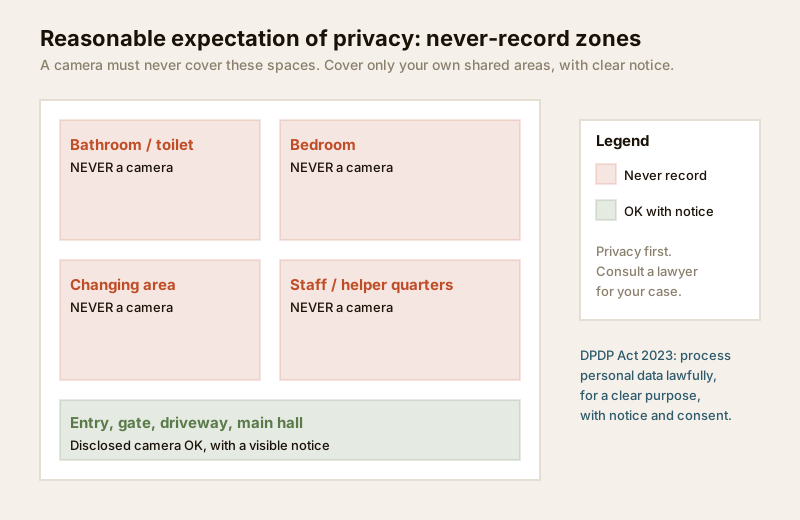
Some spaces are never legitimate to record, whether the camera is hidden or in plain view:
- Bathrooms and toilets
- Bedrooms
- Changing rooms and trial rooms
- A domestic worker's or helper's private quarters
- Any place a reasonable person expects to be private, on your property or anyone else's.
Placing a camera in these spaces, especially covertly, is not merely rude. It can amount to a criminal offence, particularly where it captures a person in a private act, and it exposes the person who installed it to serious civil and criminal liability. There is no "but it is my house" exception that lets you secretly film another adult in a bathroom or bedroom.
What the law touches (in general terms)
Several strands of Indian law bear on cameras and recorded footage. None of this is a substitute for a lawyer, but it explains why openness matters:
- The right to privacy (from Puttaswamy) frames the whole question: a reasonable expectation of privacy is legally meaningful.
- The Digital Personal Data Protection Act, 2023 (DPDP Act) governs how personal data, which includes identifiable video of people, is collected and used. Its themes are consent, a clear and lawful purpose, using no more than you need, keeping data safely, and not keeping it forever. A camera quietly harvesting footage of people with no notice and no purpose sits badly against every one of those themes. (Note that purely personal or household use has its own treatment under the Act; the safe, respectful practices below keep you on the right side regardless.)
- The Information Technology Act, 2000 and its rules address, among other things, the capture, publishing or transmitting of images of a private area of a person without consent and the misuse of computer systems and data. Covertly filming someone in a private setting, or sharing such footage, can attract serious consequences.
- Provisions of the general criminal law address voyeurism and outraging modesty. Secretly recording a person, especially a woman, in a private act is treated very seriously.
The practical takeaway is simple: the law rewards openness and punishes covert intrusion. A disclosed camera pointed at your own gate is a world apart from a concealed lens pointed at a person who does not know it is there.
Disclosed CCTV is the lawful, ethical default
For protecting a home, shop, clinic or society, the right tool is an ordinary, visible, clearly signposted camera, not a hidden one. Concealment buys you almost nothing legitimate and creates real risk.
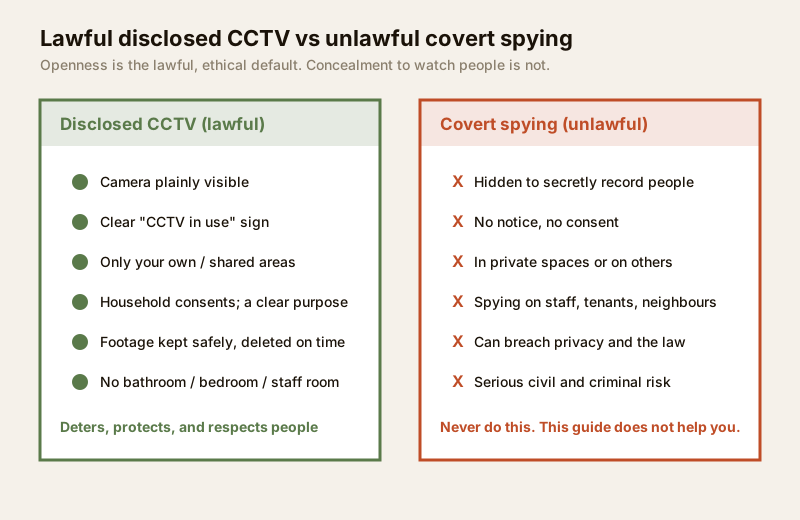
A well-run disclosed system looks like this:
- The camera is visible, and a plain "CCTV in use" notice is posted where people can see it before they enter the area.
- It covers only your own property and genuinely shared areas (your gate, porch, hall, shopfloor), not a neighbour's window, balcony or door.
- Your household or business agrees to it, and there is a clear, honest purpose: deterring theft, watching the entrance, monitoring a parcel drop.
- Footage is stored securely (change default passwords, keep firmware current) and deleted on a sensible schedule, not hoarded indefinitely.
- Nothing points at a bathroom, bedroom, changing area or staff quarters.
If you run cameras in a society or gated community, the same openness applies at scale, agreed through the RWA with notices at entry points; see the security guide for gated communities and the broader building security systems guide. To map what genuinely needs watching without over-collecting, work through the security and privacy assessment and the blind spot identification guide.
Is "discreet" ever legitimate?
Yes, but note the crucial difference. A discreet camera is simply small or unobtrusive so it does not spoil a room; it is still acknowledged, still disclosed, still in a legitimate area, and everyone in the household knows it exists. A dome camera tucked neatly into a ceiling, or a doorbell camera at the entrance, is discreet, not covert. A covert camera is one hidden specifically to record people who do not know it is there. The first is fine when it follows the rules above. The second is the thing this guide warns against.
Is this lawful and ethical? A decision table
Use this as a sanity check, not a legal ruling. When in doubt, the honest answer is almost always "disclose it or do not do it," and if stakes are high, ask a lawyer.
| Scenario | Guidance |
|---|---|
| Visible camera on your gate/porch, with a notice, covering your property | Generally fine. This is the recommended default. |
| Small, unobtrusive but acknowledged camera in your living room, household aware | Fine, if disclosed and not covering private rooms. |
| Camera aimed to also capture a neighbour's door, window or balcony | Avoid. Re-aim to your own boundary; this intrudes on others. |
| Hidden camera to secretly watch your domestic helper | Do not. Unethical and legally risky; disclose any camera and never cover their quarters. |
| Any camera in a bathroom, bedroom, changing room or staff quarters | Never. Can be a serious criminal offence, hidden or not. |
| Landlord placing a hidden camera inside a let flat | Do not. The tenant has a reasonable expectation of privacy in their home. |
| Recording a private meeting or a person without their knowledge to "have proof" | High risk. Seek legal advice before relying on covert recordings. |
| Nanny-cam concern for a child's safety at home | Prefer a disclosed camera in a shared living area, with the caregiver informed. |
The pattern is consistent: disclosure and staying on your own property keep you safe; concealment and reaching into others' privacy do not.
Protect yourself: how to spot a hidden camera
Now the defensive half, the part that genuinely helps you. Whether you are checking in to a hotel or homestay, moving into a rented flat, or using a changing room, you have every right to satisfy yourself that you are not being recorded. Here is a calm, practical scan.
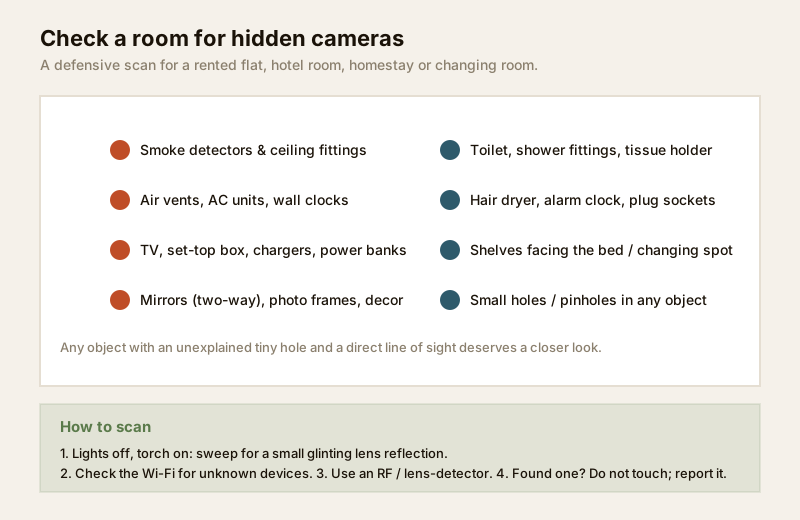
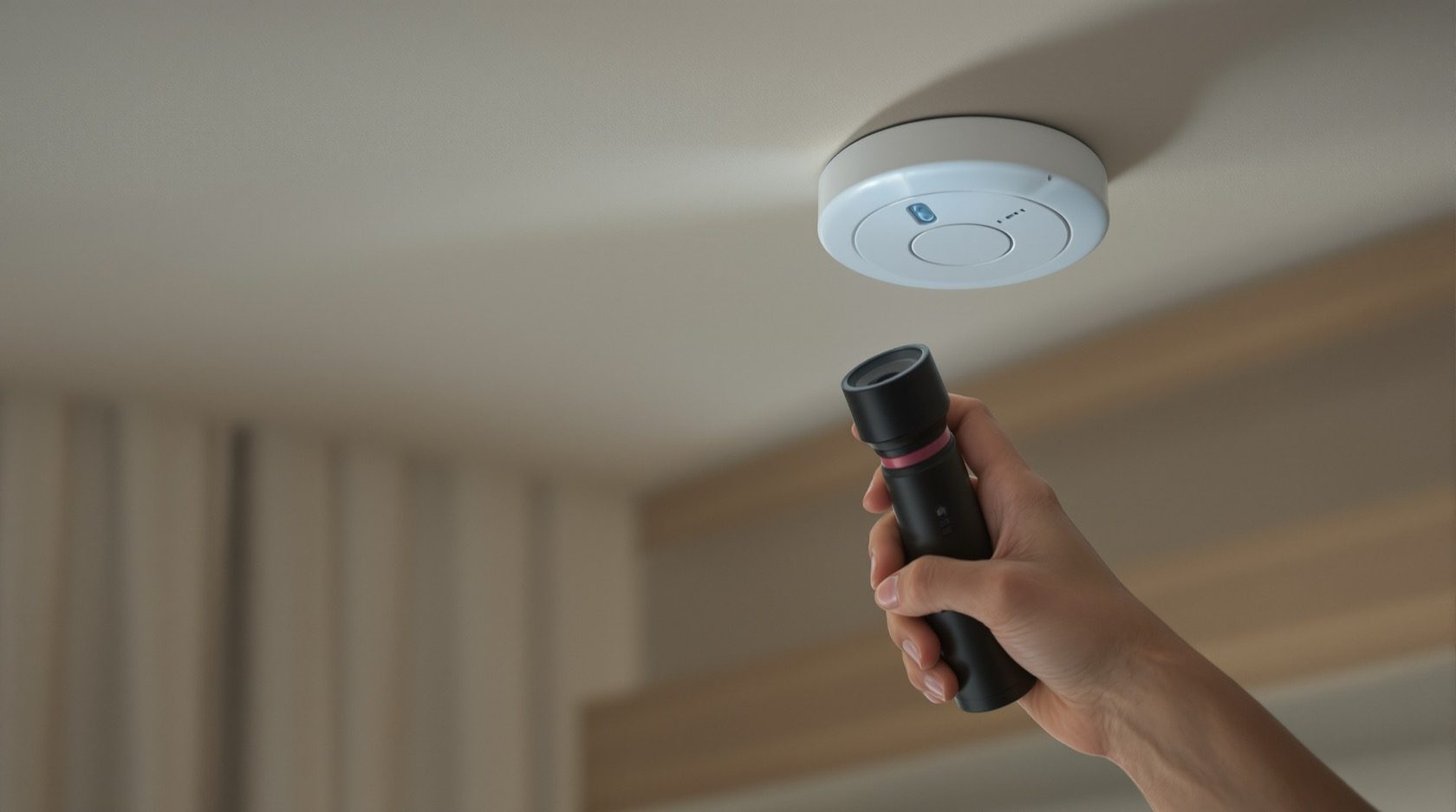
Step 1 — Scan the obvious hiding places by eye. Cameras need a line of sight, so look at anything facing a bed, sofa or changing spot: smoke detectors, air vents, wall clocks, photo frames, decorative objects, TVs and set-top boxes, chargers and "power banks" left plugged in, alarm clocks, hair dryers, tissue-box holders and plug sockets. Any object with a tiny unexplained hole pointed at the room deserves a closer look.
Step 2 — Kill the lights and use a torch. A lens reflects light. Darken the room, then slowly sweep a bright torch (your phone torch works) across suspect objects from different angles. A hidden lens often shows up as a small bright glint or a bluish reflection that does not match the surface around it.
Step 3 — Check the mirrors. For a two-way mirror worry, place a fingertip against the glass: on an ordinary mirror there is a visible gap between your finger and its reflection; if the finger and its reflection seem to touch with no gap, be cautious and inspect further.
Step 4 — Look at the network. Many hidden cameras stream over Wi-Fi. On the property's network (or by asking the host), look for unfamiliar device names or camera-like entries; a network-scanner app on your phone can list connected devices. An unexpected camera on a homestay's network is a red flag worth raising.
Step 5 — Use a detector if you want more certainty. Two inexpensive tools help:
- RF (radio-frequency) detectors pick up the wireless signal many cameras emit; sweep the room slowly and investigate any spike.
- Lens-finder detectors and apps flash a light and help you spot the tell-tale reflection of a lens; a dedicated device with a red LED ring is more reliable than an app alone.
No single method is foolproof, so combine the eye scan, the torch and, if you can, a detector.
If you find a hidden camera
Do not remove or tamper with it, and do not touch it more than necessary. It may be evidence. Instead:
- Photograph it in place and note where it is and what it faces.
- Preserve your safety first. If you feel unsafe, leave the room and go somewhere public.
- Report it. For a hotel or homestay, escalate to management and, if you suspect covert recording, to the police (dial 112). For a rented flat, this may involve your landlord, the police, and, for personal-data misuse, a complaint pathway under the DPDP framework; a lawyer can advise. Women can also use the national women's helpline 1091 and cyber-crime reporting at cybercrime.gov.in.
- Keep records of your booking, correspondence and the evidence you gathered.
You are not overreacting by checking, and you are within your rights to report.
Protect-yourself hidden-camera check: quick checklist
| Check | What to do | Red flag |
|---|---|---|
| Visual sweep | Inspect items facing beds, sofas, changing spots | Pinhole in an odd object with a clear line of sight |
| Torch test | Lights off, sweep a bright torch across surfaces | A small glint or bluish lens reflection |
| Mirror test | Fingertip-to-glass gap check | No visible gap between finger and reflection |
| Wi-Fi scan | List devices on the network with an app or ask the host | Unknown or camera-named devices |
| RF detector | Sweep the room slowly for wireless signals | A signal spike near a suspect object |
| Lens detector | Use a red-LED lens finder or app | A bright retro-reflection from a hidden lens |
| If found | Do not touch; photograph; leave if unsafe; report | Any device you did not expect |
When to bring in a professional
For your own disclosed system, you can decide the cameras, their honest coverage and the notices yourself using this hub. Hand the mounting, working at height, cabling and mains power to a licensed installer, and any board work to a licensed electrician (see the electrical hub). If you have found a device you believe was recording you covertly, treat it as a matter for the police and, for the privacy and legal fallout, a qualified lawyer; do not try to handle a potential crime alone. For a whole-home privacy-respecting design, use the camera type selector and the security and privacy assessment rather than reaching for concealment.
Key takeaways
- Privacy is the default. Bathrooms, bedrooms, changing rooms and staff quarters are never to be recorded, hidden or not; doing so can be a serious criminal offence.
- Disclosed beats hidden, always. A visible, signposted camera on your own property is the lawful, ethical way to protect a home or shop; concealment to record people is not.
- "Discreet" is not "covert." An acknowledged, unobtrusive camera is fine; a camera hidden to secretly record people is the thing to avoid.
- The DPDP Act 2023, the IT Act and India's privacy rulings all point the same way: consent, a clear purpose, and not intruding on others.
- You can protect yourself. In hotels, homestays, rented flats and changing rooms, scan by eye, use a torch, check the Wi-Fi and, if you want certainty, an RF or lens detector; if you find a device, do not touch it, photograph it, leave if unsafe, and report to management and the police (112, or 1091 / cybercrime.gov.in).
- This is not legal advice. For anything specific, consult a qualified lawyer.
References
- Justice K. S. Puttaswamy (Retd.) v. Union of India (Supreme Court of India, 2017) — recognises the right to privacy as a fundamental right; underpins the reasonable-expectation-of-privacy principle used throughout this guide.
- Digital Personal Data Protection Act, 2023 — the framework for lawful, purpose-limited processing of personal data, including identifiable video; verify the current text and rules via official government sources.
- Information Technology Act, 2000 (and amendments) — addresses capturing or transmitting images of a person's private area without consent and the misuse of data and computer systems.
- National cyber-crime reporting portal (cybercrime.gov.in), police helpline 112 and women's helpline 1091 — official channels to report suspected covert recording in India.
This is an educational overview and not legal advice. Privacy law is fact-specific and changes over time; consult a qualified lawyer for your situation, and treat any suspected covert camera as a matter for the police.
Export this guide
Related Guides — Deep-dive reading
Where Not to Install CCTV in India (2026): The No-Go Zones
A camera is a powerful thing, and pointing it at the wrong place can turn a security measure into a serious intrusion. This is the plain, humane list of places a camera must never point, plus the borderline spots to think twice about.
SecuritySecurity for Landlords in India (2026): Protect the Property, Respect the Tenant's Privacy
How an Indian landlord can lawfully secure a rented property - the exterior, boundary, entrance, common and shared areas - while never crossing the hard line into a tenant's private home. Verification done respectfully, agreement clauses that hold, rekeying between tenants, and common-area CCTV run within the DPDP Act.
SecuritySecurity for People Living Alone in India (2026): Calm, Practical Habits When There Is No Second Person to Notice
Living alone is an ordinary and growing part of Indian life - the student in a new city, the working single, the elder whose children are abroad, the person after a separation. It does not call for fear. It calls for a few deliberate habits, because there is no second person in the home to notice trouble, raise the alarm, or catch an accident. This is calm self-reliance, layer by layer.
SecurityRelated Tools — Try Free
CCTV Camera Coverage & Count Calculator
Estimate how many CCTV cameras you need, the NVR channels, storage in TB for your retention period, and an indicative all-in cost with GST.
CCTV CalculatorCCTV Placement Compliance Checker
A quick DPDP-grounded privacy and safety self-check for where a camera is pointed — flags the items to fix.
ComplianceCCTV System Type Selector
Answer five questions and get the right CCTV setup — analog / IP / hybrid, wired / wireless, local / cloud — with reasons.
CCTV Selector