
Body-Worn Cameras in India: Accountability and Evidence for Private Security
What a body-worn camera is, why guards at society gates, receptions, events and estates wear them, the accountability and evidence they bring, and the written policy, notice and DPDP-compliant storage you must get right before switching one on.
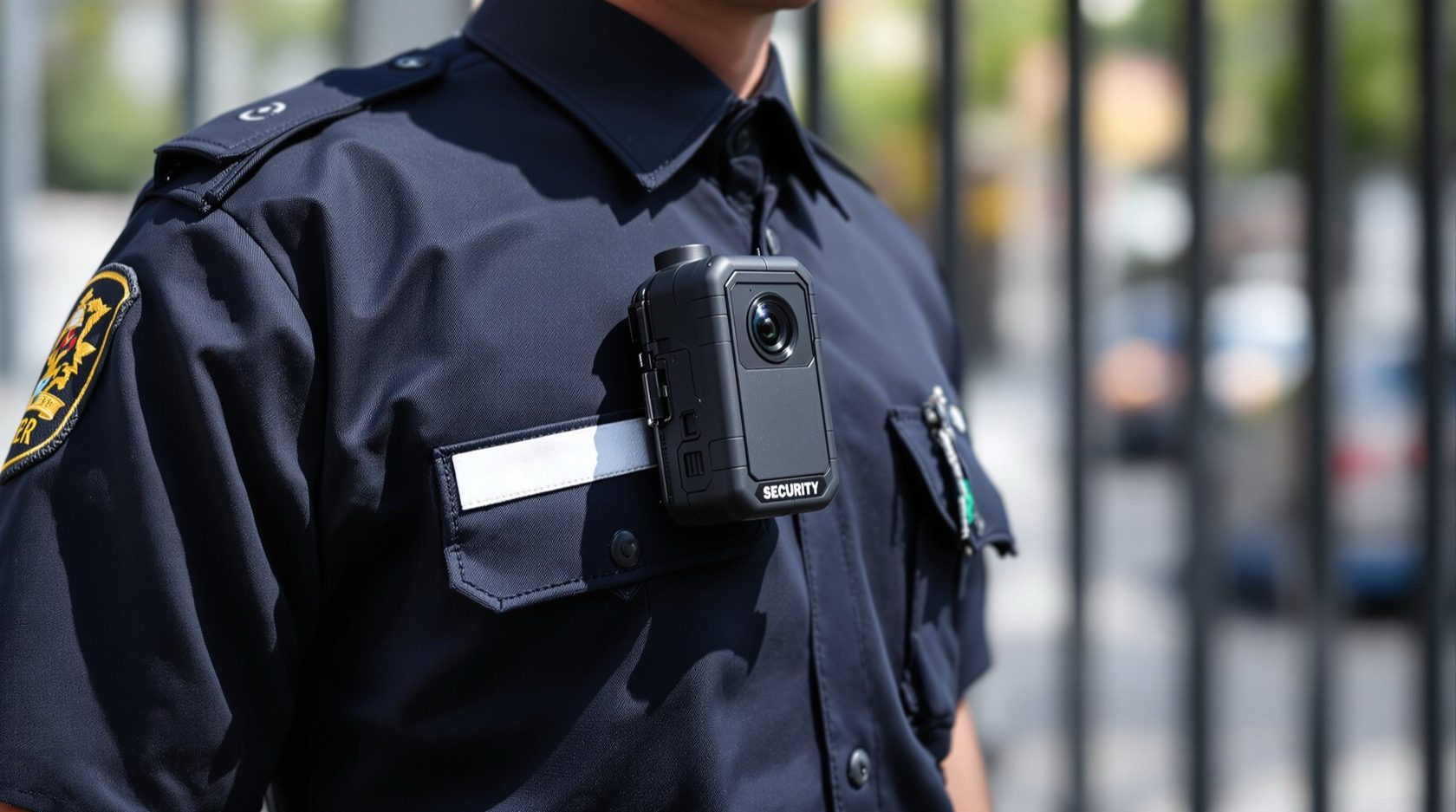
Most CCTV watches a place — a gate, a lobby, a corridor. A body-worn camera (BWC) watches an interaction. It is a small, rugged camera clipped to a security guard's uniform or chest that records what happens in front of the guard: the visitor at the gate, the dispute over a parcel, the vehicle argument at the barrier. In private security across India — gated societies, commercial receptions, event venues, estates and patrols — the BWC has quietly become one of the most useful, and most misunderstood, tools an RWA or facility manager can deploy.
This guide is the focused explainer on body-worn cameras in Studio Matrx's CCTV hub. The stance is simple and non-negotiable: a BWC is a tool for accountability and evidence, not covert surveillance. Worn openly, backed by a written policy and clear notice, it protects residents, visitors and the guard alike. Deployed secretly or without rules, it becomes a privacy liability. This guide is about doing it the right way.
Scope & ethics. This guide helps an RWA, facility manager or business decide and govern a BWC programme. Body-worn cameras must be worn visibly, never used to covertly record people, and never to capture inside homes, bathrooms, changing areas or private spaces. Handle all footage under the Digital Personal Data Protection Act, 2023. Employ only PSARA-licensed guarding agencies, whose staff are trained and vetted.
What a body-worn camera actually is
A body-worn camera is a self-contained recorder about the size of a matchbox or a small deck of cards. It clips to the chest, shoulder or lapel of a uniform and captures video, audio and a timestamp from the wearer's point of view. Unlike fixed CCTV, it moves with the guard, so it records face-to-face interactions rather than a fixed scene.
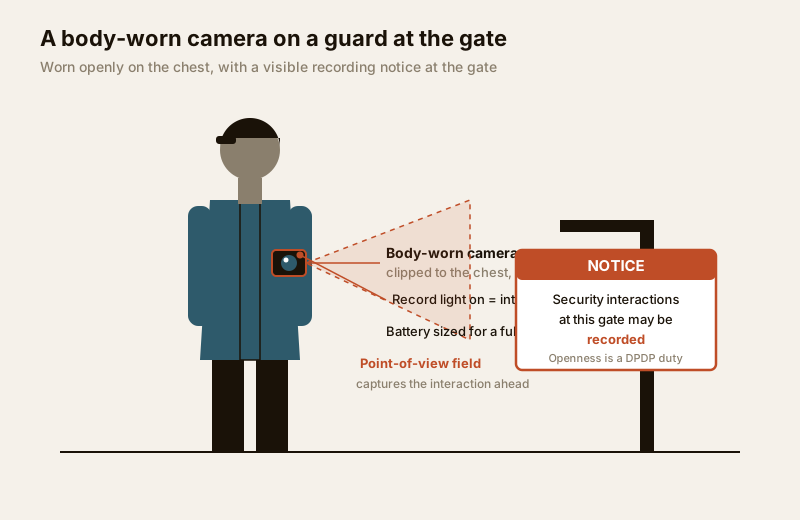
Typical features include a wide-angle lens (to capture the full interaction), an indicator light that shows when it is recording, a battery sized for a full shift, onboard storage, and — on better units — an IP-rated weatherproof body for monsoon and dust. Some record continuously; most sit in a low-power standby/buffer state and are switched to full recording by the guard when an interaction begins. The camera is worn openly and visibly; that visibility is the entire point.
Crucially, a BWC is not a hidden camera and not a replacement for fixed CCTV. It complements a fixed system: the gate CCTV sees the wide scene, the BWC captures the close, moving human interaction the fixed camera misses.
Why RWAs and businesses deploy BWCs
The value of a body-worn camera is well documented in security practice, and it rests on a simple behavioural truth: people behave better when they know an interaction is being recorded — on both sides of the camera.
- Accountability, both ways. A recorded interaction holds the guard to a professional standard and the visitor to civil behaviour. Complaints of rudeness, favouritism or misconduct at the gate can be checked against an objective record instead of one person's word against another's.
- De-escalation. The mere presence of a visible camera, and a guard calmly saying "this interaction is being recorded," measurably cools heated moments — the parcel dispute, the tailgating argument, the late-night entry refusal.
- An objective record of incidents and disputes. Gate rows, alleged damage to a visitor's vehicle, a resident's complaint about a guard — a BWC turns "he said, she said" into reviewable footage.
- Evidence. For a genuine incident — theft, assault, trespass — timestamped point-of-view footage is valuable evidence to hand to the police, far more so than a distant fixed-camera frame.
- Deterrence. A visible BWC, like visible CCTV, discourages bad behaviour before it starts.
- Guard safety. Guards are often lone workers facing aggression. Knowing the encounter is recorded protects them, and the footage supports them if they are later blamed.
The point of a BWC programme is to raise standards and settle disputes fairly — not to spy on residents. That framing must be visible in every rule you write.
Where body-worn cameras fit in private security
BWCs earn their place where a guard has repeated, close, potentially contentious interactions with people — exactly the spots a fixed camera cannot follow.
| Setting | Why a BWC fits | What it typically captures |
|---|---|---|
| RWA / society gate | Constant visitor, vehicle and delivery interactions; disputes are common | Entry refusals, parcel handovers, vehicle arguments, ID checks |
| Commercial reception / lobby | Front-desk guards manage visitors, contractors and after-hours access | Sign-in disputes, access refusals, aggressive visitors |
| Events & venues | High footfall, crowd control, ticket and entry checks | Gate scuffles, ejections, lost-property claims |
| Estate / campus patrols | Lone guards on foot rounds across a large property | Trespass, unsafe conditions, confrontations on rounds |
| Retail & warehouse security | Loss-prevention and delivery-bay interactions | Shoplifting stops, delivery disputes, staff-gate checks |
Where a BWC is the wrong tool: continuous background monitoring of a space (that is fixed CCTV's job), or anything covert. A BWC is for the moment of interaction, worn openly, switched on with purpose. To map which of your interaction points actually need one, walk your property with the security privacy assessment and the blind-spot identification guide.
The governance you must get right first
Here is the part that separates a responsible BWC programme from a privacy complaint waiting to happen. Before a single camera is switched on, you need a written policy. Hardware is the easy 20%; governance is the 80% that makes it lawful and trusted.
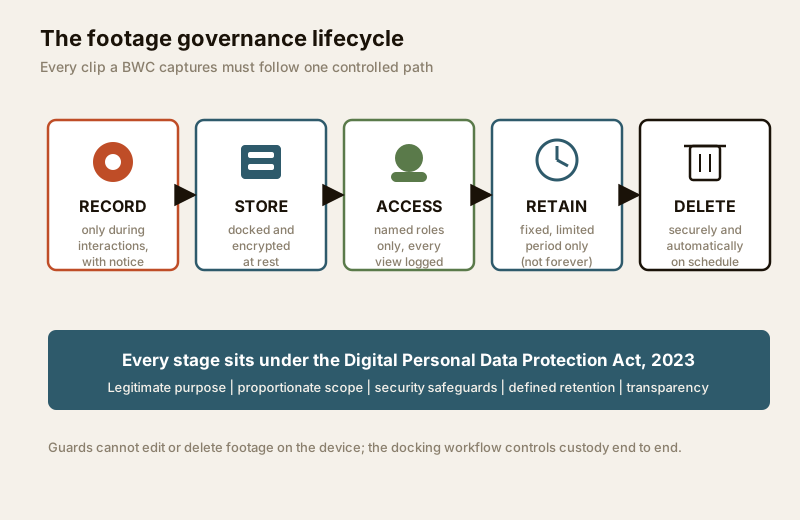
A sound policy answers every one of these, in writing:
- When recording is on and off. Define it. Common practice: recording starts when an interaction or incident begins and stops when it ends — not blanket, all-shift recording of every passer-by. Never record inside residents' homes or private spaces.
- Notice to visitors and residents. People must be told recording may occur. Put up a clear notice board at the gate and reception ("Security interactions may be recorded"), brief residents through the RWA, and have guards state it when they begin recording. Openness is a legal and ethical requirement, not a courtesy.
- No recording in private spaces. Bathrooms, changing rooms, the insides of homes, and any space with a reasonable expectation of privacy are strictly off-limits — full stop.
- Who can access footage. Name the roles. Typically a single accountable person (the facility manager or security head) plus a defined chain. Every access is logged. Guards should not be able to freely view, copy, edit or delete their own footage.
- Retention and secure storage. Set a fixed, limited retention period (many programmes keep routine footage only a few weeks unless flagged for an incident), store it encrypted, dock cameras to offload footage automatically, and delete on schedule. Storage must be access-controlled and tamper-resistant.
- DPDP Act duties. Under the Digital Personal Data Protection Act, 2023, footage of identifiable people is personal data. That brings duties: a legitimate, stated purpose (security and safety), proportionality (record interactions, not everyone all the time), security safeguards, defined retention, and a route for people to raise concerns. Treat DPDP compliance as a design input, not an afterthought.
Get these written, approved by the RWA committee or business owner, and shared with residents before deployment. A BWC without a policy is not a security tool; it is a liability.
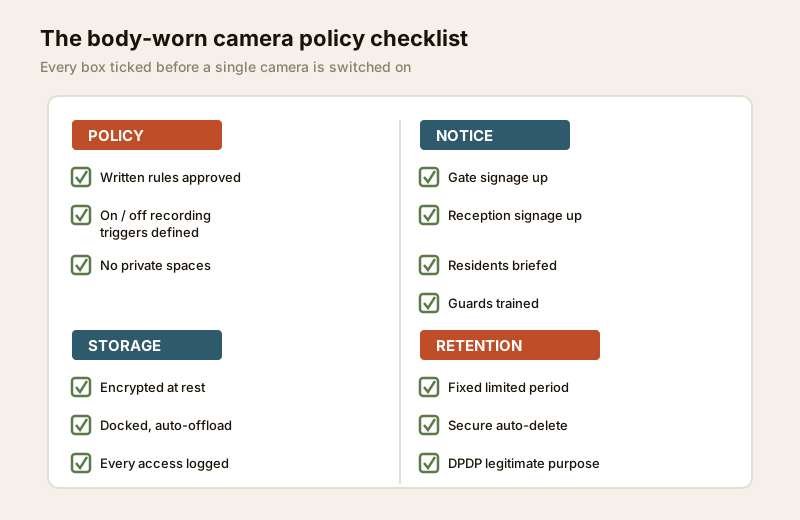
A body-worn camera deployment checklist
Use this as the go/no-go checklist. If any row is unresolved, the programme is not ready to launch.
| Area | What must be in place | Why it matters |
|---|---|---|
| Written policy | Approved rules on when to record, on/off triggers, prohibited spaces | Lawful, consistent, defensible use |
| Visitor & resident notice | Signage at gate/reception; residents briefed via RWA | Openness; a DPDP transparency duty |
| Guard training | Agency trains guards on when to record, how to state it, what is off-limits | Prevents misuse and privacy breaches |
| Access control | Named roles only; every access logged; guards cannot edit/delete | Footage integrity and trust |
| Encrypted storage | Docking station offloads to access-controlled, encrypted storage | Protects personal data from leaks |
| Retention & deletion | Fixed limited period; automatic secure deletion; incident holds | DPDP proportionality; no indefinite hoarding |
| Tamper resistance | Guards cannot stop/erase mid-incident; indicator light on | Reliable, honest record |
| DPDP legitimate purpose | Stated security/safety purpose; proportionate scope | The legal basis for recording at all |
Practical points before you buy
The governance decides whether to deploy; these practical factors decide what to buy and how it runs day to day.
- Battery life over a shift. A guard's shift can run 8–12 hours. Choose a battery (and buffered rather than continuous recording) that lasts the full shift, or plan hot-swap batteries or a mid-shift dock. A camera that dies at hour six is worse than none, because people assume it is running.
- Storage and docking. Footage has to go somewhere secure. A docking station that charges the camera and offloads footage to encrypted storage in one step is the clean pattern — it removes manual copying (and the chance to tamper) from the guard's hands.
- Tamper resistance. The value of a BWC rests on the record being honest. Pick units where a guard cannot delete or edit footage on the device, where the indicator light clearly shows recording, and where the docking workflow controls custody.
- Ruggedness. Indian gates mean dust, heat and monsoon. Favour an IP-rated weatherproof body and a secure mount that survives a shift outdoors.
- Cost. Individual BWC units span a wide range — roughly ₹6,000–₹20,000 for a basic guard unit, and ₹20,000–₹60,000+ for higher-grade cameras with better battery, encryption and docking. Budget also for docking stations, secure storage, and the recurring cost of managing footage — often the larger long-term line item. Price a full guarding-plus-camera package alongside your other measures in the security system cost estimator.
When to bring in a professional. You (the RWA committee, facility manager or owner) decide the policy, the notice, the retention rules and where BWCs are worn. Bring in a PSARA-licensed guarding agency to supply trained, vetted guards and to run the day-to-day recording discipline. If the footage will be stored on networked or cloud infrastructure, have the storage, encryption and access controls set up by a qualified IT/security integrator, and consider a legal review of your policy for DPDP compliance before launch. Any mains power for docking stations is a licensed electrician's job — see the electrical hub.
How BWCs fit the wider security picture
A body-worn camera is one layer, not a whole system. It works best inside a coordinated plan: a visible fixed CCTV system for the scene, doorbell / entry cameras at unit doors, trained gated-community guarding, and a building-wide security design tying it together. In hospitality and larger venues, the same logic scales up — see the hotels and resorts security guide. Start any deployment from a proper security risk assessment so the BWC solves a real, identified problem rather than becoming surveillance for its own sake.
Key takeaways
- A body-worn camera is a small, openly worn camera on a security guard's uniform that records interactions — the close, moving encounters that fixed CCTV cannot follow.
- Its legitimate value is accountability (both ways), de-escalation, an objective record of gate disputes, evidence, deterrence and guard safety — at RWA gates, receptions, events, patrols and estates.
- It is a tool for accountability and evidence, worn visibly — never covert surveillance. That framing must be visible in every rule.
- The hardware is the easy part; the written policy is mandatory first: when recording is on/off, clear notice to visitors and residents, no recording in private spaces, named access with logging, fixed retention and secure encrypted storage — all under the DPDP Act, 2023.
- Practical musts: shift-long battery, a docking station that auto-offloads to encrypted storage, tamper resistance, IP-rated ruggedness, and a realistic budget for the ongoing footage-management cost.
- Deploy through a PSARA-licensed agency, get a DPDP legal review of the policy, and make the BWC one coordinated layer of a wider security plan — not a standalone gadget.
References
- Digital Personal Data Protection Act, 2023 — footage of identifiable people is personal data; a BWC programme needs a legitimate stated purpose, proportionate scope, security safeguards, defined retention and transparency to the people recorded. Verify current rules and notifications through official government sources.
- Private Security Agencies (Regulation) Act, 2005 (PSARA) — governs the licensing and training of private guarding agencies in India; engage only licensed agencies and verify current state-level requirements.
- General information-security good practice (encryption at rest, access logging, least-privilege access, defined retention) for any system that stores footage of people; have storage and access controls set up and reviewed by qualified professionals.
This is an educational overview, not legal advice. Before deploying body-worn cameras, obtain a legal review of your policy for DPDP compliance, engage a PSARA-licensed guarding agency, and verify the current status of any Act or standard through official government sources.
Export this guide
Related Guides — Deep-dive reading
Security Privacy Assessment for Indian Homes
Getting the privacy side of home security right: camera placement ethics and limits, notice and consent, the extra caution audio demands, and treating footage as personal data you store, retain and delete responsibly under India's DPDP Act 2023 direction.
SecurityVisitor Vehicle Management in India: A Professional Guide
The everyday weak point of every society and office gate is not the resident's car — it is the visitor, the cab, the delivery rider and the contractor who must be let in without opening the whole park to anyone. This is the process, not just the hardware: verify at the gate before the boom lifts, park visitors away from resident bays, and never jam the gate a fire tender needs.
SecurityCo-Living Security in India: Safe Shared Living for Young Residents
The co-living and managed-PG format is booming in Indian cities, packing many unrelated residents into one shared building with common amenities and constant churn. This guide shows how to hold open community and individual privacy together — layered access, visitor control, common-area CCTV that stops at the bedroom door, and life-safety for a building full of sleepers.
SecurityRelated Tools — Try Free
CCTV Placement Compliance Checker
A quick DPDP-grounded privacy and safety self-check for where a camera is pointed — flags the items to fix.
ComplianceCCTV Camera Coverage & Count Calculator
Estimate how many CCTV cameras you need, the NVR channels, storage in TB for your retention period, and an indicative all-in cost with GST.
CCTV CalculatorSecurity System Cost Estimator
Estimate the all-in capex with GST, annual running cost and 5-year total cost of ownership of a home or building security system.
Cost Estimator