
Best Windows for Indian Climate: A Zone-by-Zone Selector
Match window type, frame material, glass, and shading to your climate zone — hot-dry, coastal, composite, temperate, or hill
The "best" window in Bengaluru would be a mistake in Leh, and the glass that keeps Jaipur cool would make a Shimla winter miserable. There is no single best window for India, because India is not one climate. It spans five recognised climate zones, and each one rewards a different combination of window type, frame material, glass, and shading. This guide is the one place that brings all four together, zone by zone, as a decision matrix you can act on.
If you want to go deeper on any single component, we link the focused guides as we go. But start here, because choosing the glass before you know your zone is how money gets wasted.
How India's climate zones work
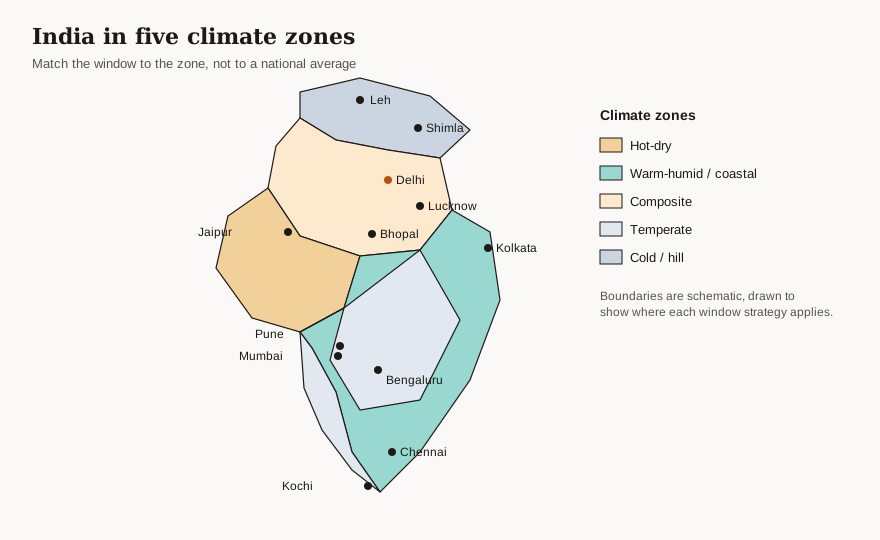
The National Building Code and the Eco-Niwas Samhita (the residential energy code from the Bureau of Energy Efficiency) classify India into five primary climate zones, plus a high-altitude cold band. Your zone decides the whole strategy: in hot zones you fight heat gain, in humid zones you chase cross-ventilation, and in the hills you flip the logic entirely and chase free winter sun while sealing out the cold.
Get the zone right first. Every other window decision flows from it.
Find your zone
- Hot-dry: Delhi, Jaipur, Ahmedabad, Nagpur, Jodhpur, Bikaner
- Warm-humid / coastal: Mumbai, Chennai, Kochi, Kolkata, Goa, Visakhapatnam
- Composite: Lucknow, Bhopal, Kanpur, Allahabad, Indore, Patna
- Temperate / moderate: Bengaluru, Pune, parts of the Deccan
- Cold / hill: Shimla, Manali, Srinagar, Leh, Gangtok, Darjeeling
A useful rule of thumb: if your summers are brutal and dry, you are hot-dry; if the air is sticky and the monsoon is heavy, you are warm-humid; if you get both a hard summer and a real winter, you are composite; if it is mild most of the year, you are temperate; and if you light a fire in winter, you are cold.
The climate-zone decision matrix
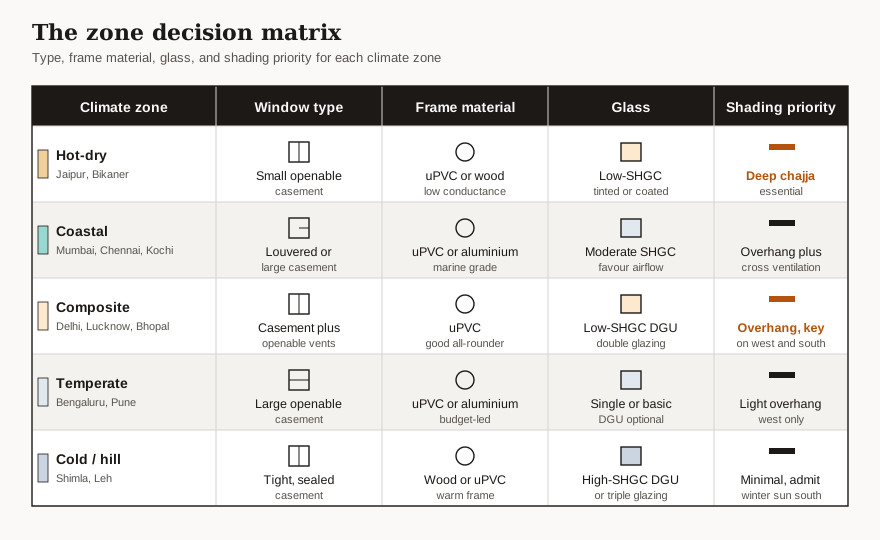
This is the core of the guide. Read across your row.
| Zone | Best window type | Best frame material | Best glass | Shading priority |
|---|---|---|---|---|
| Hot-dry | Casement and sliding, moderate openings, openable for night purge | uPVC or thermally-broken aluminium, tight dust seals | Solar-control or Low-E DGU, low SHGC ~0.25 to 0.35 | Deep external (chajja, fins) — high |
| Warm-humid / coastal | Large operable, louvered or casement, maximise cross-ventilation | uPVC or anodised / powder-coated aluminium (never bare steel) | Low-E for glare control, moderate SHGC, good VLT | Overhangs plus verandahs — high, but keep airflow |
| Composite | Flexible operable windows, moderate WWR | uPVC or aluminium | Low-SHGC glass with seasonal external shading | Adjustable / seasonal — medium-high |
| Temperate | Balanced casement / sliding, good cross-ventilation | Most materials work — value and looks lead | Clear or light Low-E for daylight | Light — low-medium |
| Cold / hill | Smaller north, generous south openings, airtight | Wood or thermally-broken frames (insulating) | DGU or triple glazing; HIGHER-SHGC on south | Minimal — you want winter sun in |
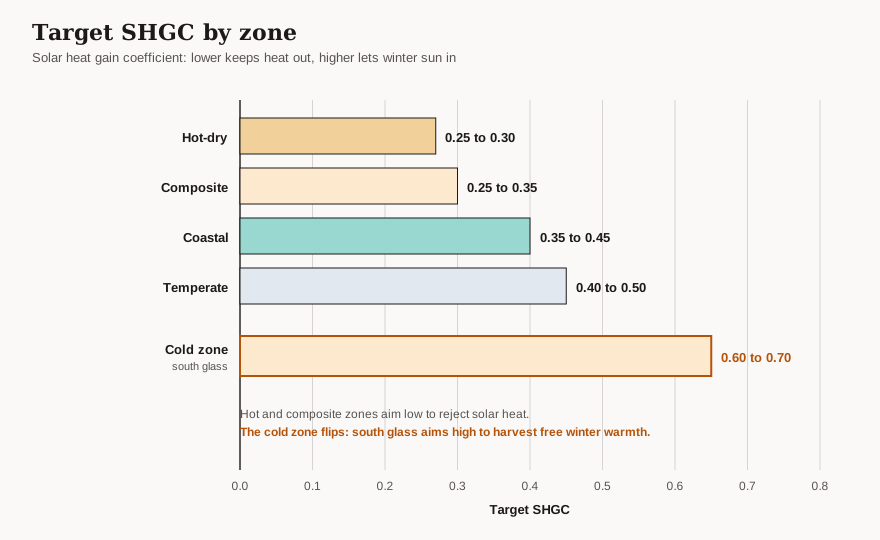
The single biggest variable is the solar heat gain coefficient (SHGC) — the fraction of solar heat a window lets through. Clear single glazing is about 0.82, a plain double-glazed unit about 0.70, and solar-control or Low-E glass drops it to roughly 0.25 to 0.35. In hot India you want that number low. In the hills, on south-facing glass, you want it high.
Hot-dry zone: block the heat, purge at night
Delhi, Jaipur, and Ahmedabad face extreme daytime heat and dust, with cool nights for much of the year. The strategy is keep openings moderate, keep solar gain out, and open up at night to flush the day's heat.
- Type: Casement or sliding windows with a good openable fraction. The NBC asks for roughly ten per cent of floor area as openable area; size for night purge, not for huge daytime glass.
- Material: uPVC or thermally-broken aluminium with tight dust seals — dust ingress is a real maintenance problem here. See our window frame materials comparison and the focused best window material for hot climate.
- Glass: Low-SHGC solar-control or Low-E double glazing. The best glass for hot climate guide goes deep on coatings and U-values.
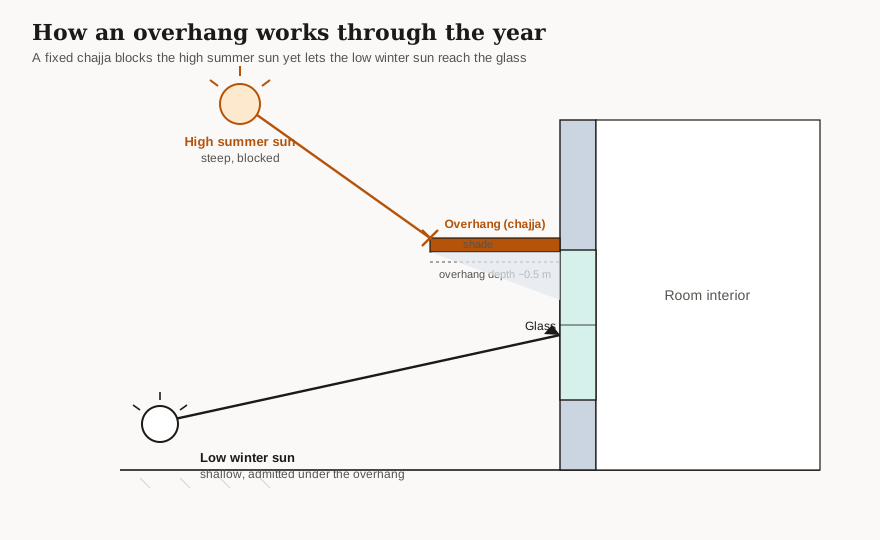
- Shading: Deep external shading is non-negotiable. A chajja or projecting fin stops the sun before it hits the glass — far more effective than any coating alone. See window shading strategies.
Warm-humid and coastal: ventilation and corrosion are the whole game
Mumbai, Chennai, Kochi, and Kolkata combine heat with high humidity, salt-laden air, and a heavy monsoon. Here, air movement beats insulation, and the enemy is corrosion and mould, not just heat.
- Type: Maximise operable area. Louvered windows and large casements give cross-ventilation that carries away humidity and keeps interiors comfortable without air-conditioning.
- Material: Corrosion resistance is critical. Salt destroys bare steel and even mild aluminium. Use uPVC, or anodised / powder-coated aluminium. The coastal material guide and the monsoon material guide cover salt and water in detail.
- Glass: Low-E to cut glare and some heat, but keep a healthy visible-light transmission so daylight still works.
- Shading and water: Overhangs and verandahs that shade without choking airflow, plus proper drainage and weep holes so monsoon water never pools in the frame.
On the coast, the question is not "how do I keep heat out" but "how do I keep air moving and salt out."
Composite zone: build for two seasons
Lucknow, Bhopal, and Kanpur get hot summers, genuinely cool winters, and a monsoon in between. No fixed setting wins, so flexibility is the design principle.
- Type: Operable windows you can open wide for winter sun and shoulder-season breeze, and shut tight in peak summer.
- Material: uPVC or aluminium both work; choose on budget and finish.
- Glass: Low-SHGC glass to handle the hard summer.
- Shading: Seasonal or adjustable shading earns its keep — deep enough to block the high summer sun, but letting the low winter sun reach the glass. This is exactly the trade-off explored in passive design for India's climate zones.
Temperate zone: the easy one
Bengaluru and Pune are mild most of the year, so windows are about daylight, ventilation, and looks rather than fighting the climate. A balanced window-to-wall ratio, clear or light Low-E glass for bright interiors, and good cross-ventilation cover it. Most frame materials perform fine, so value and aesthetics can lead the decision. If your budget is tight, this is the zone where you can spend least on glazing and still be comfortable. For the energy fundamentals behind these choices, see energy-efficient windows in India.
Cold and hill zone: the honest flip
Shimla, Manali, Srinagar, and Leh invert everything above. Insulation is king, and free winter heat is a gift, not a problem.
- Type: Smaller, well-sealed north openings to limit heat loss; generous south-facing openings to capture winter sun.
- Material: Wood is genuinely good here — it is a natural insulator — as are thermally-broken frames. Airtightness matters more than anywhere else.
- Glass: Double glazing as a minimum; triple glazing pays off in the hills where a single pane has a U-value around 5 and triple drops below 1. Crucially, use higher-SHGC glass on the south to let winter sun heat the room for free.
- Shading: Minimal. You are not blocking the sun; you are welcoming it.
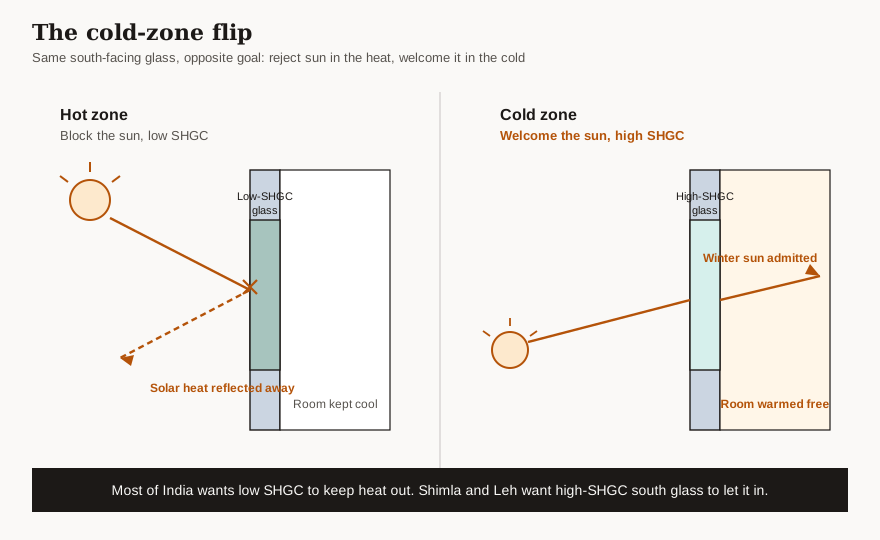
Triple glazing and high-SHGC south glass are the right call in the hills — and an expensive mistake in hot India. The same product, opposite verdict, decided entirely by your zone.
Targets to design to
The Eco-Niwas Samhita ties it together with the Residential Envelope Transmittance Value (RETV), with a benchmark of 15 W/m2 or below for most of the country, and a window-to-wall ratio linked to the visible-light transmission of your glass — more glass demands clearer or better-shaded glass. As a quick reference: aim for low SHGC and deep shading in hot and composite zones; aim for low U-value and selective high-SHGC south glass in the cold zone; and in temperate and coastal zones, prioritise daylight and airflow.
Indicative frame costs in India run roughly: uPVC Rs 250 to 800, aluminium Rs 350 to 3000, and wood Rs 500 to 1500 per square foot, depending on grade and finish.
The one-line answer
Match your zone, then read the matrix: in hot-dry block the sun with low-SHGC glass and deep chajjas; on the coast chase ventilation and corrosion-proof frames; in composite zones go flexible and seasonal; in temperate zones relax and optimise for daylight; and in the hills, flip it — insulate hard and let the winter sun pour in.
References
- Eco-Niwas Samhita (Energy Conservation Building Code for Residential Buildings), Bureau of Energy Efficiency: https://www.beeindia.gov.in/en/programmes/eco-niwas-samhita-ens
- Bureau of Energy Efficiency, residential energy efficiency resources: https://beeindia.gov.in/
- National Building Code of India (Part 8 and Part 11 on building services and approach to sustainability), Bureau of Indian Standards: https://www.bis.gov.in/
- Eco-Niwas Samhita launch and climate-zone framework, Press Information Bureau, Government of India: https://pib.gov.in/PressReleaseIframePage.aspx?PRID=1556188
Export this guide
Related Guides — Deep-dive reading
Energy Efficient Windows Explained: The Whole-System Guide for Indian Homes
Treat the window as an energy device — frame, glass, seals, shading, install and rating — and learn why low SHGC and shading beat chasing a cold-climate U-value in hot India.
Windows & GlazingEnergy-Efficient Facades in India: How the Building Skin Cuts Your Cooling, Heating & Lighting Bills
How a building facade drives cooling, heating and lighting energy in India, the three levers of solar-heat-gain control, insulation and daylighting, U-value, SHGC, VLT and WWR in plain terms, ECBC and Eco-Niwas expectations, and real Indian green buildings.
Building FacadesFloor-to-Ceiling Windows (India): Maximum Light, and the Heat Trade-Off
Full-height glazing for Indian homes — how to win the daylight and view without losing the energy code, comfort or safety.
Windows & GlazingRelated Tools — Try Free
Brise-Soleil Visualizer
Interactive horizontal-louvre cut-off angle calculator — sun altitude, louvre depth, and spacing inputs with a live shadow preview. Computes θ = arctan(spacing/depth) for façade shading, ECBC envelope compliance, hospital daylight design, and tropical sun-control detailing.
Sun Shading ToolCross-Ventilation Analyzer
Estimate airflow and air changes per hour (ACH) from room size, window areas, layout, and local wind — with NBC 2016 Part 8 compliance check.
Ventilation CalculatorWindow Material Comparison Tool
Compare uPVC, aluminium, wood, steel and composite windows on cost, life, upkeep and insulation.
Compare