
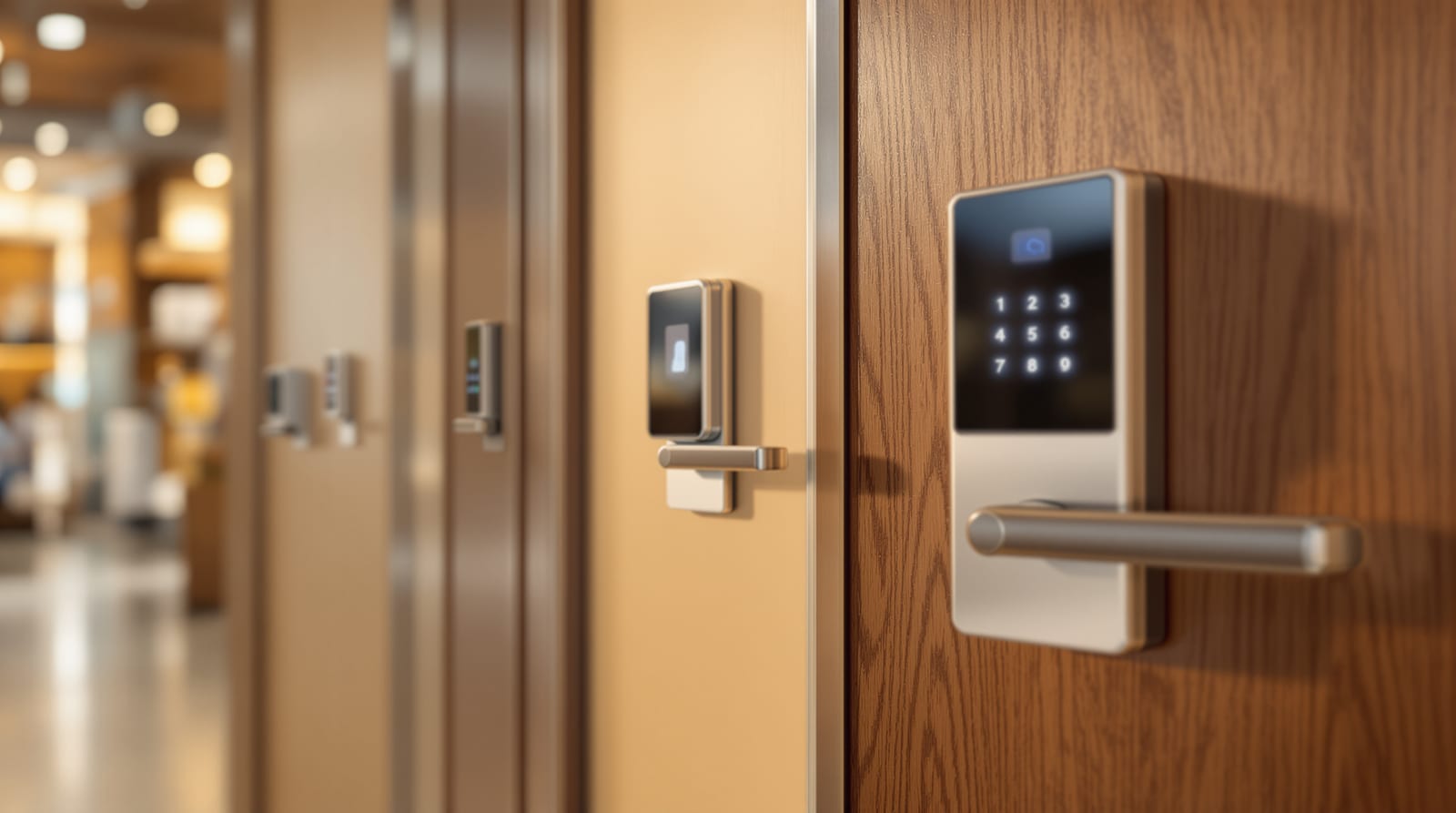
Best Smart Lock Brands in India 2026: Compared & Reviewed
A buyer's comparison of Godrej, Yale, Qubo, Ozone, Philips and Atomberg smart locks — unlock methods, build, battery and after-sales.
A smart lock is now the single most-requested upgrade on Indian main doors, and choosing among the best smart lock brands in India is mostly a question of matching unlock methods, build and after-sales support to your door and your household. The market has matured fast: you no longer have to import a lock, and you have genuine choice across home-grown names like Godrej, Qubo and Atomberg alongside global brands like Yale and Philips. This buyer's guide compares the leading brands honestly, explains what actually matters, and tells you what to check before you pay. For the wider security picture see our smart door locks guide and door security guide.
The best smart lock brands in India worth shortlisting
There is no single "best" — the right pick depends on whether you have a wooden or metal door, how many users you manage, and how much you value app/remote features versus simple fingerprint-and-PIN reliability. The names below are the ones with real dealer presence and service networks in India in 2026.
| Brand | Positioning | Known for | Typical strength |
|---|---|---|---|
| Godrej (Advantis / Catus) | Premium-mainstream | Wide service network, sturdy mortise designs | After-sales reach, build confidence |
| Yale (Assa Abloy) | Premium | Heritage lock brand, polished app ecosystem | Hardware quality, finish |
| Qubo (Hero Group) | Mid / value-smart | App-first, Wi-Fi, frequent online deals | Remote features per rupee |
| Ozone | Mid | Large hardware range, glass-door variants | Choice across door types |
| Philips | Premium-mainstream | Face/3D recognition, push-pull designs | Modern unlock methods, brand trust |
| Atomberg | Value-smart (newer) | App control, clean industrial design | Fresh feature set, pricing |
Godrej is the safest default for most homeowners purely because its service footprint reaches smaller cities. Yale and Philips sit at the premium end on finish and unlock technology. Qubo and Atomberg are the value-smart challengers, strong on app features. Ozone gives you the widest spread of body styles including locks built for glass and aluminium doors — useful if you read our aluminium doors guide.
Unlock methods: what each one is good for
Modern smart locks bundle several ways in. More methods means more convenience but also more to maintain. As a rule of thumb, choose at least three: one biometric, one code, and one fallback.
| Unlock method | Best for | Watch-outs |
|---|---|---|
| Fingerprint | Daily family use, fast entry | Wet/dry fingers, elderly prints can fail |
| PIN / keypad | Guests, maids, backup | Wear marks reveal digits; rotate codes |
| RFID card / fob | Kids, domestic help | Cards get lost; deactivate quickly |
| App (Bluetooth/Wi-Fi) | Remote unlock, access logs | Needs hub/Wi-Fi; depends on app uptime |
| Face recognition | Hands-full entry | Premium-only; lighting matters |
| OTP / e-key | One-time guest access | Requires connected model |
| Mechanical key | Emergency override | Keep it off-site, never inside |
Fingerprint-plus-PIN covers the vast majority of households. App and OTP are genuinely useful if you frequently grant access to delivery staff, tenants or relatives. Face recognition and Wi-Fi remote unlock are premium conveniences, not necessities. Always confirm the lock has a physical key override and an emergency power option.
Build, batteries and emergency power
The lock body matters as much as the electronics. A mortise (sunk into the door) lock is generally more secure and solid than a rim (surface-mounted) lock, but it needs a thicker door and proper cutting.
Most smart locks run on AA batteries (often 4 to 8) and last roughly 6 to 12 months depending on traffic and Wi-Fi use. The lock should warn you at low charge for weeks before it dies. Crucially, check the emergency power path: almost all good locks have a USB-C or micro-USB port on the underside so you can jolt them awake with a power bank if the batteries die while you are locked out, plus a mechanical key. Never buy a lock that relies on the app alone with no physical fallback.
Suitability: wooden vs metal doors
This is where many buyers slip up. The lock must match the door, or installation gets compromised.
- Solid wooden / flush doors: Most mortise smart locks are designed for these. You need a leaf at least ~38–45 mm thick to take a mortise cavity. See our wooden doors guide and flush doors guide.
- Hollow-core / cheap flush doors: A heavy mortise lock can loosen over time; pick a lighter model or upgrade the door. Read best door material before deciding.
- Metal / steel doors: Need a lock rated for steel, with the right backset; not every model fits. Check our steel doors guide.
- Glass / aluminium doors: Require specific surface-mount or patch-fitting variants — Ozone and a few others make these.
Always confirm the door thickness, backset and handing with the dealer before ordering. A mismatch is the commonest reason a smart lock looks loose or jams. Our door hardware guide covers fitting fundamentals.
App, ecosystem and after-sales
For connected models, the app is half the product. Look for: clear access logs, easy user add/remove, OTP/e-key sharing, low-battery alerts, and ideally Alexa/Google Home support. Wi-Fi locks unlock remotely from anywhere; Bluetooth-only locks work at the door or need a separate hub.
After-sales is decisive in India because a faulty main-door lock is an emergency. Godrej generally leads on physical service reach into Tier-2 and Tier-3 towns; Yale and Philips have solid metro service; Qubo and Atomberg lean on app support and courier-based replacement. Whatever the brand, get the warranty in writing, save the dealer's number, and confirm who installs (brand technician vs local carpenter).
| Factor | Premium (Yale, Philips, Godrej top) | Value-smart (Qubo, Atomberg, Ozone) |
|---|---|---|
| Warranty (typical) | Broadly 1–3 years | Broadly 1–2 years |
| Service model | Brand technician common | App + courier replacement common |
| Finish & body | Heavier, polished | Lighter, modern |
| App maturity | Generally polished | Improving, feature-rich |
| Price band | Mid to premium | Value to mid |
Warranty terms vary by model and dealer, so treat the above as typical norms, not guarantees. For the full picture read our door warranty guide and door after-sales service guide.
What to check before you buy
1. Door fit — thickness, backset, handing, mortise vs rim. Get the dealer to confirm against your actual door.
2. Fallback access — physical key and emergency USB power port both present.
3. Unlock mix — at least fingerprint + PIN; add app/OTP only if you'll use them.
4. Battery life and alerts — AA-based, with weeks of low-battery warning.
5. Warranty in writing — period, what's covered, who services it locally.
6. Installation — brand technician preferred; a botched cut ruins a good lock.
7. Price + 18% GST — smart locks attract 18% GST; budget supply plus fitting. Use our door GST calculator.
To sanity-check the spend against the rest of your door budget, compare with the 2026 door cost guide and, if you're pricing a full home, the door budget planner. City costs and labour also shift fitting charges — see door cost by city.
Frequently asked questions
Which is the best smart lock brand in India for most homes?
For most households, Godrej (Advantis / Catus) is the safest all-round pick because of its build confidence and wide service network. If you want premium finish and modern unlock methods, look at Yale or Philips; for value and app features, Qubo or Atomberg. Match the choice to your door and how much you'll use connected features.
Are smart locks safe if the power or internet goes down?
Yes, good ones are. Smart locks run on their own batteries, not mains power, so a power cut doesn't affect them. If batteries fully drain, you use the emergency USB port with a power bank or the mechanical key. Wi-Fi outages only disable remote app unlock — fingerprint and PIN keep working at the door.
Can I fit a smart lock on any door?
No. The door must suit the lock: solid wooden and flush doors of adequate thickness take mortise locks easily; hollow-core doors may not hold heavy locks well; metal, glass and aluminium doors need specific variants. Always confirm thickness, backset and handing with the dealer before buying.
How much do smart locks cost in India?
Broadly ₹5,000–₹12,000 for value/app-smart models, ₹10,000–₹22,000 for mid-range, and ₹20,000–₹45,000+ for premium and face-recognition push-pull locks — supply only, before 18% GST and fitting. Online offers can lower these. Treat figures as indicative across brands, not fixed quotes.
Fingerprint or face recognition — which should I choose?
Fingerprint plus PIN covers nearly every household reliably and costs less. Face recognition is a premium convenience that helps when your hands are full, but it's pricier and depends on lighting. Choose face only if you specifically want it; otherwise prioritise a solid fingerprint reader and a physical-key fallback.
Do smart locks come with warranty and service?
Yes. Most brands offer broadly 1–3 years depending on model, but terms vary, so get the warranty in writing. Confirm who services it locally — brand technician versus app/courier replacement — before you buy, because a faulty main-door lock is an emergency you'll want fixed fast.
Export this guide
Related Guides — Deep-dive reading
Smart Door Locks in India (2026): Fingerprint, PIN, RFID, Face and App Locks Compared
How digital and biometric smart locks actually work, every access method ranked, the battery and backup-key reality nobody warns you about, Wi-Fi vs Bluetooth, retrofit vs mortise, the real brands (Godrej, Yale, Qubo, Hafele, Lavna) and what each tier costs in 2026.
Home Doors & EntrancesSmart Lock vs Traditional Lock in India (2026): Which Should Guard Your Door?
An honest, even-handed head-to-head for Indian homes — keyless convenience, e-keys and remote access on one side, simple key-in-hand reliability with no power dependence on the other — ending in a clear verdict by household, and one rule both must obey: never trap anyone inside.
SecurityWiFi Smart Lock for Indian Homes: App Control, E-Keys & Connectivity Guide (2026)
How WiFi smart locks let you lock, unlock and grant access from your phone - hub vs built-in WiFi vs Bluetooth, e-keys for maids and deliveries, geofencing, voice control, and the Indian power-and-network caveats nobody warns you about.
Home Doors & EntrancesRelated Tools — Try Free
Door Cost Calculator
Estimate the all-in cost of a door — leaf, frame, hardware, fitting and GST — by type, material and size.
Door CalculatorDoor Lock Selector
Answer a few questions and get the right lock type — mortise, multipoint, deadbolt, privacy or smart — for any door.
Door ToolDoor Security Rating Calculator
Score your main door out of 100 across leaf, frame, lock and hardware — and see the top upgrades.
Security Tool