

Zoning and Land Use Certificate in India: Check a Plot's Zone Before You Build (2026)
Every plot sits in a planning zone that decides what you may build on it. Here is how zoning and master plans work, what a land-use certificate proves, and how to check a plot's zone before you buy or build.
Two plots on the same street can look identical and cost the same, yet one lets you build a family home and the other does not. The difference is almost never visible on the ground. It is written into the city's plan, in the plot's zone. Before any authority sanctions a building, it checks that what you want to build matches what the land is zoned for. Get this wrong and no amount of a beautiful design, a clean title or ready money will save the project.
This guide explains, in plain language, how Indian cities zone land, why a plot's zone decides what you can build, what a land-use or zoning certificate proves, and how to check a plot's zone before you buy or build.
Disclaimer: This is general educational information, not legal, planning or engineering advice. Zoning categories, master-plan maps, certificate names, fees and processes differ from state to state and city to city, and are revised over time. Leave the reading of official maps, the filing of applications and any liaison with authorities to a qualified architect, licensed engineer or licensed building surveyor. Binding decisions on a plot's zone and on what may be built rest solely with the local authority (the municipal corporation, development or planning authority, or gram panchayat). Always confirm a specific plot's zone in writing with that authority before you buy or build.
What "zoning" actually means
Zoning is the rule that divides a city into areas, and assigns each area a permitted set of uses. It answers a single question for every piece of land: what is this land allowed to be used for. A residential zone is meant for homes. An industrial zone is meant for factories and warehouses. A commercial zone is meant for shops and offices. Land in a green belt or no-development zone is meant to stay open.
Zoning is not a tax, not an ownership record and not the same as your title deed. You can fully own a plot and still be barred from building a house on it, because the land is zoned for something else. Ownership tells you the land is yours. Zoning tells you what you are allowed to do with it. Both must line up before you build.
The zone is set by the planning authority, not by the seller and not by you. That is why "the broker said it is fine for a house" carries no weight. Only the authority's plan and its certificate settle the matter.
The master plan and development plan
Cities do not zone land plot by plot on request. They zone it in advance, across the whole city, through a single document usually called the master plan, development plan or comprehensive development plan (often abbreviated CDP). Different states use different names for the same idea, and the planning body differs too: a development authority, an urban development authority, the town and country planning department, or the municipal corporation itself.
The master plan is both a map and a rule book. The map colours the city into zones. The rule book, sometimes issued as zoning regulations or development control regulations, states what each colour permits, what it prohibits, and the conditions attached. Master plans are made for a horizon year and are revised periodically, so an old plan you find online may already be superseded. This is one more reason to confirm the current plan with the authority rather than trusting a cached copy.
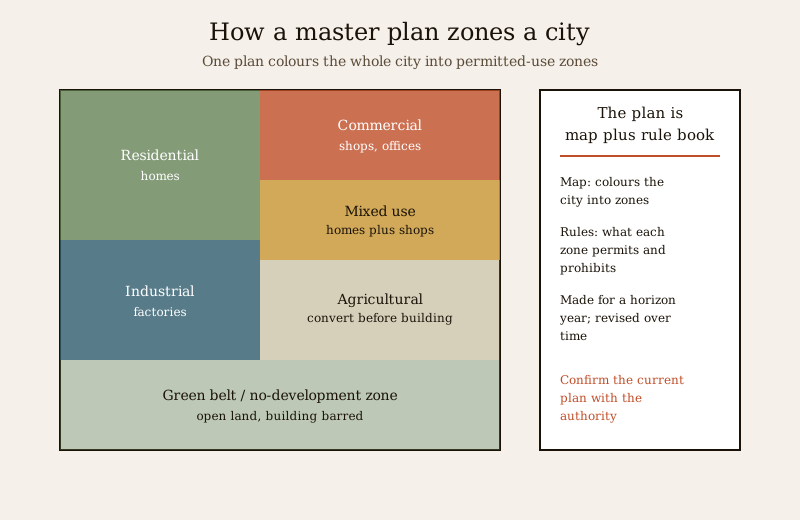
Because the master plan is prepared for the future, it can zone land that today looks like farmland as a future residential area, and it can freeze a fast-growing suburb as a green belt. What the ground looks like now is a weak guide; what the current master plan says is the real answer.
Why a plot's zone decides what you can build
When you apply for building plan sanction, the authority overlays your proposal on the master plan. If the plot is in a residential zone and you propose a house, the use matches and the application can proceed on its other merits. If the plot is in an industrial or agricultural zone and you propose a house, the use does not match, and the plan is rejected at the very first gate, before setbacks, height or floor area are even examined.
This is why the zone is the foundation of the whole permit journey. Everything downstream, the floor space you get, the setbacks you leave, the height you may reach, the parking you must provide, is defined by rules that apply within a zone. A residential house needs residential-zoned land. Get the zone right and the rest of the process, covered in our building-plan sanction walkthrough, has a chance. Get it wrong and there is nothing to sanction.
The zone also interacts with development-rights rules. How much you can build on a given zone is governed by floor-area ratios, explained in FAR versus FSI and development rights, and those ratios themselves differ by zone. Two residential plots of the same size in different sub-zones can yield very different buildable areas.
Common zones and what they allow
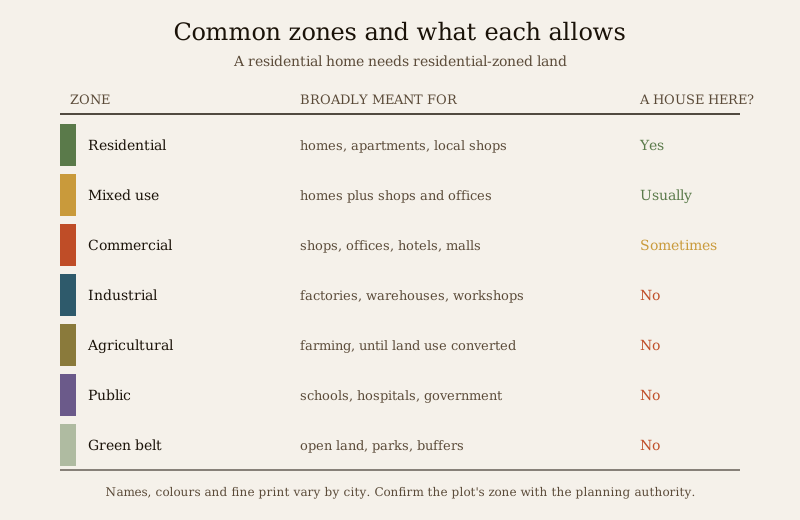
The table below shows the zone categories most cities use and what each broadly permits. Names, colours and the fine print vary by city, so treat this as a mental model, not a rulebook for any one place.
| Zone | Broadly meant for | A house here? |
|---|---|---|
| Residential | Homes, apartments, small local shops | Yes, this is the target zone for a home |
| Commercial | Shops, offices, hotels, malls | Sometimes, as part of mixed use; check limits |
| Mixed use | Homes plus shops and offices together | Usually yes, subject to conditions |
| Industrial | Factories, warehouses, workshops | No, homes generally not permitted |
| Agricultural | Farming and allied activity | No, until land use is converted |
| Public and semi-public | Schools, hospitals, government uses | No, reserved for institutional use |
| Green belt / no development | Open land, parks, buffers, forests | No, building is heavily restricted or barred |
| Transport and utilities | Roads, railways, services | No, reserved for infrastructure |
Land-use zone versus revenue land classification
Two separate systems describe the same plot, and confusing them is one of the most common and costly mistakes homeowners make.
The land-use zone comes from the master plan and is set by the planning authority. It answers what the land may be used for in planning terms: residential, commercial, industrial and so on.
The revenue classification comes from the land records and is maintained by the revenue department. It records what the land is on the revenue books, most importantly whether it is agricultural or non-agricultural (often called NA). A plot can be classified as agricultural in the revenue records even while the master plan zones it as a future residential area, and vice versa.
For a home, both usually need to line up. The plot has to be zoned residential (or a use that permits housing) in the master plan, and it typically also needs to be non-agricultural in the revenue records. If the land is still agricultural, it must first go through conversion, the process our guide on DC conversion and NA land-use change walks through in detail. Cross-check both systems; a clean answer from one does not guarantee the other.
What a land-use or zoning certificate proves
A land-use certificate, also called a zoning certificate, land-use extract or a certified copy of the CDP for a plot, is the planning authority's written statement of a specific plot's zone under the current master plan. It converts the general colour on a city map into an authority-issued answer for your exact survey number and location.
It typically states the plot's identity, the master plan it refers to, the zone the plot falls in, and sometimes the road-widening or reservation lines that cross the plot. What it proves is narrow but vital: it proves what the authority itself says the land is zoned for, on the date it was issued. It is the document you rely on rather than a broker's word, a coloured map screenshot, or the seller's assurance.
It does not prove title, does not prove the land is free of disputes, and does not by itself sanction any building. It is one essential input, alongside title, tax records and the full list of approvals and NOCs, into a safe decision. Because plans are revised, treat an old certificate with caution and get a current one for any live decision.
How to check a plot's zone before you buy or build
Checking a plot's zone is a sequence of steps that moves from a rough public map to an authority-issued certificate. The table sets out the journey; the figure that follows shows it as a flow.
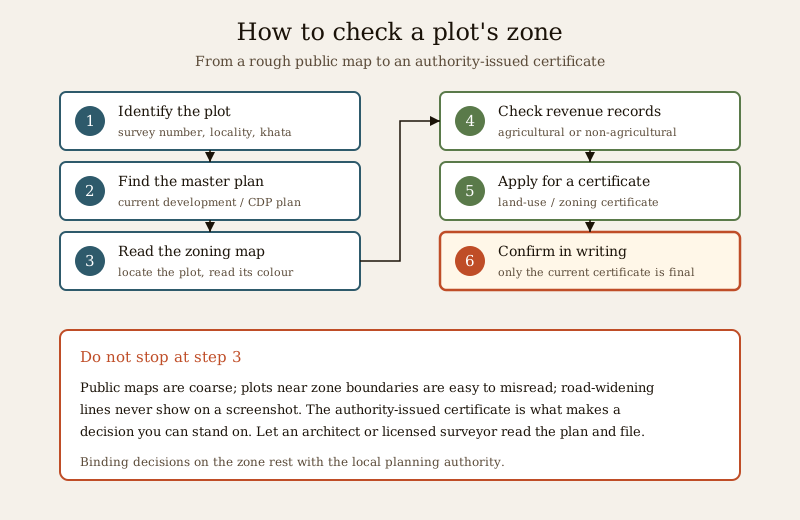
| Step | What you do | What it tells you |
|---|---|---|
| 1. Identify the plot | Note the survey number, locality and any plot or khata number | A precise reference to look up |
| 2. Find the master plan | Locate the current master, development or comprehensive plan for the city | Which document governs the zone |
| 3. Read the zoning map | Have a professional locate the plot on the plan and read its colour or code | The plot's likely zone |
| 4. Check revenue records | Confirm whether the land is agricultural or non-agricultural | Whether conversion is needed |
| 5. Apply for a certificate | Ask the planning authority for a land-use or zoning certificate for the plot | The authority's written zone answer |
| 6. Confirm in writing | Treat only the current certificate from the authority as final | A reliable basis to buy or build |
Do not stop at step three. Public master-plan maps are coarse, plots near zone boundaries are easy to misread, and road-widening lines may cut through a plot in ways a screenshot never shows. The authority-issued certificate in step five is what turns a reasonable guess into a decision you can stand on. A qualified architect or a licensed building surveyor should read the plan and handle the certificate application; this is exactly the kind of task covered when you hire an architect early.
If you are still at the buying stage, zoning belongs in your due diligence alongside title, access and records. Our guide on how to buy a residential plot folds the zone check into the wider checklist so you do not clear one hurdle while tripping over another.
The risk of building against zoning
Building against a plot's zone is not a paperwork nuisance to be regularised later. It is the fastest route to losing the building and the money in it.
If the use does not match the zone, the plan will not be sanctioned, so you have no legal permission to build. If you build anyway, the building is unauthorised, and unauthorised buildings can be served notices, sealed, denied water and power, refused an occupancy certificate, and, in the worst case, demolished. Banks are wary of lending against them and buyers of purchasing them. A house that cannot get an occupancy certificate is one you cannot safely live in or cleanly sell.
The mistake is almost always avoidable. It comes from trusting a map screenshot, a broker's assurance or the fact that "neighbours built here", instead of confirming the zone with the authority. That confirmation costs a little time and a modest fee; skipping it can cost the entire project. When in doubt about the wider sequence, the building regulations and compliance hub gathers the concepts, and why building rules exist explains the reasoning behind zones and plans.
Key takeaways
- A plot's planning zone, not its price or its owner, decides what you may legally build on it; a residential home needs residential-zoned land.
- Cities zone land in advance through a master plan, development plan or comprehensive development plan, which is both a coloured map and a rule book, and which is revised over time.
- The land-use zone (from the master plan) and the revenue classification (agricultural versus non-agricultural) are two different systems, and for a home both usually need to line up; agricultural land needs conversion first.
- A land-use or zoning certificate is the authority's written statement of a specific plot's zone under the current plan; it proves the zone, not title or sanction.
- Check a plot's zone by moving from the public master-plan map to an authority-issued certificate, and treat only the current certificate as final.
- Building against zoning means no sanction, an unauthorised building and no occupancy certificate, with sealing or demolition in the worst case; confirm the zone in writing with the planning authority first.
References
- Local master plan, development plan or comprehensive development plan and its zoning or development control regulations, issued by the city's development or planning authority. Confirm the current version with the authority.
- Zoning regulations and land-use tables published by state town and country planning departments and municipal corporations.
- Revenue department land records for the plot's agricultural or non-agricultural classification.
- Studio Matrx guides: building-plan sanction process, list of approvals and NOCs, DC and NA land-use conversion, FAR versus FSI, how to buy a residential plot, and the building regulations and compliance hub.
Last verified July 2026. Zoning categories, master-plan maps, certificate names, fees and processes are indicative, state and city dependent, and change over time. Confirm your plot's zone in writing with the planning authority, and route filing and liaison through a qualified architect, licensed engineer or licensed building surveyor.
Export this guide
Related Guides — Deep-dive reading
Understanding Building Bye-Laws in India: A Homeowner's Guide
What municipal building bye-laws are, who makes them, and how to find and read the ones that actually govern your plot
Building Regulations & ComplianceAgricultural to Non-Agricultural Land Use Conversion in India: DC / NA / CLU Explained (2026)
Most land in India is classified agricultural, and building a house on it usually needs the land use converted to non-agricultural or residential first - called DC conversion in Karnataka, an NA order in Maharashtra and Gujarat, and change of land use (CLU) elsewhere. This guide explains why it matters, who can buy agricultural land, how conversion works, and how to check whether a plot is already converted.
Buying LandApprovals and NOCs You Need Before Construction in India: The Full Checklist (2026)
A plain-language master list of the permissions and no-objection certificates a home may need before building - and, honestly, how few most small homes actually require.
Building RegulationsRelated Tools — Try Free
Construction Approval Checklist — 24-Stage Tracker
Track every approval, permit, and NOC from land title to occupancy certificate across 24 stages.
ApprovalsBuilding Plan Approval Roadmap
Step-by-step building plan approval process by city with documents, timelines, and fees.
ArchitectAIFee Proposal Builder
Build a professional architectural design fee proposal with itemised stages and deliverables.
Fee Proposal