

Approvals and NOCs You Need Before Construction in India: The Full Checklist (2026)
A plain-language master list of the permissions and no-objection certificates a home may need before building - and, honestly, how few most small homes actually require.
Search "approvals needed before construction" and you will find lists of twenty or thirty documents. It looks terrifying. The truth is calmer: most of those items are conditional. They only apply to tall buildings, large layouts, coastal sites, or land next to an airport or a monument. A modest home on a clear residential plot usually needs only a handful.
This guide is the map. It walks through every approval and no-objection certificate (NOC) you might meet, tells you plainly when each one actually applies, and says who is expected to obtain it. Think of it as a filter: read down the list, and for each item ask "does this trigger apply to my site?" For most readers, the answer to the scary-sounding ones will be no.
This is an explainer, not legal advice. Which approvals apply to your plot is site, scale and state specific, and the rules change. Let your architect, licensed engineer or building surveyor handle the actual filing and liaison, and treat the local authority - the municipal corporation, development or planning authority, or gram panchayat - as the only body that can bind you on what your site needs. Every list, fee and timeline below is indicative.
How to read this checklist
Approvals fall into four natural groups. The first two - land or title, and the plan itself - are relevant to almost everyone. The third - the NOCs - is where the long, frightening lists come from, and it is almost entirely conditional. The fourth - utility connections - happens later, usually around occupancy rather than before you start.
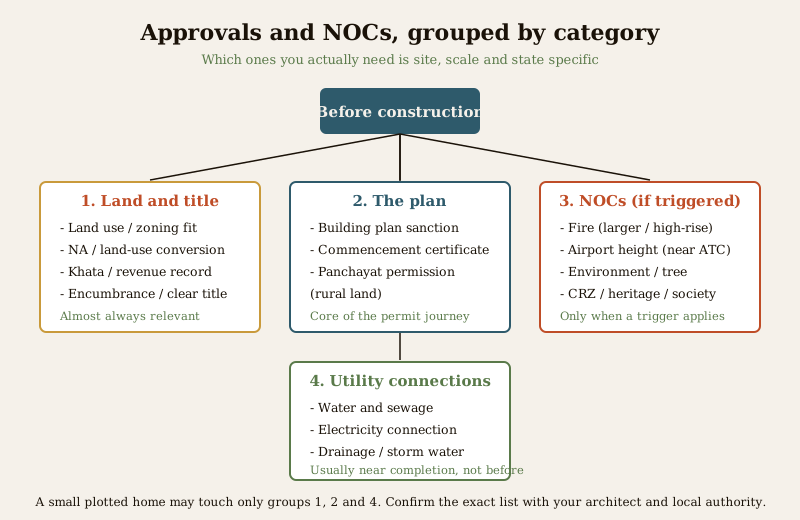
The single most useful habit is to separate "always" from "only if". A checklist that treats a fire NOC and a plan sanction as equally likely for your bungalow is misleading you. So as we go, watch the trigger column: that is what decides whether an item is on your list at all.
Group 1: land, use and title
Before a plan can be sanctioned, the land under it has to be the right kind of land, held with a clean record.
Land use and zoning fit. Your plot must sit in a zone where housing is permitted under the master plan or development plan. This is not a certificate you go and "get" so much as a check your architect makes early - if the plot is marked commercial, industrial or agricultural, building a home may not be allowed until the use is changed. Our guide on the zoning and land-use certificate explains how to confirm this.
NA or land-use conversion. If the land is classified agricultural, it typically has to be converted to non-agricultural (NA) use before any residential construction. This is a revenue-department process and is the owner's responsibility, usually with the architect advising. See DC conversion and NA land-use conversion for how that works. On a plot inside an approved residential layout, this step is usually already done - do not assume you need it.
Khata and revenue record. The property must be entered in the municipal or revenue records in your name, often called a khata or its equivalent. Authorities will not sanction a plan or release utility connections against an unrecorded property. Our khata and e-khata explainer covers this. Title itself - a clear chain of ownership and no encumbrance - sits alongside this as the foundation everything else rests on.
Group 2: the plan and the permit to start
This is the core of the permit journey, and it applies to nearly every new build.
Building plan sanction. The local authority approves the drawings against the building bye-laws - setbacks, height, coverage, floor area and parking. Your architect or licensed engineer prepares and files this, and it is the one approval almost no home can skip. The full sequence is in our building plan sanction, step by step guide.
Commencement certificate. In many states, sanction alone does not let you start; you need a separate commencement certificate (sometimes bundled with the sanction, sometimes a distinct step) confirming you may legally begin work. Starting without it, where it is required, can make the whole build unauthorised. See the commencement certificate explained.
Panchayat permission. If your plot is rural - under a gram panchayat rather than a municipal corporation - the approval route is different and often simpler, but it still exists. Skipping it because "it is a village" is a common and costly mistake. Our panchayat building approval guide covers the rural route.
Group 3: the NOCs (only when triggered)
Here is where checklists balloon. Almost every item below is conditional. Read the trigger, and if it does not describe your site, cross the item off.
Fire NOC. Required for larger and taller buildings - typically once you cross a height or built-area threshold set by your state (high-rise apartments, big institutional or commercial blocks). A single-family home well under that limit generally does not need one. The owner obtains it from the state fire service, on the architect's advice.
Airport-height NOC. If your site lies within the height-restriction zone around an airport, you may need a no-objection certificate confirming your building height is within the permitted limit, usually via the Airports Authority's online system. This is purely locational - most sites are nowhere near an airport funnel, and for them it simply does not apply.
Environment clearance. This is aimed at large projects - big built-up areas or large layouts crossing the thresholds in the environmental rules. An individual house is almost always far below those limits. Do not let a generic list convince you your bungalow needs an environmental clearance.
Tree or arboriculture NOC. If existing trees have to be felled or transplanted - especially protected species - permission from the relevant tree authority or forest department is usually needed. Many states also expect a certain number of trees to be planted. This applies to sites with mature trees, not bare plots.
CRZ NOC. Sites within the Coastal Regulation Zone - a defined belt along the coast and tidal water bodies - face additional restrictions and a special clearance. This is a hard rule for coastal plots and a non-issue for inland ones.
Heritage or ancient-monument NOC. Building near a protected monument can trigger a heritage clearance limiting height and works within a regulated radius. Again, purely locational.
Society or association consent. In a gated community, cooperative society or planned layout, the association's bye-laws may require its consent or an NOC before you build or alter, on top of the statutory approvals.
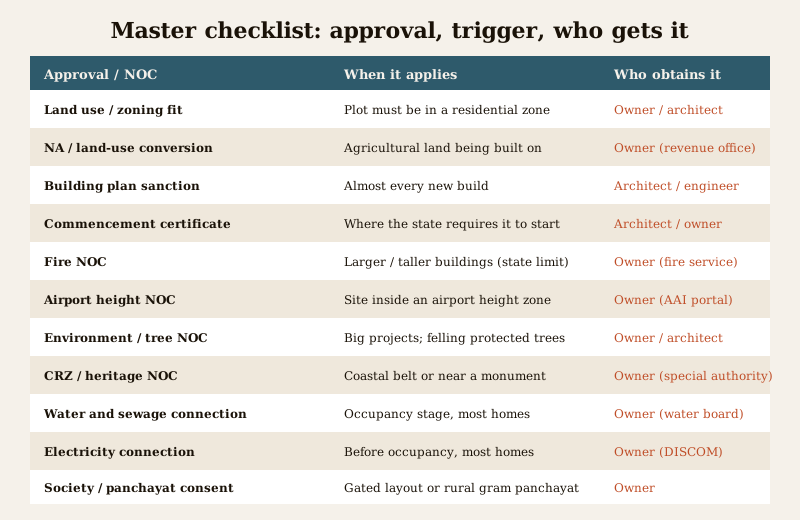
The table below is the same information in one place - the approval, the trigger, and who is expected to obtain it.
| Approval / NOC | When it applies | Who obtains it |
|---|---|---|
| Land use / zoning fit | Plot must lie in a residential zone | Owner, checked by architect |
| NA / land-use conversion | Agricultural land being built on | Owner (revenue office) |
| Khata / revenue record | Property must be recorded in your name | Owner |
| Building plan sanction | Almost every new build | Architect / licensed engineer |
| Commencement certificate | Where the state requires it to start work | Architect / owner |
| Panchayat permission | Plot under a gram panchayat (rural) | Owner |
| Fire NOC | Height or area over the state limit | Owner (fire service) |
| Airport-height NOC | Site inside an airport height zone | Owner (AAI system) |
| Environment clearance | Large built-up area over the threshold | Owner / consultant |
| Tree / arboriculture NOC | Felling or transplanting trees | Owner / architect |
| CRZ NOC | Plot inside the coastal regulation zone | Owner |
| Heritage NOC | Site near a protected monument | Owner |
| Water and sewage connection | Most homes, at occupancy stage | Owner (water board) |
| Electricity connection | Before occupancy, most homes | Owner (DISCOM) |
| Society / association consent | Gated layout or cooperative | Owner |
Group 4: utility connections
Water, sewage and electricity connections are approvals too, but they usually come near the end - around occupancy - not before you break ground. You apply to the local water board and the electricity distribution company (DISCOM), typically once the structure is up. Some authorities tie these releases to a completion or occupancy step, which is why they sit late in the journey. If your design harvests rainwater or handles storm water on site, that may be a sanction condition - our rainwater harvesting regulations guide explains where that becomes mandatory.
Small home versus complex project
Put the two extremes side by side and the point becomes obvious. A small plotted home on clear residential land needs a short, manageable list. A tall apartment block, a coastal resort or a large layout collects NOC after NOC across many departments.
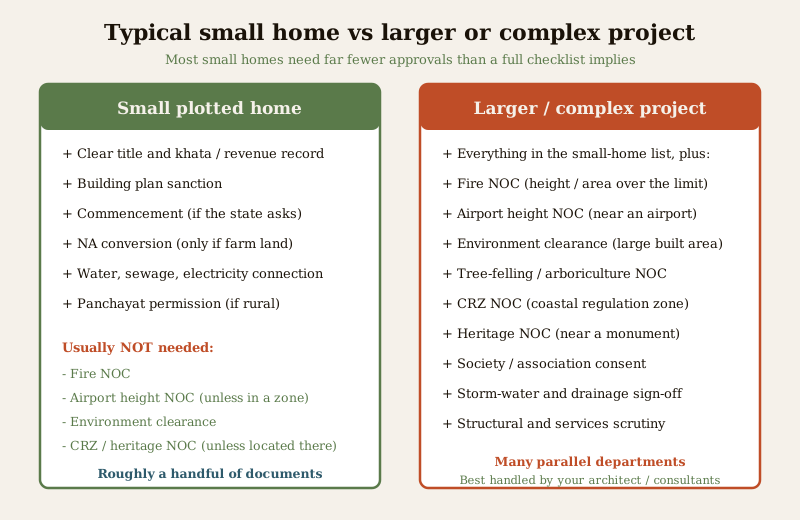
| Item | Typical small home | Larger / complex project |
|---|---|---|
| Building plan sanction | Yes | Yes |
| Commencement certificate | If state requires | Yes |
| Land-use / NA conversion | Only if farm land | Often, plus zoning studies |
| Fire NOC | Usually no | Yes |
| Airport-height NOC | Only if in a zone | Often |
| Environment clearance | No | Frequently |
| CRZ / heritage NOC | Only if located there | If located there |
| Tree / arboriculture NOC | Only if felling trees | Common |
| Utility connections | Yes | Yes, at scale |
| Society / association consent | If in a gated layout | Common |
If your project is on the right-hand side of that table, do not try to run the departments yourself. Appoint an architect and, where needed, specialist consultants to manage the parallel approvals - our guide on how to build with the right regulations and compliance is the hub that ties these concepts together.
Practical order of play
A sensible sequence for a straightforward home: confirm the zoning and title first; convert the land use if it is agricultural; get the khata or revenue record in order; then have your architect prepare and file the plan sanction and any commencement certificate; obtain only the NOCs your site genuinely triggers; and arrange utility connections as the build nears completion. Do not chase NOCs you do not need - it wastes months and money.
The healthiest mindset is not "collect everything" but "confirm what applies". Ask your architect to draw up a site-specific list against your plot and your state's bye-laws, and let the local authority confirm it. That short, correct list beats a long, generic one every time.
Key takeaways
- Most approvals are conditional - a small home on clear residential land needs only a handful, not the twenty-item list you see online.
- The "always" items are usually zoning and title, plan sanction, a commencement certificate where required, and utility connections.
- Fire, airport-height, environment, CRZ, heritage and tree NOCs are trigger-based - check whether the trigger describes your site before assuming you need them.
- Rural plots go through the gram panchayat, not the municipal corporation - a different but real route.
- Let your architect or licensed engineer file and liaise; treat the local authority as the only body that can confirm what your site truly needs. All lists, fees and timelines here are indicative and change.
References
- Local building bye-laws and the applicable master plan or development plan (municipal corporation / development or planning authority / gram panchayat).
- National Building Code of India (SP 7), Bureau of Indian Standards - fire and life-safety provisions that inform state fire-NOC thresholds.
- Airports Authority of India NOC (colour-coded zoning / height) online application system.
- Coastal Regulation Zone notification and the applicable state coastal zone management plan.
- Environmental impact assessment thresholds under the applicable environment ministry notifications.
- State fire-services rules for fire-NOC applicability by building height and occupancy.
Export this guide
Related Guides — Deep-dive reading
Building Plan Sanction Process, Step by Step (India) (2026)
Before a single brick is laid, your house plan must be approved by the local authority. Here is who prepares it, what documents it needs, how it is submitted and scrutinised, and what a sanctioned plan actually buys you.
Building RegulationsUnderstanding Building Bye-Laws in India: A Homeowner's Guide
What municipal building bye-laws are, who makes them, and how to find and read the ones that actually govern your plot
Building Regulations & ComplianceRainwater Harvesting Rules in India: When RWH Is Mandatory & How to Comply
A plain-English guide to India's mandatory rainwater-harvesting rules for homeowners — why so many states and cities require RWH for buildings above a certain size, how it becomes a condition for plan sanction and completion certificate, and why the exact trigger, structure and rebate always come from your own local bye-laws.
PlumbingRelated Tools — Try Free
Construction Approval Checklist — 24-Stage Tracker
Track every approval, permit, and NOC from land title to occupancy certificate across 24 stages.
ApprovalsApartment Video Door System Planner
Enter flats, entrances, floors and guard desk for a first-pass building intercom plan — door stations, indoor monitors, guard station, the right architecture and an indicative cost band.
Building PlannerApartment vs Villa Interior Planning Guide
Compare ceiling height, structural flexibility, lighting, storage, and services between apartments and villas.
Planning Guide