
East-Facing Window Design (India): Gentle Morning Sun, Tricky to Shade
Why the east wall gives soft golden dawn light, which rooms it suits, and how to shade low-angle morning sun with vertical fins instead of overhangs.
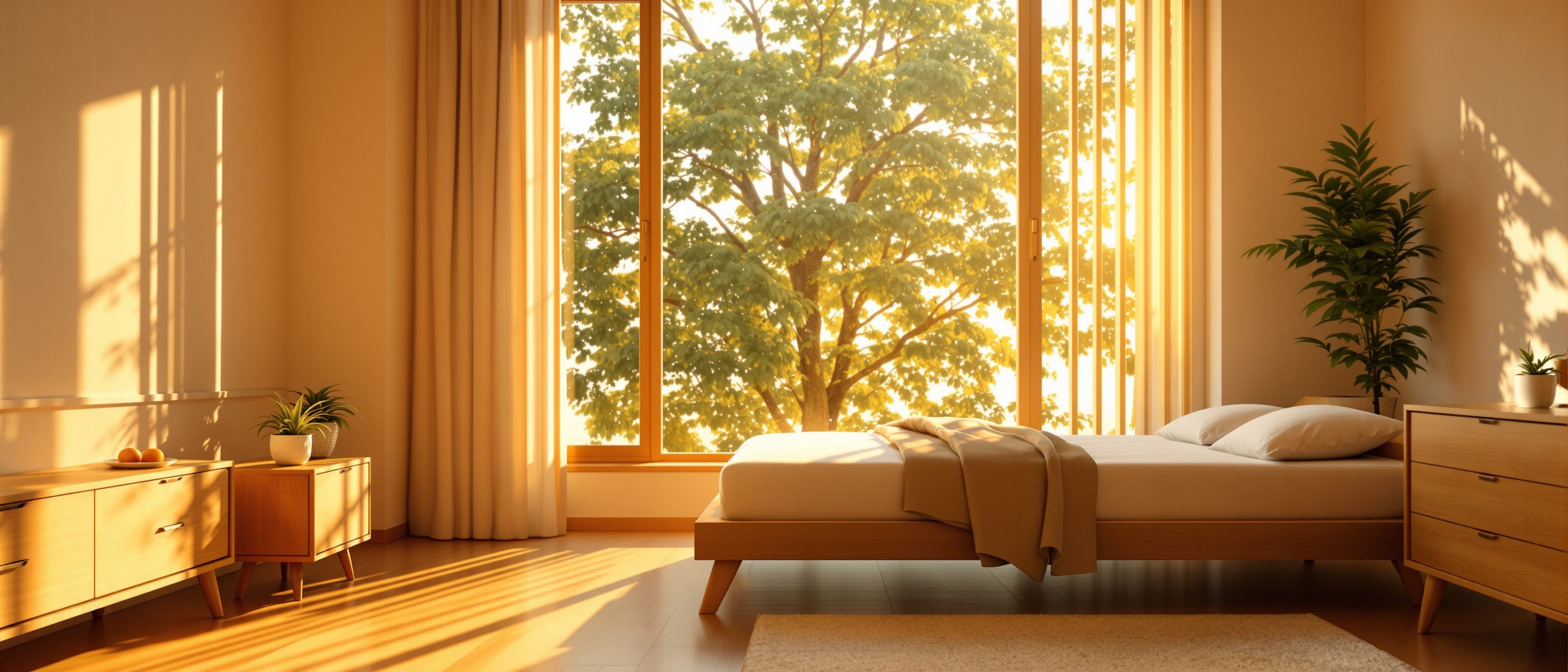
The east wall is where the Indian day begins. Sun rises over it, pours in low and golden, and warms the room before the heat of the day arrives. That gentle dawn light is the east window's gift, which is why vastu, bedrooms and breakfast nooks all gravitate to this wall. But the same low angle that makes the morning so pleasant is exactly what makes east sun so hard to shade. A horizontal chajja, the workhorse that tames the south, is nearly useless against a sun sitting just above the horizon. This guide is about designing the window on an east wall so you keep the soft light and still control the morning warmth.
This is the WINDOW design, not the house layout. If you are planning where the rooms sit on an east-facing plot, read the companion guide first.
Picture the east window as a sunrise alarm clock: lovely to wake to, but you want a snooze button for the warm summer mornings.
How the east sun behaves
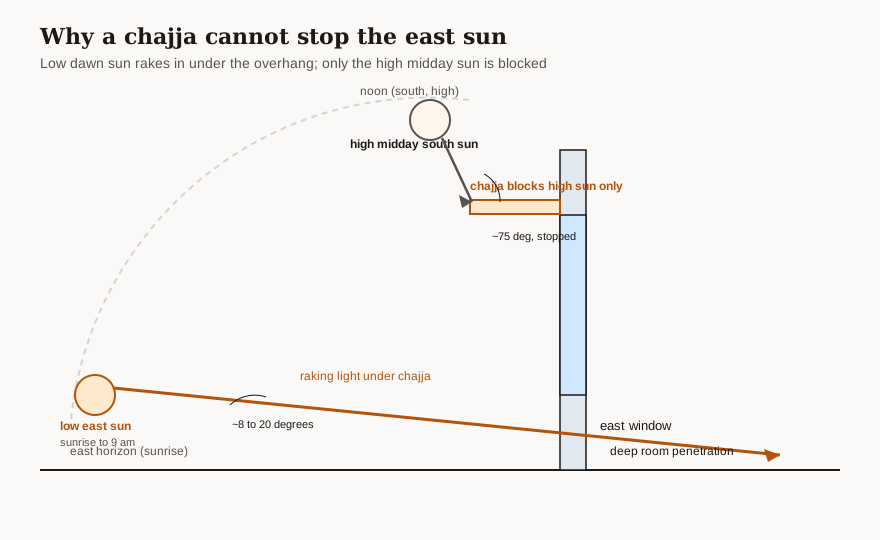
In India (Northern Hemisphere), the sun rises roughly in the east, climbs through the southern sky, and sets in the west. So an east-facing window gets direct sun from sunrise until late morning, then none for the rest of the day. The crucial fact is the angle: at dawn the sun is at the horizon, climbing only slowly. Light therefore arrives almost level, raking deep into the room under any overhang.
| Time of day | East window receives | Quality | Heat load |
|---|---|---|---|
| Sunrise to ~9 am | Direct, very low-angle sun | Warm, golden, raking | Low to moderate (cool air) |
| ~9 am to noon | Direct, rising-angle sun | Bright | Moderate, rising in summer |
| Noon onwards | No direct sun (sun is south then west) | Soft indirect daylight | Low |
Because the gain lands in the morning when outdoor air is still cool, an east window is far kinder than a west window, which dumps heat in the late afternoon when the day is already at its hottest. The morning load is real in peak summer, but it is the most forgiving of the three sunny orientations.
Best rooms for an east window
The warm, early light suits rooms used in the morning. This is where east and vastu agree.
| Room | Why east suits it |
|---|---|
| Bedroom | Wake to soft natural light; morning heat clears by the time you are out |
| Breakfast nook / dining | Cheerful early light for the morning meal |
| Pooja room | Vastu favours east/north-east; symbolic dawn light |
| Kitchen | Vastu places the kitchen south-east; an east window plus exhaust works well |
| Study (early use) | Bright for morning work; goes cool and even by afternoon |
Avoid putting your main TV or screen-work wall directly opposite a large east window: low morning sun causes glare and reflections. For all-day, glare-free, even light with the least heat, a north window is the better choice; reserve east for where the morning moment is a feature.
The shading problem (and the fix)
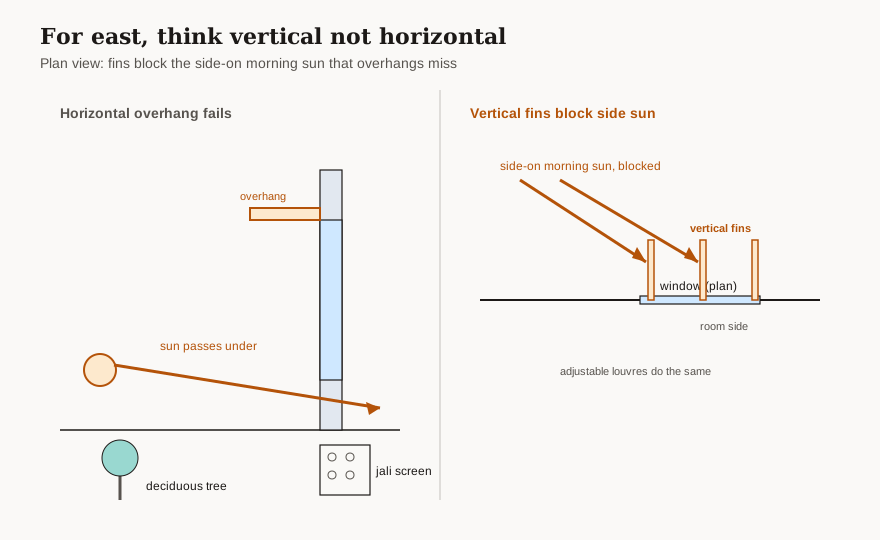
Here is the catch every architect knows: a horizontal overhang barely shades an east window. A chajja blocks sun coming from above, which is perfect for the high midday sun on a south window. But the east morning sun arrives almost horizontally, so it slips straight under the chajja and into the room. To control east (and west) sun you need shading that blocks from the side, not the top.
| Shading device | Works on east? | Notes |
|---|---|---|
| Horizontal chajja / overhang | Poorly | Misses low-angle morning sun; keep only for rain protection |
| Vertical fins (projecting blades) | Well | Block raking sun from the side; angle them to the morning sun |
| External louvres / adjustable blades | Very well | Tilt to cut sun yet keep view and breeze |
| Internal blinds / sheer curtains | Moderate | Cheapest control; less effective than external (heat is already through the glass) |
| Deciduous tree on the east | Well | Leaves shade summer mornings, bare branches let in winter sun |
| Jali / perforated screen | Well | Diffuses harsh raking light, gives privacy, cools incoming air |
The rule: for east, think vertical, not horizontal. Combine an external device (fins, louvres, or a tree) for the heat with an internal blind for fine glare control on the brightest mornings. A small awning at the head still earns its place for monsoon rain even if it does little for sun.
Size, sill and area
The east window follows the same NBC and sill logic as any other wall. Get the openable area and sill height right for the room's use.
| Parameter | Indicative value (confirm bye-laws) |
|---|---|
| Openable area (NBC rule of thumb) | At least 10 per cent of room carpet area |
| Bedroom window | About 4 ft x 4 ft |
| Living / dining | 5 ft x 4 ft to 6 ft x 4 ft |
| Kitchen | About 4 ft x 3 ft, sill above counter |
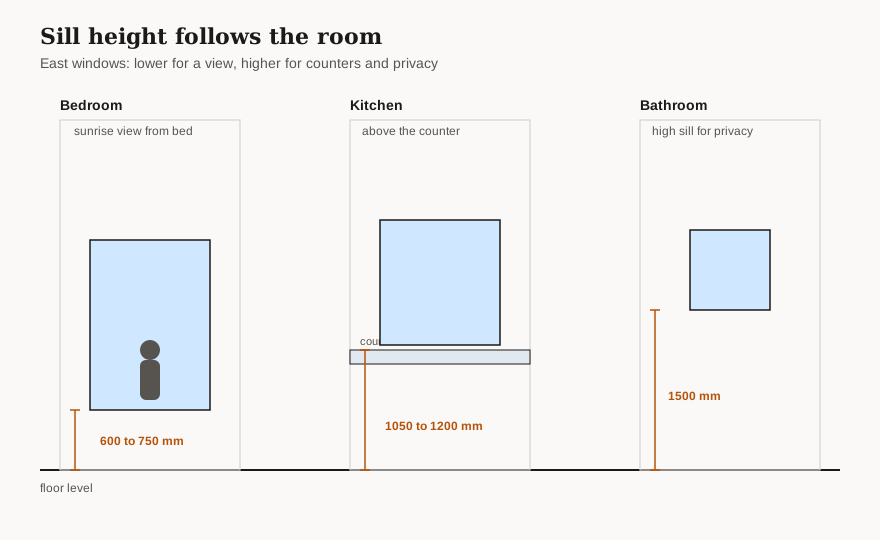
| Sill, living / bedroom | 600 to 750 mm (2 to 2.5 ft) for a seated view |
| Sill, kitchen | 1050 to 1200 mm (above counter) |
| Sill, bathroom | About 1500 mm (privacy) |
A lower sill in an east bedroom lets you catch the sunrise from the bed; a higher sill keeps a furniture wall and privacy. Use a window schedule (W1, W2 and so on) on your drawings.
Glazing and WWR for east
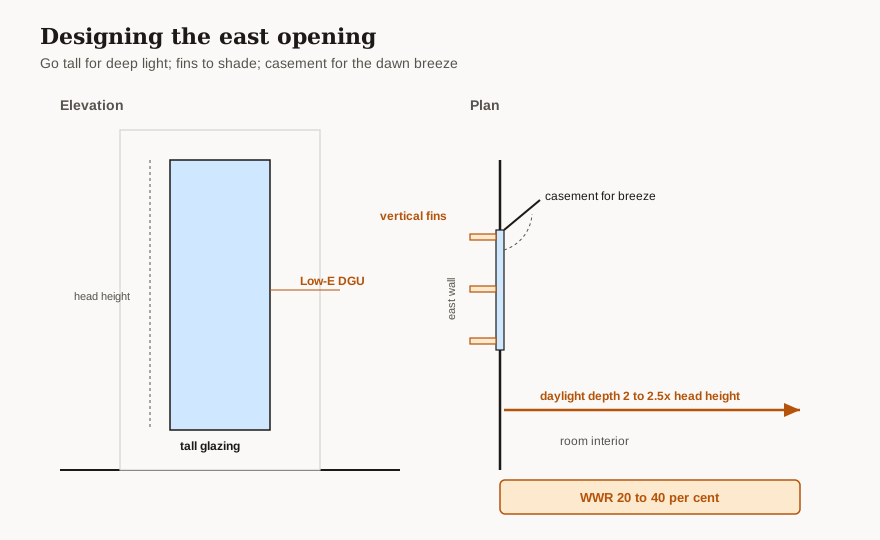
East is generous: because the heat load is morning-only and mild, you can use more glass on the east wall than on the west with less penalty. Push the morning light deeper by going taller rather than wider, since a side window lights roughly 2 to 2.5 times its head height into the room.
As you raise the window-to-wall ratio (WWR), the Eco-Niwas Samhita code asks for glass with a minimum visible light transmittance (VLT) and the wall envelope's RETV to stay at or below 15 W per m2.
| WWR band | Minimum VLT (ENS) |
|---|---|
| 0 to 0.30 | 0.27 |
| 0.31 to 0.40 | 0.20 |
| 0.41 to 0.50 | 0.16 |
| 0.51 to 0.60 | 0.13 |
A sensible east specification for most Indian homes: about 20 to 40 per cent WWR, a Double Glazed Unit with a Low-E coating (low SHGC, adequate VLT) to trim the summer-morning gain while keeping the light, plus the vertical external shading above. Pair operable casement or awning sashes for the cool dawn cross-breeze, which an east window is well placed to capture before the day heats up.
Vastu and the east window
Vastu strongly favours the east. It prescribes bigger windows on the east, north and north-east, medium on the north-west and south-east, small on the west and south, and as little as possible on the south-west. East and north-east openings are associated with health, prosperity and morning light, and a kitchen window on the east wall (with exhaust) is a classic recommendation.
Happily, this harmonises with building science: east and north light are the coolest and most pleasant, so the vastu preference and the climate logic largely agree. Treat vastu as guidance and reconcile it with the sun-path and your shading plan. For the full window vastu picture see the dedicated guide; for the wider, single-orientation context start from the planning pillar.
Vastu and physics shake hands on the east wall: both say let the morning in.
Quick checklist
- Do use east windows for bedrooms, breakfast nooks, pooja rooms and morning-use spaces.
- Do shade with vertical fins, external louvres, deciduous trees or jali, not just a chajja.
- Do specify Low-E DGU and keep WWR around 20 to 40 per cent; go taller for deeper light.
- Do include operable sashes for the cool morning cross-breeze.
- Avoid relying on a horizontal overhang to stop low morning sun.
- Avoid placing screens or TV walls directly facing a big east window (glare).
Related guides
- Window placement guide (India) — the planning pillar for size, sill and orientation.
- East-facing house plan (India) — the whole-house layout; this guide is the window on the east wall.
- Vastu for home windows (India) — the full directional vastu rules for windows.
- North-facing, south-facing and west-facing window design — the other three walls.
- Types of glass for windows (India) — choosing Low-E DGU and VLT/SHGC.
References
- BIS Guide for Using NBC 2016: https://www.bis.gov.in/wp-content/uploads/2022/08/Booklet-Guide-for-Using-NBC-2016.pdf
- Eco-Niwas Samhita 2018 (BEE/ECBC): https://ecbc.in/econiwas.html
- IS 3362 natural ventilation of residential buildings: https://law.resource.org/pub/in/bis/S03/is.3362.1977.pdf
- Standard window size by room (CiviConcepts): https://civiconcepts.com/blog/standard-window-size
- Vastu for doors and windows (Livspace): https://www.livspace.com/in/magazine/vastu-for-house-doors-windows
Export this guide
Related Guides — Deep-dive reading
North-Facing Window Design (India): The Best Light With the Least Heat
Why the north wall gives soft, even, glare-free daylight with almost no heat, and how to design large, high-VLT windows that make the most of it.
Windows & GlazingWest-Facing Window Design (India): Taming the Harsh Afternoon Sun
Why the west wall is the hardest orientation to glaze, and how to minimise, shade and layer the defences against the low afternoon sun.
Windows & GlazingSouth-Facing Window Design (India): High Sun You Can Actually Shade
Why the south wall's high midday sun is the easiest to block, how to size a chajja by latitude, and how big south glass works with the right shade and glass
Windows & GlazingRelated Tools — Try Free
Brise-Soleil Visualizer
Interactive horizontal-louvre cut-off angle calculator — sun altitude, louvre depth, and spacing inputs with a live shadow preview. Computes θ = arctan(spacing/depth) for façade shading, ECBC envelope compliance, hospital daylight design, and tropical sun-control detailing.
Sun Shading ToolCross-Ventilation Analyzer
Estimate airflow and air changes per hour (ACH) from room size, window areas, layout, and local wind — with NBC 2016 Part 8 compliance check.
Ventilation CalculatorVastu Window Planner
Vastu guidance for window placement and size by wall direction and room — rating and remedies.
Vastu