
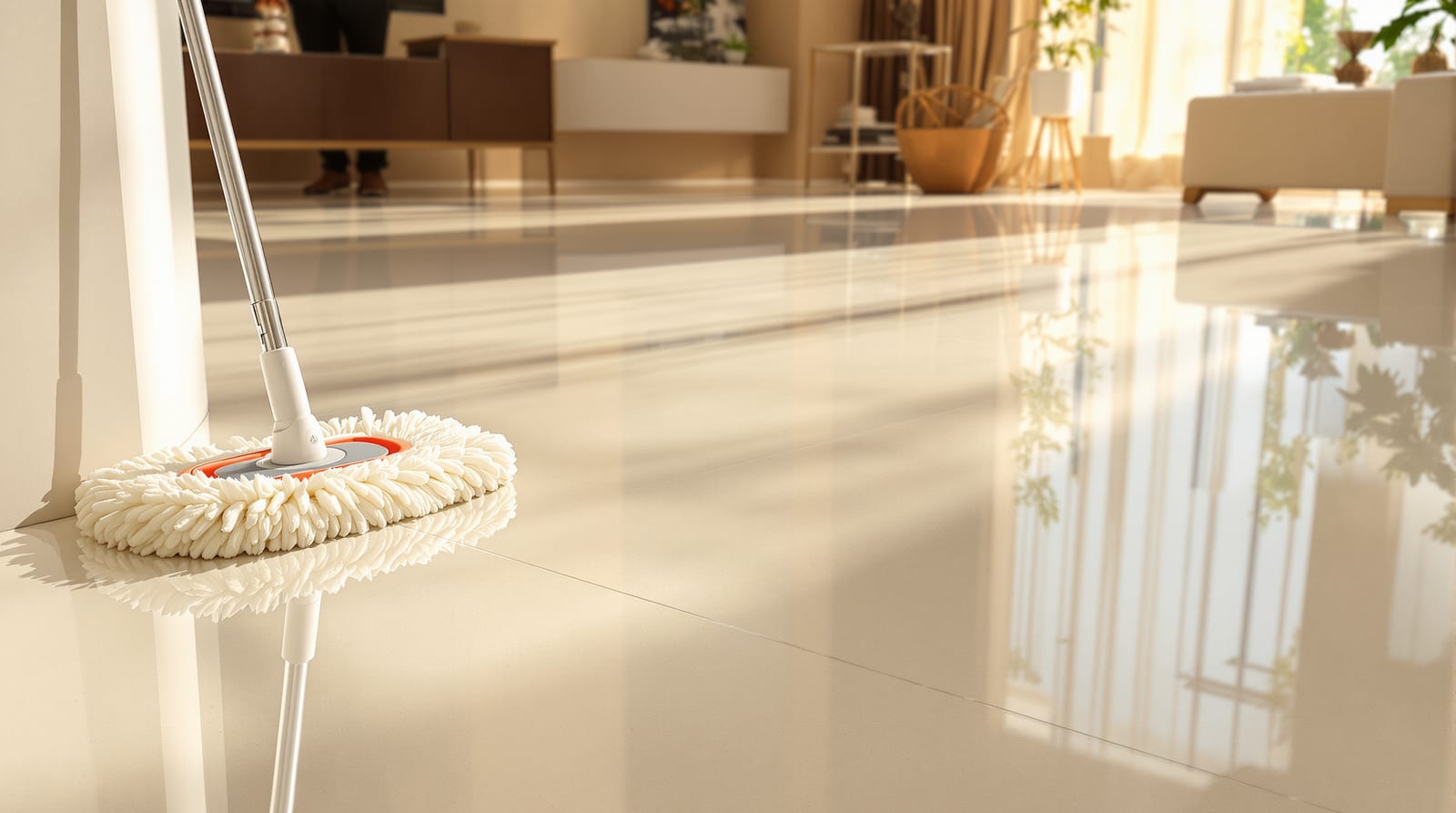
Vitrified Tile Maintenance: How to Care for Vitrified & PGVT Floors in India
Vitrified and PGVT tiles are India's most common, near maintenance-free floor; the real weak point is the cement grout, not the tile, so this guide shows the simple routine, post-construction haze and stain removal, and how to keep the gloss.
Vitrified tiles cover more Indian floors than any other material, and there is a good reason: they are about as close to maintenance-free as a floor gets. Fired so hard that they absorb less than 0.5% water, they do not stain, swell, rot or fade the way wood, cement or natural stone can. The surprise for most homeowners is that the tile is almost never the problem. The weak point is the thin band of cement grout between the tiles, which yellows, stains and traps grime long before the tile itself shows any wear. This guide gives you the genuinely simple cleaning routine vitrified floors need, the post-construction cleanup that gets a new floor looking right, and the few things that can actually harm the tile or its grout.
Why vitrified tiles are nearly maintenance-free
Vitrified tiles, including the popular full-body, double-charged, GVT and PGVT varieties, are made by fusing clay and silica at very high temperatures until the body turns glass-like (the word vitrified literally means turned to glass). The result, governed by IS 15622, is a body with water absorption below 0.5%, far lower than ceramic tiles and natural stone. Because almost nothing can soak in, almost nothing can stain the tile face.
PGVT, polished glazed vitrified tile, adds a printed design layer under a glassy glaze and is increasingly sold with a nano coating, sometimes branded nano-polish or anti-stain. This coating fills the microscopic pores left by polishing, making the surface even more stain and dirt resistant so that spills wipe off instead of keying in. Studio Matrx covers the tile types in depth in the guides on vitrified tile flooring, PGVT tiles and GVT tiles; here we focus purely on keeping them looking new.
The practical upshot is that a vitrified floor does not need sealing, waxing, polishing or any special chemistry. Sweep it, damp mop it with a mild detergent, and it will look good for decades. The maintenance effort goes almost entirely into the grout lines, not the tiles.
The simple daily and weekly routine
You do not need expensive products. The whole routine is sweep, then damp mop with a gentle cleaner, then let it dry.
| Task | How often | What to use | Notes |
|---|---|---|---|
| Dry sweep or dust mop | Daily | Soft broom, microfibre dust mop or vacuum | Removes grit that dulls gloss and scratches glaze over time |
| Damp mop | 2-3 times a week, or daily in dusty cities | Microfibre mop, bucket of warm water, capful of mild pH-neutral detergent | Wring well; a damp, not soaking, mop dries without streaks |
| Spot wipe spills | As they happen | Damp cloth | Tile will not stain, but wiping keeps grout clean |
| Deep clean grout lines | Monthly or as needed | Soft brush, mild detergent or grout cleaner | See the grout section below |
| Buff out scuff marks | As needed | Pencil eraser, melamine sponge, or soft cloth with a little soap | Black heel and rubber marks lift easily |
A few habits make a real difference. Sweep before you mop every single time, because the most common cause of fine scratches on a glossy floor is dragging grit around with a wet mop. Change the mop water once it looks dirty, or you simply spread a grey film that dries to a haze. And use the least cleaner that works; over-dosing detergent leaves a sticky residue that attracts dust and makes the floor look dull and feel tacky underfoot.
The real weak point: cement grout, not the tile
Here is the single most useful thing to understand about a vitrified floor. The tile is glass-hard and non-absorbent, but the standard cement grout between the tiles is porous and absorbent. So when chai, oil, turmeric, hard water or muddy monsoon footprints land on the floor, the tile shrugs them off while the grout line drinks them in. Over a year or two the grout yellows, darkens around the dining table and kitchen, and grows mould streaks in bathrooms, while the tiles next to it still look brand new. The diagram below shows why dirt collects in the joint and not on the tile.
The takeaways follow directly from the picture. First, keeping a vitrified floor looking new is mostly about keeping the grout clean. Second, if you are still at the building or renovation stage, ask for epoxy grout in the kitchen, bathrooms and dining area, because it is non-porous and effectively stain-proof, or at least have your cement grout sealed. Studio Matrx covers this trade-off fully in the tile grouting guide and the dedicated grout cleaning and whitening guide.
Keeping and reviving the grout lines
For routine grime, scrub the grout lines with a soft brush, an old toothbrush or a grout brush, using warm water and a mild detergent or a dedicated tile-and-grout cleaner from brands such as Roff or MYK Laticrete. Work the brush along the line, leave the cleaner a few minutes to lift the dirt, then wipe and rinse. A steam mop is excellent here because the heat loosens grime in the pores without any chemical.
When the grout has gone permanently yellow or grey, you have three options. A grout whitener or grout pen recolours the surface and is the cheapest fix for living areas. A deeper clean with an oxygen-bleach paste (oxygen bleach, not chlorine, around vitrified) can restore a lot of the original tone. If the grout is cracked, missing or beyond cleaning, the proper fix is to rake it out and regrout, ideally switching to epoxy in wet and spill-prone rooms. Once the grout is clean, applying a penetrating grout sealer keeps it that way for one to two years.
The big rule: never use acid on the grout
Plenty of people reach for a strong acid cleaner like Harpic or a generic hard-water acid to make a floor sparkle. On the vitrified tile itself this usually does no permanent harm because the glass body resists most chemicals. The danger is the cement grout. Acid eats into Portland cement, softening and pitting the grout, washing out the binder and leaving the joints weak, rough and even more prone to staining afterwards. It can also dull a nano-coated PGVT surface over repeated use and is unpleasant and unsafe to handle. Stick to pH-neutral or mild cleaners for everyday use, and if you ever must use a stronger product to shift cement haze (see below), keep it off the grout, work fast, and rinse thoroughly with plenty of water.
| Issue | Safe fix | Avoid |
|---|---|---|
| Everyday dust and grime | Sweep then damp mop, mild detergent | Strong acid cleaners (harm grout) |
| Greasy film, dull look | Warm water with a little dish soap, then plain-water rinse | Over-dosing detergent (leaves sticky residue) |
| Yellowed cement grout | Grout cleaner, oxygen bleach, steam, whitener or regrout | Chlorine bleach soaking the grout repeatedly |
| Black scuff and heel marks | Eraser, melamine sponge, soft cloth with soap | Abrasive metal scourers on gloss |
| Cement haze after construction | Mild dilute acid descaler used carefully, then heavy rinse | Acid left to dwell on grout |
| Paint or adhesive spots | Plastic scraper, then mineral spirit / acetone wipe | Metal blades that scratch the glaze |
| Hard-water spots in bathrooms | Mild descaler on tile only, wipe dry after each use | Acid on grout lines |
Post-construction cleanup: haze, paint and cement marks
A newly tiled floor almost always looks cloudy and patchy when the masons leave, and homeowners often panic thinking the tiles are defective. They are not. The film is grout haze, a thin layer of cement and grout residue left across the tile faces, plus drips of paint, putty, drop-spots of tile adhesive and white efflorescence salts. This is the one time a vitrified floor needs real elbow grease.
Start dry and gentle, then escalate only as needed. First sweep and vacuum thoroughly. Mop with warm water and detergent to lift the easy film. For stubborn grout haze that remains as a milky cloud, a dedicated cement or grout haze remover, or a heavily diluted acidic descaler made for tiles, will dissolve it; apply it to the tile faces, keep it off the grout joints as much as possible, scrub with a white nylon pad, then rinse repeatedly with clean water and dry. For paint, putty and dried adhesive blobs, soften them and lift with a plastic or wooden scraper rather than a metal blade, then wipe any residue with a little mineral spirit or acetone on a cloth. Efflorescence, the white powdery bloom, usually brushes off dry and fades as the slab finishes drying out. Do this cleanup before furniture goes in, and the floor that looked ruined will come up bright and even.
Keeping the gloss and dealing with scratches
A polished or PGVT vitrified floor holds its shine for years on its own; it does not need wax or liquid floor polish, and many wax products actually build up a dull, slippery, dirt-grabbing film, so skip them. The gloss is protected mainly by keeping grit off the floor. Place a coir or rubber mat at every entry to catch the abrasive sand and dust that does the real damage, stick felt pads under chair and table legs, and never drag heavy furniture or appliances across the floor; lift them or slide them on a blanket.
Glossy PGVT does have one genuine vulnerability: because the surface is mirror-smooth, fine scratches and scuffs show up more than they would on a matte tile. Light surface scuffs are usually rubber or metal marks, not gouges, and lift with an eraser, a melamine sponge or a dab of mild abrasive cream like a non-gritty metal polish buffed with a soft cloth. Deeper scratches in the glaze cannot truly be removed at home; you can reduce their visibility with a tile polishing compound, but a badly gouged tile is best swapped out. Because you should always keep a spare box from the same dye lot, replacement is straightforward; Studio Matrx walks through it in the cracked tile replacement guide. For broader stain emergencies across all materials see the floor stain removal guide, and for the all-material everyday method, the complete floor cleaning guide.
Frequently asked questions
Do vitrified tiles need sealing or polishing?
No. The tile body is fired below 0.5% water absorption and the polished or nano-coated surface is sealed by its own glaze, so it never needs sealing, waxing or re-polishing. The only thing worth sealing is porous cement grout, which benefits from a penetrating grout sealer every one to two years. Avoid liquid floor polishes and waxes, which build up a dull, slippery film.
Why do my tiles look fine but the lines between them are dirty and yellow?
Because the tile is non-absorbent glass while the cement grout between them is porous and soaks up oil, chai, turmeric and hard water. The grout is the weak point, not the tile. Clean the lines with a grout brush and mild cleaner or steam, and consider a grout whitener or switching to epoxy grout in the kitchen and bathrooms.
Can I use acid or Harpic to clean my vitrified floor?
Avoid it. The vitrified tile itself usually resists acid, but the cement grout does not: acid eats the binder, pits and weakens the joints, and leaves them rougher and more stain-prone. It can also dull a nano-coated PGVT surface. Use pH-neutral or mild detergents for everyday cleaning, and reserve any dilute descaler strictly for one-time cement-haze removal, kept off the grout and rinsed away fast.
How do I get rid of the cloudy film on my newly laid tiles?
That cloudy film is grout haze, a normal cement residue left after grouting. Sweep, then mop with warm water and detergent. If a milky cloud remains, use a tile-specific cement or haze remover, or a well-diluted acidic descaler, on the tile faces only, scrub with a nylon pad, then rinse several times and dry. Lift paint and adhesive drips with a plastic scraper, never a metal blade.
How do I remove scratches and scuff marks from glossy PGVT tiles?
Most marks are surface scuffs from rubber or metal, not real scratches, and lift with a pencil eraser, a melamine sponge or a little non-gritty polishing cream buffed with a soft cloth. True scratches in the glaze cannot be fully repaired at home; a tile polishing compound reduces their visibility, but a deeply gouged tile is best replaced from your spare box of the same dye lot.
Export this guide
Related Guides — Deep-dive reading
How to Clean Bathroom Tiles (India): Shine, Hard-Water Film & Soap Scum
A practical, India-first routine for cleaning bathroom tiles and keeping them glossy — the daily squeegee habit, weekly wash, monthly deep clean, and the safe cleaner for each tile type, including the golden rule that natural stone must never meet acid.
BathroomsGrout Cleaning and Whitening India: Why Grout Turns Yellow or Black and How to Restore It
Why porous cement grout yellows, stains and grows mould in Indian homes, plus the cleaning methods, grout whitener pens, regrouting and epoxy upgrades that actually restore white joints and keep them clean.
Flooring & SurfacesGranite Floor Care in India: Keep a Near-Indestructible Floor Looking New
Why granite is the lowest-maintenance natural stone in Indian homes, the simple pH-neutral routine that keeps it gleaming, and how to seal lighter varieties, lift oil, rust and hard-water marks, and re-polish a dull floor.
Flooring & SurfacesRelated Tools — Try Free
Apartment Furniture Size Chart
Standard furniture dimensions for Indian apartments — sofas, beds, tables, dining, storage.
Reference ChartGrout Quantity Calculator
Estimate grout in kg and cost by tile size, joint width and thickness — cement or epoxy grout.
Flooring CalculatorPool Water Calculator
Chlorine, shock and salt doses plus top-up water for your pool — an indicative balancing guide.
Pool Calculator