
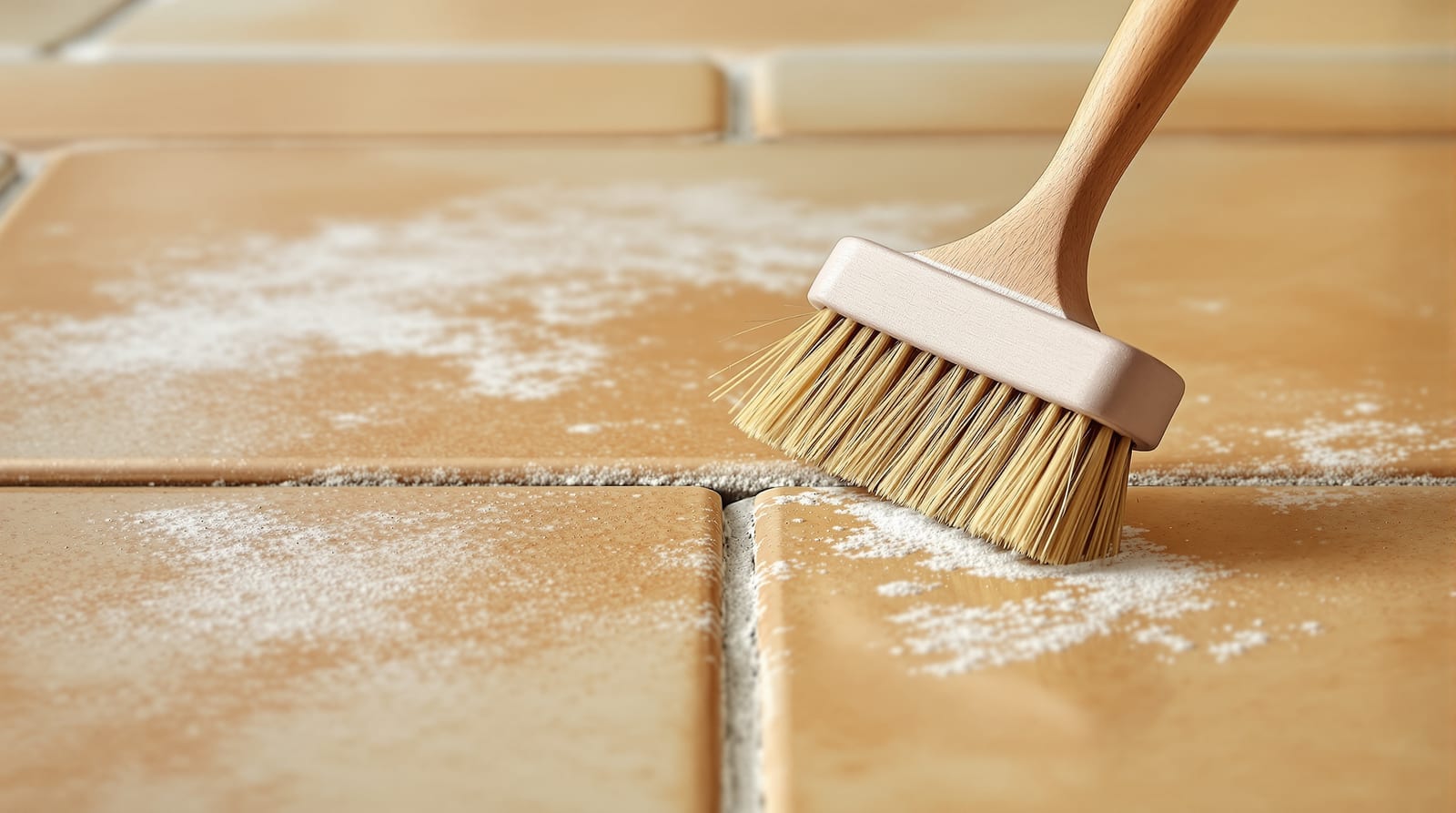
Grout Cleaning and Whitening India: Why Grout Turns Yellow or Black and How to Restore It
Why porous cement grout yellows, stains and grows mould in Indian homes, plus the cleaning methods, grout whitener pens, regrouting and epoxy upgrades that actually restore white joints and keep them clean.
The tiles look fine, but the lines between them have gone yellow, grey or, in the bathroom, an alarming black. That is grout failing, and it is the single most common reason a perfectly good Indian floor starts to look tired and unhygienic. The good news is that most discoloured grout can be brought back to near-new white without ripping up a single tile. This guide explains why grout discolours in the first place, then walks through every realistic fix, from a kitchen-cupboard scrub to grout whitener pens, regrouting and a permanent epoxy upgrade, and how to seal so you do not fight the same battle next year.
Why grout turns yellow, grey or black
Ordinary cement grout is a cement, sand and polymer powder that cures into a hard but porous solid. Those open pores are the whole problem. Every spill, every speck of cooking grease in the air, every bucket of mop water carrying dissolved dirt soaks into the joints and stays there. Unlike a glazed tile, which wipes clean because nothing penetrates it, cement grout drinks colour in and holds it.
There are three distinct kinds of discolouration, and the fix depends on which one you have:
- Yellow or grey grime. This is everyday dirt, body oils, kitchen grease and hard-water minerals absorbed into the pores. It is the most common and the easiest to reverse.
- Brown or rust staining. Usually iron in hard water, spilled food like turmeric, chai and curry, or rust from a metal object left standing on a wet floor.
- Black or pink spotting, especially in bathrooms. This is living mould and mildew, not dirt. It grows in the constantly damp joints of showers and around floor traps. It must be killed, not just scrubbed, or it comes straight back.
A quieter villain makes all of this worse: how you mop. Dragging a sloppy, dirty mop across the floor pushes greasy, gritty water straight into the grout lines, which sit slightly lower than the tile faces and act like little gutters. Over months, that is exactly how a white floor ends up with grey joints. Wringing the mop out properly, changing the water often and using a pH-neutral cleaner slows this down enormously, which is covered in the Studio Matrx floor cleaning guide.
The method comparison: from a quick scrub to a permanent fix
Before reaching for anything harsh, know that the right method depends on how bad the grout is and how much effort you want to spend. Here is the realistic picture for Indian homes, cheapest and gentlest first.
| Method | Effort | What it costs (indicative, plus 18% GST) | Result |
|---|---|---|---|
| Baking soda paste plus stiff brush | High, manual scrubbing | Under ₹100, kitchen staples | Lifts light to moderate grime, safe on all grout and stone |
| Oxygen bleach (sodium percarbonate) soak | Medium, soak then scrub | ₹150-400 per tub | Strong on stains and mould, colour-safe, low odour |
| Commercial grout cleaner (alkaline) | Low to medium | ₹250-600 per bottle | Fast on heavy grime; check it is acid-free near stone or cement |
| Steam cleaner | Low, just guide the nozzle | ₹3,000-8,000 for the machine | Excellent on mould and grease, chemical-free, reusable |
| Grout whitener or recolour paint | Medium, one-time application | ₹400-900 per kit | Coats joints opaque white or any colour; hides what cleaning cannot |
| Regrouting (rake out and refill) | High, skilled labour | ₹15-40 per sq ft labour plus grout | Brand-new joints; the moment to switch to epoxy |
| Switch to epoxy grout | High, professional | ₹350-700 per kg material plus labour | Permanent, stain-proof, mould-proof, no resealing |
Start at the top and only move down if the gentler method does not deliver.
Cleaning method by method
Baking soda and a brush
The safe first attempt. Make a thick paste of baking soda (sodium bicarbonate) and a little water, work it into the joints with an old toothbrush or a stiff grout brush, leave it ten minutes, then scrub along the lines and rinse. For a stronger action, spray plain white vinegar over the paste only on tile that is NOT natural stone, so it fizzes; never do this on marble, Kota or any natural stone, because the acid will etch and dull the stone permanently. On stone floors, skip the vinegar and use baking soda with a drop of mild dish soap instead. This handles most light yellowing for the price of nothing.
Oxygen bleach soak
For moderate to heavy staining and early mould, oxygen bleach (sodium percarbonate, sold as a colour-safe laundry booster) is the workhorse. Dissolve it in warm water per the pack, pour or brush it generously over the grout, let it sit for 15-30 minutes so it can penetrate, then scrub and rinse. It is far gentler than chlorine bleach, will not bleach colour from coloured grout, and has little smell. It is the best all-round choice for a whole-room refresh.
Commercial grout cleaners and the chlorine question
Bottled grout cleaners are usually strong alkaline degreasers and work fast on kitchen grime. Two cautions for Indian homes. First, avoid acidic cleaners (and never use toilet cleaners like Harpic) on grout next to marble, Kota stone or terrazzo, the acid etches the stone and can also erode cement grout itself. Second, chlorine bleach (and bleach-based products) will whiten and kill mould but is harsh, smells strong, can lighten coloured grout, and weakens cement grout if used repeatedly, so reserve it for stubborn bathroom mould and rinse thoroughly. For routine work, oxygen bleach is the smarter pick.
Steam cleaning
A steam cleaner is the most satisfying chemical-free option. Hot pressurised steam blasts grease and grime out of the pores and kills mould spores with heat alone. Run the narrow nozzle slowly along each joint, then wipe away the loosened dirt with a microfibre cloth. It is brilliant for bathrooms and kitchens and, once you own the machine, free to run. It will not fix grout that is permanently dyed by old stains, but for living mould and greasy build-up nothing is faster.
Tackling black mould in bathrooms
Black or pink spots in shower and floor-trap joints are biological. Cleaning alone removes the surface but leaves roots that regrow within weeks. Kill it: apply oxygen bleach or a dilute chlorine bleach solution, let it dwell 10-15 minutes, scrub and rinse. Then fix the cause, because mould only grows where joints stay wet. Improve ventilation (run the exhaust fan), squeegee the floor after showering, and confirm the floor actually drains, a wet area should slope roughly 1:80 to 1:100 to the trap so water never pools. If mould keeps returning in the same joints, that is your floor telling you those joints should be epoxy. See the Studio Matrx guide to bathroom flooring for the wider wet-area picture.
When cleaning is not enough: whitener and colourant pens
Sometimes the grout is not dirty, it is permanently discoloured, the stain has chemically bonded into the cement and no amount of scrubbing brings back the white. This is where a grout whitener or grout colourant earns its place. These are pigmented sealers or epoxy-based paints that you apply over clean, dry grout to coat it in a uniform new colour, classic white, or a darker grey or charcoal that will hide future dirt far better.
They come as small bottles with a sponge tip, marker-style pens for narrow joints, or tubs you brush on. The technique is the same: clean and fully dry the grout first, run the applicator along each joint, wipe any colourant off the tile faces immediately before it sets, and let it cure. A good colourant both recolours and seals, so it resists staining afterward. It is a genuine half-day transformation for a tired bathroom or kitchen at a fraction of the cost and mess of regrouting. The limitation is that it sits on the surface, so it works best on sound grout, not on grout that is cracked, crumbling or missing.
When to regrout, and why that is the moment to go epoxy
If joints are cracked, powdery, hollow-sounding or actually missing in places, cleaning and whitening only paper over a structural problem. The fix is regrouting: rake the old grout out to at least two-thirds of the tile depth with a grout saw or an oscillating tool, vacuum the dust, and refill. Regrout when you see crumbling or sandy grout, recurring cracks, persistent mould that returns no matter how often you clean, or three or more joints that have already broken away.
Here is the key insight: once you are paying to rake out and refill, the marginal cost of upgrading to epoxy grout is small, and epoxy solves the problem for good. Epoxy grout is a resin-plus-hardener system that cures into a dense, non-porous plastic. It absorbs nothing, so it is effectively stain-proof, waterproof and mould-resistant, and it never needs sealing. It costs more per kg and is fussier to apply, so it is worth hiring a tiler experienced with it, but in kitchens, bathrooms and utility areas it pays back in years of clean joints. Reputable brands in India include MYK Laticrete, Roff (Pidilite), Bal Endura and Fevicol. The full trade-off between cement and epoxy is laid out in the Studio Matrx tile grouting guide, and you can estimate how much you need with the grout quantity calculator.
The diagram below shows why the same joint behaves so differently before and after: a dirty, porous cement joint that has absorbed grime versus a cleaned and sealed joint that grime can no longer penetrate.
Sealing: how to stop it coming back
If you have cleaned cement grout back to white, do not stop there, seal it, or you are simply restarting the clock. A penetrating grout sealer soaks into the pores and forms an invisible barrier so spills bead on top and wipe away instead of soaking in. Apply it only once the grout is completely clean and dry: run the sealer along each joint with the applicator bottle or a small brush, wipe any excess off the tile faces, let it cure per the label (usually a day before heavy use), and reapply every one to two years, sooner in kitchens and bathrooms. It is a small, cheap habit that keeps the difference between a floor you re-clean every monsoon and one that simply wipes clean. For sealing across stone and grout more broadly, see the Studio Matrx floor resealing guide.
Two material notes. On vitrified and porcelain tiles the tile itself never needs sealing, only the cement grout between them does, which is covered in vitrified tile maintenance. And epoxy grout never needs sealing at all, which is the whole point of choosing it in spill-prone rooms.
A realistic plan of attack
Match effort to the problem. For light yellowing across a room, an oxygen bleach soak and scrub, then a sealer, is the best value. For a stained bathroom with mould, steam or oxygen bleach to kill the mould, fix the ventilation and drainage, and seal. For grout that is permanently discoloured but sound, a grout whitener or colourant transforms it in an afternoon. For cracked, crumbling or missing grout, regrout and take the chance to switch the wet rooms to epoxy. Do that once and you stop fighting your floor every year.
Frequently asked questions
Why does my grout keep turning yellow even after I clean it?
Because cement grout is porous and you have not sealed it. Cleaning removes the grime but leaves the pores wide open, so the next few months of cooking grease, foot traffic and mop water soak straight back in. Seal the grout right after cleaning, and reapply sealer every year or two, to break the cycle. If it still yellows fast in a kitchen or bathroom, the long-term answer is epoxy grout.
Can I use Harpic or acid to clean grout?
No, not near natural stone or on cement grout. Acidic cleaners like Harpic etch and permanently dull marble, Kota stone and terrazzo, and repeated acid use eats away cement grout itself, making it more porous and worse over time. Use baking soda, oxygen bleach or an acid-free alkaline grout cleaner instead. Save chlorine bleach only for killing stubborn bathroom mould, and rinse it off well.
Is grout whitener or recolour paint a permanent fix?
It is long-lasting but not eternal. A good grout colourant both recolours and seals, so it resists staining and can last several years, but it sits on the surface, so it works only on sound grout, not on cracked or crumbling joints. If your grout is structurally fine and just stained, it is an excellent, cheap transformation. If joints are failing, regrout instead.
When should I regrout instead of just cleaning?
Regrout when the grout is cracked, sandy or powdery, when joints are hollow or missing in places, or when mould keeps returning no matter how often you clean. Those are signs the grout has failed structurally, and surface cleaning cannot fix it. Since you are already raking it out, that is the ideal moment to upgrade kitchens and bathrooms to stain-proof, mould-proof epoxy grout.
How do I stop black mould coming back in the bathroom?
Kill it (oxygen or chlorine bleach, dwell, scrub, rinse), then remove the conditions it needs. Mould only grows where joints stay wet, so run the exhaust fan, squeegee or wipe the floor after showering, and make sure the floor actually slopes to the drain so water does not pool. If mould still returns in the same joints, regrout those joints with epoxy, which mould cannot colonise.
Export this guide
Related Guides — Deep-dive reading
Epoxy Grout vs Cement Grout for Tiles in India: Which to Specify (2026)
A plain-English guide to tile grouts for Indian homes: what grout does, how cementitious grout compares with epoxy grout on cost, stain and water resistance, hygiene and durability, and exactly where each one belongs - kitchens, bathrooms, pools, dry rooms and more.
Building MaterialsTile Grouting Guide India: Cement vs Epoxy Grout, Joint Width, Mixing, Curing and Sealing
How to grout tile floors properly in Indian homes: choosing cement versus stain-proof epoxy grout, getting timing and joint width right, floating it in, clearing haze, curing and sealing.
Flooring & SurfacesFloor Sealing and Resealing Guide India: How to Seal Marble, Granite, Kota, Sandstone, Terrazzo and Cement Grout
Why porous natural stone and cement grout floors need sealing, the simple water-drop test to check if resealing is due, penetrating versus topical sealers, how to clean-dry-coat-buff, how often to reseal, and what you should never seal.
Flooring & SurfacesRelated Tools — Try Free
Grout Quantity Calculator
Estimate grout in kg and cost by tile size, joint width and thickness — cement or epoxy grout.
Flooring CalculatorFloor Sealer Calculator
Estimate stone and grout sealer in litres, bottles and cost by area, surface porosity and coats.
Flooring CalculatorMonsoon-Readiness Checklist
Pre-rain home audit across 9 categories — terrace, drains, waterproofing, electrical, HVAC, pest, vehicles, documents.
Seasonal Audit