
Door Threshold Types Compared: Which to Use (India 2026)
Stone saddle, ramped, recessed, aluminium seal strip or weather-bar threshold — which type suits internal, external, wet and wheelchair-accessible doors, and what each costs.
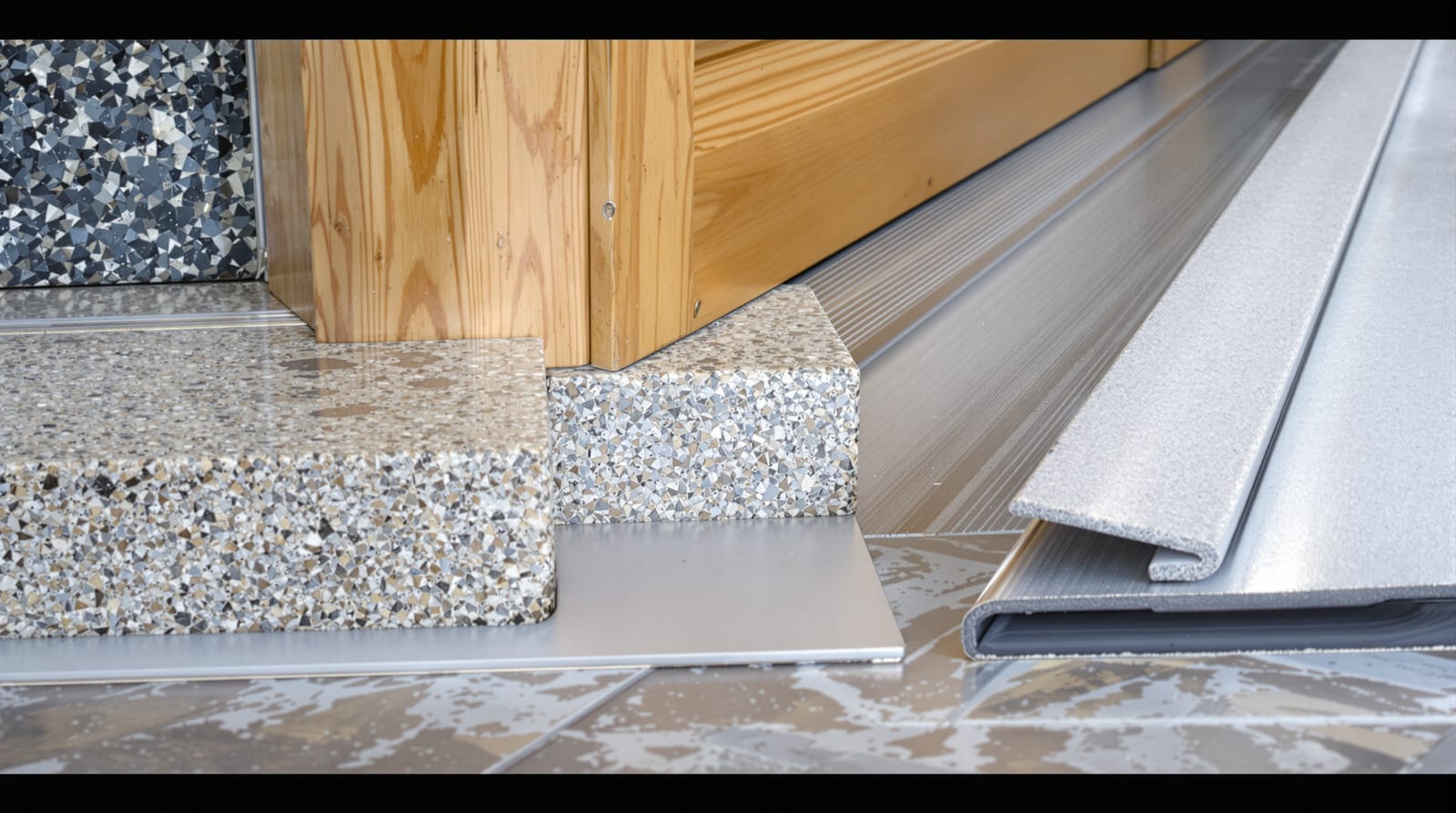
The threshold is the bottom member you step over at a doorway — the dehleez or umbara in much of India, the vasal padi in the south. It is the most overlooked part of a door, yet it decides whether monsoon water sheets into your hall, whether the door draughts and whistles, whether a wheelchair or trolley can roll through, and whether the frame foot rots in five years. Choosing among the common door threshold types is not cosmetic: each one is engineered for a different job. A flush internal door wants almost no threshold; an external main door wants a sloped, sealed barrier; a bathroom wants a waterproof kerb; an accessible entrance wants a near-flat saddle under 12mm. This guide compares the five types Indian homes actually use — stone/timber saddle, ramped (bevelled), recessed/rebated, aluminium threshold strip with rubber or brush seal, and finned/weather-bar — and tells you where each suits, what it costs, and how it seals.
The five door threshold types
Every threshold is really doing one of three things: sealing out water and draught, bridging a floor-level change, or simply finishing a doorway cleanly. The five common types map onto those jobs.
1. Stone or timber saddle
A saddle is a solid bar laid across the opening, flush or slightly raised, that the leaf shuts down onto. In India this is most often a granite or Kota stone saddle — durable, waterproof and traditional — though hardwood saddles appear in heritage and joinery-led homes. A raised stone saddle at the main door is the classic umbara: it blocks dust and splash, gives the door a clean seat, and (in Vastu) is considered auspicious. Bedded in sealant, granite is the workhorse external and wet-area threshold.
2. Ramped (bevelled) threshold
Where there is a level change between two floors — a step down to a balcony, a tiled-to-marble transition, or a raised wet-area kerb — a ramped or bevelled threshold eases the foot, trolley or wheelchair over it. The ramp can be cut into stone, formed in screed, or be a proprietary aluminium ramped strip. The RPwD Act 2016 and the Harmonised Guidelines 2021 require that any upstand over ~6mm be bevelled, and the total height stay ≤12-13mm for an accessible route. A ramp is the bridge between a watertight kerb and step-free access.
3. Recessed / rebated threshold
A recessed threshold sits in a rebate cut or cast into the floor, so its top finishes flush with the surrounding finish. This is the near-invisible option: the leaf undercut closes over it, the floor reads as continuous, and there is no trip lip. It suits internal doors where you want flooring to flow room to room, and it is the basis of most zero/level accessible thresholds when paired with an external drainage channel. Forming it well needs the floor screed planned before tiling.
4. Aluminium threshold strip with rubber or brush seal
The modern engineered threshold: an extruded aluminium strip screwed across the opening, carrying a rubber (EPDM) bulb, a wiper blade, or a brush (pile) seal that the leaf bottom or an automatic drop-seal presses against. It draught-proofs, dust-proofs and quietens the door, and is the standard for AC rooms, balconies and external doors where you want a clean seal without a tall stone step. Brush seals suit slightly uneven floors; rubber bulbs seal tightest on a true floor.
5. Finned / weather-bar threshold
The heavy-duty external type: a finned aluminium threshold with one or more upstanding fins, paired with a weather bar (a raised lip on the sill) and a drip/throat groove under the outer edge. The leaf base carries a weatherseal or drip bar that laps over the fin, so wind-driven monsoon rain is thrown clear and cannot track inward. This is what a serious external main door, a coastal home, or a high-exposure balcony door needs.
Comparison: which threshold suits where
| Threshold type | Best location | Seals against | Accessible? | Indicative cost | Watch-outs |
|---|---|---|---|---|---|
| Stone / timber saddle | External main door, wet-area kerb, internal flush | Water, dust, draught (if bedded) | Only if low + bevelled (≤12mm) | Granite ₹250-700/rft; hardwood ₹300-800/rft | A high stone step is a trip and a barrier; bed in sealant |
| Ramped / bevelled | Floor-level changes, accessible routes, wet-area kerb edge | Bridges level change, partial water | Yes — the accessible choice | ₹150-500/rft (alu strip); stone ramp labour-led | Slope must be gentle; keep total rise ≤12-13mm |
| Recessed / rebated | Internal doors, zero-threshold accessible | Flush — needs add-on seal for draught | Yes (with drainage if external) | ₹100-400/rft + screed prep | Plan the floor recess before tiling; drains on external |
| Aluminium strip + rubber/brush seal | AC rooms, balconies, external doors | Draught, dust, sound, light water | Low profiles can be accessible | ₹120-450/rft; with auto drop-seal ₹600-1,500/door | Brush wears; rubber needs a true floor; screw into solid |
| Finned / weather-bar | External main, coastal, high-exposure balcony | Wind-driven rain, draught, dust | Less so (upstand fin) | ₹250-800/rft + weather bar | Fin can trip; needs matching leaf drip bar + throating |
As a rule of thumb: internal = recessed or none, AC/balcony = aluminium seal strip, wet area = granite saddle kerb, external main = finned/weather-bar or sloped granite, and accessible = low recessed or ramped, ≤12-13mm. Costs vary with stone grade, profile and labour; add GST 18% on hardware and aluminium sections.
How each type seals — and the India realities
Sealing is where thresholds earn their keep, and India's monsoon, dust and termite pressure make it unforgiving.
- Slope and throating, always (external). Any external sill must slope outward so water runs away from the leaf, with a drip/throat groove under the outer lip to break the water film. A flat external threshold wicks water inward by capillary action — the single commonest cause of a wet hall floor after the first heavy rain.
- Weather bar + leaf drip. The finned/weather-bar threshold only works if the leaf base carries a matching drip bar or weatherseal that laps the fin. Specify them together, or you have an upstand the door simply rattles over.
- Wet areas need a kerb, not just a strip. For bathrooms, raise a granite saddle kerb bedded in sealant, integrate it with the waterproofing membrane, and slope the floor away. Use WPC, PVC, RCC or aluminium frames at the threshold — never untreated timber, which rots and feeds termites at the wet floor line.
- Draught and dust on internal/AC doors. A flush recessed threshold seals nothing on its own; pair it with an automatic drop-seal or a brush/rubber strip so the AC stays in and the dust stays out. A granite umbara also genuinely blocks under-door dust and splash — the Vastu and the building science agree here.
- DPC under the frame foot. Whatever threshold you choose, the frame foot must sit on a damp-proof course and ideally a stone/RCC base block, so capillary damp from the floor does not climb the jambs.
The accessibility rule you cannot ignore
For any door on an accessible route — and increasingly for good practice at every main door — the RPwD Act 2016 and the Harmonised Guidelines 2021 call for a threshold that is preferably flush, ≤12-13mm in height, and bevelled where it exceeds ~6mm. A tall traditional umbara fails this. The reconciliation in Indian homes is a low recessed saddle or a ramped granite edge that keeps the kerb watertight on the wet side while presenting a near-flat, bevelled face to the dry side — often with an external drainage channel and slope so a flush threshold still sheds water. Never let a threshold compromise free egress: it must not become a trip hazard on an escape route.
Quick decision guide
| Your situation | Choose | Why |
|---|---|---|
| Internal bedroom / study door | Recessed/flush, or aluminium seal strip | Floor flows; seal strip for AC/sound |
| Bathroom / wet area | Granite saddle kerb, sloped, sealed | Waterproof, membrane-integrated, termite-safe |
| External main door (sheltered) | Sloped granite saddle + drip groove | Durable, sheds water, auspicious umbara |
| External main / coastal / exposed | Finned / weather-bar + leaf drip | Defeats wind-driven monsoon rain |
| Balcony / AC room door | Aluminium strip + rubber or brush seal | Draught, dust and sound seal, low profile |
| Wheelchair / step-free access | Low recessed or ramped, ≤12-13mm bevelled | Meets RPwD / Harmonised Guidelines |
Threshold types compared
The threshold is one piece of the larger sill and frame picture. For the full bottom-member detail see the door thresholds guide and how to design the door sill; for step-free entrances read zero-threshold doors; for the external rain detail see the door weather bar; and for wet rooms, waterproofing door thresholds. Setting a stone saddle well is covered in door saddle installation, and the cultural angle in main-door threshold Vastu. It all sits within the complete door guide and the door frames pillar. To match a threshold to your opening, try the door threshold selector and, for accessible doors, the zero-threshold feasibility checker.
Frequently asked questions
Which door threshold type is best for an external main door in India?
For a sheltered main door a sloped granite saddle with a drip groove is durable, waterproof and serves as the traditional umbara. For exposed, coastal or high-rain locations choose a finned/weather-bar threshold paired with a matching leaf drip bar, so wind-driven monsoon rain is thrown clear rather than tracking inward.
What threshold should I use in a bathroom or wet area?
Raise a granite saddle kerb bedded in sealant, integrate it with the floor waterproofing membrane, and slope the floor away from the door. Use a WPC, PVC, RCC or aluminium frame at the threshold — never untreated timber, which rots and attracts termites at the wet floor line.
What is the maximum threshold height for wheelchair access?
The RPwD Act 2016 and the Harmonised Guidelines 2021 require an accessible threshold to be preferably flush and no more than about 12-13mm high, with any upstand over ~6mm bevelled. A low recessed saddle or a ramped granite edge meets this while still keeping a watertight kerb on the wet side, ideally with an external drainage channel.
How does an aluminium threshold strip seal the door?
The extruded aluminium strip carries a rubber (EPDM) bulb, a wiper blade, or a brush (pile) seal that the leaf bottom or an automatic drop-seal compresses against when the door closes. This draught-proofs, dust-proofs and quietens the door — ideal for AC rooms, balconies and external doors. Rubber bulbs seal tightest on a true floor; brush seals tolerate slightly uneven floors.
Is a raised umbara threshold a problem for accessibility?
A tall traditional umbara fails the accessibility rule and is a trip hazard. The practical fix is a low recessed or ramped saddle: keep the watertight kerb on the wet or outside face but present a near-flat, bevelled face under 12-13mm to the dry side, with slope and a drip groove so the flush threshold still sheds water and free egress is preserved.
What does a door threshold cost in India?
As a rule of thumb, a granite saddle runs about ₹250-700 per running foot, a hardwood saddle ₹300-800/rft, an aluminium seal strip ₹120-450/rft, and a finned/weather-bar threshold ₹250-800/rft plus the weather bar. An automatic drop-seal adds roughly ₹600-1,500 per door. Add GST 18% on hardware and aluminium sections; stone grade and labour move these bands.
Export this guide
Related Guides — Deep-dive reading
Door Threshold Standards for Indian Homes: Sill, Weather Bar & Accessibility (2026)
What the strip under your door actually does - water, dust, draft and insect barrier, level transition and trip-safe accessibility - with the right material, the 12 mm accessibility limit, weather-bar and drip-groove detailing for external doors, and the wet-bathroom threshold.
Home Doors & EntrancesZero Threshold Doors in India: Level Access (India 2026)
How to detail a flush, step-free door threshold for wheelchairs and ageing-in-place while still keeping monsoon water out.
Home Doors & EntrancesDoor Saddle Installation: Threshold Fitting (India 2026)
How to fit a granite or aluminium saddle threshold on mortar or adhesive, level it true, and seal it against monsoon water ingress.
Home Doors & EntrancesRelated Tools — Try Free
Accessible Door Checker
Check a door against wheelchair-accessibility guidance — clear width, threshold, handle and closer force per RPwD 2021.
Compliance ToolDoor Threshold Selector
Choose the right threshold — saddle, ramped, aluminium-seal, weather-bar or zero — by door location and accessibility.
Threshold SelectorBathroom Floor Slope Calculator
Work out the floor fall to the drain and screed depth from the run and slope ratio — with a drains-properly verdict.
Bathroom Calculator