

Thermal Performance of Windows: Reading the Spec Sheet
U-value, SHGC, VLT, LSG, Air Leakage and Condensation Resistance — what every number on a window's spec sheet physically means, with Indian figures
A window's spec sheet is a short list of cryptic numbers — U-value 1.8, SHGC 0.27, VLT 0.45, LSG 1.67, AL 0.10, CR 62. Most buyers nod and move on. But each of those numbers describes a real, physical thing the window does to the heat and light hitting it, and once you can read them you can tell a genuinely good window from a marketing one. This guide is the METRICS deep-dive — what every number on the spec sheet physically means, with Indian numbers and an honest verdict on which ones actually matter in a hot climate.
The single most important reframe for India, stated up front: in most of the country solar heat coming through the glass (SHGC) dominates conduction (U-value). The cold-climate instinct to chase a tiny U-value is usually the wrong priority here. Read the spec sheet through that lens.
U-value: the rate of non-solar heat flow
The U-value (or U-factor), in W/m2K, is the rate at which non-solar heat conducts through the WHOLE window — glass, frame and spacer together — for each degree of temperature difference between inside and outside. Lower is better. Crucially it is a whole-window figure: a brochure that quotes only the centre-of-glass U-value is flattering itself, because the frame and edge are always worse than the middle of the pane.
That heat travels four distinct ways, and the U-value rolls three of them into one number while SHGC handles the fourth. The cross-section below maps all four.
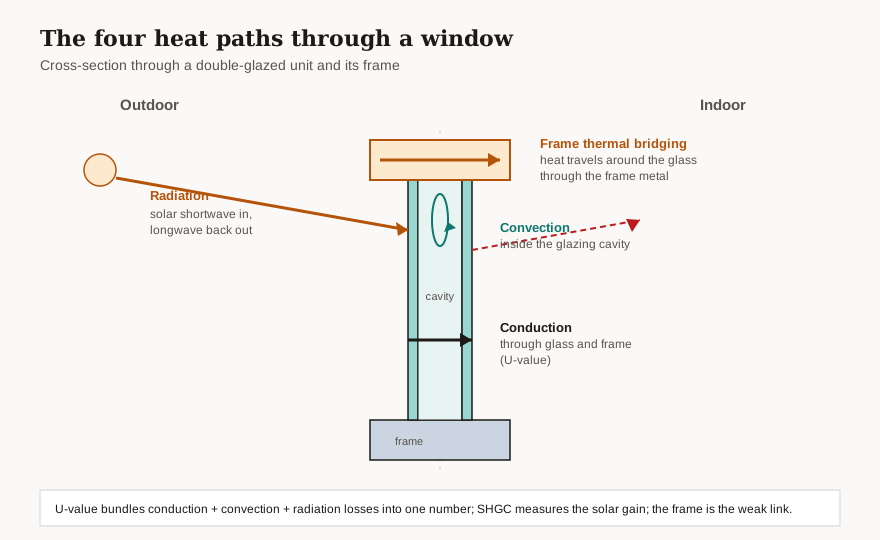
- Conduction through the solid glass and frame — heat marching straight through the material. This is the bulk of the U-value.
- Radiation — longwave infrared re-radiated across the cavity and off the glass (a Low-E coating reflects this back); separately, solar shortwave radiation passing straight through is measured by SHGC, not U-value.
- Convection — air or gas circulating inside the glazing cavity, carrying heat from the warm pane to the cold one.
- Frame thermal bridging — the frame conducting heat around the glass entirely. A bare aluminium frame is the worst offender (more on this below).
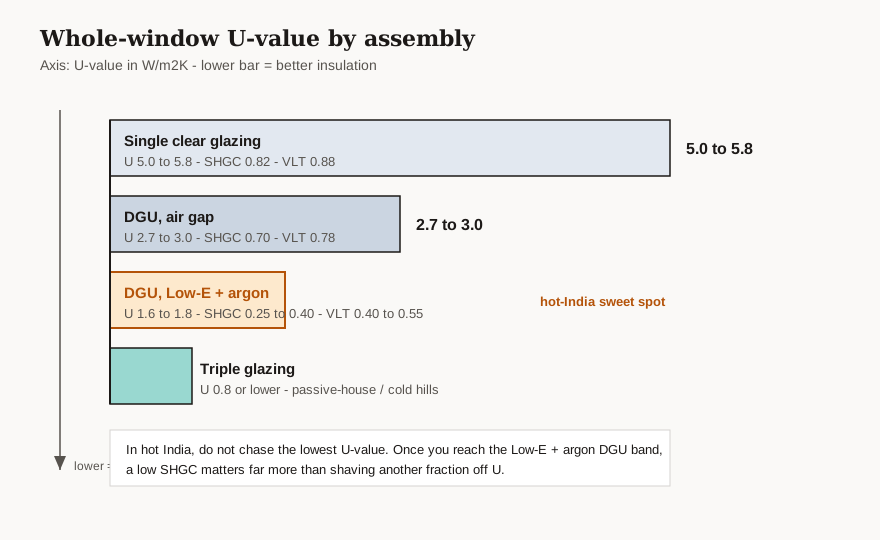
Single glazing sits at 5.0 to 5.8 W/m2K; a double-glazed unit drops to about 2.7 to 3.0; add a Low-E coating and argon fill and you reach 1.6 to 1.8; passive-house triple glazing goes to 0.8 or below. NFRC-rated windows span roughly 0.20 to 1.20. In Indian practice, frames rarely beat about 1.6 without a premium thermally-broken system — and for most of the country that ceiling is perfectly fine. The insulation MECHANISM behind these numbers — cavity gas, warm-edge spacers, sealing — is the subject of our window insulation guide; this guide stays on what the numbers mean.
SHGC: the number that matters most in India
The Solar Heat Gain Coefficient is the fraction (0 to 1) of the sun's heat that gets through the window — both the part transmitted straight through the glass and the part absorbed and then re-radiated inward. Lower is better in hot India. Clear single glazing has an SHGC around 0.82, meaning 82 per cent of the solar heat pours in. A clear DGU is about 0.70; a solar-control or Low-E DGU cuts it to 0.25 to 0.40; aggressive solar-control glass reaches 0.18 to 0.27.
This is the number a Delhi or Chennai homeowner should read first. On a sun-facing wall, the solar gain through clear glass can swamp anything the U-value is doing — which is why the certification codes target it directly: GRIHA requires SHGC less than or equal to 0.25, IGBC less than or equal to 0.45. The science of how SHGC behaves with sun angle and orientation is covered in solar heat gain and windows; the glass that delivers a low SHGC is in energy-efficient glass.
VLT and LSG: keeping daylight while cutting heat
Visible Light Transmittance (VLT or VT) is the fraction of daylight the glass lets through, 0 to 1. You want this HIGH — a dim room defeats the point of a window and forces lights on. The Eco-Niwas Samhita sets a minimum VLT that rises as your window-to-wall ratio falls, so smaller windows must be clearer.
The tension is obvious: cutting solar heat usually cuts light too. The number that resolves it is LSG, the Light-to-Solar-Gain ratio = VLT divided by SHGC. A higher LSG means the glass is letting light in while keeping heat out — the hallmark of a spectrally-selective Low-E coating that filters the invisible infrared while passing the visible. Aim for LSG greater than or equal to 1.25. A glass with VLT 0.45 and SHGC 0.27 has an LSG of about 1.67 — excellent. Plain bronze tint with VLT 0.50 and SHGC 0.60 has an LSG of just 0.83 — it dims the room more than it cools it.
The assembly comparison table
Putting U-value, SHGC and VLT side by side across the four assembly tiers shows how the levers move together. The figure ladders the U-value visually; the table carries all three numbers.
| Assembly | U-value (W/m2K) | SHGC | VLT | Verdict for hot India |
|---|---|---|---|---|
| Single glazing, clear | 5.0 to 5.8 | 0.82 | 0.88 | Avoid on sun-facing walls |
| DGU, air-filled, clear | 2.7 to 3.0 | 0.70 | 0.78 | Better insulation, still high gain |
| DGU + Low-E (solar) + argon | 1.6 to 1.8 | 0.25 to 0.40 | 0.40 to 0.55 | The hot-India sweet spot |
| Triple-glazed, passive-house | 0.8 or below | varies | lower | Overkill except cold hills |
The third row is where most Indian homes should land: the big win is the low SHGC, not the last fraction off the U-value. The jump from triple's 1.6 to 0.8 U-value buys little comfort in Chennai while adding weight and cost — see the honest verdict in triple-glazed windows.
Thermal bridging and the frame's hidden penalty
The frame can be up to a third of the window, so a conductive frame quietly wrecks good glass. Thermal bridging is heat finding a short-cut through a solid conductor that bypasses the insulation around it. Bare aluminium is a metal highway: a solid-profile aluminium frame can conduct more heat than the glass it surrounds, which is why a whole-window U-value is always worse than the glass-only figure the brochure prefers to quote.
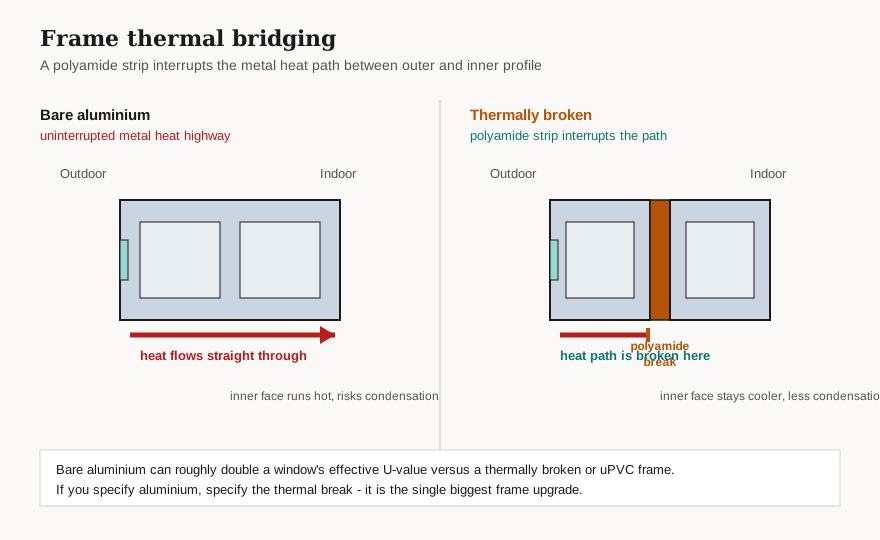
The fix is a thermal break — a strip of low-conductivity polyamide built between the inner and outer aluminium profiles to interrupt the metal path. uPVC sidesteps the problem with multi-chamber hollow profiles, and wood is naturally low-conductivity. This is exactly why you read the WHOLE-window U-value, never centre-of-glass: the frame is where the bridging penalty hides.
Air Leakage and Condensation Resistance: the secondary numbers
Two more NFRC numbers round out the sheet.
- Air Leakage (AL), in cfm/ft2 — how much air whistles through the closed window per unit area. Lower is tighter. A leaky window undoes a good U-value; this is the cheapest performance number to get right and the most ignored.
- Condensation Resistance (CR), 0 to 100 — how well the window resists condensation forming on the indoor surface. Higher is better. In humid coastal India and in air-conditioned rooms, low-CR windows sweat at the cold edge, dripping onto sills and breeding mould. A warm-edge spacer and a thermal break both lift CR.
| Metric | Units | Better is | Typical good value |
|---|---|---|---|
| U-value | W/m2K | Lower | 1.6 to 2.7 (DGU) |
| SHGC | 0 to 1 | Lower (hot India) | 0.25 to 0.40 |
| VLT | 0 to 1 | Higher | 0.40 to 0.60 |
| LSG (VLT/SHGC) | ratio | Higher | greater than or equal to 1.25 |
| Air Leakage | cfm/ft2 | Lower | less than or equal to 0.1 |
| Condensation Resistance | 0 to 100 | Higher | greater than 55 |
How to read the sheet — the hot-India priority order
Faced with two spec sheets, read them in this order for an Indian home, not the cold-climate order.
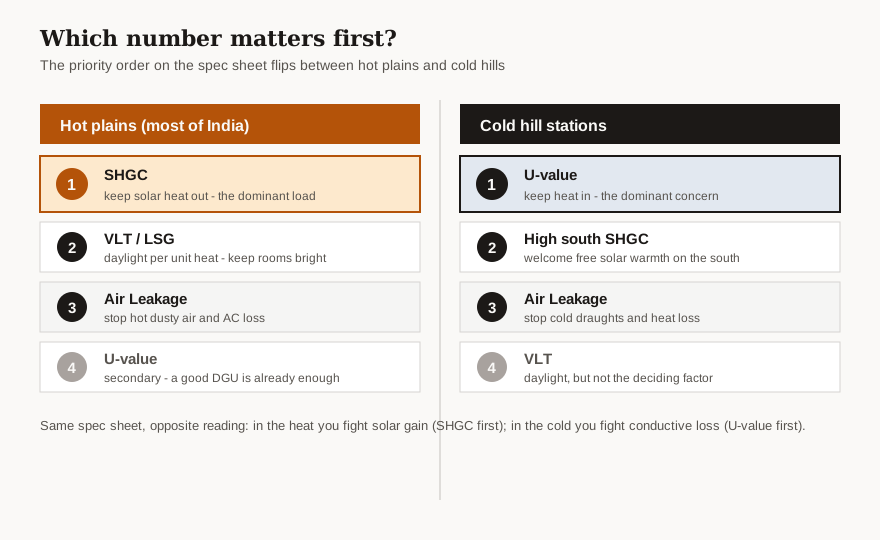
1. SHGC first — on any sun-facing window, this dominates. Want 0.25 to 0.40, paired with external shading.
2. VLT and LSG — confirm the glass keeps daylight; LSG greater than or equal to 1.25 means it is spectrally selective, not just dark.
3. Air Leakage — a tight seal is nearly free to specify and protects every other number.
4. U-value — important but secondary in the plains: 1.6 to 2.7 is plenty. Chase a sub-1.0 U-value only in cold hill stations (Shimla, Manali, Leh), where conduction genuinely dominates and SHGC actually flips to wanting high south-facing gain.
These are the raw physical numbers. WHO tests and certifies them — the NFRC label, BEE, ENS — and how to ask a fabricator for a real test report is a separate question, covered in window energy ratings explained: that guide is about the LABEL, this one is about what the numbers on it physically mean. For the system-level view of how frame, glass, seals and shading combine into one energy device, start at the pillar: energy-efficient windows explained.
Related guides
- Energy-efficient windows explained — the pillar tying frame, glass, seals and shading together.
- Window energy ratings explained — who certifies these numbers and how to read the label (this guide is what they mean).
- Energy-efficient glass — the glass layer that delivers low SHGC and high LSG.
- Window insulation guide — the insulation mechanism behind the U-value.
- Types of glass for windows — the full glass menu these metrics describe.
References
- Eco-Niwas Samhita 2018 (BEE / ECBC): https://ecbc.in/econiwas.html
- Low-E glass rating: U-factor, SHGC, VT explained: https://www.mannleecw.com/what-is-low-e-glass-rating/
- Low-E glass and energy efficiency (Guardian Glass): https://www.guardianglass.com/eu/en/our-glass/glass-types/low-e-glass
- Glass and window solutions for homes (Saint-Gobain India): https://in.saint-gobain-glass.com/knowledge-center/glass-and-windows
- Types of Low-E and solar control glass (FG Glass India): https://fgglass.com/blogs-details/types-of-low-e-glass
Export this guide
Related Guides — Deep-dive reading
Energy Efficient Windows Explained: The Whole-System Guide for Indian Homes
Treat the window as an energy device — frame, glass, seals, shading, install and rating — and learn why low SHGC and shading beat chasing a cold-climate U-value in hot India.
Windows & GlazingWindow Insulation Guide for Indian Homes
How a window keeps heat out and conditioned air in — the glazing cavity, frame thermal break and air-sealing deep-dive
Windows & GlazingEnergy-Efficient Facades in India: How the Building Skin Cuts Your Cooling, Heating & Lighting Bills
How a building facade drives cooling, heating and lighting energy in India, the three levers of solar-heat-gain control, insulation and daylighting, U-value, SHGC, VLT and WWR in plain terms, ECBC and Eco-Niwas expectations, and real Indian green buildings.
Building FacadesRelated Tools — Try Free
Cross-Ventilation Analyzer
Estimate airflow and air changes per hour (ACH) from room size, window areas, layout, and local wind — with NBC 2016 Part 8 compliance check.
Ventilation CalculatorBrise-Soleil Visualizer
Interactive horizontal-louvre cut-off angle calculator — sun altitude, louvre depth, and spacing inputs with a live shadow preview. Computes θ = arctan(spacing/depth) for façade shading, ECBC envelope compliance, hospital daylight design, and tropical sun-control detailing.
Sun Shading ToolGlass Selection Tool
Single vs double (DGU) vs triple glazing and the right glass type for your climate, priority and sun.
Window Tool