

Window Insulation Guide for Indian Homes
How a window keeps heat out and conditioned air in — the glazing cavity, frame thermal break and air-sealing deep-dive
A window is the weakest link in a wall. A brick-and-plaster wall might block heat at a rate of around 2 to 3 W/m2K; a plain single-glazed window leaks at 5 to 5.8 W/m2K — more than twice as fast. Insulation is the art of slowing that leak: keeping the cooled (or in the hills, heated) air you paid for inside, and the outdoor temperature out. This guide is the deep-dive on the insulation MECHANISM — how a window actually resists heat flow, and the three levers you control: the glazing cavity, the frame, and the air seals.
One honest caveat up front, because it reframes everything: in most of hot India, solar heat coming straight through the glass (SHGC) matters more than conduction (U-value). Insulation is necessary, but a sub-1.0 U-value chased the way cold countries do is usually the wrong priority here. We will keep insulation in its place.
What "insulation" means: the U-value
The single number that captures a window's insulation is its U-value (or U-factor), measured in W/m2K — the rate of non-solar heat flow through the WHOLE window: glass, frame and spacer together. Lower is better. The U-value ladder below shows how each lever drops it.
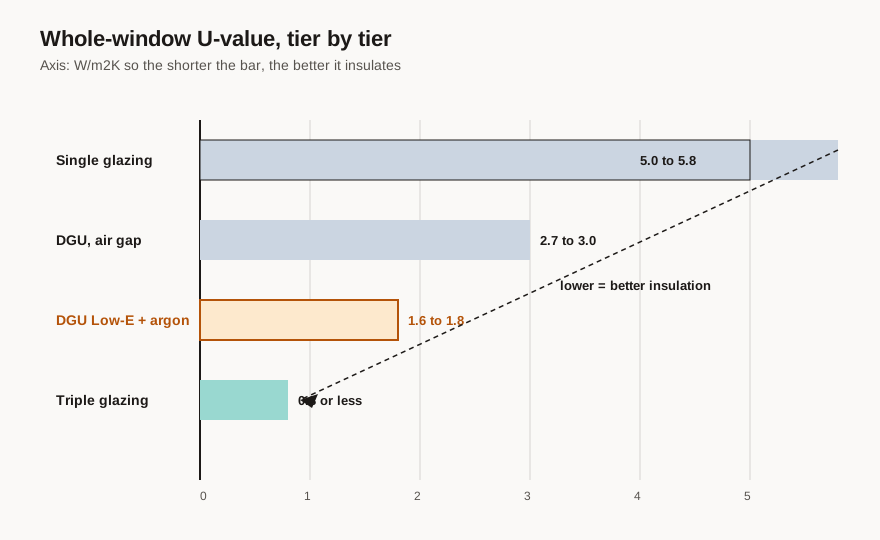
| Assembly tier | Indicative whole-window U (W/m2K) | What changed |
|---|---|---|
| Single glazing (clear) | 5.0 to 5.8 | One pane, no cavity |
| Double glazing (DGU, air-filled) | 2.7 to 3.0 | A trapped-air cavity is added |
| DGU + Low-E + argon | 1.6 to 1.8 | Coating reflects radiant heat; argon slows convection |
| Triple-glazed (passive-house) | 0.8 or below | Two cavities, usually 2 Low-E coatings |
NFRC-rated windows span roughly 0.20 to 1.20. In Indian practice, frames rarely beat about 1.6 without a premium thermally-broken or passive-house system — and that is fine for most of the country. The deep physics of these metrics lives in our thermal performance of windows guide; this guide stays on the insulation MECHANISM and the sealing that the spec sheet never mentions.
Where heat actually leaks
Before fixing insulation, see where the heat moves. Through a window it travels four ways: conduction through the solid glass and frame, radiation (solar shortwave in — that is SHGC — plus longwave re-radiation), convection inside the glazing cavity, and air leakage through gaps around bad seals. The cross-section maps each path.
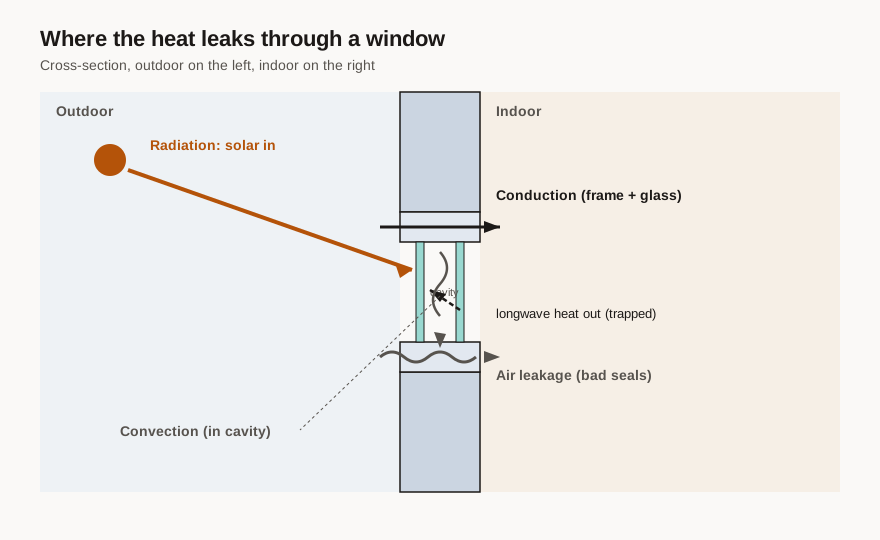
The three levers below each target a different path. Get all three right and the window finally behaves like the wall it sits in.
Lever 1 — The glazing cavity
A double-glazed unit (DGU) insulates because of the trapped gas between the panes, not the glass itself. Glass conducts heat readily; still air does not. The detailing of that cavity is where the insulation is won or lost.
- Air gap 12 to 16 mm. This is the sweet spot. Too narrow and conduction across the gap stays high; too wide (greater than about 20 mm) and the gas starts to circulate (convection), undoing the benefit. 12 to 16 mm is the standard target.
- Argon fill cuts U-value 10 to 15 per cent. Argon is denser and more sluggish than air, so it convects less inside the cavity. It is a modest add-on cost in India and a reliable upgrade for AC-heavy or hill-station rooms.
- Warm-edge spacer. The spacer is the bar that holds the two panes apart at the perimeter. A traditional aluminium spacer is a metal ring around the whole edge — a cold bridge that invites condensation. A warm-edge spacer (polymer or stainless) breaks that bridge, lifting the edge temperature and cutting perimeter condensation.
- Triple glazing = two cavities. A third pane adds a second insulating gap and usually a second Low-E coating, pushing U toward 0.8. In hot India this is normally overkill — see the honest verdict in triple-glazed windows. It earns its keep mainly in cold hill stations (Shimla, Manali, Leh) or extreme-noise sites.
Note what is NOT primarily an insulation move: the JUMP from one pane to two. That is a glazing-LAYERS decision — covered in single vs double glazing. That guide answers "how many panes"; THIS guide is about how the cavity, frame and seals make those panes actually insulate.
Lever 2 — The frame and the thermal break
The frame is up to a third of the window area, so a conductive frame quietly sabotages good glass. Materials differ hugely.
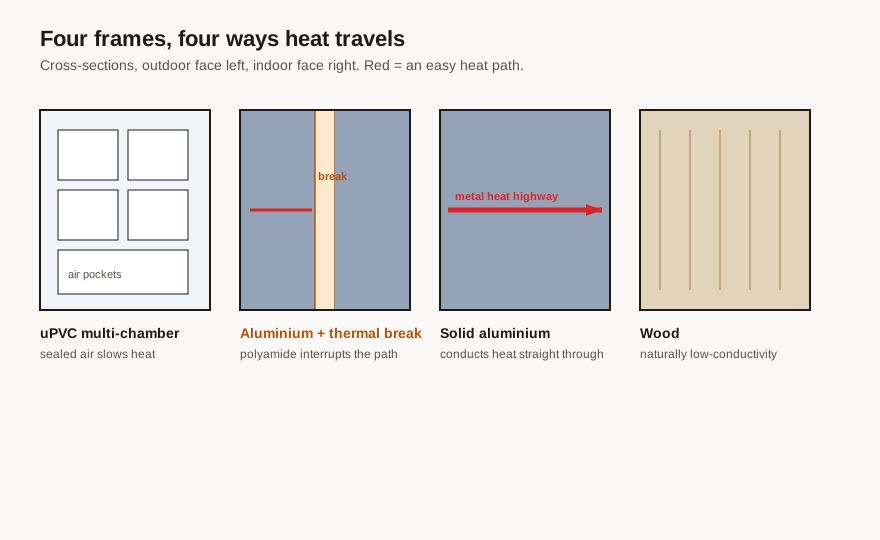
- uPVC is a multi-chamber hollow plastic profile. Each internal chamber traps a pocket of still air, so the profile insulates itself. Steel reinforcement inside large spans does not break the insulation. This is the best all-round thermal value in India.
- Aluminium is a metal highway for heat. Bare aluminium conducts so well that a solid-profile aluminium window can dump more heat through the frame than through the glass — and sweat with condensation. The fix is a thermal break: a strip of low-conductivity polyamide (a tough nylon) sandwiched between the inner and outer aluminium profiles. It physically interrupts the metal path so heat cannot flow straight across. Aluminium WITHOUT a thermal break should not be specified for an air-conditioned or cold-climate room.
- Wood is naturally low-conductivity — the traditional Indian frame insulates well on its own, though it needs the maintenance covered in our materials guides.
- Composite / fibreglass (pultruded FRP) is strong and stable with low conductivity and needs no separate thermal break — premium but excellent.
A thermal break is simply a deliberate non-conductive gap built INTO a metal frame. No break, no insulation — the glass barely matters.
| Frame | Insulation behaviour | Watch-out |
|---|---|---|
| uPVC (multi-chamber) | Self-insulating air pockets | Choose heat-stabilised grade for 45 C+ |
| Aluminium, NO thermal break | Poor — metal bridge | Avoid for AC / cold rooms |
| Aluminium, polyamide thermal break | Good | Costs more; insist on it |
| Wood (teak/deodar) | Naturally low-conductivity | Needs sealing every 2 to 4 years |
| Composite / fibreglass | Excellent, stable | Priciest, fewer Indian fabricators |
Lever 3 — Air sealing, the cheapest and most ignored fix
A premium DGU in a thermally-broken frame still fails if outdoor air whistles through gaps around the sash. Air leakage is the cheapest insulation fix and the most neglected. A well-sealed mid-range window routinely outperforms a poorly-sealed premium one.
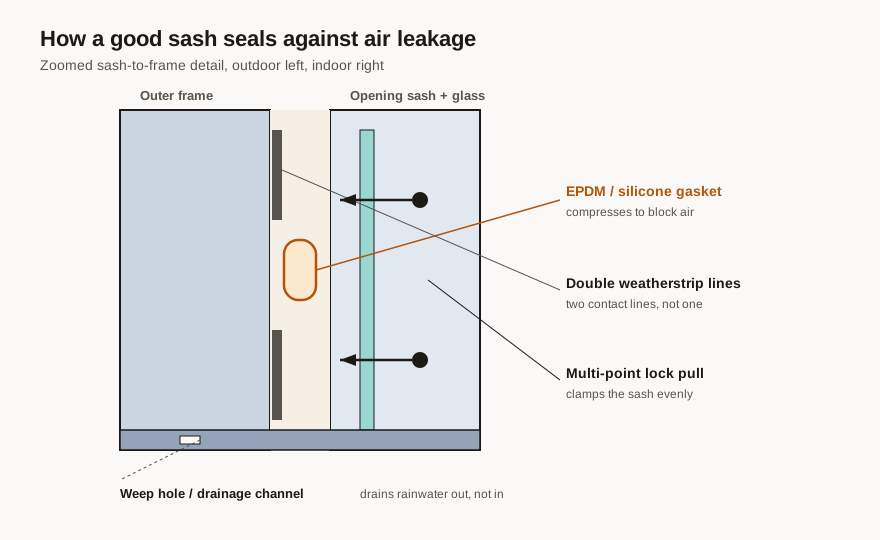
- EPDM or silicone gaskets run continuously around the sash. EPDM stays flexible for years and resists UV and ozone better than cheap PVC gaskets that harden and crack.
- Double or triple weatherstripping. Two or three independent seal lines mean one gap does not breach the whole window. Multi-point locks pull the sash tight onto these seals.
- Drainage and weep holes. Sealing must not trap water. Properly placed weep channels drain the frame so monsoon water escapes outward rather than sitting against the seal — sealing and drainage work together.
- The NFRC reports this as Air Leakage (AL, cfm/ft2) — lower is tighter. Ask the fabricator for it, along with installation gap-filling (PU foam plus sealant, not just mortar).
The honest hot-India verdict
Insulation is necessary but not sufficient here. The Eco-Niwas Samhita 2018 residential envelope code caps RETV at 15 W/m2 and sets a minimum VLT by window-to-wall ratio — and it leans on the whole envelope, not on a heroic glass U-value. For most Indian homes the right spend order is:
1. Low-SHGC glass + external shading — stop the sun before it loads the room.
2. Airtight seals — the cheapest win, almost free to specify.
3. A sensible DGU U-value (around 1.6 to 2.7) — good insulation, not passive-house extremes.
Chase a sub-1.0 U-value only in the cold hills. Everywhere else, insulation earns its keep as one of three levers — not the headline. For the system-level picture of how frame, glass, seals, shading and rating combine, start at the pillar: energy-efficient windows explained.
Related guides
- Energy-efficient windows explained — the pillar that ties frame, glass, seals and shading together.
- Single vs double glazing — how many panes; this guide is the insulation mechanism behind them.
- Triple-glazed windows — when a second cavity is worth it (and when it is overkill).
- Thermal performance of windows — the U-value, SHGC, VLT and LSG metrics in depth.
References
- Eco-Niwas Samhita 2018 (BEE / ECBC): https://ecbc.in/econiwas.html
- Low-E glass and energy efficiency (Guardian Glass): https://www.guardianglass.com/eu/en/our-glass/glass-types/low-e-glass
- Low-E glass rating: U-factor, SHGC, VT explained: https://www.mannleecw.com/what-is-low-e-glass-rating/
- Glass and window solutions for homes (Saint-Gobain India): https://in.saint-gobain-glass.com/knowledge-center/glass-and-windows
- System aluminium windows for Indian monsoons (Alcoi): https://alcoi.in/system-aluminium-windows-indian-monsoons/
Export this guide
Related Guides — Deep-dive reading
Energy Efficient Windows Explained: The Whole-System Guide for Indian Homes
Treat the window as an energy device — frame, glass, seals, shading, install and rating — and learn why low SHGC and shading beat chasing a cold-climate U-value in hot India.
Windows & GlazingTriple Glazed Windows Explained (India): Is It Overkill for Our Climate?
Three panes, two gaps, the best U-value going — but in hot India the real win is Low-E and low SHGC, not a third sheet of glass. An honest deep-dive.
Windows & GlazingEnergy-Efficient Facades in India: How the Building Skin Cuts Your Cooling, Heating & Lighting Bills
How a building facade drives cooling, heating and lighting energy in India, the three levers of solar-heat-gain control, insulation and daylighting, U-value, SHGC, VLT and WWR in plain terms, ECBC and Eco-Niwas expectations, and real Indian green buildings.
Building FacadesRelated Tools — Try Free
Window Material Comparison Tool
Compare uPVC, aluminium, wood, steel and composite windows on cost, life, upkeep and insulation.
CompareCross-Ventilation Analyzer
Estimate airflow and air changes per hour (ACH) from room size, window areas, layout, and local wind — with NBC 2016 Part 8 compliance check.
Ventilation CalculatorBrise-Soleil Visualizer
Interactive horizontal-louvre cut-off angle calculator — sun altitude, louvre depth, and spacing inputs with a live shadow preview. Computes θ = arctan(spacing/depth) for façade shading, ECBC envelope compliance, hospital daylight design, and tropical sun-control detailing.
Sun Shading Tool