
Sustainable Plumbing in India: A Whole-Home Water and Energy Strategy
The connector guide to green plumbing for Indian homes — how low-flow fixtures, efficient design, rainwater harvesting, greywater reuse, solar and heat-pump hot water, smarter pumping, leak prevention and durable materials fit together to cut both your water and energy footprint.
Sustainable plumbing is not one gadget you buy. It is a strategy — a handful of decisions that together decide how much water and how much energy your home quietly consumes for its entire life. Get the strategy right and a normal three-bedroom Indian home can halve its water bill and shave a big chunk off its electricity bill without anyone feeling deprived.
This is the section pillar for green plumbing inside the Studio Matrx Plumbing Knowledge Hub. It is deliberately a connector: it explains the whole picture — every lever you can pull — and then routes you to the specific guide or hub that does the deep work. Read this first to see how the pieces fit, then follow the links to build each piece properly.
Sustainable plumbing has two footprints, not one. Every litre of water you save also saves the energy used to pump, heat and treat it. The best moves shrink both at once.
The two footprints: water and energy
A home's plumbing spends resources in two currencies. Understanding both is the whole game.
- The water footprint is the volume you draw from the municipal main, the borewell or the tanker, plus everything you send down the drain. In much of urban India this is the binding constraint — cities ration supply, borewells drop year on year, and tanker water is expensive.
- The energy footprint is the electricity and gas your plumbing burns: pumps lifting water to the overhead tank, geysers heating it, and treatment systems purifying it. Water heating alone is often the single largest electricity load in an Indian household after air-conditioning.
The two are linked. Hot water you waste is heated water wasted — energy down the drain, literally. A leaking overhead tank makes the pump run longer, burning power to spill water on the terrace. This is why the smartest interventions attack both footprints together, and why a scatter of unconnected "eco" purchases rarely adds up to much.
The seven levers — and where each is covered in depth
There are seven practical levers a homeowner can pull. Each one already has a dedicated guide or hub in this Knowledge Hub; this pillar's job is to show you which lever matters for your situation and where to go next. The table below is your map.
| Sustainability lever | What to do | Where to learn more |
|---|---|---|
| Use less water at the tap | Fit low-flow taps, aerators, dual-flush cisterns and efficient showers; design short, well-sized runs | Water-efficient plumbing and the Bathrooms hub for fixtures |
| Harvest rainwater | Capture rooftop rain into storage or recharge pits to offset municipal and borewell demand | Rainwater harvesting guide |
| Reuse greywater and treated sewage | Route bath and wash water — or STP-treated output — to flushing and gardening | Greywater recycling and STP hub |
| Heat water efficiently | Replace resistance geysers with solar or heat-pump water heating | Solar water heaters and heat-pump water heaters |
| Pump smarter | Right-size pumps, avoid oversizing, use level controllers and efficient motors | Water-efficient plumbing |
| Stop leaks and monitor use | Catch silent leaks early; add smart meters, flow sensors and shut-off valves | Smart plumbing systems |
| Treat only what you must | Match treatment to the actual water test; avoid wasteful over-treatment | Water treatment guide |
Notice that no single lever is the answer. A solar geyser on a house that leaks half its supply is a half-measure; low-flow taps upstream of an oversized, always-on pump save less than they should. Sustainability is what happens when the levers reinforce each other.
Cut demand first: efficient fixtures and design
The cheapest litre is the one you never draw. Before harvesting or reusing anything, reduce what the house asks for in the first place. Aerated taps mix air into the stream so a lower flow still feels full; dual-flush cisterns give you a short flush for liquids; efficient showerheads cap flow without a weak spray. Good design matters just as much as hardware — short hot-water runs waste less water waiting for warmth, and correctly sized pipes avoid both pressure loss and dead legs.
- Fit aerators on every wash-basin and kitchen tap — the single cheapest water saving in any home.
- Choose dual-flush cisterns and BIS-rated water-efficient sanitaryware; the Bathrooms hub covers fixture selection in depth.
- Keep the geyser close to the bathroom, or insulate the hot line, so you draw less cold water waiting for hot.
- Get the full demand-side playbook in the water-efficient plumbing guide.
Bring in new water: rainwater and reuse
Once demand is trimmed, replace some of what remains with water you would otherwise let run away.
- Rainwater harvesting captures rooftop runoff into a storage tank for direct use, or into a recharge pit to lift your borewell. In many Indian cities it is mandatory above a plot size, and it is the highest-impact single move a monsoon-fed home can make. See the rainwater harvesting guide.
- Greywater and treated-sewage reuse takes the water from baths, wash-basins and washing machines — or the treated output of a building STP — and puts it to work flushing toilets and watering the garden, where drinking-quality water is wasteful. This is a specialist area with its own treatment and safety rules; the greywater recycling and STP hub is the place to plan it.
A useful mental model: potable in, non-potable reused. Fresh treated water is precious — spend it on drinking, cooking and bathing, and cover flushing and gardening with harvested rain or recycled greywater wherever the plumbing allows.
Spend less energy: efficient hot water and pumping
Water heating is where a green home saves the most electricity, so it deserves real attention.
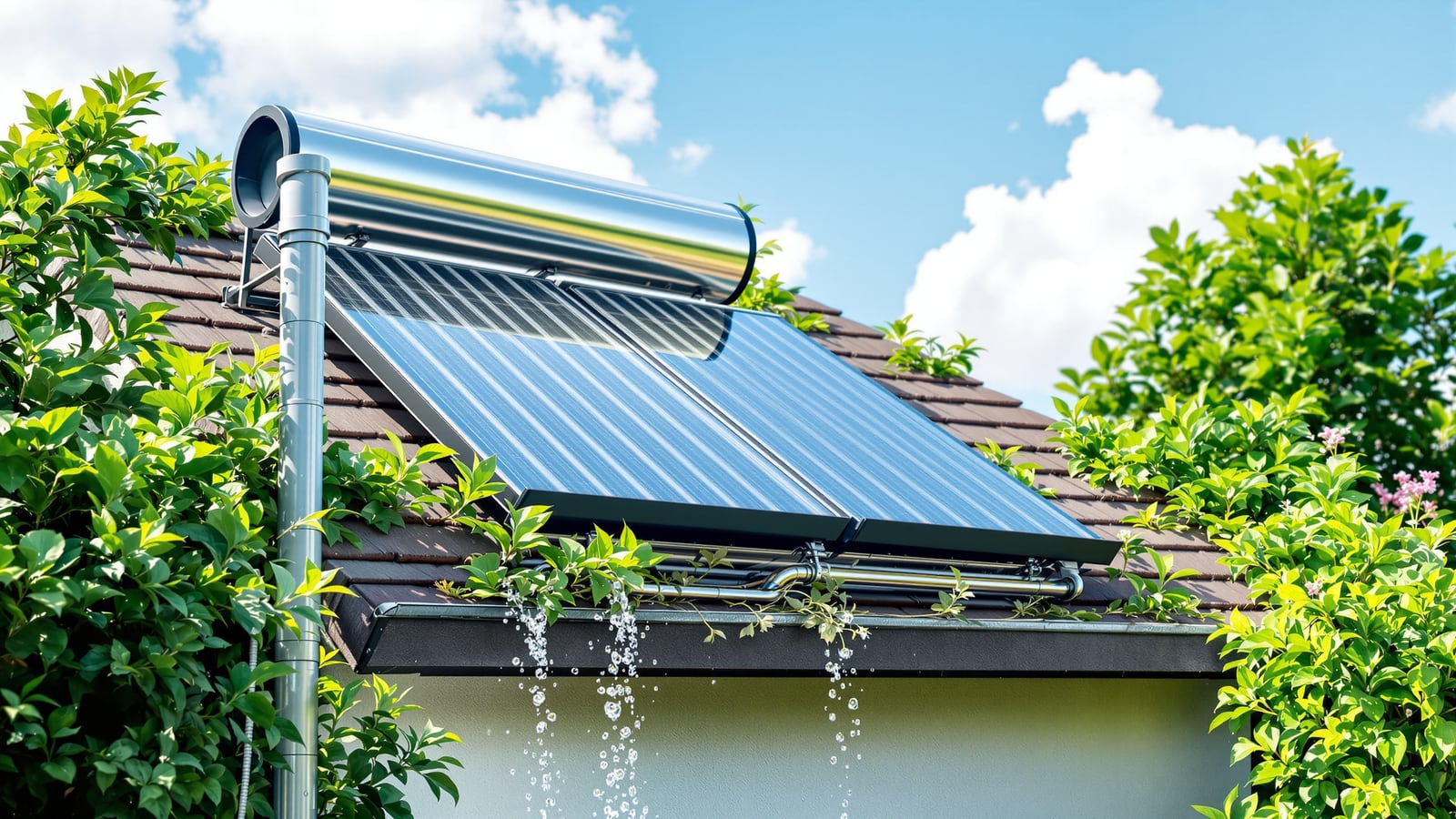
- A solar water heater uses the sun to pre-heat or fully heat your water, cutting geyser electricity dramatically in most of sunny India. See the solar water heaters guide.
- A heat-pump water heater moves heat rather than generating it, using roughly a third of the electricity of a resistance geyser — the best fit where solar is impractical or hot water is needed round the clock. See the heat-pump water heaters guide.
- Pumping is the other big electrical load. An oversized pump short-cycles and wastes power; the right-sized pump with a level controller runs only when needed. The water-efficient plumbing guide covers sizing and controls.
| Hot-water choice | Electricity use vs resistance geyser | Best fit |
|---|---|---|
| Resistance (electric) geyser | Baseline (highest) | Backup or very low usage |
| Solar water heater | Large saving on sunny days | Independent homes, terraces with good sun |
| Heat-pump water heater | Roughly one-third the energy | Flats, cloudy regions, all-day hot water |
Read the running-cost and payback numbers as indicative and get local quotes — for exact figures follow the linked guides, and never let sticker price alone decide, because the cheap geyser is usually the expensive choice over ten years.
Close the loop: stop leaks and see your water
You cannot manage what you cannot see. A silent overhead-tank overflow or a weeping concealed joint can waste thousands of litres a month while the pump burns power to replace them. This is where smart monitoring earns its keep — the genuinely net-new lever that older green homes never had.
- Fit a smart water meter or flow sensor to spot abnormal usage and get leak alerts on your phone.
- Add an automatic tank level controller so the pump stops the moment the tank is full — no overflow, no wasted power.
- Consider a motorised shut-off valve that can close the supply automatically when a leak is detected, protecting the house while you are away.
- The full picture — sensors, controllers, app-connected devices and when each is worth it — is in the smart plumbing systems guide.
Build it to last: durable materials
The greenest pipe is the one you never have to dig up and replace. Material choice is a quiet sustainability decision: corrosion-resistant, long-lived pipework and quality fittings avoid the water, energy and demolition waste of premature failure. A leak-prone system is an un-green system, however efficient its fixtures. Choose materials rated for your water and pressure, joint them properly, and insulate hot lines to keep heat where it belongs. The pipe-material and jointing guides in this hub cover the specifics; the sustainability point is simply that durability is conservation — every year a system lasts is a year of embodied resources not spent replacing it.
Where green homes fit the ratings
If you are chasing a formal green-building rating, plumbing is a major scoring area. Indian frameworks such as IGBC, GRIHA and the ECBC for larger buildings all reward water-efficient fixtures, rainwater harvesting, wastewater reuse and efficient hot water — the very levers above. You do not need a certificate to benefit, but if you are building new, designing to these principles from the start is far cheaper than retrofitting later, and it lines your home up for a rating if you ever want one.
The short version
Sustainable plumbing is a sequence, not a shopping list. Reduce demand with efficient fixtures and good design. Supply the gap with harvested rain and reused greywater. Heat and pump with solar, heat-pumps and right-sized motors instead of brute-force electricity. Monitor everything so leaks never run silent. And build durable, because a system that lasts is the deepest saving of all. Start with whichever lever fits your home best, follow the linked guide to do it properly, and let each move make the next one count for more.
References
- Bureau of Indian Standards — plumbing and sanitaryware specifications, including water-efficiency ratings for fixtures.
- IGBC (Indian Green Building Council) and GRIHA — green-building rating frameworks that credit water conservation, rainwater harvesting, wastewater reuse and efficient hot water.
- Bureau of Energy Efficiency — guidance on water-heating and pumping energy efficiency for Indian homes.
Export this guide
Related Guides — Deep-dive reading
Smart Water Monitoring India: Track Bathroom Usage, Catch a Running Toilet, Cut the Bill (2026)
A clamp-on or inline flow sensor turns your water line into a dashboard — litres per shower, a toilet that never stops filling, a hidden drip you would never hear. This is the honest India-first guide to smart water monitoring: how sensors meter each fixture, the apps and alerts, tie-ins with auto shut-off valves, and the real rupee cost against the bill it saves.
BathroomsWater Efficient Plumbing for Indian Homes: Cut Water Use with Low-Flow Fixtures, PRVs & Leak Fixes
Practical, low-cost ways to use far less water without living with less comfort — aerators and low-flow taps, dual-flush WCs, efficient showerheads, pressure control to stop over-flow, chasing down leaks and drips, hot-water recirculation, and short pipe runs. A homeowner's playbook for a leaner, cheaper water bill.
PlumbingSmart Plumbing System for Indian Homes: Meters, Leak Sensors & Auto Shutoff
What a smart plumbing system actually adds in an Indian home — smart water meters and sub-metering, IoT leak sensors, automatic shutoff valves, tank and pump controllers, water-quality sensors and app monitoring — plus the honest question of when each is worth the money on an intermittent, tank-fed supply.
PlumbingRelated Tools — Try Free
Rainwater Tank Sizer
How big should your rainwater tank be? Computes annual harvest, recommended tank capacity in litres, water-bill savings, and payback — for 10 Indian cities.
RWH CalculatorShower Water Flow Calculator
Shower water use per shower, day and month by head type, plus a pressure-adequacy check for your tank height or pump and low-flow savings.
Bathroom CalculatorGreen Building Water Score Calculator
Score a building's water efficiency 0–100 from treated-water reuse, rainwater harvesting, low-flow fixtures and metering, with an IGBC/GRIHA-style rating and your biggest improvement lever.
Sustainability