
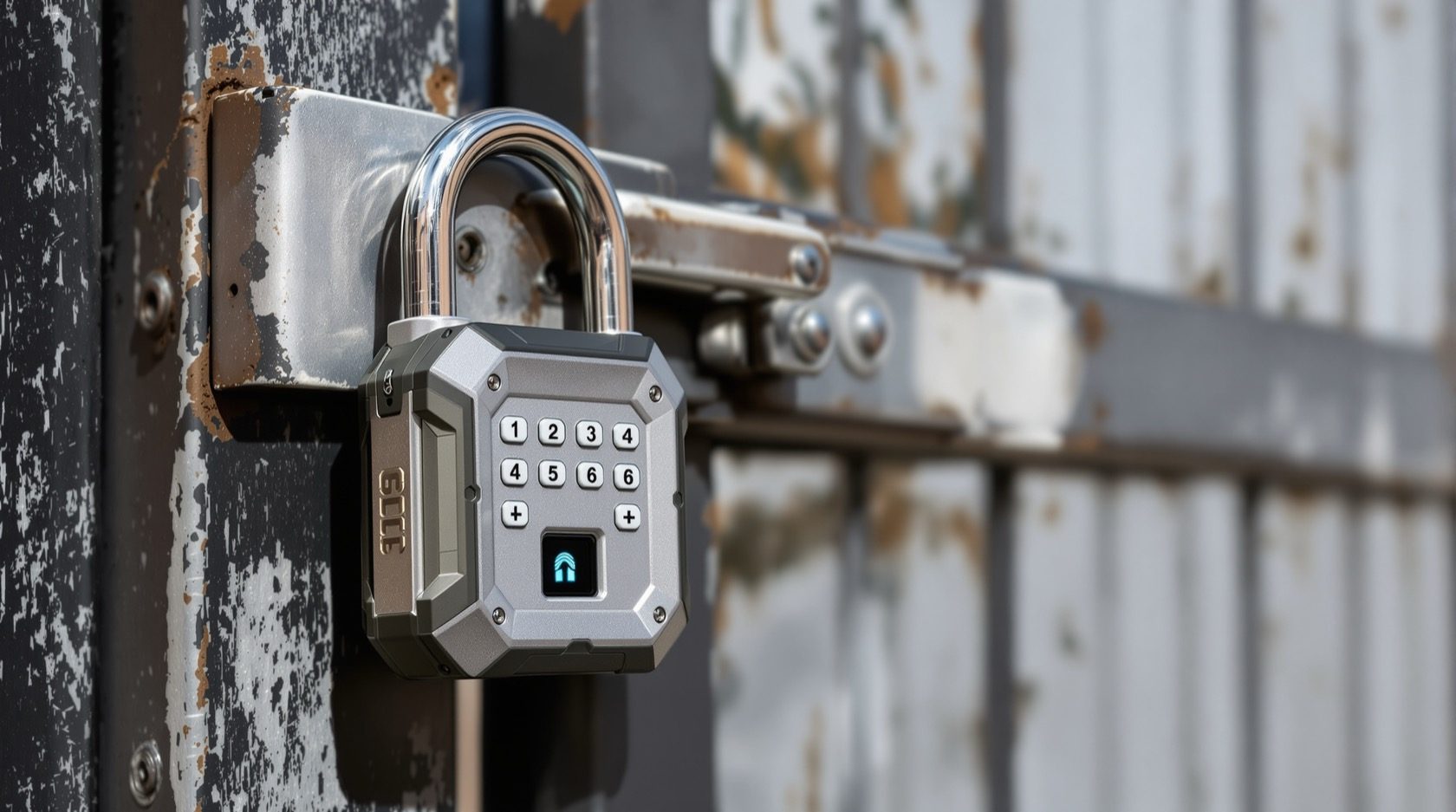
Smart Padlocks in India (2026): A Buyer's Guide to Fingerprint, Bluetooth and Code Padlocks
Portable, battery-powered padlocks that open by fingerprint, phone or code, and how to choose one that survives an Indian gate, godown or monsoon, with a dead-battery backup you actually understand.
A padlock is the most portable lock there is: it clips onto a hasp, a chain, a shutter loop or a zip and secures whatever a fixed lock cannot. Smart padlocks take that same familiar shape and swap the keyhole for a fingerprint sensor, a Bluetooth app or a keypad, so there is no key to lose, copy or hand around. For a compound gate, a shed, a godown, a shop shutter, a gym locker or a bicycle, that convenience is genuinely useful.
It is also where the trade-offs are sharpest. A padlock lives outdoors more often than any other lock in your home, so weather is its biggest enemy. And because most smart padlocks have no mechanical key at all, the day the battery dies is the day you find out whether you understood the backup. This guide is about the padlock as a form — where it fits in Indian life, and what to check before you buy. It sits under the Studio Matrx smart locks and access control hub and the complete guide to smart locks in India; for how each unlock method behaves, follow the credential guides linked below rather than re-reading them here.
Scope and safety. A padlock is usually not a fire-escape door, but people must still be able to get out of anything you lock. Never padlock a gate, shutter or room that is someone's only way out, and never chain an escape route. Because most smart padlocks carry no keyhole, always confirm the dead-battery backup (a USB-C jump, a spare credential, a recovery code) before you buy. Fitting a hasp, a shutter lock or wiring anything to a mains-powered gate is a licensed carpenter's or electrician's job — see the electrical hub. This is educational guidance, not legal advice.
What a smart padlock actually is
Strip away the electronics and a smart padlock is the same two-part object every Indian home already owns: a shackle (the U-shaped loop that passes through a hasp or chain) and a body (the block it locks into). The difference is what releases the shackle. Instead of a key turning a mechanism, a small motor or latch inside the body springs the shackle open when the lock recognises you — by a fingerprint on a sensor, a tap in a phone app, or a code on a keypad. A rechargeable battery, usually topped up through a USB-C port, powers all of it.
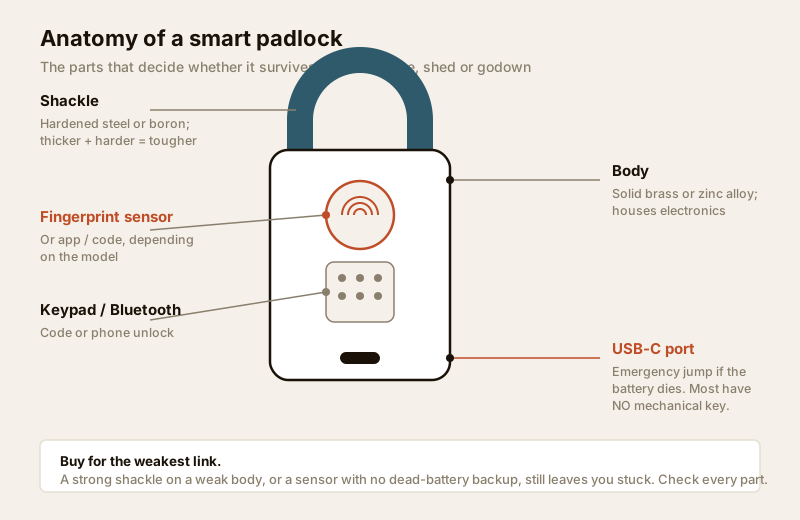
The unlock method is a matter of preference and is covered in depth elsewhere: a fingerprint padlock is fastest for one or two regular users; a Bluetooth padlock unlocks from a phone and can log and share access; a code/PIN padlock needs no enrolment and suits a rotating crew. Many models combine two or three. Pick the method for who uses the lock and how often — then judge the hardware, which is what the rest of this guide is about, because a padlock's job is to resist weather and force, and no unlock method helps with that.
Where a smart padlock earns its place in India
The padlock's whole appeal is that it goes where a fixed lock cannot. In an Indian home or small business, that is a long list:
| Where | Typical use | What to prioritise |
|---|---|---|
| Compound and side gates | Keyless entry for family, no key under a pot | High IP rating, thick shackle, weatherproof |
| Terrace and utility doors | Roof access, water-tank rooms, meter cupboards | Weatherproof; never lock an escape route |
| Sheds and outhouses | Garden tools, generator, pump room | IP65+, rust-resistant shackle |
| Godowns and stores | Stock rooms, warehouses, back stores | Robust body, shared app access, audit log |
| Shop shutters | Roll-down shutter loops after hours | Weatherproof, shrouded shackle, sharable codes |
| Gym, hostel and PG lockers | Personal storage, no key to carry | Small, light; indoor rating is enough |
| Luggage and travel | Suitcases, backpacks, trolley bags | TSA-friendly size, fingerprint or code |
| Cycles and two-wheelers | Bike frame, helmet, delivery boxes | Weatherproof, portable, chain-compatible |
Two themes run through that table. First, most of these spots are outdoors or semi-outdoors, so weather resistance is not optional. Second, several are shared — a godown crew, a shop's staff, a hostel warden — where the ability to grant and revoke access from a phone (a Bluetooth or app padlock) beats cutting duplicate keys. If you are weighing a padlock against a fixed smart gate lock or a smart cabinet lock, the smart lock selector walks you through the choice by use.
What to check before buying: the hardware
The electronics are the easy part to be dazzled by. The parts that actually keep your things safe are the boring metal ones, and they are where cheap padlocks cut corners. Think of these as buyer cautions — what to inspect and ask about, so you match the lock to the risk.
The shackle
The shackle is the loop that gets attacked first, so it matters most:
- Material and hardness. Look for hardened steel or boron alloy, not plain plated steel. Hardened metal resists cutting and sawing far better; the maker's datasheet or listing should say so plainly. If it does not mention shackle material, treat that as a red flag.
- Thickness. A thicker shackle is harder to force. For a gate, shutter or godown, look for a substantial diameter; a slim shackle is fine for a locker or luggage but under-gunned outdoors.
- Shrouded shoulders. On tougher outdoor models the body rises to shroud the shackle, leaving less of it exposed. That is a sign the maker took forced entry seriously.
- Rust resistance. In Indian weather a shackle that is not stainless or well-treated will seize and streak within a monsoon. Stainless or coated hardened steel lasts.
The body
The body houses the electronics and holds the shackle, so it must be solid, not hollow:
- Prefer a solid brass or zinc-alloy body over thin pressed metal. Brass also handles humidity well, which matters outdoors.
- Check that the shackle seats into a proper locking mechanism, not a flimsy plastic catch.
- A heavier lock is usually a more solid one; suspiciously light can mean hollow.
Weatherproofing: the make-or-break for outdoor use
This is the single check most buyers skip and most regret. An outdoor padlock in India faces driving monsoon rain, months of dust, forty-plus-degree heat and high humidity, all of which kill a poorly sealed lock — water seeps into the electronics, dust jams the shackle, and the fingerprint sensor stops reading a wet or grimy finger.
- Look for an IP rating, and understand it. IP65 or higher means dust-tight and protected against water jets — the sensible floor for a gate, shed or shutter. IP54 or unrated is for indoor or sheltered use only (a locker, a cupboard, luggage).
- A weather cover or flap over the sensor and USB-C port keeps rain and dust out and is worth having outdoors.
- Rust-resistant metals throughout, as above.
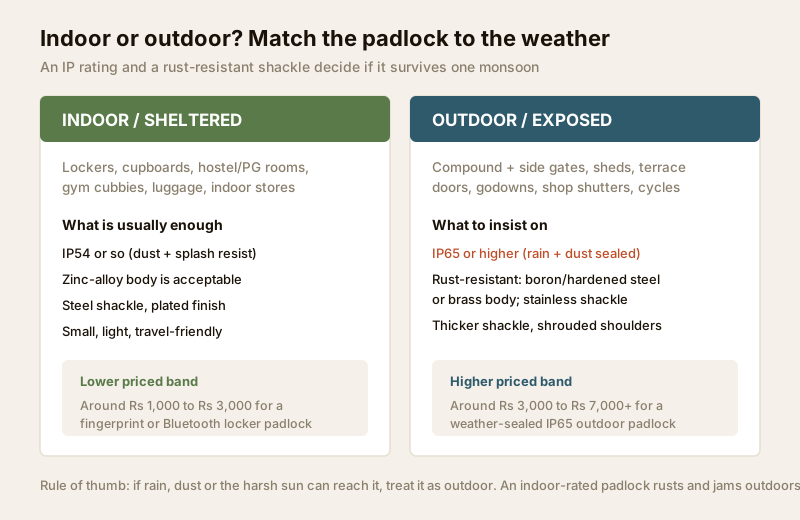
Getting this wrong is expensive twice: you pay for the lock, then pay again when it rusts shut in six months. When in doubt, treat a spot as outdoor. The smart lock cost calculator helps you set a realistic budget once you know indoor versus outdoor, since the weather-sealed models sit in a higher band.
Power: battery life, warnings, and the dead-battery problem
Because a smart padlock has no keyhole on most models, power is not a convenience feature — it is the whole question of whether you can get in. Three things to check, in order of importance:
1. Dead-battery access. This is the one that traps people. Most modern smart padlocks have no mechanical key, so the emergency route is a USB-C jump: you touch a power bank to the USB-C port, the lock wakes for a few seconds, and you unlock as normal with your finger or code. Before you buy, confirm the padlock has this — or some equally reliable backup — and then actually keep a small power bank and cable to hand. A padlock with no key and no jump port is a lock-out waiting to happen.
2. Low-battery warning. A good padlock warns you for days or weeks before it dies — a red LED, a beep on each unlock, or a low-battery alert in the app. That warning is what turns a dead battery from a crisis into a five-minute recharge. Check the model gives one, and never ignore it.
3. Battery life and charging. Most rechargeable smart padlocks last several months to a year on a charge depending on how often you open them. USB-C charging is now standard and convenient. For a lock you open many times a day (a busy godown or shop), expect to recharge more often and plan for it.
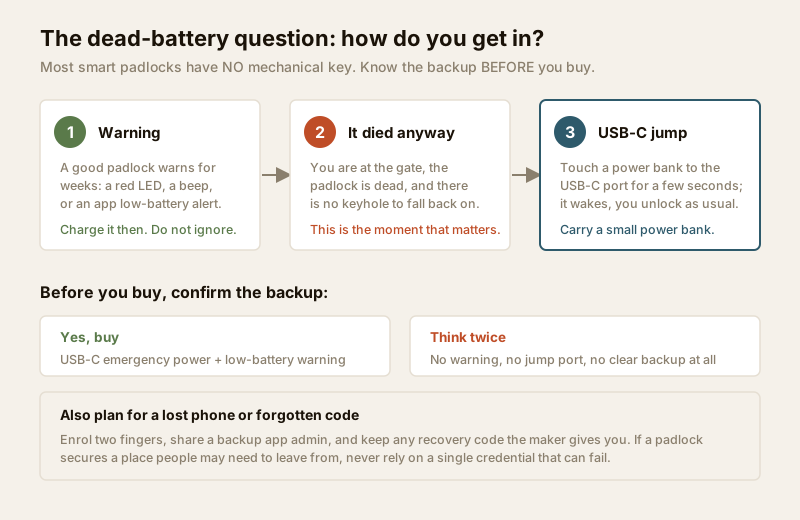
The same "what if my main way in fails" thinking applies to the credential, not just the battery. Enrol two fingers rather than one on a fingerprint model, keep a backup code or a second admin on a Bluetooth model, and store any recovery code the maker supplies somewhere safe. A single credential that can fail — one enrolled finger, one phone — is a single point of lock-out.
Sharing access: fingers, codes and app users
One quiet advantage of a smart padlock over a keyed one is that you can grant and take back access without cutting metal. How you do it depends on the unlock method:
| Method | How you share | How you revoke |
|---|---|---|
| Fingerprint | Enrol each person's finger on the lock | Delete that fingerprint from the lock |
| Code / PIN | Give the code; some allow temporary codes | Change the code (and re-share to others) |
| Bluetooth / app | Invite a user in the app, often time-limited | Remove the user; access ends immediately |
For a shared godown, shop or hostel, an app-controlled padlock is usually the most manageable: you see who has access, grant a temporary window to a delivery or a contractor, and revoke a departed worker in seconds — no lock change, no re-keying.
That convenience carries a duty. Fingerprints and access logs are sensitive personal data under the Digital Personal Data Protection Act, 2023. If a padlock stores fingerprints or keeps an unlock log — especially at a workplace like a godown or shop — collect only what you need, tell people it is happening, keep it on the device rather than an unnecessary cloud where you can, and delete a departed worker's fingerprint or app access promptly. Treat it the way you would treat handing back a key. This is educational, not legal advice.
The one rule that overrides everything: never trap anyone
A padlock is usually not a fire-egress door in the code sense — but the life-safety principle still holds absolutely. Never padlock a gate, shutter, terrace door or room that is someone's only way out. A padlocked exit has cost lives in fires at Indian shops, godowns and hostels, and no security benefit is worth it.
- If a shutter or gate is an exit route when people are inside, it must be openable from the inside without the lock — do not padlock it shut while occupied.
- A terrace or utility door that is also a fire-escape path must never be padlocked in a way that traps people on the roof.
- For any door people genuinely pass through to enter and leave a home, a padlock is the wrong tool entirely — you want a fixed smart gate lock or a mortise/deadbolt smart lock with a mechanical key override, not a padlock. The complete guide to smart locks covers those door locks.
Use a padlock for things and stores, not for the doors people escape through.
When to bring in a professional. Choosing and charging a padlock is a do-it-yourself job. But fitting a strong hasp or staple so the padlock actually holds (a good lock on a weak hasp is pointless), fabricating a shutter locking loop, or wiring anything to a mains-powered gate motor is skilled work — use a licensed carpenter, fabricator or electrician, and see the electrical hub. For anything that doubles as an exit, get a professional to confirm it can never trap someone inside, and follow the smart locks and access control hub for the fixed-door options.
Key takeaways
- Smart padlocks go where fixed locks cannot — gates, sheds, godowns, shutters, lockers, luggage and cycles — opening by fingerprint, phone or code with no key to lose or copy.
- Buy for the hardware, not the gadget. A hardened or boron-steel shackle of good thickness and a solid brass or zinc body decide how much force the lock resists; a cheap body undoes a clever sensor.
- Weatherproofing makes or breaks outdoor use. In Indian monsoon, dust and heat, insist on IP65 or higher and rust-resistant metal for anything exposed; IP54 or unrated is indoor-only.
- Understand the dead-battery backup before you buy. Most smart padlocks have no mechanical key — confirm a USB-C emergency jump plus a clear low-battery warning, keep a power bank handy, and enrol a second finger or backup code.
- Never padlock an exit. Padlocks are for things and stores, never for a gate, shutter or door that is someone's only way out; footage and fingerprints are sensitive data under the DPDP Act, 2023, so minimise and delete departed users.
References
- Digital Personal Data Protection Act, 2023 — fingerprints and access logs are sensitive personal data; collect only what is needed, prefer on-device storage, and delete a departed user's credentials promptly, especially at workplaces like godowns and shops.
- Manufacturer specifications — verify the shackle material and diameter, body metal, IP weatherproofing rating, battery life and the dead-battery/USB-C emergency access on the maker's own datasheet before ordering.
- National Building Code of India (SP 7), Bureau of Indian Standards and local fire bye-laws for any exit, escape route or mains-powered gate; confirm the current edition via the BIS catalogue: https://www.services.bis.gov.in/
This is an educational overview, not legal advice. Fitting hasps, shutter hardware and any mains-connected gate wiring are qualified professional tasks — engage licensed tradespeople, never padlock an escape route, and verify any standard's current status via the BIS catalogue before relying on it.
Export this guide
Related Guides — Deep-dive reading
Access Control Maintenance in India (2026): Readers, Locks and Fail-Safe Egress
How to keep a card, keypad, fingerprint or face access-control system reading reliably and locking securely — and, above everything, how to test that its doors still release on a fire alarm and on power loss, so an access-controlled door never becomes a life-safety trap.
SecuritySmart Locks in India (2026): The Complete Guide to How They Work, How to Choose and How to Fit One Safely
The umbrella guide to smart locks for Indian homes: what a smart lock actually is, the credential that opens it, the lock body it lives in, and the safety, power and privacy calls every buyer must make.
SecuritySmart-Lock Power Battery Planning in India (2026): How the Lock Is Fed and What Happens When Power Runs Out
The install-side power decision for a smart lock: battery versus wired mains, sizing a UPS so a power cut cannot lock people out, and always planning the dead-battery get-in-anyway path with a mechanical key.
SecurityRelated Tools — Try Free
Window Hardware Cost Calculator
Estimate window hardware cost — hinges, handles, locks, rollers and multipoint gears.
Window CalculatorAccess-Control Battery-Backup Calculator
Size the standby battery so an access system keeps running through a power cut, with an egress life-safety note.
Battery BackupDoor Lock Selector
Answer a few questions and get the right lock type — mortise, multipoint, deadbolt, privacy or smart — for any door.
Door Tool