
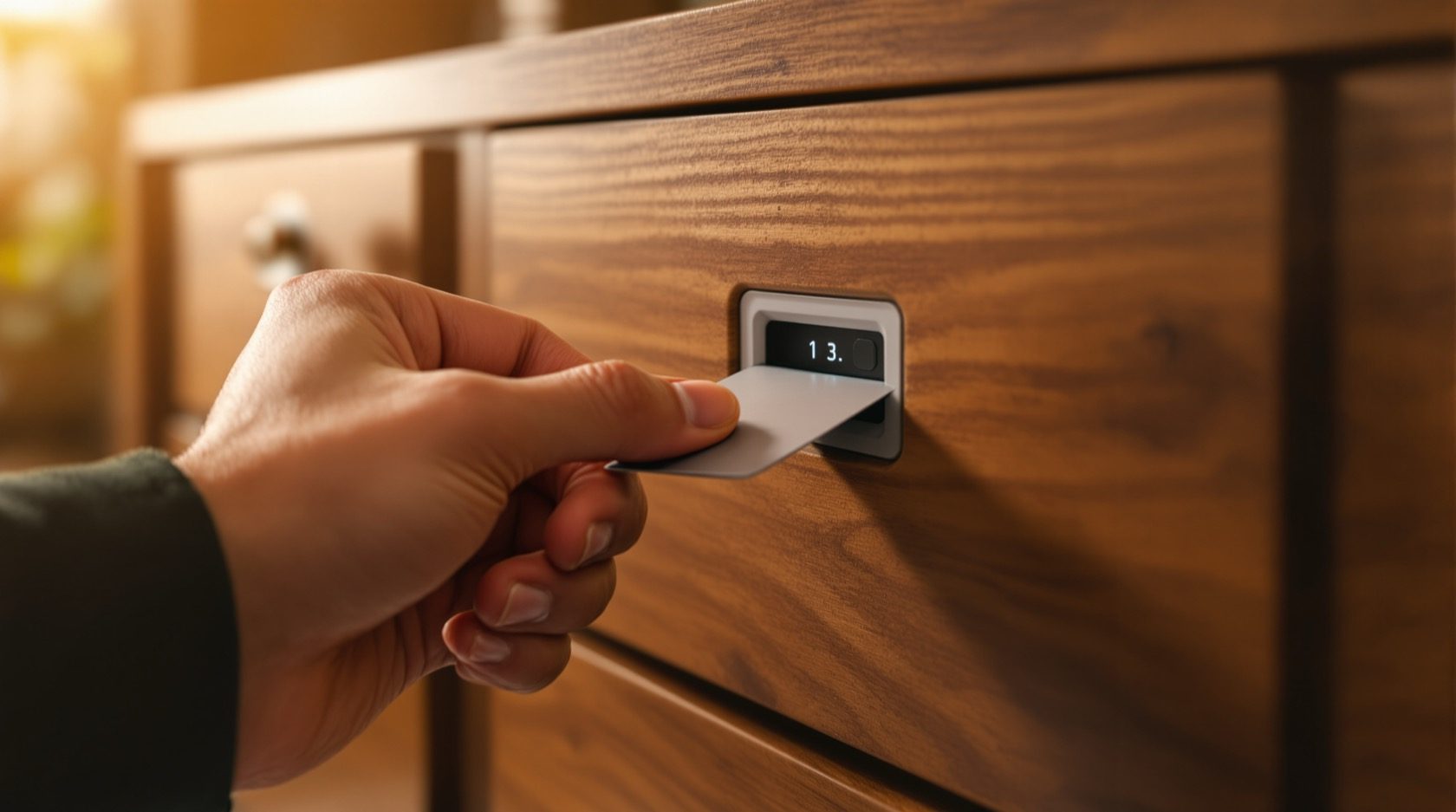
Smart Cabinet Locks in India (2026): Concealed Drawer, Wardrobe and Locker Locks
Small hidden electronic locks that secure drawers, cabinets, wardrobes and lockers by card, fingerprint, code or app - what they suit, how they fit invisibly, and the dead-battery question that decides which one to buy.
Not every lock guards a doorway. Some of the most useful electronic locks in an Indian home are the ones nobody sees: a small concealed unit tucked behind a drawer face that keeps documents, jewellery and cash out of casual reach, or a child-safe latch on the cabinet where the medicines and cleaning chemicals live. Smart cabinet locks are these little hidden electronic locks - for drawers, cabinets, wardrobes and lockers - opened by an RFID card, a fingerprint, a code or a phone app instead of a metal key.
They belong to a different family from the main-door smart locks in the Studio Matrx smart locks and access control library. A cabinet lock does not carry the life-safety weight of a door people escape through, so the buying decision is simpler - but there is one question that separates a good one from a regret, and it is the one most buyers forget to ask.
Scope & safety. This guide helps you choose and plan a concealed cabinet lock; a licensed carpenter or installer should do the actual fitting into your furniture. A cabinet or drawer is usually NOT a fire-egress door, so there is no fire-alarm interlock to worry about - but people must still be able to get things OUT in an emergency, so a child-safety cabinet must stay instantly openable by an adult, and you must NEVER put a lock on any chest, box or appliance a child could climb inside and be trapped. Any access log is personal data under the Digital Personal Data Protection Act, 2023. This is educational guidance, not legal advice.
What a smart cabinet lock actually is
Strip away the credential and every cabinet lock is the same four parts, shown below: a reader on the outside face (card pad, fingerprint sensor, keypad, or nothing visible at all), a lock body hidden behind the panel, a cam or bolt that catches the cabinet frame, and a small battery - also concealed. The whole point is that the furniture looks untouched. A drawer that hides a lock is a drawer a casual intruder does not think to attack.
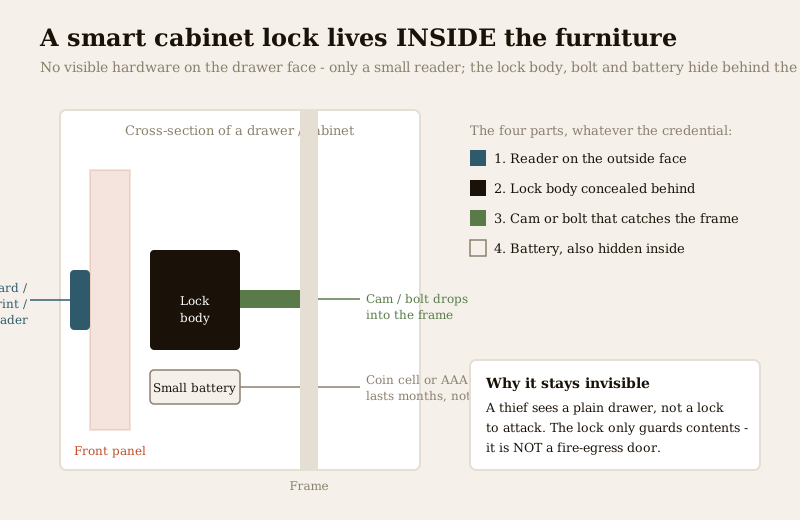
Because the lock only guards contents and not a doorway, its job is deterrence and privacy more than fortress security. A determined thief with time and tools is a different threat - that is what a bolted safe is for. What a smart cabinet lock does brilliantly is stop opportunists, curious houseguests, small children and casual snooping, and give you a tidy record of who opened a shared drawer.
The credential is a separate choice
How you open it - card, finger, code or phone - is the same decision you would make for any smart lock, so this guide will not re-explain each one. In short:
- RFID card or tag (RFID cabinet locks) - fast, cheap, no keyhole to see, and easy to hand a card to a family member or revoke a departed tenant. The workhorse for wardrobes, PG and office lockers.
- Fingerprint (fingerprint locks) - nothing to carry or lose, good for a personal valuables drawer, but the sensor is a small visible feature and enrols each user.
- PIN / code (PIN code locks) - a keypad you can share verbally, handy for a shared office cabinet.
- App / Bluetooth (app-controlled locks) - open from your phone and, on some, see the log remotely; convenient but battery- and phone-dependent.
Pick the credential by who needs access and how often; pick the body type by how the furniture is built - which is the part worth spending real thought on.
The three form factors
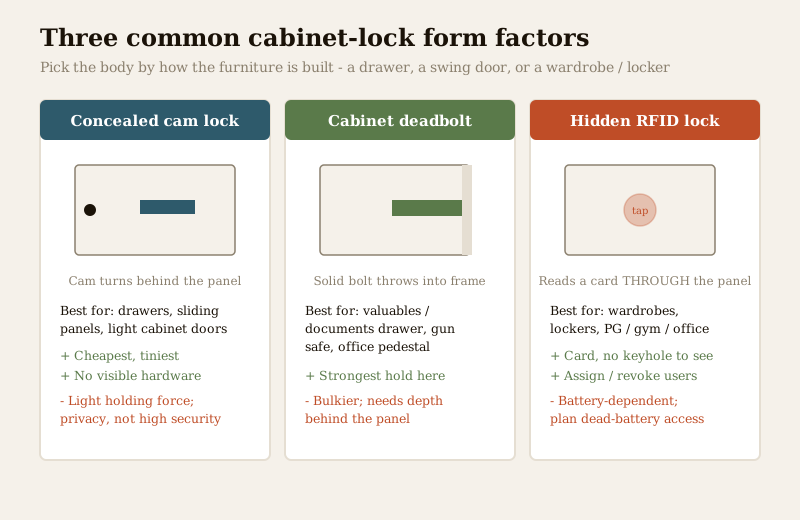
Cabinet locks come in three broad body shapes, and the right one depends entirely on your furniture, not your credential. The comparison below lays them side by side.
| Form factor | How it holds | Best for | Watch out for |
|---|---|---|---|
| Concealed cam / drawer lock | A small cam turns behind the panel to catch a keeper | Drawers, sliding panels, light cabinet doors | Light holding force - privacy, not high security |
| Cabinet deadbolt | A solid bolt throws into the frame | Valuables and documents drawer, office pedestal, gun cabinet | Bulkier; needs depth behind the panel |
| Hidden RFID lock | Reads a card through the panel, then releases a latch | Wardrobes, lockers, PG / gym / office | Battery-dependent; plan dead-battery access |
The hidden RFID lock is the one people find most magical: the reader sits behind the wood, so you tap a card against a blank cabinet face and it opens with no visible hardware at all. It is superb for a bank of hostel or gym lockers and for office pedestals where you want to assign and revoke cards centrally. The trade-off is that it lives entirely on its battery, which makes the dead-battery plan non-negotiable.
Where these earn their place in an Indian home or office
A few uses come up again and again:
- A home valuables and documents drawer - property papers, passports, a little cash and jewellery in one lockable drawer, opened by fingerprint or a card only the adults carry. A cabinet deadbolt suits this best.
- Medicine and cleaning-chemical cabinets - the single most valuable child-safety use. A locked cabinet keeps medicines, phenyl, bleach and sharp tools away from small children. (More on doing this safely below.)
- Office pedestals and filing - each desk pedestal or filing cabinet on its own card, with a log of who opened what. Pairs naturally with an office access-control card system so one card does the door and the drawer.
- PG, hostel and gym lockers - a bank of RFID lockers you can reassign to the next resident by re-issuing a card, no re-keying.
- Retail display cases - glass jewellery or electronics cabinets that staff open by card, leaving a record of each access.
For a broader home picture, cabinet locks slot in under the layered approach in the apartments security guide; they are the last, innermost layer after the door and the main smart lock.
Installing it: hidden inside the furniture
The defining feature of this whole category is that there is no visible hardware - or almost none. The lock body is routed into the back of the panel and the reader (if any) sits flush or hides entirely behind the wood. That has three practical consequences:
1. The furniture must have depth and a fixing point. A cabinet deadbolt needs room behind the panel for the bolt to throw; a flimsy ply drawer may only take a light cam lock. Check the lock's stated panel thickness and clearance against your furniture before buying.
2. It is a carpenter's job, not a five-minute DIY. Routing a recess and aligning the bolt or cam to the frame cleanly is fiddly. A poor fit binds or fails to catch. Have a carpenter or the vendor's fitter do it.
3. Retrofit is usually fine. Most cabinet locks are designed to be added to existing furniture, so you rarely need new cabinets - just the depth and a clean fixing surface.
Any mains-powered or wired variant (rare for cabinets, but some retail and locker banks use them) crosses into wiring that a licensed electrician should handle - see the electrical hub. The vast majority of home and office cabinet locks, though, are simple battery units.
Power and the dead-battery question
This is the question that decides your purchase. A cabinet lock runs on a small battery - a coin cell or a couple of AAAs - and it is hidden inside the furniture, so when it dies you cannot just swap the cell from outside and there is often no ordinary keyhole. How you get in when the battery is flat is the single most important thing to check before you buy. India's power cuts do not directly affect a battery lock, but a battery you forgot about for a year certainly will.
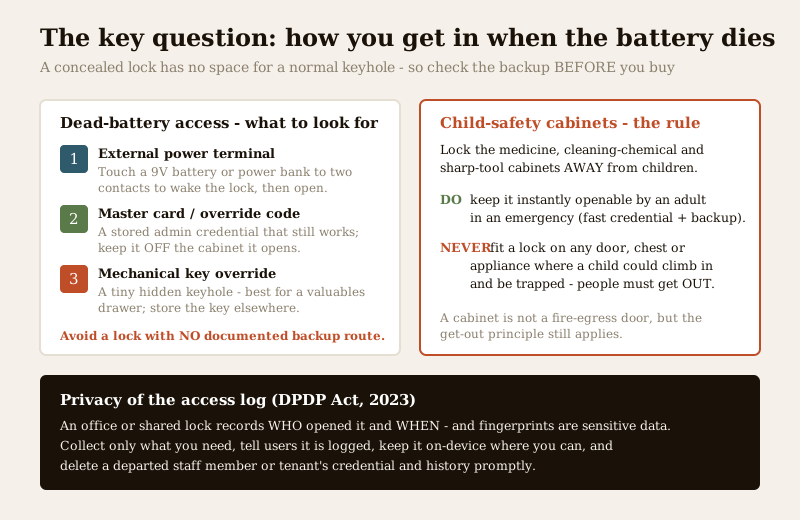
Look for at least one documented backup route:
| Backup route | How it works | Keep in mind |
|---|---|---|
| External power terminal | Touch a 9V battery or power bank to two contacts to wake the lock, then open with your normal credential | Common on RFID and keypad cabinet locks; learn where the contacts are |
| Master card / override code | A stored admin credential that still works to open it | Keep the master card OR the record of the override code well away from the cabinet it opens |
| Mechanical key override | A tiny concealed keyhole releases the lock | Best on a home valuables drawer; store the key somewhere else entirely |
Avoid any cabinet lock whose manual cannot tell you clearly how to open it with a dead battery. Then build a simple habit: many locks chirp or flash a low-battery warning for weeks before dying, so change the cells the moment it warns rather than waiting for silence.
Child safety: the one place the get-out rule bites
Locking the medicine and cleaning-chemical cabinets away from small children is one of the best reasons to fit a cabinet lock at all. But this is exactly where the life-safety principle from the rest of the smart-lock library still applies, even though a cabinet is not a fire-egress door:
- Keep it instantly openable by an adult. In an emergency - a child has swallowed something, someone needs a medicine fast - an adult must be able to open the cabinet in seconds. Choose a quick credential and a reliable backup; do not lock away the very thing you might need urgently behind a lock you cannot open under stress.
- Never lock a child WHERE they could be trapped. Put locks on cabinets, not on any chest, trunk, box, fridge or appliance a child could climb inside. A locked cavity a child can enter is a genuine danger. People - and small people especially - must always be able to get OUT.
- The lock guards the contents, not the room. A child-safety cabinet lock is there to keep dangerous things away from children, never to confine anyone.
Privacy of the log
Any cabinet lock with a card, fingerprint or app can keep a record of who opened it and when. In a home that is trivial; in an office, shop or PG it is sensitive personal data under the Digital Personal Data Protection Act, 2023, and fingerprints especially so. The same discipline you would apply to a door reader applies here:
- Collect only what you need and prefer on-device storage over a cloud log where you can.
- Tell users the drawer or locker is logged - staff and tenants should know their access is recorded.
- Delete a departed person's credential and history promptly - the leaving employee's card, the former tenant's fingerprint, the old locker assignment.
Choosing the right one
Two Studio Matrx tools shortcut the decision. The smart lock selector matches a form factor and credential to your use - a valuables drawer, a locker bank, a child-safety cabinet - and the smart lock cost calculator helps you budget a single lock or a row of lockers. As a rough guide, a basic concealed cam or keypad cabinet lock starts around a thousand-odd rupees; an RFID or fingerprint cabinet lock typically runs a few thousand; a bank of managed office or hostel lockers is priced per unit plus the card system.
When to bring in a professional. Choosing the lock and planning where it goes you can do yourself. Hand the fitting - routing the recess, aligning the bolt, and any wired or mains-powered locker bank - to a carpenter or, for anything electrical, a licensed electrician. For an office or PG deploying many locks with a shared card system, plan the credential and log-retention policy up front with whoever runs your access control, so departing users are removed cleanly. Never fit a lock on anything a child could climb inside.
Key takeaways
- Smart cabinet locks are small concealed electronic locks for drawers, cabinets, wardrobes and lockers - opened by card, fingerprint, code or app, with no visible hardware on the furniture.
- Match the body to the furniture: a light cam lock for drawers and panels, a cabinet deadbolt for a valuables or documents drawer, a hidden RFID lock for wardrobes and locker banks.
- The dead-battery plan is the deciding question - insist on a documented backup (external power terminal, master card or override code, or a mechanical key) and change the cells at the first low-battery warning.
- Child-safety cabinets must stay adult-openable in an emergency, and you must never put a lock where a child could climb in and be trapped - a cabinet is not a fire-egress door, but people must still get OUT.
- Any access log is personal data under the DPDP Act, 2023 - minimise what you collect, tell users, prefer on-device storage, and delete a departed person's credential and history promptly.
References
- Digital Personal Data Protection Act, 2023 - access logs and fingerprints from a shared cabinet or locker are personal (and often sensitive) data; obtain notice/consent, minimise collection, and delete a departed user's records.
- Manufacturer specifications - verify the panel thickness and clearance the lock needs, the battery type and life, and above all the documented dead-battery access method, on the maker's own datasheet before ordering.
- National Building Code of India (SP 7), Bureau of Indian Standards, and local bye-laws for any electrical or life-safety aspect of a wired locker install; verify the current edition via the BIS catalogue: https://www.services.bis.gov.in/
This is an educational overview, not legal advice. Fitting a lock into furniture, and any wired or mains-connected locker install, are qualified professional tasks - engage a carpenter or licensed electrician, and verify any standard's current status via the BIS catalogue before relying on it.
Export this guide
Related Guides — Deep-dive reading
Access Control Maintenance in India (2026): Readers, Locks and Fail-Safe Egress
How to keep a card, keypad, fingerprint or face access-control system reading reliably and locking securely — and, above everything, how to test that its doors still release on a fire alarm and on power loss, so an access-controlled door never becomes a life-safety trap.
SecuritySmart Locks in India (2026): The Complete Guide to How They Work, How to Choose and How to Fit One Safely
The umbrella guide to smart locks for Indian homes: what a smart lock actually is, the credential that opens it, the lock body it lives in, and the safety, power and privacy calls every buyer must make.
SecurityEmergency Access Planning for Indian Homes (2026): A Way In, A Way Out, Always
How to plan every way you and the people who need to can still get in or out when a battery dies, a phone is lost, a resident is locked in, or help must reach someone fast — convenient day-to-day, but never a trap.
SecurityRelated Tools — Try Free
Access-Control Battery-Backup Calculator
Size the standby battery so an access system keeps running through a power cut, with an egress life-safety note.
Battery BackupSmart Lock Cost Calculator
Estimate smart door lock cost by access type, tier and number of doors — and compare it to a mechanical lock.
Door CalculatorAcoustic Privacy (STC) Visualizer
Indian healthcare acoustic visualizer — compare wall assemblies and noise sources, see received SPL after STC attenuation, and check FGI 2018 / IS 1950 / NABH speech-privacy compliance with live dual-canvas waveform.
Acoustic Tool