
Fire NOC Process in India (2026): Getting the Fire No-Objection Certificate
A plain-language guide for homeowners, builders and resident welfare associations to what a Fire NOC is, why buildings need one, and how the clearance from the state fire service generally works, from the design-stage no-objection to the final certificate and periodic renewal, framed as process navigation rather than a rulebook.
A Fire No-Objection Certificate, almost always shortened to Fire NOC, is a written clearance from your state or city fire service saying it has no objection to a building because that building meets the fire and life-safety provisions expected of it. It is not a receipt you buy and it is not a formality you can skip on the larger buildings that need it. It is the fire service confirming, on paper, that the escape routes, the water supply, the alarms and the access for a fire tender are actually in place, so that if fire ever breaks out the building gives people a fair chance to get out and the firefighters a fair chance to get in.
For a homeowner in a small independent house the Fire NOC may never come up at all. It becomes central the moment a building crosses into the sizes and uses that state fire rules cover: apartment blocks above a certain height, commercial premises, institutions, assembly buildings, and many mixed-use structures. For those, the Fire NOC is frequently a gate on other things you actually want, the occupancy or completion certificate, a trade or business licence, and, for a resident welfare association running an existing building, a renewal the fire service expects to see kept current. This guide explains what the certificate is, the general two-stage idea behind it, the process flow you will typically walk through, and, above all, who to ask, because the specifics are set locally and change.
Scope & how to read this. This is practical compliance literacy, not legal advice or authoritative code. Requirements vary by state and city and change over time, always confirm the current position with the Authority Having Jurisdiction (the fire service, municipal body, or a licensed professional) before you act. This guide deliberately gives no fees, no timelines, no validity periods and no form or clause numbers, because those are exactly the details that differ from state to state and are revised without notice. For every one of them, your state fire service portal is the source of truth.
What a Fire NOC actually is, and why it matters
A Fire NOC is the fire service's formal statement that a building has satisfied the fire-safety and life-safety requirements that apply to it. Those requirements are drawn from the National Building Code of India (its current edition is published as SP 7:2026) as adopted and enforced through your state's fire prevention and life-safety Act, the municipal building bye-laws, and the state fire rules. The fire service is the Authority Having Jurisdiction for this, it interprets those provisions for your building, checks that the design and the installed systems meet them, and issues, withholds or renews the certificate accordingly.
Why does it matter beyond the certificate itself? Because so much else hangs off it. In many states the occupancy or completion certificate for a covered building will not issue until the fire service has given its NOC. Several kinds of business and trade licences ask for a current Fire NOC before they are granted or renewed. And for an existing occupied building, a housing society or commercial complex, the fire service expects the NOC to be renewed periodically, which in practice means the fire systems have to be maintained in working order for the life of the building, not just switched on for one inspection. The certificate is really a proxy for a simple question, will this building protect the people inside it in a fire, and the whole process exists to answer that honestly.
This is not legal advice. Whether your specific building needs a Fire NOC at all, and which stage applies, is decided by your state fire rules and the fire officer, not by a general guide. Treat what follows as a map of the usual terrain, then confirm the actual route with the security and fire regulations overview as a starting frame and, decisively, with your local fire service.
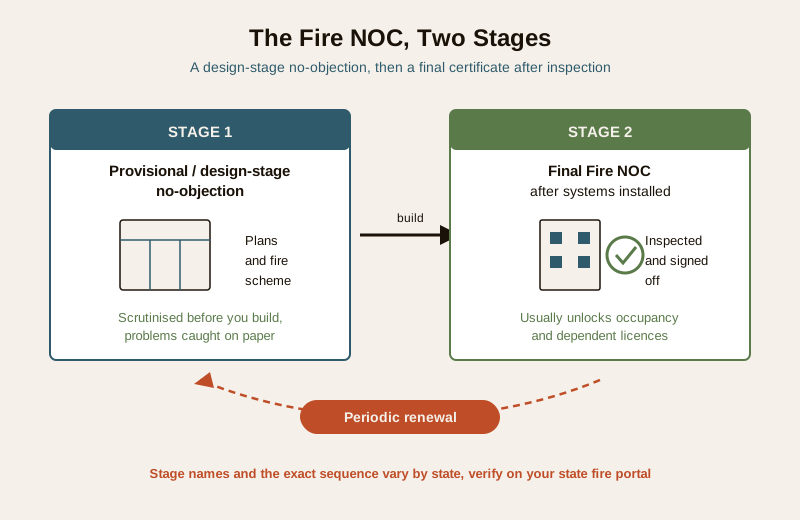
The two-stage idea, provisional then final
Most state systems, though the names differ, work in two broad stages. Understanding the shape helps you plan even before you know your state's exact terminology.
The first stage happens at the design or planning stage, before or during construction. Here the fire service reviews the building's plans and its proposed fire scheme, the layout of escape staircases and exits, the fire-fighting water supply and pumps, the detection and alarm design, the access for a fire tender, and so on, and issues a provisional clearance or design-stage no-objection if the scheme is acceptable. This is sometimes called a provisional NOC, a no-objection for the scheme, or a fire scheme approval. Its purpose is to catch problems on paper, where they are cheap to fix, rather than in concrete, where they are not.
The second stage happens after the systems are actually installed, typically as the building nears completion. The fire service, or its officers, inspect the finished building against the approved scheme, confirm the pumps run, the alarms sound, the exits are clear and the hydrants are charged, and, once satisfied, issue the final Fire NOC. This is the certificate that usually unlocks occupancy and the licences that depend on it.
The stages and their names vary by state. Some states use two clearly separate certificates, some fold the steps differently, and the exact labels, provisional versus final, design-stage versus completion, differ across jurisdictions. Do not assume another city's process is yours. The one reliable move is to read your own state fire service portal and, where covered elsewhere, the NBC fire-safety requirements overview for the code backdrop.
How the process generally flows
Stripped to its essentials, and allowing that every state arranges it slightly differently, the journey usually runs through the same recognisable steps. Many states now run much of this online through a fire service or single-window portal.
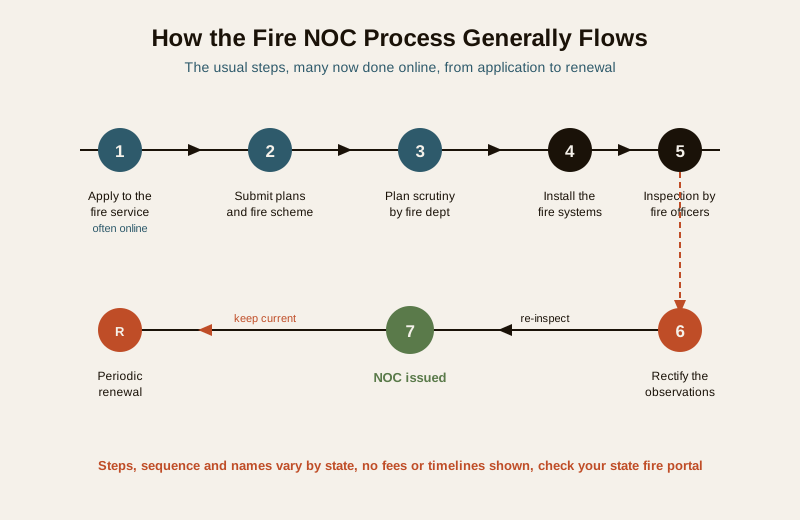
Apply to the fire service. You, or more usually your fire consultant, register and apply, increasingly through the state fire service or municipal online portal. The application identifies the building, its occupancy type and its scale, which is what determines the requirements.
Submit plans and the fire scheme. You lodge the building plans and a fire scheme, the drawings and specifications showing how the building will meet the fire provisions, prepared by a qualified fire consultant.
Plan scrutiny. The fire department reviews the scheme against the applicable provisions and either accepts it, issuing the provisional or design-stage clearance, or returns observations for you to address.
Install the systems. Construction proceeds and the fire systems are installed to the approved scheme, the hydrants and pumps, sprinklers where required, detection and alarm, emergency lighting, signage and the rest.
Inspection. Fire officers inspect the completed building against the approved scheme and test that the systems actually work.
Rectify observations. If the inspection raises shortcomings, you fix them and, usually, present the building for re-inspection. This back-and-forth is normal, not a sign of failure.
NOC issued. Once the building satisfies the inspection, the final Fire NOC is issued, and it can then support your occupancy certificate and any licences that require it.
Periodic renewal. The certificate is not permanent. The fire service expects it to be renewed on a recurring basis for occupied buildings, which keeps the fire systems maintained and tested over the building's life. A related idea, the periodic fire-safety audit or self-certification some states require, is covered in the fire safety inspection guide.
Every fee, timeline and validity here is set locally and changes. This guide names no numbers on purpose. What the application costs, how long scrutiny takes, how long the NOC stays valid before renewal, and which forms to use, are all decided by your state fire rules and revised periodically. Read them off your state fire service portal, or have your consultant confirm the current figures, and never rely on a number quoted in a general article.
What to prepare
Exactly what the fire service wants differs by state, occupancy and building scale, and the definitive checklist is the one on your state portal. That said, the general shape of the documentation is fairly consistent, and knowing it lets you brief your consultant sensibly.
| What you prepare | What it is, in plain terms | Who usually produces it |
|---|---|---|
| Building plans | Approved architectural and structural drawings of the building | Architect, from the sanctioned plans |
| Fire scheme drawings | Layout of exits, staircases, hydrants, pumps, detection, alarm and tender access | Licensed fire consultant or engineer |
| System specifications | Details of the fire-fighting and detection systems proposed or installed | Fire consultant, with the installer |
| System test certificates | Evidence that the installed systems were tested and work | Installer or testing agency, at completion |
| Ownership and occupancy documents | Proof of ownership, land or building use, and related permissions | Owner or developer |
| Application form | The state fire service application, often filed online | Owner or consultant on the portal |
Treat this as an orientation, not a definitive list. The fire service may ask for more, and it is entitled to. Preparing early matters because gaps in paperwork, not gaps in the building, are what most often stall an application.
Who does what, the roles that matter
Three roles carry a Fire NOC between them, and a homeowner or RWA office-bearer navigating this for the first time should be clear on each.
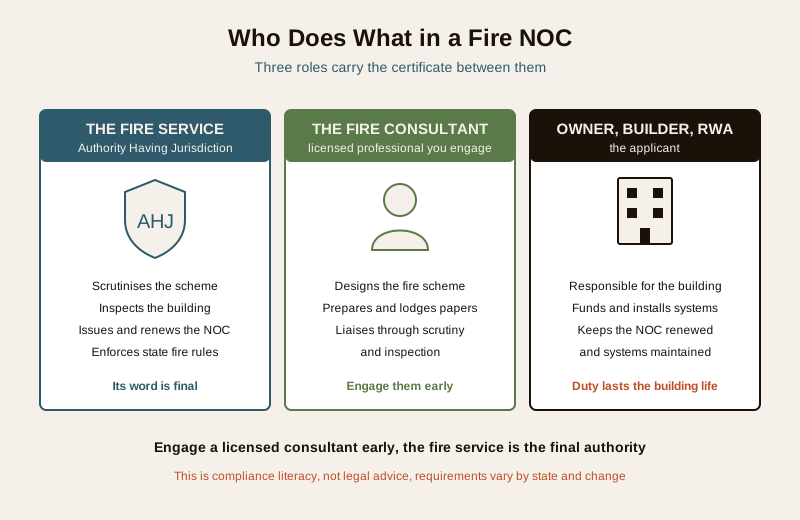
The fire service is the Authority Having Jurisdiction. The state or city fire service, through its fire officers, is the body that scrutinises the scheme, inspects the building, issues or withholds the NOC, and enforces the state fire prevention and life-safety Act. Its word, not a general guide's, is final on your building. When there is any doubt about what applies, the fire service is who you ask.
Engage a licensed fire consultant or agency. For any building that needs a Fire NOC, you should engage a licensed fire consultant or fire-fighting agency early, ideally before the design is frozen. They design the fire scheme, prepare and lodge the documentation, liaise with the fire department through scrutiny and inspection, and know your state's current process, forms and expectations in a way no article can substitute for. Choosing a consultant with genuine standing before your local fire service is one of the more consequential decisions in the whole exercise.
The owner, builder or RWA is the applicant. Whether you are a developer building for sale, an owner building for yourself, or a resident welfare association running an existing block, you are the party responsible for the building meeting the requirements, for funding and installing the systems, and, crucially, for keeping the NOC renewed and the systems maintained long after the first certificate issues.
How this connects to the wider fire-safety picture
The Fire NOC is the approval, but it sits on top of the actual fire safety of the building. The escape provisions, the reachable-by-tender access, the detection and the suppression are all things the NOC checks and things the building genuinely needs.
- For tall residential and commercial buildings, the demands rise sharply, the high-rise fire safety requirements guide explains why height changes everything about escape and suppression.
- The building has to let a fire tender reach and work around it, which the fire tender access guide covers, and which is a common inspection sticking point.
- For where the NOC sits within the broader compliance map, the security and fire regulations hub is the place to zoom out.
None of these replace the fire officer's judgement on your building. They help you understand what the scheme is trying to achieve, so you brief your consultant well and read the inspection observations with understanding rather than alarm.
Key takeaways
- A Fire NOC is the fire service's clearance that a building meets the fire and life-safety provisions expected of it, and it commonly gates occupancy, completion and licences, and must be renewed for occupied buildings.
- The usual shape is two stages, a design-stage or provisional no-objection on the plans and fire scheme, then a final NOC after the systems are installed and inspected, but the stages and their names vary by state.
- The process generally flows from applying to the fire service, often online, through plan scrutiny, installation, inspection, rectifying observations, issue of the NOC, and periodic renewal.
- Prepare early, building plans, a fire scheme by a licensed consultant, system test certificates and ownership documents, but treat any general list as orientation and take the definitive one from your state portal.
- The fire service is the Authority Having Jurisdiction and its word is final, engage a licensed fire consultant early, and remember that fees, timelines, validity and forms are set locally and change, so verify them on your state fire service portal.
References
- National Building Code of India (SP 7) and your state fire prevention and life-safety Act, the code and the state law that together define the fire and life-safety provisions a building must meet for its Fire NOC. Verify the current NBC edition via the BIS catalogue and your state Act via the state fire service.
- Your state or city fire service portal, the Authority Having Jurisdiction that scrutinises, inspects, issues and renews the Fire NOC, and the only reliable source for the current application process, forms, fees, timelines and validity in your jurisdiction.
- Municipal corporation or development authority building bye-laws, which in many states link the occupancy or completion certificate to the Fire NOC, confirm the local linkage with your municipal body.
This is an educational guide to navigating the Fire NOC process, not legal advice, an authoritative code, or a substitute for your state fire rules. Whether a building needs a Fire NOC, the exact stages, documents, fees, timelines, validity and forms, and every specific requirement, vary by state and city and change over time. Always confirm the current position with your state or city fire service and engage a licensed fire consultant before you act.
Export this guide
Related Guides — Deep-dive reading
Fire System Approval Process in India (2026): Getting Your Fire Systems Signed Off
The systems side of fire compliance, explained for homeowners and RWAs. How the alarms, sprinklers, hydrants, pumps and emergency lighting in a building get designed to the fire scheme, installed by a competent agency, tested, commissioned, inspected and certified as part of the fire approval.
SecuritySecurity and Fire Regulations Guide for India (2026): Know the Rules and How to Navigate Them
There is no single national rulebook you can read off. This is the map of the whole regulatory landscape for home, housing-society and commercial security and fire systems in India, and a calm way to navigate it: who sets the rules, who approves what, and how to stay on the right side of them.
SecurityFire Safety Inspection in India (2026): The Routine Checks That Catch Failures Early
The cheap, frequent in-house walk-round - are exits clear, extinguishers charged, the alarm panel normal, fire doors closing - that catches the drift toward a neglected building before it can matter, and the log that proves you looked.
SecurityRelated Tools — Try Free
Structural Modification Approval Checklist
41 items across structural assessment, society approval, municipal compliance, and safety.
Approval ChecklistConstruction Approval Checklist — 24-Stage Tracker
Track every approval, permit, and NOC from land title to occupancy certificate across 24 stages.
ApprovalsApartment Video Door System Planner
Enter flats, entrances, floors and guard desk for a first-pass building intercom plan — door stations, indoor monitors, guard station, the right architecture and an indicative cost band.
Building Planner