
Security Product Certification Guide (2026): Reading the Marks That Prove a Device Is Safe and Genuine
How a homeowner tells a genuinely certified, fit-for-purpose security product from an uncertified one, and why it matters most for life-safety and anything electrical or outdoor. A plain-language buyer's guide to the marks and standards you will actually meet in India, and how to verify one is real.
Two boxes on a shop shelf can look identical. Same glossy print, same feature list, same shape of camera or detector inside. One carries a genuine standards mark backed by a licence you can look up; the other carries a sticker that means nothing, printed to look reassuring. The price gap between them is often small, and the safety gap between them can be enormous. Certification is the one thing on the box that is meant to be checked rather than believed, and learning to read it is the single most useful skill a buyer of security equipment can have.
This guide is about the marks and standards you will actually meet when you buy security and safety products in India, what each one honestly tells you, and how to tell a real one from a fake. It is not a legal manual and it does not list standard numbers for you to memorise. It teaches the buyer's habit: know which marks matter for which products, treat certification as a non-negotiable filter where life is at stake, and verify rather than trust the sticker. Get this right and everything else in your buying decision, the features, the price, the warranty, rests on solid ground. Get it wrong and the most attractive product on the shelf can be the most dangerous.
Certification matters least on a decorative gadget and most on the devices your family's safety depends on. A fairy-light controller with a dubious mark is a small risk. A smoke detector, an extinguisher, an electrical device wired into your walls, or a camera left out in the monsoon is a different matter entirely. For those, an uncertified product is not a bargain, it is a hazard wearing the same box.
Scope and how to use this. This is a buyer's guide to reading and verifying certification, not an installation manual, a price list or a catalogue of standard numbers. For what a product should cost, see the cost guides; for the after-sale promise, see the security product warranty guide. Use this alongside the product-specific buying guides: it tells you which marks to demand, and they tell you which product to demand them on. On life-safety products, fire alarms, detectors, extinguishers, and on anything electrical or outdoor, certification is never traded away for a lower price or a nicer look. Specify the right certified product, buy it through an authorised channel, and hand installation to a licensed professional.
What a certification mark actually promises a buyer
Strip away the jargon and a genuine certification mark makes one simple promise: an independent body, not the seller, has tested this product against a published standard and licensed it to carry the mark. That is the whole value. It converts "trust us, it is good" into "a third party checked it against a rule everyone can read."
A mark tells you three things worth having. First, the product was tested to a defined benchmark rather than to whatever the factory felt like. Second, the maker submitted to oversight and can have the licence withdrawn, so there is something to lose by cheating. Third, and this is the part buyers forget, the mark is only as good as its verifiability. A mark you cannot look up is just ink. The genuine ones are all backed by a licence, a registration number or a listing that exists in a database you can check. That checkability is the point, and it is exactly what a fake cannot reproduce.
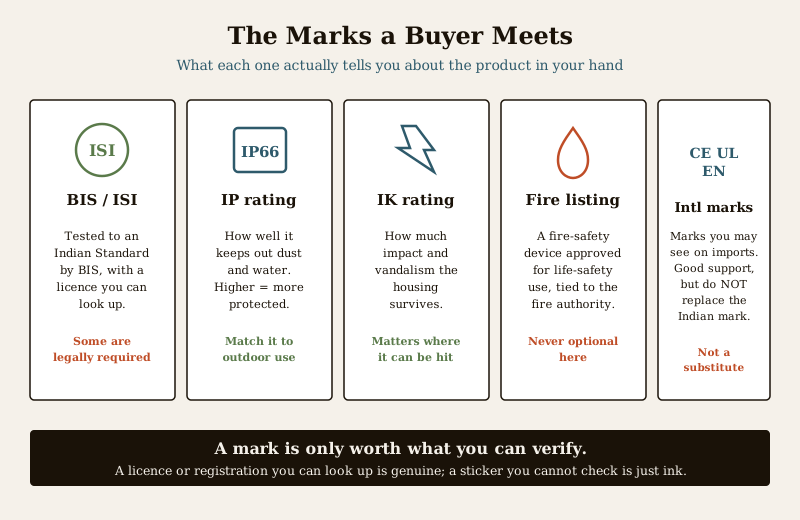
The marks you will actually meet, and what each one tells you
You do not need every standard number. You need to recognise a handful of marks and know what each is telling you about the product in your hand.
BIS and the ISI mark
The Bureau of Indian Standards (BIS) is India's national standards body. When a product is made to an Indian Standard (an "IS" standard) and licensed by BIS, it may carry the ISI mark, the familiar mark showing conformity to a specific Indian Standard. For a buyer, the ISI mark on a relevant product means it was made to a national benchmark and the maker holds a BIS licence to say so. It is the most important mark to recognise in India, and for some product categories it is legally required rather than optional. Do not try to memorise IS numbers; simply recognise the mark and, for anything that matters, confirm the licence exists rather than assuming.
CRS, the registration idea for electronics
Many electronic products in India fall under a mandatory registration idea run by BIS, often called the Compulsory Registration Scheme (CRS). Under it, covered electronic goods must be registered with BIS and carry a registration mark and number before they can be sold. Cameras, power supplies, adaptors and similar electronics are the kind of goods this idea targets. For a buyer, the takeaway is simple: for mainstream electronics, there should be a registration, and a registration number can be checked. An imported electronic gadget with no Indian registration at all is a warning sign, not a sophistication.
IP rating, the dust-and-water number
An IP rating (Ingress Protection) tells you how well a device resists dust and water. It appears as "IP" followed by two digits: the first is protection against solids and dust, the second against water. Higher is more protected. This is the single most useful spec when you buy anything that lives outdoors. An outdoor camera, a gate reader or an exterior sensor exposed to Indian dust and monsoon needs a genuinely weather-rated body; a common expectation for outdoor cameras is a high IP rating such as IP66 or IP67, meaning strong dust and water resistance. An indoor-only device with a low rating, installed outside because it was cheaper, will fog, corrode and die in one wet season. Match the IP rating to where the device will actually sit.
IK rating, the impact-and-vandal number
An IK rating measures resistance to mechanical impact, how hard a knock the housing survives. It also appears as "IK" followed by two digits, higher being tougher. This matters for anything mounted where it could be hit, kicked or deliberately attacked: a camera at a reachable height, a gate keypad, a doorbell unit in a shared entrance. A vandal-resistant camera dome is typically specified to a high IK rating such as IK10. If a device is within arm's reach in a public or semi-public spot, ask about its IK rating; if it is high up and out of reach, it matters less.
Fire product listing and the fire authority
Fire-safety devices, smoke and heat detectors, fire alarm panels, extinguishers, are a category apart. Here certification is not a feature, it is the entire point of the product, and it is tied to the local fire authority. A fire extinguisher should carry the appropriate Indian Standard conformity, and fire alarm and detection equipment is expected to be listed or approved to recognised fire standards. Beyond the mark on the box, the building's fire installation is signed off by the fire officer, and using non-listed devices can invalidate that approval as well as your safety. For anything whose job is to warn you or fight a fire, an uncertified unit is worthless precisely when you need it. See the dedicated how to choose a fire alarm guide and the fire-safety hub for the detail.
CE, UL and EN, the international marks you may see
On imported products you will often see international marks. CE is a European conformity marking, UL is a well-known North American safety listing, and EN standards are European standards you may see quoted in a datasheet. These are real and meaningful in their home markets, and a reputable maker will often hold them. But for a buyer in India, they do not replace an Indian requirement where one exists. A camera with a genuine UL or CE background and a proper Indian registration is a good sign; a product waving only a "CE" logo and nothing Indian, especially where Indian registration is mandatory, is at best incomplete and at worst using a foreign-looking badge as camouflage. Treat international marks as supporting evidence, not as a substitute for the Indian mark the category requires.
Data and cyber assurance, the newest buying criterion
For anything connected, a Wi-Fi camera, a smart lock, a video doorbell, a home hub, certification now has a data dimension. A camera or biometric lock captures personal data, and under the Digital Personal Data Protection Act, 2023 (DPDP), how that data is handled is a real concern, not a technicality. There is no single sticker for this yet, so you look for the practices instead: does the device force you to change a default password, does it encrypt what it stores and sends, does the maker publish security updates, and where does your footage actually go. A connected device that ships with a fixed default password and a cloud you know nothing about is a poor buy however good its picture. This assurance angle sits beside the physical marks as a modern part of buying trust; the how to choose a CCTV camera guide covers the camera-specific side.
Why certification is a non-negotiable filter, not a nice-to-have
For most purchases, certification is one factor among many. For three kinds of product it comes first, before price, before features, before looks, and a missing mark simply removes the product from your list.
Life-safety products. Fire alarms, smoke and heat detectors, and extinguishers exist to work in the worst moment of your life. An uncertified one may look identical and cost less and do nothing when it matters. There is no acceptable saving here. If it is a life-safety device and it is not properly certified and listed, it is off the list, full stop.
Anything electrical. A device wired into your home's power, or one that charges and sits on a wall, carries fire and shock risk if it is badly made. Certification for electrical goods is largely about exactly that risk. An uncertified electrical product is not a cheaper version of the same thing; it is an untested one you are trusting with your wiring.
Anything outdoor. A device exposed to Indian sun, dust and monsoon must be rated for it. Here the relevant certification is the weather and impact rating, and buying an indoor-rated unit for an outdoor spot guarantees early failure and, if it is powered, a hazard.
Never compromise on this. On a life-safety product, an electrical product, or an outdoor product, certification is a pass-or-fail filter, not a tie-breaker. No feature, discount or design justifies buying an uncertified one. A pretty camera that dies in the rain protected nothing; an uncertified detector that stays silent in a fire is worse than none, because you believed you were covered.
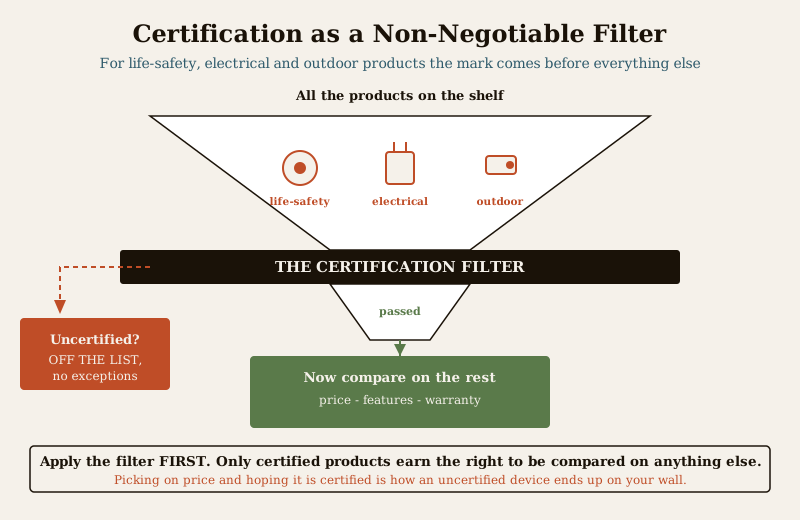
Notice the order in that picture. Certification is the filter you apply first. Only once a product has passed it do you start comparing price, features and warranty among the survivors. Doing it the other way round, picking on price and features and then hoping it is certified, is how an uncertified device ends up on your wall.
How to verify a mark is genuine
A sticker is easy to print. The habit that protects you is treating every important mark as something to confirm, not admire.
- Buy through an authorised channel. The most reliable single safeguard. An authorised dealer or the maker's official store sells genuine, India-certified stock and stands behind it. Grey-market and unauthorised sellers are where uncertified, fake-marked and "export surplus" goods flow in.
- Check that the licence or registration actually exists. Genuine marks come with a licence or registration number, and BIS maintains public ways to check whether a licence or registration is real and current. If a product claims an ISI mark or an electronics registration, the number should resolve to a live record. A mark with no number, or a number that does not check out, is a fake.
- Match the mark to the exact product. A certificate is issued for a specific model. A seller waving a certificate for a different model, or a generic "our factory is certified" letter, has not shown you that this product is certified. Ask for the mark on this model.
- Be suspicious of "export surplus" and unbranded imports. A product described as export surplus, or an unbranded import with foreign-looking marks and no Indian certification, has by definition skipped the Indian requirement. That is not a lucky bargain; it is the absence of the very thing you are trying to verify.
- Beware the too-good discount. A steep discount on an item that is normally certified and controlled is often the tell that it is grey-market or uncertified stock. If the price makes no sense, the certification is usually what was removed to get there.
Red flags and a certification checklist per category
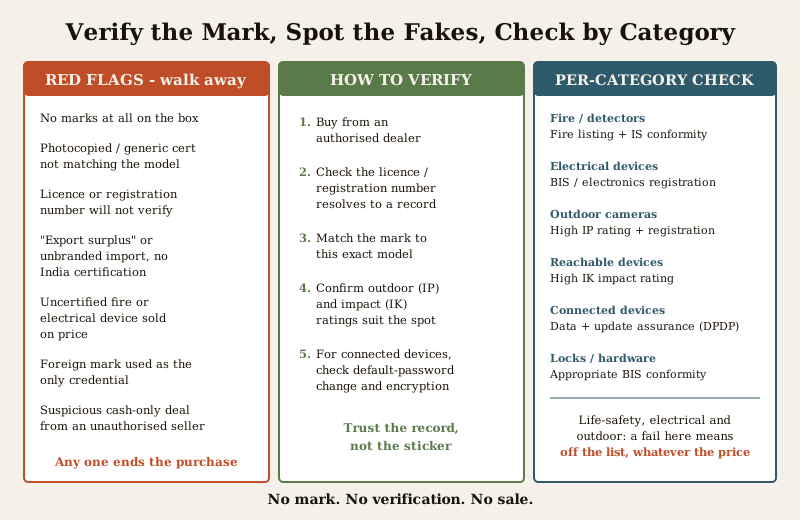
Some warning signs mean walk away, whatever else the product offers:
Red flags that end a purchase. No certification mark at all on a product where one is expected. A photocopied, generic or model-mismatched certificate. A licence or registration number that does not verify. An uncertified fire or electrical device offered as a cheaper equivalent. Foreign marks used as the only credential where Indian certification is mandatory. Any pressure to buy quickly, cash only, from an unauthorised seller.
The right certification differs by what you are buying. Use this as a category-by-category filter:
| Product category | What certification to demand | Why it is non-negotiable here |
|---|---|---|
| Fire alarm, smoke/heat detector | Fire listing/approval to recognised fire standards, plus fire-authority acceptance | Life-safety; a silent detector in a fire is worse than none |
| Fire extinguisher | Appropriate Indian Standard conformity | Life-safety; must discharge correctly when used |
| Electrical devices (wired, charging) | BIS/ISI conformity or electronics registration as applicable | Fire and shock risk from a badly made unit |
| Outdoor camera / gate reader | High IP rating for weather, plus electronics registration | Fails fast and can become a hazard if not weather-rated |
| Reachable camera / keypad / doorbell | Adequate IK impact rating, plus the above | Must survive knocks, weather and tampering |
| Connected device (Wi-Fi cam, smart lock, hub) | Data and update assurance: no fixed default password, encryption, security updates, clear data handling | Captures personal data under DPDP; a soft target if neglected |
| Lock and physical hardware | Appropriate BIS conformity for the hardware type | Security value depends on it actually resisting force |
The buyer's certification checklist
Before you pay for any security or safety product, run the same short check:
- Is this a life-safety, electrical or outdoor product? If yes, certification is a pass-or-fail filter and you apply it first.
- Does it carry the right mark for its category? Fire listing for fire devices, BIS/electronics registration for electricals, a suitable IP rating for outdoor, an IK rating where it can be hit, data assurance where it is connected.
- Can the licence or registration number be verified? A number that resolves to a live record, not just a printed logo.
- Am I buying through an authorised channel? Authorised dealer or official store, not a grey-market seller or an "export surplus" deal.
- Does the certificate match this exact model? Not a different model, not a generic factory letter.
- Do the ratings suit where it will actually sit? Outdoor rating for outdoors, impact rating for reachable spots, indoor units kept indoors.
- For connected devices, does it force a password change and encrypt data? And does the maker publish security updates.
If a product fails any life-safety, electrical or outdoor check, it is off the list regardless of price or features. If it passes, you have earned the right to compare it on everything else.
Key takeaways
- A certification mark is a promise you can check — an independent body tested the product to a published standard and licensed the mark; its whole value is that you can verify it rather than believe it.
- Recognise the handful that matter — BIS/ISI and the IS idea, electronics registration (CRS), IP rating for outdoor, IK rating for impact, fire listing for fire devices, CE/UL/EN as international supporting marks, and data assurance for connected products.
- Certification is a non-negotiable filter for three categories — life-safety, electrical and outdoor products. There, a missing mark removes the product from your list before price or features are even discussed.
- Verify, do not trust the sticker — buy authorised, check the licence or registration number resolves, match the certificate to the exact model, and treat "export surplus" and unbranded imports with no Indian certification as a red flag.
- Match ratings to the real spot — outdoor rating outdoors, impact rating where it can be hit, and connected devices judged on default passwords, encryption and updates under DPDP.
Where to go next
- How to choose a security system — the pillar buying guide this certification lens applies across.
- Security product warranty guide — the after-sale promise that sits beside certification in a trustworthy purchase.
- How to choose a fire alarm and the fire-safety hub — where certification is the entire point of the product.
- How to choose a CCTV camera — outdoor rating, impact rating and the data-assurance angle in practice.
- The buying and choosing sub-hub — the full library of selection guides this certification lens underpins.
References
- Bureau of Indian Standards (BIS) — the national standards body responsible for Indian Standards (IS), the ISI mark, and the registration of covered electronic products; BIS provides public ways to verify whether a licence or registration is genuine and current. Check the specific mark and number for your product via the BIS portal: https://www.services.bis.gov.in/
- Ingress Protection (IP) and Impact (IK) ratings — internationally recognised rating scales describing a device's resistance to dust and water, and to mechanical impact; match the rating to where the device will physically sit before buying.
- National Building Code of India (SP 7) and the local fire authority — govern which fire-safety devices are acceptable in a building and the sign-off of the fire installation; using non-listed devices can invalidate approval as well as safety. Verify the current edition via the BIS catalogue.
- Digital Personal Data Protection Act, 2023 (DPDP) — connected security devices such as cameras and biometric locks capture personal data; default-password change, encryption, security updates and clear data handling are legitimate buying criteria under it.
This is an educational buyer's guide to reading and verifying security-product certification, not legal advice, an installation manual or a catalogue of standard numbers. Certification requirements and standard editions change; always verify a specific mark, licence or registration through the official BIS portal, buy through authorised channels, and engage a licensed professional to install life-safety and electrical equipment.
Export this guide
Related Guides — Deep-dive reading
BIS Standards for Security Equipment in India (2026): The Marks That Matter
What the Bureau of Indian Standards actually certifies, the ISI mark and the CRS registration you will meet on cameras, alarms, cables and extinguishers, and how a homeowner checks a mark is real on the BIS portal, without memorising a single standard number.
SecurityHow to Choose a Fire Alarm in India (2026): A Life-Safety, Code-Governed Buying Guide
A fire alarm is not shopped on price or looks. It is specified to the National Building Code and the local fire officer, built from listed and certified parts, and installed by a licensed contractor. This guide shows a homeowner, manager or architect how to choose and verify one correctly.
SecurityHow to Choose a CCTV Camera (2026): The Homeowner's Decision Guide for India
Cut through the spec-sheet noise and choose the right CCTV camera for each spot around an Indian home. What actually matters — sensor and low-light performance, lens and field of view, form factor, IP and IK ratings, honest smart features — and the marketing claims to ignore.
SecurityRelated Tools — Try Free
Security System Cost Estimator
Estimate the all-in capex with GST, annual running cost and 5-year total cost of ownership of a home or building security system.
Cost EstimatorCCTV IP & IK Rating Decoder
Decode weatherproof (IP) and vandal-proof (IK) ratings and get the minimum you need for each mounting spot in Indian weather.
IP & IK RatingsSmart Lock Finder
Find the right smart lock — access methods, tier and must-haves like a mechanical override — for your door and budget.
Door Tool