
Radiant Cooling: Comfort From Cool Surfaces, Not Cold Blasts
The quiet, efficient alternative to blowing cold air — how radiant cooling chills floors, ceilings or panels with water to absorb heat directly from a room, why it's more comfortable and efficient, its big caveat (condensation in humid India), and where it fits.
Conventional air conditioning cools by blowing cold air — which can feel draughty, noisy and uneven. Radiant cooling does it differently and, many argue, better: it chills a surface (a floor, ceiling or panel) that quietly absorbs heat directly from the room and its occupants, the way a cool cave feels comfortable without any breeze. It's more comfortable, quieter and often more efficient — but it carries one big caveat in humid India: condensation. This guide explains radiant cooling, its appeal, its limits, and where it fits.
It builds on the Sustainable HVAC and Building HVAC Design guides, part of the HVAC Knowledge Hub.
The safety line & scope. Radiant cooling is an engineered hydronic system — design, condensation control, installation and commissioning are specialist MEP/HVAC work, critical in humid climates. This guide helps you understand and specify it, not to design one.
How radiant cooling works
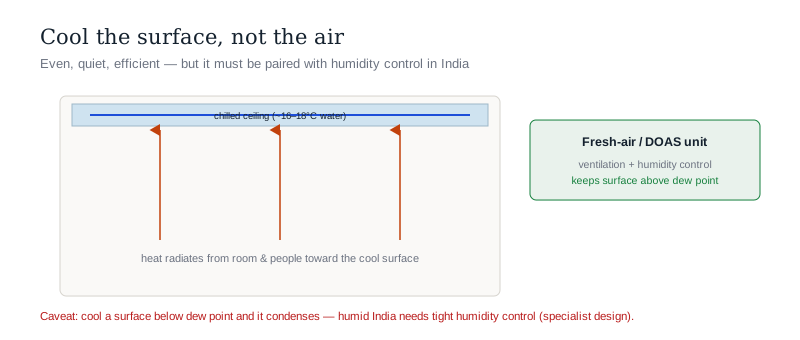
The principle is cooling a surface, not the air:
- Chilled water (warmer than an AC's — typically ~16–18 °C, not near-freezing) circulates through pipes embedded in a floor, ceiling, or in wall/ceiling panels (or chilled beams).
- The surface becomes cool, and heat from the room, furnishings and people radiates and convects toward it — you feel comfortable because the surfaces around you are cool, not because cold air is blown at you.
- It's paired with a fresh-air/ventilation system — radiant cooling handles the sensible heat; a separate system provides fresh air and controls humidity (a key point).
- Higher chilled-water temperature = higher efficiency — the chiller works less hard than for conventional AC.
Why it's appealing
- Comfort — no draughts, no cold blasts, no dry-eye from blown air; even, gentle, whole-body comfort.
- Quiet — no fans roaring in the space (the fans are in the separate fresh-air system).
- Efficiency — the higher water temperature and lack of air-moving energy make it more efficient than all-air systems.
- Clean and unobtrusive — cooling hidden in the floor/ceiling, freeing the space of visible units.
- Pairs with sustainability — its efficiency and higher water temperatures suit green buildings, solar and low-energy design.
The big caveat: condensation in humid India
This is the make-or-break issue, and why radiant cooling needs expert design in India:
- Cool a surface below the dew point and moisture condenses on it — exactly the problem in humid coastal and monsoon conditions.
- So radiant cooling must be paired with tight humidity control — a dedicated outdoor-air/dehumidification system keeps indoor humidity low enough that the surface stays above dew point.
- The chilled-water temperature is kept above the dew point — which is why it runs warmer than an AC coil.
- In humid climates this is essential and non-trivial — get it wrong and you get condensation, damp and mould. This is why radiant cooling is specialist engineering, not a casual choice, in much of India.
In short: radiant cooling is superb, but in humid India it only works when paired with proper humidity control — the two go together.
Where radiant cooling fits
- Premium and green buildings — offices, institutions, high-end homes valuing comfort, quiet and efficiency, with the budget for proper design.
- With a dedicated fresh-air/dehumidification system — always, in India.
- Controlled environments — where humidity can be managed reliably.
- Less suited to — simple homes without humidity control, and casual retrofits; it's an engineered, designed-in system.
- Radiant heating (warm floors) is common in cold regions and hill stations — the same technology run for warmth, without the condensation issue.
The one-line answer
Radiant cooling comforts by chilling a surface — a floor, ceiling or panel through which cool water circulates — so heat radiates from the room and its occupants toward it, giving even, quiet, draught-free comfort without blowing cold air, and doing so more efficiently because it runs warmer chilled water and moves no air. It's paired with a separate fresh-air system for ventilation. Its make-or-break caveat in humid India is condensation: cool a surface below the dew point and moisture forms, so radiant cooling must be paired with tight humidity control (a dedicated dehumidification/fresh-air system keeping the surface above dew point) — which makes it specialist MEP engineering, not a casual choice, in much of the country. Where that's done — premium and green buildings with the design budget — it's one of the most comfortable and efficient ways to cool; without humidity control in a humid climate, it invites damp and mould.
Where to go next
- The strategy: Sustainable HVAC Guide.
- The humidity it depends on: Humidity Control Guide · HRV & ERV Guide.
- The building context: Building HVAC Design Guide.
- Green certification: Green Building Ratings Guide.
References
- ISHRAE — radiant cooling & dedicated outdoor air system (DOAS) design guidance; ASHRAE Standards 55 (comfort) and 90.1 (energy).
- National Building Code of India, SP 7 (Part 8 — Building Services; verify current edition), Bureau of Indian Standards.
- Bureau of Energy Efficiency (BEE) — ECBC (efficient cooling systems): https://beeindia.gov.in/
Radiant cooling is engineered hydronic design requiring expert condensation/humidity control, especially in humid climates; design, installation and commissioning are specialist MEP/HVAC work. Verify any standard's current status via the BIS catalogue before relying on it.
Export this guide
Related Guides — Deep-dive reading
Radiant & Underfloor Heating: Even, Comfortable Warmth from the Floor Up
The quiet, draft-free way to heat — how radiant and underfloor heating warm surfaces and people rather than blowing hot air, hydronic vs electric systems, where they suit Indian hill homes and bathrooms, and the comfort and efficiency case.
HVAC & CoolingFlooring Thermal Comfort in India: How Your Floor Affects Heat, Cold and Energy Bills
The physics of why stone and tile feel cool while wood, cork and carpet feel warm, and how to match the floor to your climate zone so the surface under your feet works with the weather instead of against it.
Flooring & SurfacesHome Heating in India: Where It Matters and What Actually Works
India is cooling-dominant, but heating matters more than it seems — hill stations, North-Indian winters and, above all, hot water in every home. A grounded overview of the options (heat pumps, water heaters, radiant, room heaters, solar) and how to choose without wasting energy.
HVAC & CoolingRelated Tools — Try Free
Cross-Ventilation Analyzer
Estimate airflow and air changes per hour (ACH) from room size, window areas, layout, and local wind — with NBC 2016 Part 8 compliance check.
Ventilation CalculatorGreen Building Water Score Calculator
Score a building's water efficiency 0–100 from treated-water reuse, rainwater harvesting, low-flow fixtures and metering, with an IGBC/GRIHA-style rating and your biggest improvement lever.
SustainabilityRainwater Tank Sizer
How big should your rainwater tank be? Computes annual harvest, recommended tank capacity in litres, water-bill savings, and payback — for 10 Indian cities.
RWH Calculator