

Home Heating in India: Where It Matters and What Actually Works
India is cooling-dominant, but heating matters more than it seems — hill stations, North-Indian winters and, above all, hot water in every home. A grounded overview of the options (heat pumps, water heaters, radiant, room heaters, solar) and how to choose without wasting energy.
Talk about HVAC in India and it's nearly all about cooling — but the "H" stands for heating, and it matters more than the climate map suggests. Hill stations and the northern plains get genuinely cold winters; bathrooms everywhere need hot water; and the single most-used "heating appliance" in an Indian home is the humble water heater. Getting heating right — efficiently, safely, and only where it's actually needed — is a real part of a comfortable home. This guide is the grounded overview of heating in India and how to choose.
It's the anchor of the heating thread in the HVAC Knowledge Hub, and builds on HVAC Fundamentals.
Scope & safety. Choosing heating and using appliances safely is homeowner territory (covered here). Installation of gas, electrical and hydronic heating is qualified professional work — and fuel-burning heaters demand ventilation for safety (see room heaters).
Where heating actually matters in India
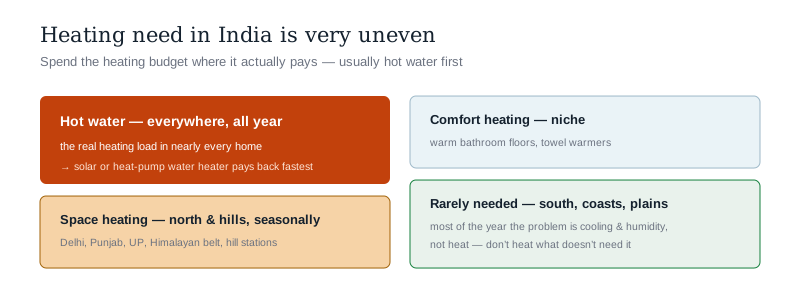
Heating need in India is very uneven — spending on it should follow:
- Hot water — everywhere, all year. Every home heats water for bathing; in winter, demand jumps. This is the heating that actually dominates most Indian energy bills, not space heating.
- Space heating — the north & hills, seasonally. Delhi, Punjab, UP, the Himalayan belt and hill stations get cold enough (single digits °C) to want room or whole-home heating for a few weeks to months.
- Comfort heating — niche. Warm bathroom floors, towel warmers, and takes-the-chill-off heating in otherwise mild climates.
- Rarely needed — the south, coasts & plains most of the year, where the design problem is cooling and humidity, not heat.
The design principle: don't heat what doesn't need it, and spend the heating budget where it pays — usually water heating first.
The heating options, at a glance
The main ways to add heat, roughly from most to least efficient:
- Heat pump — moves heat rather than making it, so it delivers 3×+ the heat per unit of electricity. A reversible AC already is an air-source heat pump. The efficient electric future for both space and water heating (see heat pumps).
- Water heaters (geysers) — storage, instant, gas, solar or heat-pump types for hot water — the everyday heating (see water heaters).
- Solar thermal — free heat from the sun for hot water; India's dominant renewable heating (see solar water heating).
- Radiant / underfloor — warm surfaces for even, comfortable heat, well-suited to hill homes and bathrooms (see radiant & underfloor).
- Room heaters — plug-in fan, halogen, convection or oil-filled heaters for quick, local warmth (see room heaters) — convenient but energy-hungry and, for gas types, a safety matter.
- Resistance electric (plain heating elements) — simple and cheap to buy but the least efficient way to make heat; fine in small doses, costly as a main source.
Efficiency: move heat, don't make it
The single most important heating idea mirrors the efficiency ladder for cooling:
- Making heat (resistance elements — room heaters, plain geysers) turns 1 unit of electricity into ~1 unit of heat.
- Moving heat (a heat pump) turns 1 unit of electricity into 3 or more units of heat, by pumping it from the outdoor air. Same warmth, a third of the running cost.
- Free heat (solar thermal) uses the sun for most of the load, with a backup for cloudy days.
- Reduce first — a well-insulated home (heat transfer) holds warmth, so it needs far less heating (and less cooling) — the same envelope that keeps summer heat out keeps winter warmth in.
For most Indian homes, the efficient package is: an insulated envelope, a solar or heat-pump water heater for the everyday load, and targeted room heating only where and when winter demands it.
Choosing well
- Start with hot water — it's the biggest, most constant heating load; a solar or heat-pump water heater pays back fastest.
- Match space heating to the climate — full systems only where winters justify them; elsewhere, a portable heater for a few weeks.
- Prefer heat pumps to resistance wherever a system is worth installing.
- Mind safety — never run a fuel-burning heater in a sealed room; keep heaters clear of fabrics and children (see room heaters).
The one-line answer
India is cooling-dominant, but heating matters — unevenly. Hot water is the real heating load in nearly every home, all year; space heating matters seasonally in the north and hill stations; and comfort heating is niche — so the rule is don't heat what doesn't need it and spend the budget on water heating first. The options, most-to-least efficient: a heat pump (moves heat, delivering 3×+ warmth per unit of electricity — a reversible AC already is one), solar thermal (free sun-heat for water), water heaters (the everyday geyser), radiant/underfloor (even comfort for hill homes and bathrooms), and room heaters (quick local warmth, but energy-hungry and a safety matter for gas types), with plain resistance electric the least efficient. The governing idea mirrors cooling: move or harvest heat, don't make it, and insulate first so a home needs less heating at all — for most Indian homes that means an insulated envelope, a solar or heat-pump water heater, and targeted room heating only where winter truly demands it.
Where to go next
- The efficient heat source: Heat Pump Guide.
- The everyday load: Water Heater Guide · Solar Water Heating Guide.
- Comfortable warmth: Radiant & Underfloor Heating.
- Safe quick warmth: Room Heater Guide.
References
- Bureau of Energy Efficiency (BEE) — star labelling for water heaters & appliances; efficient heating guidance: https://beeindia.gov.in/
- Ministry of New & Renewable Energy (MNRE) — solar water heating: https://mnre.gov.in/
- National Building Code of India, SP 7 (Part 8 — Building Services; verify current edition), Bureau of Indian Standards; ISHRAE — heating design guidance.
Choosing and safely using heating is covered here; installation of gas, electrical and hydronic heating is qualified professional work. Verify any standard's current status via the BIS catalogue before relying on it.
Export this guide
Related Guides — Deep-dive reading
Water Heaters (Geysers): Types, Efficiency and Choosing the Right One
The most-used heating appliance in an Indian home, decoded — storage vs instant, electric vs gas vs solar vs heat-pump, what capacity you need, the BEE star rating, and how to cut the running cost of the hot water you use every day.
HVAC & CoolingHot Water Systems Guide (India): How to Choose the Right Water Heater
Electric, gas, solar or heat-pump? Central or point-of-use? A homeowner's how-to-choose overview that compares every water-heating option on upfront cost, running cost and where each one actually suits an Indian home.
PlumbingRadiant & Underfloor Heating: Even, Comfortable Warmth from the Floor Up
The quiet, draft-free way to heat — how radiant and underfloor heating warm surfaces and people rather than blowing hot air, hydronic vs electric systems, where they suit Indian hill homes and bathrooms, and the comfort and efficiency case.
HVAC & CoolingRelated Tools — Try Free
Geyser Running Cost Calculator
Work out a water heater's electricity use and running cost per day, month and year — and compare electric, gas, heat-pump and solar.
Bathroom CalculatorGeyser Size Calculator
Find the right water-heater capacity (litres) or instant kW for your bathroom and household, with an indicative running-cost note.
Bathroom CalculatorHeated Towel Rail Calculator
Size an electric heated towel rail (wattage and bars) and work out its running cost per month and year at your tariff.
Bathroom Calculator