
How to Evaluate a Builder Floor Before Buying
The due-diligence checklist for builder floors — title, construction quality, layout and red flags
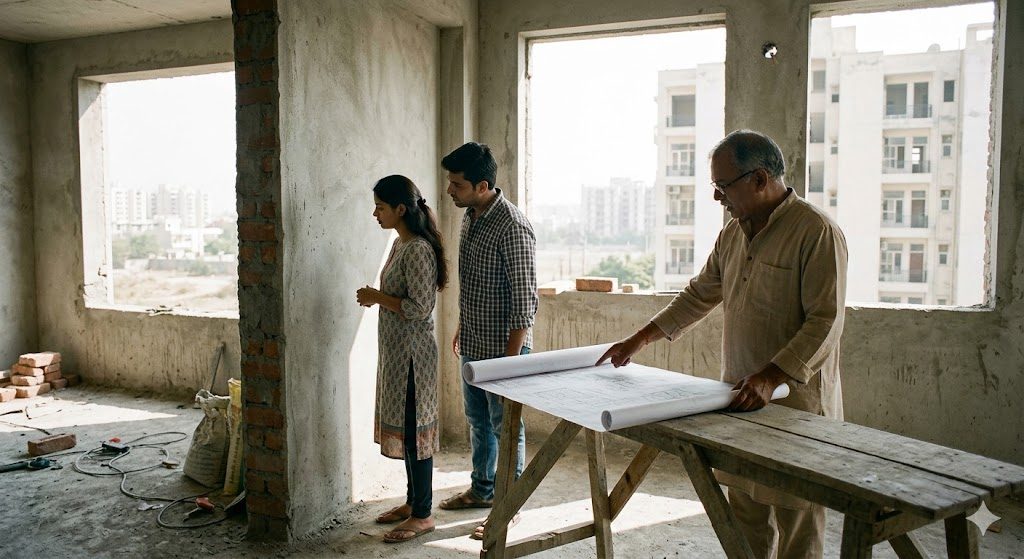
Rohan and Sneha found it on a Sunday drive through a leafy Gurgaon sector: a freshly painted, three-bedroom "builder floor" — the entire second floor of a smart-looking G+3 house, with a balcony, modular kitchen, and a price that, somehow, undercut every glossy apartment they had shortlisted. The broker was warm, the paint smelled new, the staircase had granite. They were ready to pay a token amount on the spot. What they did not know — and what nobody volunteered — was that the building was sanctioned for three floors and four had been built, that there was no occupancy certificate, and that the only bank willing to lend would do so at a punishing rate against a property it considered half-legal. Six months and one near-loss of their booking amount later, they walked away wiser.
That story plays out thousands of times a year across Delhi NCR, Gurgaon, Faridabad, Noida, and increasingly Bengaluru, because the builder floor is one of the most popular — and most quietly risky — housing products in India. This guide is the pre-purchase due-diligence checklist Rohan and Sneha wish they had: how to read the title and approvals, judge construction quality, test the layout, sanity-check the price, and spot the red flags that separate a great deal from a slow-motion legal headache. It sits inside our broader home-planning pillar, and it is deliberately about the stage before you buy. (Once you have bought and want to design the space, our companion piece on builder floor interiors takes over.)
The single core idea: a builder floor is bought floor by floor on a shared plot, so its value depends almost entirely on paperwork you cannot see from the doorstep — the sanctioned plan, the occupancy certificate, and the title chain. Inspect the documents as hard as you inspect the marble, because a beautiful floor with broken papers is worth less than a plain floor with clean ones.
What exactly is a "builder floor"?
A builder floor is an independent floor of a low-rise residential building — most often a single self-contained unit occupying one entire storey of a G+3 or G+4 house built on an individual plot. A builder (or the original plot owner) constructs the building floor by floor and sells each floor as a separate dwelling, often to four or five unrelated families. You buy the second floor; someone else owns the first; the builder may keep the ground or the terrace.
It is a uniquely North-Indian phenomenon at scale — Delhi, Gurgaon, Faridabad, Ghaziabad, Noida, and the older colonies of South Delhi are full of them — and the model is now common in parts of Bengaluru, Hyderabad, and tier-2 cities too. It exists because of how plotted residential land was sold: a 200–500 square yard plot, zoned for a handful of floors, becomes more valuable cut into independent floors than as one large house.
The appeal is real. You typically get more carpet area per rupee than a comparable society apartment, an independent feel (your own floor, often your own entrance via a common stair), lower or no monthly maintenance, and freedom from a controlling RWA. But the same independence is the source of the risk: there is usually no developer balance sheet behind it, often no society, frequently no occupancy certificate, and the land beneath you is shared.
Builder floor vs apartment — the differences that matter
| Dimension | Builder floor | Society apartment |
|---|---|---|
| Land ownership | Undivided share of one small plot, split among 3–5 owners | Undivided share of large land parcel, split among hundreds |
| Approvals | Plot-level sanctioned plan; OC often missing | RERA-registered project, OC for the tower |
| Society / RWA | Usually none or informal | Formal RWA, registered society |
| Amenities | Minimal — maybe a lift, parking; rarely a gym or park | Pool, gym, security, clubhouse, power backup |
| Maintenance | Low or self-managed | Higher monthly charges |
| Services | Often independent meters, tanks, water | Shared, professionally managed |
| Loan-ability | Banks cautious, especially without OC | Easy — most banks empanel the project |
| Resale liquidity | Slower; buyer pool smaller | Faster; deeper buyer pool |
| Privacy / space | High — whole floor to yourself | Lower — shared walls and corridors |
Neither is "better." A clean, sanctioned, OC-holding builder floor in a good sector can be the best-value home in the city. The problem is that "clean and sanctioned" is the exception, not the rule — which is why due diligence is the entire game. If you are still torn between the two formats, our interactive apartment vs villa comparison tool walks through the trade-offs for your priorities.
The four-pillar evaluation
Everything you need to check falls under four pillars: legal and title, construction quality, layout and livability, and financial. Work through all four — a perfect score on three and a failure on one is still a failure.
Pillar 1 — Legal and title (the one that decides everything)
This is where builder floors are won or lost. The construction can be redone; the title cannot. Spend more time here than anywhere else, and get a property lawyer to vet the file — a one-time fee of ₹15,000 to ₹40,000 that has saved buyers crores.
Sanctioned plan vs actual floors built
Ask for the sanctioned (approved) building plan and count the floors it permits — then count the floors that actually stand. This is the most important single check on a builder floor. Local development authority norms cap the number of floors and the floor-area ratio (FAR/FSI) for a given plot size and zone. A plot sanctioned for stilt-plus-three (S+3) sometimes ends up as stilt-plus-four because the builder squeezed in an extra saleable floor.
If you are being sold an unsanctioned floor, that floor is illegal construction. It can be sealed, regularised only on the authority's terms (if at all), or in the worst case demolished — and no bank will fund it. Even if you are buying a sanctioned floor in a building that has one unsanctioned floor above, the whole structure can attract notices. Never take the broker's word; read the plan, and if numbers do not match, treat it as a hard stop until clarified in writing.
OC and CC — occupancy and completion certificates
The completion certificate (CC) confirms the building was finished as per the sanctioned plan. The occupancy certificate (OC) confirms it is legally fit for people to live in. On builder floors, a missing OC is the single most common defect. Many builder-floor buildings simply never obtain one — and an absent OC cascades: banks hesitate to lend, water and electricity connections can be irregular, property tax and resale get complicated, and you are technically occupying a building not certified for occupation.
An OC is not a nice-to-have. If the seller cannot produce it, ask precisely why, whether it is applied for, and get the answer documented in the agreement. Our deep dive on building plan approval explains the sanction-to-OC pipeline in full.
Title chain, registry, and encumbrance
Trace ownership back at least 30 years through the chain of registered sale deeds and the mother deed, and pull a fresh encumbrance certificate (EC) from the sub-registrar to confirm there are no undisclosed loans, mortgages, or liens on the property. Confirm the seller is the actual owner of the specific floor and that earlier transfers were properly registered. For inherited or partitioned plots, check that all legal heirs have signed off.
RERA applicability
Builder floors sit in a grey zone. RERA applies to projects above the size and unit thresholds (broadly, land area over 500 square metres or more than eight units, with state variations). Many builder-floor buildings fall below these thresholds and so escape mandatory registration — which means fewer statutory protections, not more. If the project does qualify, verify the registration number directly on your state RERA portal rather than trusting a certificate the builder hands you. Our full RERA guide explains the applicability test and what protections you do and do not get.
Undivided land share and ownership of the plot
Because the plot is shared, your sale deed should clearly specify your undivided share (UDS) of the land — the proportion of the plot you co-own. This determines your stake in the most valuable asset (the land) and your rights if the building is ever redeveloped. A floor sold with a vague or missing UDS is a serious weakness; the land, not the brick, is what appreciates.
Builder-buyer agreement, tax, mutation, NOC
Read the builder-buyer agreement line by line: what exactly is sold, the carpet area, parking allocation, payment schedule, possession date, and penalty clauses. Confirm property tax is fully paid and that mutation (transfer of municipal records into the seller's name) is done — you cannot cleanly mutate into your name otherwise. Check whether the plot is freehold or leasehold (leasehold needs lessor conversion/NOC for transfer), and collect any required NOCs from the authority, co-owners, or an existing lender.
A builder floor is only as strong as its weakest document. The marble can be replaced in a weekend; a broken title can take years and lakhs in court — if it can be fixed at all.
The documents to verify, in order
Climb the documents ladder from the foundation up. Each rung supports the ones above it.

| # | Document | What it proves | Where to get it |
|---|---|---|---|
| 1 | Sanctioned / approved building plan | How many floors and how much area were legally permitted | Seller; verify with local authority |
| 2 | Completion certificate (CC) | Build matches the sanctioned plan | Seller / authority |
| 3 | Occupancy certificate (OC) | Building is legally fit to occupy | Seller / authority |
| 4 | Mother deed + chain of sale deeds | Unbroken ownership history (30+ years) | Sub-registrar, seller |
| 5 | Encumbrance certificate (EC) | No undisclosed loans or liens | Sub-registrar |
| 6 | RERA registration (if applicable) | Project is registered and compliant | State RERA portal |
| 7 | Latest property tax receipt | No arrears | Municipal body |
| 8 | Mutation / khata extract | Records in the seller's name | Municipal body |
| 9 | Approved utility connections | Legal water and electricity meters | Utility provider bills |
| 10 | NOCs (authority / co-owners / bank) | No objections to the transfer | Respective parties |
| 11 | Registered sale deed (at closing) | Your legal ownership | Sub-registrar |
Have a lawyer cross-check that the carpet area, floor number, and UDS in the sale deed match the agreement and the sanctioned plan. Mismatches here are where disputes are born.
Pillar 2 — Construction quality
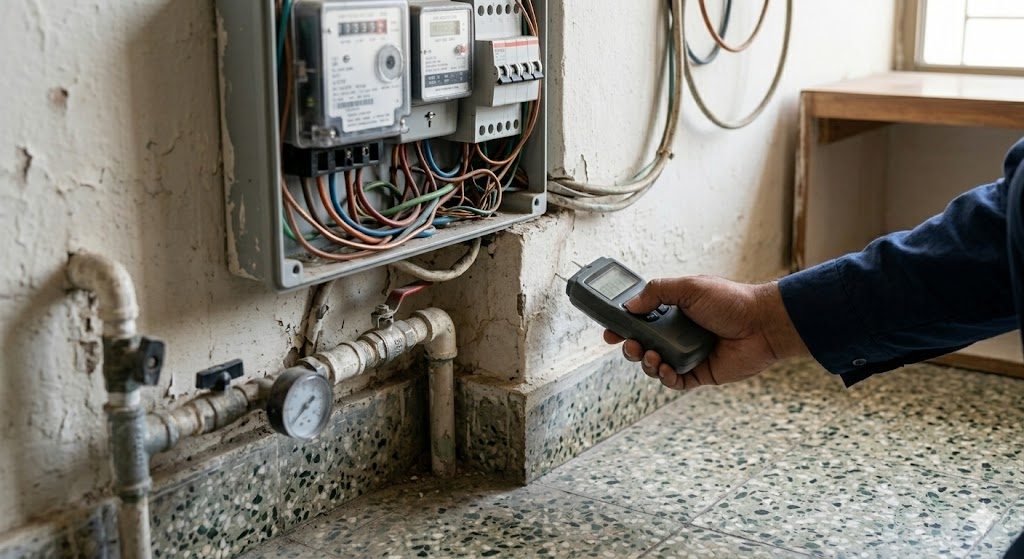
Builder floors are built fast, often by small contractors optimising cost per saleable square foot. Quality varies wildly between an end-user-grade build and a flip job dressed up with cosmetic finishes. Inspect the bones, not the paint.
Structure
Most modern builder floors use an RCC (reinforced cement concrete) framed structure — columns and beams carrying the load — which is preferable to older load-bearing brick construction for multi-storey safety. Ask about the structural design, look at column sizes (visibly slim columns on a tall building are a worry), and check the plinth and any visible cracks. Diagonal cracks at corners, cracks wider than a coin's edge, or cracks that have been freshly puttied over deserve a structural engineer's opinion (₹5,000 to ₹15,000 well spent).
Seepage, damp, and waterproofing
This is the most common hidden defect. Walk every wall and ceiling looking for stains, blistering paint, efflorescence (white salt deposits), and a musty smell — especially in bathrooms, the kitchen, around windows, and the ceiling under the terrace. The best time to inspect is during or just after the monsoon, when leaks show themselves. Failed terrace or bathroom waterproofing is expensive and recurring, and a freshly painted ceiling can hide a chronic leak. Probe; do not just glance.
Services — electrical, plumbing, water, parking, lift
| Service | What to check |
|---|---|
| Electrical | Sanctioned load adequate for AC/geyser load; separate legal meter per floor; quality of wiring and DB |
| Plumbing | Concealed vs exposed; pressure; separate overhead/underground tank share; no leaks |
| Water source | Municipal supply, borewell, or tanker; reliability and quality; who pays for the borewell |
| Parking | Is your parking deeded and demarcated, or informal? Stilt vs open vs none |
| Lift | Present for upper floors? Who maintains and pays for it? A 3rd/4th floor without a lift hurts resale |
| Ventilation | Cross-ventilation, window sizes, light and air wells |
| Sunlight | Which direction does the floor face; how dark are the inner rooms |
For the top floor, also check terrace rights, heat ingress, and roof waterproofing. For the ground floor, check flood/water-logging history and damp rising from the plinth.
Pillar 3 — Layout and livability
A builder floor's plan is fixed — you are buying someone else's space-planning decisions, often made to maximise saleable rooms rather than to live well.
- Real carpet area. Measure it. Builders quote super built-up or "saleable" area that can be 25–30 percent larger than the actual usable carpet area. Carry a laser measure or use our room measurement tool and compute the true carpet figure yourself. If you are not confident reading the plan, our beginner's guide to reading floor plans makes it simple.
- Room sizes and proportions. A "3BHK" with two box-bedrooms you cannot fit a queen bed and a wardrobe into is a 1.5BHK in disguise. Check usable wall length, not just floor area.
- Cross-ventilation and light. Independent floors often have windows on only two sides, with dark, airless inner rooms and bathrooms. Stand in each room at midday and judge the light honestly.
- Privacy and noise. You share a slab with the floor below and a stair with everyone. Check sound transfer and whether the common stair compromises your entrance privacy.
- Resale and future demand. A well-laid-out, sanctioned, OC-holding floor with parking and a lift sells; a dark, lift-less top floor in a building with paperwork issues sits on the market for years.
For the deeper principles, our guides on space-planning principles and the space-planning mistakes that make homes feel smaller are worth a read before you commit.
Pillar 4 — Financial
The headline price is the least of it. Build the true cost and stress-test the loan.
Price-per-square-foot benchmarking
Convert the asking price to price per square foot of carpet area (not super built-up) and compare against recent, registered transactions in the same sector — not the asking prices on listing sites, which run optimistic. A builder floor should trade at a meaningful discount to a comparable society apartment to compensate for fewer amenities and weaker loan-ability. Use our plot evaluation tool to sanity-check land value, and the cost calculator to model the all-in number.
Loan-ability — the make-or-break
Banks are genuinely cautious on builder floors. Many will fund only two of the four floors in a building, will not lend at all without an OC, and apply a lower loan-to-value ratio with stricter title scrutiny. Before you fall in love with a floor, get a pre-approval from at least one bank against that specific property. If no mainstream bank will touch it, that is the market telling you something — and your eventual buyer will hit the same wall, hurting resale.
Hidden and recurring costs
| Cost head | Typical 2026 band | Notes |
|---|---|---|
| Stamp duty | 4–7% of value | Varies by state and buyer gender; women often pay less |
| Registration | ~1% | Plus minor charges |
| GST (under-construction only) | 5% (1% affordable) | Not on ready, OC-received resale |
| Brokerage | 1–2% | Negotiable |
| Legal due-diligence | ₹15,000–₹40,000 | The cheapest insurance you will buy |
| Structural / inspection | ₹5,000–₹15,000 | For an engineer's opinion |
| Maintenance | Low / self-managed | Lift and motor power shared informally |
| Interiors after possession | ₹1,200–₹3,000 / sq ft | See our builder-floor interiors guide |
The red flags — when to walk away
If you take one image from this guide, take this one. These are the signals that should make you slow down, get everything in writing, renegotiate hard, or simply leave.

| Red flag | Why it matters | What to do |
|---|---|---|
| Unsanctioned extra floor | Illegal construction; sealing or demolition risk; un-loanable | Count floors against the sanctioned plan; hard stop if mismatched |
| No OC | Not legally fit to occupy; blocks loans and clean resale | Insist on OC or written timeline; price the risk in |
| Setback encroachment | Building breaches the mandatory boundary gap; penalty/demolition | Measure against the sanctioned plan; check side/rear setbacks |
| Dampness / seepage | Failed waterproofing; recurring, expensive | Inspect post-monsoon; probe fresh paint; get an engineer in |
| No loan-ability | Banks refuse — title or OC weakness | Get pre-approval first; treat refusal as a market signal |
| Vague undivided land share | Weak claim to the appreciating asset | Demand explicit UDS in the sale deed |
| Verbal-only parking/lift rights | Disputes after purchase | Get demarcated, deeded, in writing |
| Seller dodges document requests | The single biggest tell | No documents, no token amount |
Get it right, in order
1. Shortlist on paper first. Ask for the sanctioned plan and OC before the second visit. No documents, no deposit — ever.
2. Count the floors. Sanctioned floors must equal actual floors. This one check kills most bad deals.
3. Engage a property lawyer. Have them vet the title chain, mother deed, EC, agreement, and UDS. Budget ₹15,000 to ₹40,000.
4. Get a bank pre-approval on that specific floor. If no mainstream bank will lend, walk.
5. Inspect the build — ideally during or just after the monsoon. Bring a structural engineer if anything looks off.
6. Measure the real carpet area yourself and benchmark price per carpet square foot against registered sales.
7. Negotiate against the red flags. Every defect is a price-reduction lever or a walk-away signal.
8. Close cleanly — collect all NOCs, register the sale deed, and complete mutation into your name.
Do these eight in order and you will have done more due diligence than 90 percent of builder-floor buyers — which is exactly why so many of them get burned.
Once you have a floor under contract, DesignAI can help you turn it into a home — it drafts space-aware layouts, interior briefs, and rough BOQs from your floor plan, so you arrive at your designer or contractor with a clear, costed brief instead of a blank page. Pair it with our builder floor interiors guide for the post-purchase fit-out.
References
1. National Building Code of India 2016 (NBC 2016), Bureau of Indian Standards — occupancy, structural safety, services, and means of egress provisions referenced for low-rise residential buildings.
2. The Real Estate (Regulation and Development) Act, 2016 (RERA) and respective state rules — applicability thresholds, registration, and buyer protections; verify on your state RERA portal.
3. IS 456:2000, Bureau of Indian Standards — code of practice for plain and reinforced concrete, relevant to RCC framed structures.
4. Local Development Authority byelaws (DDA Master Plan / Building Byelaws, Haryana / Gurugram and equivalent municipal byelaws) — floor limits, FAR/FSI, setbacks, and OC/CC procedures.
5. The Registration Act, 1908 and The Transfer of Property Act, 1882 — registration of sale deeds, title transfer, and encumbrance.
6. Council of Architecture (CoA) guidance on sanctioned plans and architect certification.
7. Francis D. K. Ching, Architecture: Form, Space and Order — principles of light, ventilation, and spatial proportion for judging layout quality.
Continue with the home-planning pillar, then explore builder floor interiors, the RERA guide, building plan approval, and the beginner's guide to reading floor plans.
Export this guide
Related Guides — Deep-dive reading
Plot Due Diligence in India: The Complete Pre-Purchase Check (2026)
Before you pay a rupee for a plot, run the full pre-purchase check with your lawyer and a licensed surveyor - legal title, revenue records, planning approvals, physical survey and financial dues. This guide walks through each pillar, gives you a checklist and tells you when to walk away.
Buying LandLand Documents Checklist Before Buying a Plot in India (2026)
Every document to collect and verify before you buy a residential plot in India - the title chain, encumbrance certificate, khata or patta, mutation, survey and layout, land-use conversion and tax dues - what each one proves, the red flag if it is missing, and how the same record is named differently in each state.
Buying LandHow to Buy a Plot in India: Step-by-Step Due Diligence, Documents and Registration (2026)
The complete, plain-language map of buying a residential plot in India end to end - define your requirement and budget, evaluate the site, run the due-diligence stage (title, documents, encumbrance, khata, land-use, approvals), discover the fair price, sign the agreement, register the sale deed, and get mutation and possession - with a step-by-step process table and a red-flags table.
Buying LandRelated Tools — Try Free
Acoustic Privacy (STC) Visualizer
Indian healthcare acoustic visualizer — compare wall assemblies and noise sources, see received SPL after STC attenuation, and check FGI 2018 / IS 1950 / NABH speech-privacy compliance with live dual-canvas waveform.
Acoustic ToolPre-Possession Inspection Checklist
Inspect your flat before registration — 10 categories, 70+ checkpoints across legal, carpet area, structure, finishes, and deviations.
Homebuyer ChecklistStamp Duty Calculator — All Indian States
Stamp duty + registration charges for all 28 states and 8 UTs — gender concessions, urban/rural variants, metro cess built in.
Stamp Duty