
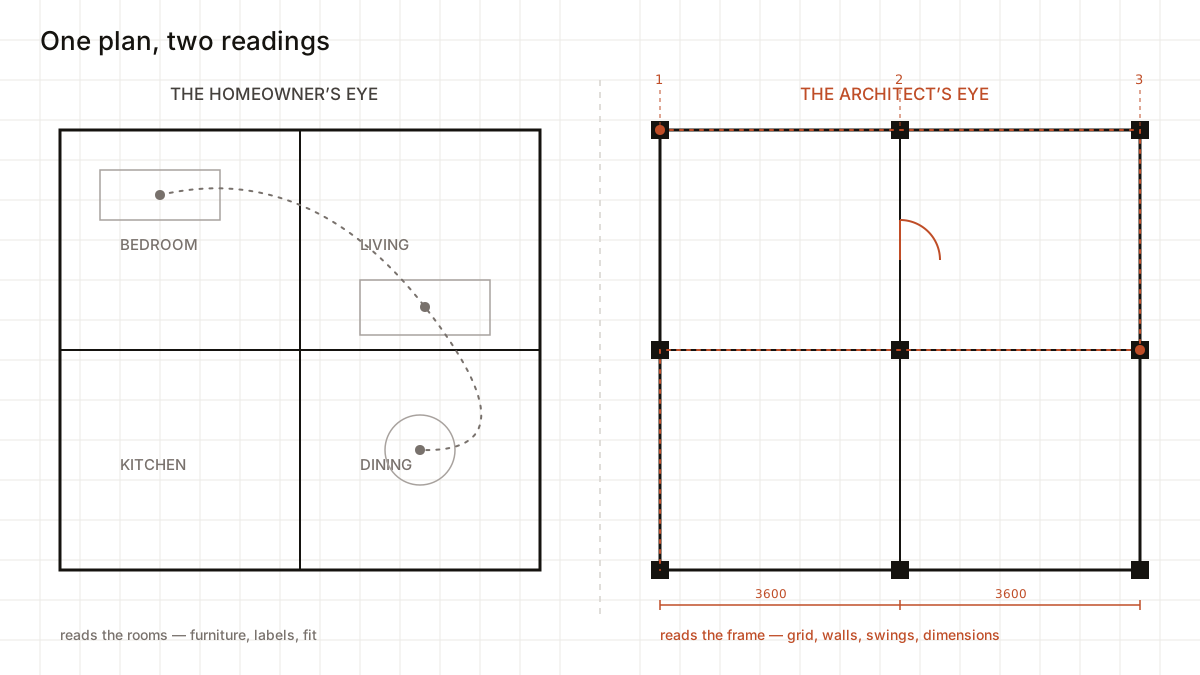
How Architects Read Drawings Differently Than Homeowners
The same sheet, two different readings — what a trained eye notices first, the questions professionals ask of a drawing, and how to start seeing a plan the way your architect does.
Hand the same floor plan to two people and you will get two completely different first sentences. The homeowner says, "Oh — there's the master bedroom, and look, the kitchen is next to the dining." The architect says almost nothing for the first ten seconds, because they are not reading the rooms yet. They are reading the frame — checking the scale, finding the north point, scanning the grid, and only then letting their eye fall into the spaces.
This is not a matter of intelligence. It is a matter of order. A trained reader has learned to triage a drawing the way an emergency doctor triages a patient: check the things that, if wrong, make everything else meaningless — before getting drawn into the comfortable, obvious details. The good news is that the order is learnable, and once you know it, you cannot un-know it. You will start seeing your own house plan the way the person who drew it does.
This guide is about that shift in how you look, not about any one drawing type.
Reading a drawing like an architect means triaging the sheet in a fixed order — title block, scale, north, grid, levels, structure, openings, dimensions, notes — so you judge the framework before you fall in love with the rooms.
This is the orientation guide for the Construction Drawings Masterclass. It is for the homeowner who has just been handed a thick set and feels lost, and for the B.Arch or junior site engineer who can name every line but has not yet built the habit of reading in triage order. Once you have this mental sequence, the type-specific guides will land far better — drawing symbols every homeowner should know, understanding drawing scales, and the drawing review checklist to run on your own set.
An amateur reads a plan to find the rooms. A professional reads a plan to find the mistakes.
1. Why the homeowner and the architect see different things
A drawing is a compressed code. The homeowner reads it as a picture — a top-down photograph of a house, where the labelled boxes are rooms and the little arcs are doors. That reading is not wrong; it is just shallow. It stops at "what is where."
The architect reads it as an instruction set — a stack of decisions, each of which has consequences for the ones below it. A wall is not a line; it is a thickness, a material, and a question: is it carrying load, or just dividing space? A door is not a gap; it is a swing direction that will or will not collide with a switchboard. A room is not a box; it is a set of dimensions that must add up to the overall figure, and a floor level that must relate to the one next door.
The difference is depth of consequence. Homeowners read for recognition. Professionals read for failure.
The two reading paths, side by side
| What the eye lands on | Homeowner reads it as | Architect reads it as |
|---|---|---|
| Thick vs thin wall lines | "Some walls are darker" | Load-bearing / RCC vs partition — what can move later |
| The little arc at a door | "That's a door" | Swing direction, clear width, what it might foul |
| Numbers along the edge | "Measurements" | A dimension string that must total the overall — a checksum |
| Hatched / filled areas (poche) | "Shading" | The cut: solid material the section passes through |
| A circle with a line and number | "Some symbol" | A section or detail marker pointing to another sheet |
| Repeated dots on a grid | "Columns, I think" | The structural skeleton everything else hangs on |
For students & site engineers: this table is really the homeowner-to-professional translation layer. Your job on site is to live permanently in the right-hand column. When a contractor says "we'll shift this wall," your first reflex should be the right-hand reading — is it load-bearing? does a beam land on it? — not the left-hand "sure, it's just a wall."
2. The triage sequence: the order a trained eye actually follows
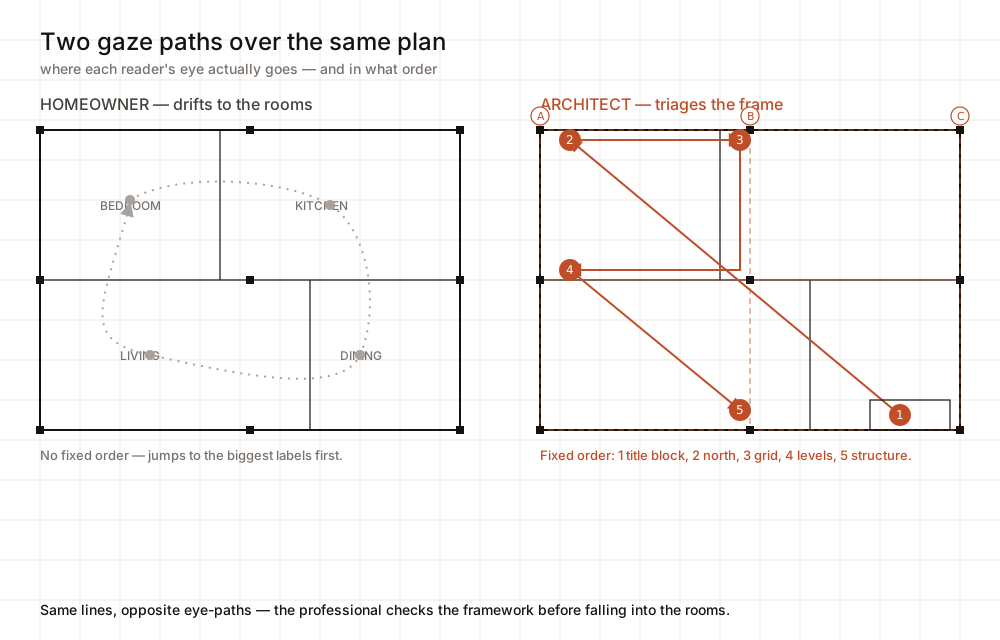
Architects do not read a sheet left-to-right or top-to-bottom. They run a fixed sequence, fastest-and-most-fatal first. Here it is.
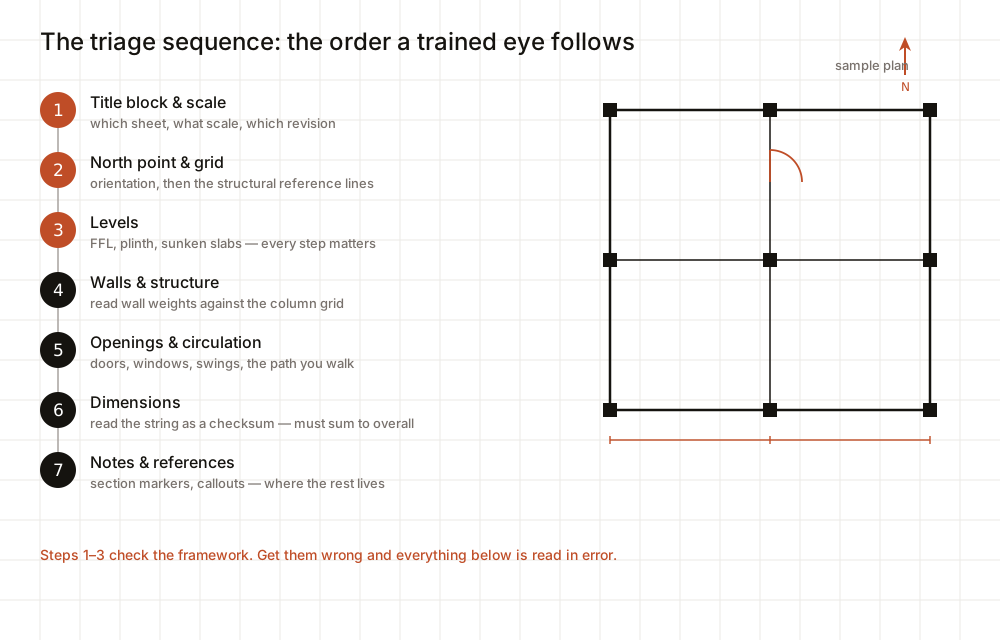
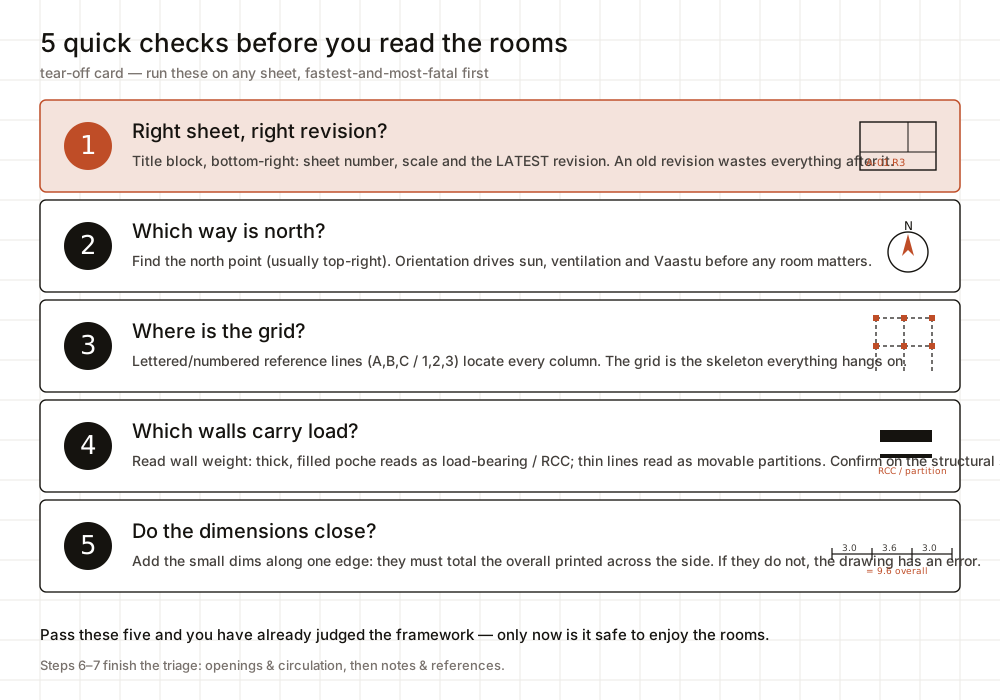
1. Title block & scale. Bottom-right corner first, always. What sheet is this (A = architectural, S = structural)? What is the scale — 1:100, 1:50? What is the revision number and date? If you read a superseded revision, every careful thing you do next is wasted. As per IS 962, the title block carries the project name, sheet number, scale and revision; the scale governs how every later measurement is interpreted.
2. North point & grid. Find north (IS 962 places it preferably at the top-right). Orientation drives sun, Vaastu, ventilation. Then find the grid — the lettered/numbered reference lines (A, B, C across; 1, 2, 3 down) that locate every column. The grid is the skeleton; everything else is flesh.
3. Levels. Spot the level markers — FFL (finished floor level), plinth, sunken slab in wet areas. A change of even 100 mm between two rooms is a step, a ramp, or a tripping hazard waiting to be coordinated.
4. Walls & structure. Now read wall weights — thick/filled poche for load-bearing or RCC, thinner for partitions — and overlay the column grid. Ask: does the structure make sense before I worry about furniture?
5. Openings & circulation. Doors, windows, swings, and the path a person walks from entry to every room. Is the circulation clear, or do you walk through a bedroom to reach a bathroom?
6. Dimensions. Read the dimension strings as a checksum: the chain of small dimensions along an edge must add up to the single overall dimension. If they do not, the drawing has an error.
7. Notes & references. Last: the general notes, the section markers, the detail callouts that send you to other sheets. These tell you where the rest of the story lives.
The whole pass takes a professional under a minute. It feels like instinct, but it is this list, run so often it became reflex.
3. The cues a trained eye catches instinctively
Once the framework is checked, certain things jump out at a professional that a homeowner glides past. These are the high-information marks.
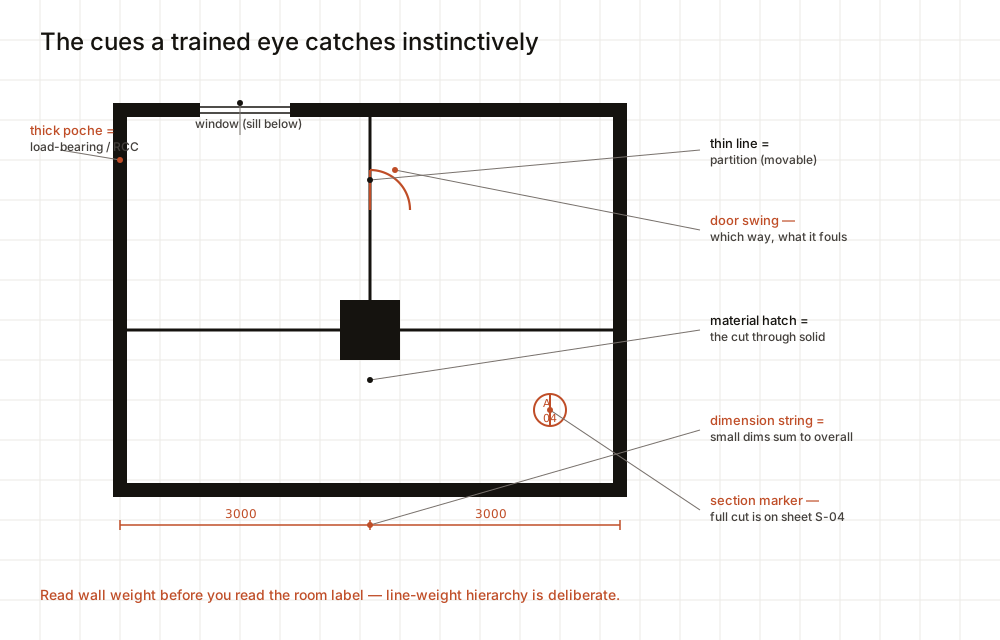
- Wall thickness and poche. Poche is the solid fill (or close diagonal hatch) on the part of a wall the cut passes through. A thick, filled wall reads instantly as load-bearing or RCC; a thin, lighter line reads as a partition you could, in principle, move. This single distinction decides what is renovatable later.
- Door swing direction. The arc is not decoration — it shows which way the leaf opens and how much floor it sweeps. A professional checks it does not foul a switchboard, a second door, or a person's natural path.
- Window sill vs full-height. A break in the wall with two parallel lines reads as a window (sill below); a full opening reads as a door or a French window. The eye sorts these without thinking.
- Material hatching. Different patterns mean different materials — brick, concrete, earth fill. Hatching that signals concrete or structural steel is a tell that the element is likely structural — but it is not proof it is load-bearing: in an RCC-frame building the columns, beams and slabs carry the load while concrete or masonry walls can be non-structural infill. Confirm against the structural drawings rather than assuming.
- Dimension strings. The chain of numbers along the edge is read as a self-checking sum, not just sizes.
- Section & detail markers. A circle-and-arrow with a number says "the full story of this cut is on sheet S-04." A professional follows the reference; a homeowner does not notice it is even a pointer.
Red flag — if two walls of obviously different thickness are both unlabelled and you cannot tell load-bearing from partition, that is not your failure as a reader. That is a drawing that needs a query back to the architect.
For students & site engineers: train your eye to read poche weight before you read the room label. On a coordinated set, line weights are a deliberate hierarchy — cut lines heaviest, then visible edges, then hidden (dashed), then dimension/leader lines lightest. If a drawing has flat, uniform line weights, it has not been properly drafted, and reading it will be slower and more error-prone.
4. The questions: same plan, different interrogation
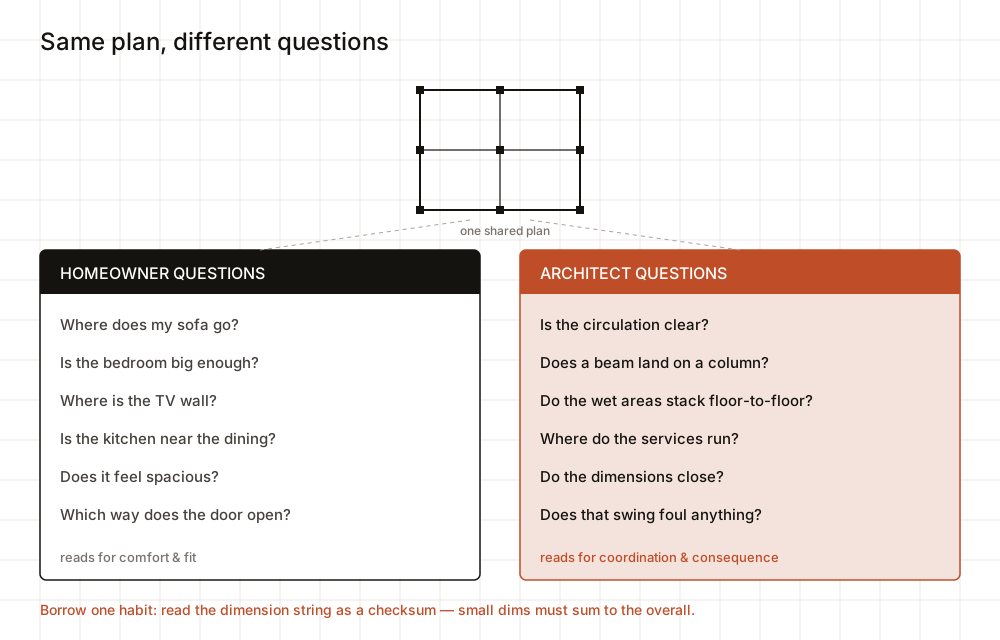
The deepest difference is not what the two readers see — it is what they ask. A homeowner interrogates a plan for comfort and fit. An architect interrogates it for coordination and consequence.
| Homeowner asks | Architect asks | Why the architect's question matters |
|---|---|---|
| Where does my sofa go? | Is the circulation clear? | A path that cuts through a room ruins both. |
| Is the bedroom big enough? | Does a beam land on a column? | A beam with no column under it is unbuildable. |
| Where is the TV wall? | Do the wet areas stack floor-to-floor? | Toilets/kitchens above each other share one plumbing shaft — cheaper, drier, sane. |
| Is the kitchen near the dining? | Where do the services run? | Pipes, ducts and conduits need planned chases, not afterthoughts. |
| Does it feel spacious? | Do the dimensions close? | If the string does not sum to the overall, something is wrong on site. |
| Which way does the door open? | Does that swing foul anything? | Swing into a switchboard or another door is a daily annoyance for years. |
You do not need to ask the architect's questions perfectly. You need to know they exist, so that when you sit across the table you can say, "Do the bathrooms stack above each other?" — and watch your architect smile, because now you are reading the drawing with them, not at them.
The single best habit to borrow
If you remember one professional move, make it this: read the dimensions as a checksum. Pick any edge, add up the small dimensions, and confirm they equal the overall dimension printed across the whole side. When they do, you have just verified the drawing the way an engineer does. When they do not, you have caught a real error — and a question worth raising.
5. How to use this
Run the seven-step triage on your own set before your next site or design meeting — title block, scale, north, grid, levels, structure, openings, dimensions, notes. You will arrive with sharper questions and waste less of everyone's time.
From here, go deeper with the cluster: the Construction Drawings Masterclass pillar maps the whole set; drawing symbols every homeowner should know and understanding drawing scales sharpen the cues above; and the drawing review checklist turns this triage into a printable list to run on every revision.
When you are ready to act: explore ready-to-read layouts in our house plans library, generate and study your own with DesignAI, or bring a professional in through find an architect.
References & Further Reading
Indian standards & manuals
- IS 962:1989 — Code of Practice for Architectural and Building Drawings (sheet sizes, scales, line weights, north point, title block, abbreviations).
- National Building Code of India (NBC) 2016 — overarching provisions for building drawings, services coordination and documentation.
- IS 456 — Plain & Reinforced Concrete (referenced where structural members appear on a plan).
Books / references
- Ching, F. D. K. — Architectural Graphics and Building Construction Illustrated (the standard texts on drawing convention and reading line-work).
- Architectural Working Drawings — on the discipline of dimension strings, schedules and coordination.
Companion Studio Matrx guides
- Construction Drawings Masterclass — the pillar.
- Construction drawing symbols homeowners should know
- Understanding drawing scales
- How construction drawings work together
- Construction drawing review checklist
- Building a house in India
Author's Note — Amogh N P. The first time a drawing truly opened for me, it was not because I learned a new symbol — it was because an old engineer told me to "stop reading the rooms and read the grid first." It reorganised everything. I have tried to hand you that same small turn of the head here, because once your eye learns the order, a plan stops being a wall of lines and starts being a conversation you are finally part of.
Disclaimer. This guide is an educational overview to build drawing literacy; it is not a substitute for a licensed structural engineer, MEP consultant or registered architect. Read and act only on the stamped, project-specific drawings for your own house. All conventions, sizes, levels and values mentioned are indicative and typical, to be confirmed against your sealed drawings and the latest revision.
Export this guide
Related Guides — Deep-dive reading
50 Construction Drawing Symbols Every Homeowner Should Know
A visual glossary — the doors, windows, stairs, fixtures, electrical points, plumbing marks, section cuts and material hatches that turn a wall of lines into a readable house.
Construction DrawingsHow All Construction Drawings Work Together
From one grid to a finished house — how architectural, structural and MEP sheets coordinate, where clashes hide, the order drawings are issued, and how a small change ripples across the whole set.
Construction DrawingsBathroom Planning for New Homes in India: Get It Right Before You Build
The bathroom decisions you cannot undo once the slab is cast — location and stacking, sunken vs non-sunken slabs, waterproofing, and the plumbing, electrical and ventilation you must coordinate with the civil work, stage by stage.
BathroomsRelated Tools — Try Free
Cross-Ventilation Analyzer
Estimate airflow and air changes per hour (ACH) from room size, window areas, layout, and local wind — with NBC 2016 Part 8 compliance check.
Ventilation CalculatorApartment Furniture Size Chart
Standard furniture dimensions for Indian apartments — sofas, beds, tables, dining, storage.
Reference ChartFull-Room BOQ — Living, Bedroom, Kitchen, Bath
Room-wise BOQ across living, bedrooms, kitchen, utility, and bathrooms with line-item pricing.
Full-Room BOQ