
Water Heaters (Geysers): Types, Efficiency and Choosing the Right One
The most-used heating appliance in an Indian home, decoded — storage vs instant, electric vs gas vs solar vs heat-pump, what capacity you need, the BEE star rating, and how to cut the running cost of the hot water you use every day.
The water heater — the geyser — is the heating appliance almost every Indian home actually uses, every day, all year. It's also where a surprising slice of the electricity bill goes, especially in winter. Yet most people buy one on price alone and never think about the type, the capacity or the running cost. Getting it right — the right kind, the right size, and an efficient one — quietly saves money for years. This guide decodes water heaters and how to choose.
It builds on the Home Heating Guide, part of the HVAC Knowledge Hub. Choosing and buying a geyser is squarely a homeowner decision — this guide is for you.
Scope & safety. Choosing, sizing and using a water heater is covered here. Installation (electrical connection, earthing, gas lines, pressure valves) is qualified electrician/plumber work — and gas geysers must never be installed in a sealed bathroom (see below).
The types of water heater
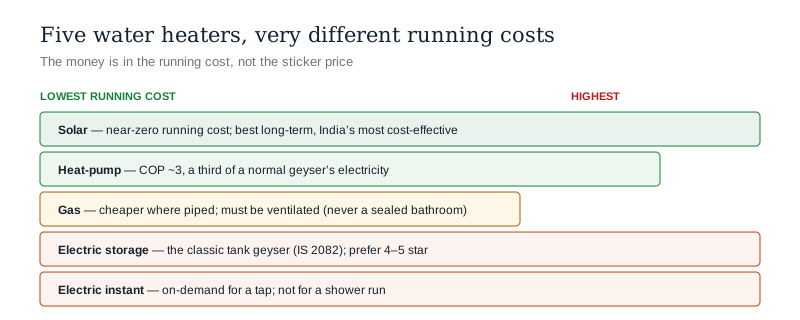
Five main types, each suited to a different need:
- Storage (electric) — the classic tank geyser. Heats and holds a tankful (6–50 L). Reliable, steady hot water; the default for bathing. Built to IS 2082.
- Instant / tankless (electric) — a small unit that heats water on demand (1–3 L). Great for a kitchen tap or a quick handwash; not for filling a bucket or a shower run.
- Gas (LPG/PNG) — heats water instantly by burning gas; cheaper to run than electric where you have piped gas, and unaffected by power cuts. But it must be installed with proper ventilation — never in a closed bathroom (flue gases are dangerous).
- Solar water heater — uses the sun; near-zero running cost once installed. India's most cost-effective long-term hot water (see solar water heating).
- Heat-pump water heater — a small heat pump that heats water at COP ~3, using about a third of a normal geyser's electricity. The efficient electric option for high demand.
What capacity do you need?
Buying too big wastes standby heat; too small means cold showers. A rough guide:
- Handwash / kitchen tap — 1–3 L instant.
- One person, bucket bath — 6–10 L storage.
- Bathroom, shower / 1–2 people — 15–25 L storage.
- Family bathroom / multiple in succession — 25–35 L.
- Whole-house / multiple bathrooms — larger storage, solar, or a heat-pump system.
Bigger tanks lose more heat standing idle, so size to your actual peak draw, not the largest you can afford.
Efficiency and the BEE star rating
The running cost — not the purchase price — is where a water heater costs or saves you money:
- BEE star rating — storage electric geysers carry a star label; more stars mean better insulation and less standby heat loss. Prefer 4–5 star for a unit that runs daily.
- Standby loss — a storage geyser left on all day reheats itself repeatedly; using a timer or switching on ~15–20 minutes before use cuts this waste.
- The efficiency ladder — for the same hot water, running cost runs roughly: solar (near zero) < heat-pump (COP ~3) < gas (where piped) < electric storage/instant (COP ~1). Use our geyser running cost calculator to see your numbers.
- Set a sensible temperature — scalding-hot storage wastes energy and then gets diluted with cold anyway; a moderate setting is safer and cheaper.
Buying and using well
- Match type to use — storage for bathing, instant for a tap, solar/heat-pump for high demand and low running cost, gas where piped gas is available and ventilation is proper.
- Right-size the capacity — to your peak, not the maximum.
- Buy efficiency — 4–5 star, and add a timer.
- Safety — professional electrical installation with earthing and an ELCB/RCCB; a working pressure-relief valve; and never a gas geyser in a sealed bathroom. Get it serviced periodically (anode rod, element descaling in hard-water areas).
The one-line answer
A water heater is the heating appliance Indian homes actually use every day, and choosing well saves for years. The five types suit different needs: storage electric (the classic tank geyser for bathing, built to IS 2082), instant electric (on-demand for a kitchen tap, not a shower run), gas (cheaper to run where piped, but must be ventilated — never in a sealed bathroom), solar (near-zero running cost, India's most cost-effective long-term), and heat-pump (COP ~3, a third of a normal geyser's electricity). Size to your actual peak draw (a bucket bath needs 6–10 L, a family bathroom 25–35 L) since oversized tanks waste standby heat. And the money is in the running cost, not the sticker price: prefer a 4–5-star BEE-rated unit, add a timer, set a moderate temperature, and remember the cost ladder — solar < heat-pump < gas < plain electric. Buy the right type and size, an efficient one, install it safely through a professional, and the daily hot water quietly costs a fraction of what a carelessly chosen geyser does.
Where to go next
- See your numbers: Geyser Running Cost Calculator.
- The cheapest hot water: Solar Water Heating Guide.
- The efficient electric route: Heat Pump Guide.
- The heating overview: Home Heating Guide.
References
- IS 2082 : 2018 Stationary Storage Type Electric Water Heaters — Specification (Fifth Revision), Bureau of Indian Standards (ETD 32).
- Bureau of Energy Efficiency (BEE) — Standards & Labelling (star rating) for storage water heaters: https://beeindia.gov.in/
- Ministry of New & Renewable Energy (MNRE) — solar water heating systems: https://mnre.gov.in/
Choosing, sizing and using a water heater is covered here; electrical, gas and plumbing installation is qualified professional work. Verify any standard's current status via the BIS catalogue before relying on it.
Export this guide
Related Guides — Deep-dive reading
Geyser for Bathroom India: Water Heater Types, Sizing, Star Rating & Safe Wiring (2026)
How to choose a bathroom water heater in India — storage vs instant vs gas vs solar, the right litres for a bucket bath or shower, BEE star rating and running cost, why hard water needs an anode and descaling, pressure rating for showers, and the dedicated electrical point and safety it must have.
BathroomsHow to Choose a Geyser in India: Buyer's Guide to Size, Type, Star Rating & Price (2026)
A buyer's decision guide to picking a bathroom geyser in India — sizing instant vs storage by family and use, storage vs instant vs gas vs solar, BEE star rating and running-cost maths, glass-lined vs stainless tank for hard water, pressure rating, warranty, good-better-best price tiers, the IS 302 safety mark, and how to spot a refurbished unit.
BathroomsHot Water Systems Guide (India): How to Choose the Right Water Heater
Electric, gas, solar or heat-pump? Central or point-of-use? A homeowner's how-to-choose overview that compares every water-heating option on upfront cost, running cost and where each one actually suits an Indian home.
PlumbingRelated Tools — Try Free
Geyser Running Cost Calculator
Work out a water heater's electricity use and running cost per day, month and year — and compare electric, gas, heat-pump and solar.
Bathroom CalculatorGeyser Size Calculator
Find the right water-heater capacity (litres) or instant kW for your bathroom and household, with an indicative running-cost note.
Bathroom CalculatorRainwater Tank Sizer
How big should your rainwater tank be? Computes annual harvest, recommended tank capacity in litres, water-bill savings, and payback — for 10 Indian cities.
RWH Calculator