

Room Heaters: Types, Safety and Choosing One for an Indian Winter
The winter workhorse of North India, decoded — fan, halogen, convection and oil-filled heaters compared, what actually suits a bedroom vs a bathroom, the real safety rules (ventilation, dry air, burns, CO), and how to stay warm without a scary bill.
For the few cold weeks of a North-Indian winter, the plug-in room heater is how most homes stay warm. They're cheap to buy, need no installation, and warm a room in minutes — but they're also energy-hungry, and every winter they cause avoidable accidents from burns to, in the worst cases, suffocation. Choosing the right type for the room and knowing the real safety rules turns a room heater from a hazard-and-a-bill into safe, sensible warmth. This guide covers both.
It builds on the Home Heating Guide, part of the HVAC Knowledge Hub. This is genuinely useful homeowner knowledge — including the safety points that matter most.
Safety first. Room heaters are a leading cause of winter household accidents. The safety rules below are not optional — read them. Any fuel-burning heater (gas/kerosene) must never run in a closed room (risk of carbon-monoxide poisoning).
The types of room heater
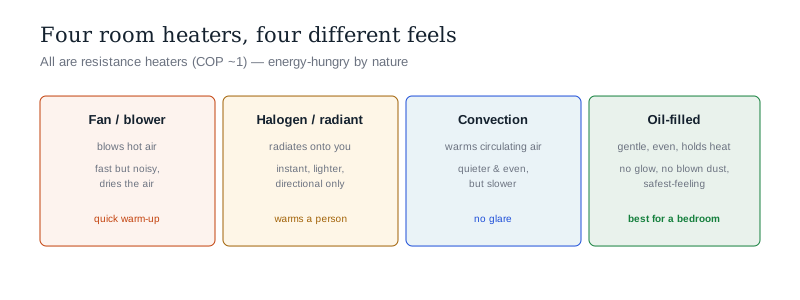
Four common electric types, each with a different feel:
- Fan / blower heater — an element with a fan that blows hot air. Fast to warm a room, cheap, but noisy, dries the air, and stops warming the moment it's off. Good for a quick warm-up.
- Halogen / radiant heater — glowing rods that radiate heat directly onto you (like sitting near a fire). Instant directional warmth, energy-lighter, but only warms what's in front of it, not the whole room. Good for a person, not a space.
- Convection heater — warms air that circulates naturally around the room. Quieter and more even than a fan, no glare, but slower.
- Oil-filled radiator — an element heats sealed oil in fins that radiate gentle, even heat. The most comfortable and safest-feeling for all-night bedroom use: no glowing element, no blown dust, retains warmth after switch-off — but slow to heat and heavier. Widely the best pick for a bedroom.
All are resistance heaters (COP ~1), so they're energy-hungry by nature — see running cost below.
Matching the heater to the room
- Bedroom (all night) — an oil-filled radiator: gentle, even, no glare or noise, safest to leave running with care.
- Quick warm-up (living room) — a fan heater for speed, then switch off.
- Warming one person (desk, chair) — a halogen/radiant heater aimed at you; cheaper than heating the whole room.
- Bathroom — only a heater rated for bathroom/wet-area use, kept well away from water; never an ordinary heater near a wet floor.
The safety rules that matter
Room heaters cause serious accidents every winter — these rules prevent them:
- Ventilation for fuel heaters — gas and kerosene heaters consume oxygen and emit carbon monoxide; never run them in a sealed room or overnight while sleeping. This kills people every year. Electric heaters don't produce CO, but the ventilation habit is safest.
- Keep clear of anything flammable — curtains, bedding, clothes, paper: at least a metre of clear space. Never dry clothes on a heater.
- Never leave unattended with children or pets — glowing/hot surfaces cause burns; choose enclosed types (oil-filled) around kids.
- Don't run overnight unattended if avoidable; if you must, use an oil-filled type with a thermostat and tip-over cut-off.
- Electrical safety — plug directly into a proper socket (not a flimsy extension), on an earthed circuit; a heater draws heavy current.
- Mind the dry air — heaters dry the air and can irritate skin, eyes and throat; a bowl of water or a humidifier helps.
Cost — and cheaper ways to stay warm
- They're expensive to run. A 2,000 W heater run 5 hours a day is ~10 units daily — at ₹8/unit, ~₹80/day, well over ₹2,000 a month. Resistance heat is costly heat. See yours in the room heater running cost calculator.
- Use less of it — heat the room you're in, not the house; a lower setting and a timer; warm clothing and a blanket do a lot of the work.
- Radiant for a person, not a space — a halogen heater aimed at you uses less than heating a whole room.
- For regular winters, a heat pump (reversible AC) is far cheaper to run — a third of the electricity for the same warmth. A room heater is best as an occasional-cold-snap tool, not a whole-winter habit.
The one-line answer
The plug-in room heater is how most North-Indian homes get through a few cold weeks — cheap, instant, no install, but energy-hungry and a real safety matter. The types differ in feel: a fan/blower heats fast but is noisy and dries the air; a halogen/radiant warms a person instantly (not the room); a convection heater is quieter and even but slow; and an oil-filled radiator gives the gentlest, safest all-night bedroom warmth (no glow, no blown dust, holds heat) — so pick oil-filled for a bedroom, a fan for a quick warm-up, and radiant to warm one person. The safety rules are not optional: never run a fuel-burning (gas/kerosene) heater in a sealed room (carbon-monoxide risk that kills every year), keep a metre clear of anything flammable, don't leave it unattended around children, use earthed sockets, and add moisture for the dried-out air. And because these are resistance heaters (COP ~1) they're expensive to run — heat only the room you're in, prefer radiant for a person, and for regular winters a reversible-AC heat pump costs a third as much for the same warmth.
Where to go next
- See your numbers: Room Heater Running Cost Calculator.
- The heating overview: Home Heating Guide.
- The cheaper-to-run alternative: Heat Pump Guide.
- The most comfortable heating: Radiant & Underfloor Heating.
- Fix the dry air: Humidity Control Guide.
References
- Bureau of Energy Efficiency (BEE) — appliance efficiency; heat pumps vs resistance heating: https://beeindia.gov.in/
- Product-safety practice for household heating appliances (tip-over & overheat cut-offs, earthing); manufacturers' safety instructions.
- National Building Code of India, SP 7 (Part 8 — Building Services; verify current edition), Bureau of Indian Standards.
This guide covers choosing and safely using room heaters. Fixed electrical/gas heating installation is qualified professional work. Verify any standard's current status via the BIS catalogue before relying on it.
Export this guide
Related Guides — Deep-dive reading
Water Heaters (Geysers): Types, Efficiency and Choosing the Right One
The most-used heating appliance in an Indian home, decoded — storage vs instant, electric vs gas vs solar vs heat-pump, what capacity you need, the BEE star rating, and how to cut the running cost of the hot water you use every day.
HVAC & CoolingBathroom Fire Safety India: NBC 2016 Part 4, Fire-Rated Materials & Electrical Ignition
The bathroom is rarely thought of as a fire risk, yet it hides several: a leaky geyser element, an over-run exhaust-fan motor, cheap flammable PVC panels overhead, and aerosol cans stored beside a heat source. This is an honest, practical reference to fire and life safety in the Indian bathroom — the NBC 2016 Part 4 context that actually applies to homes, the real ignition sources, self-extinguishing false-ceiling and PVC materials, earth-leakage protection as fire prevention, escape considerations, and the carbon-monoxide danger of gas geysers.
BathroomsHome Heating in India: Where It Matters and What Actually Works
India is cooling-dominant, but heating matters more than it seems — hill stations, North-Indian winters and, above all, hot water in every home. A grounded overview of the options (heat pumps, water heaters, radiant, room heaters, solar) and how to choose without wasting energy.
HVAC & CoolingRelated Tools — Try Free
Cross-Ventilation Analyzer
Estimate airflow and air changes per hour (ACH) from room size, window areas, layout, and local wind — with NBC 2016 Part 8 compliance check.
Ventilation CalculatorCurtain Thermal Calculator
Estimate the solar heat-gain a curtain or blind cuts by orientation, glass and treatment — and the cooling saving.
Thermal ToolFull-Room BOQ — Living, Bedroom, Kitchen, Bath
Room-wise BOQ across living, bedrooms, kitchen, utility, and bathrooms with line-item pricing.
Full-Room BOQ