
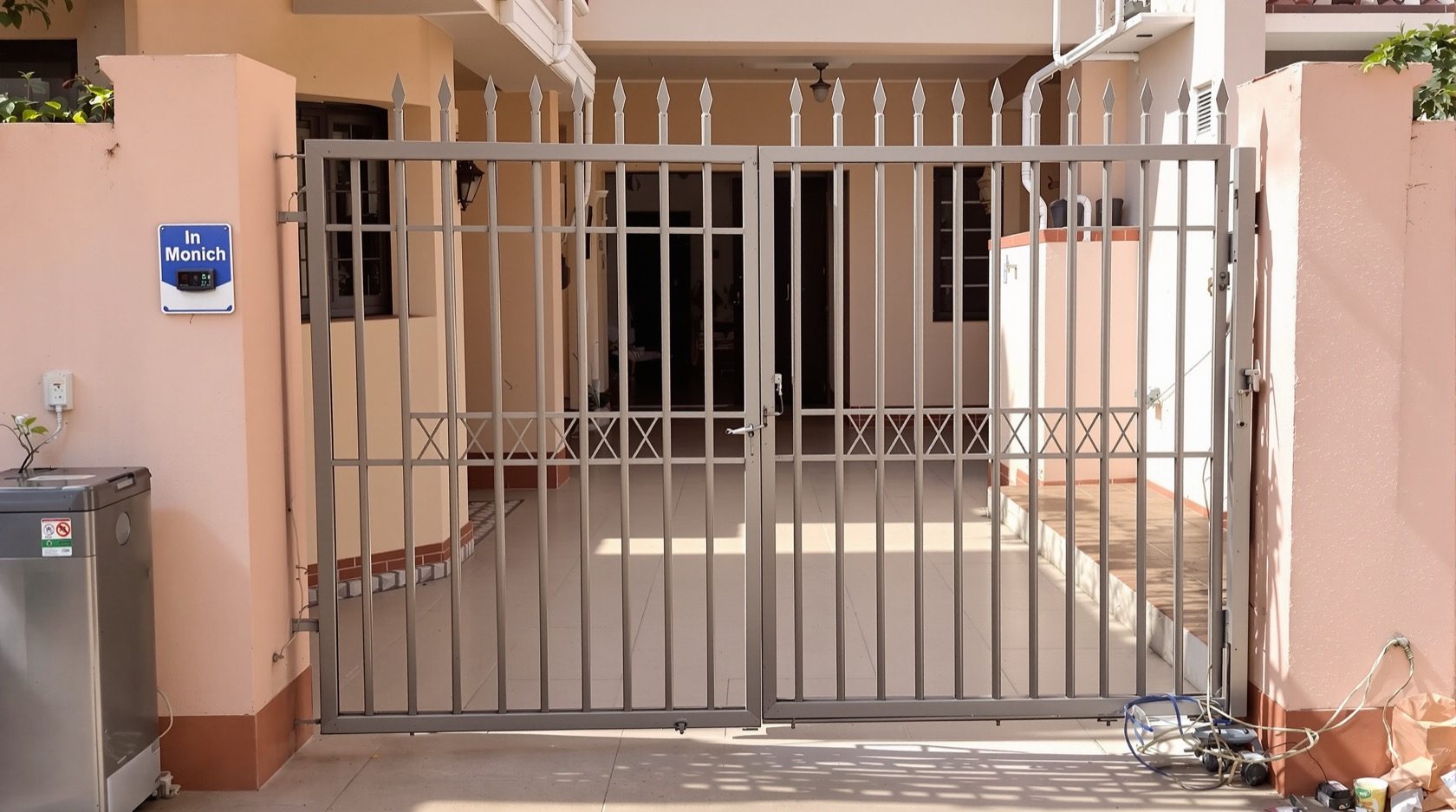
Gate Automation: Motorised Gates, Wiring & Safety in India
The gate that opens from your car — how automatic gate systems work: sliding and swing motors, the wiring and power they need, remote and app control, tying in the intercom and safety sensors, and the backup that gets you in when the power's out.
There's a real, daily convenience — and a security gain — in a gate that opens from your car without anyone stepping into the rain or the road. Gate automation adds a motor and controls to a sliding or swing gate, driven by a remote, keypad, app or the intercom. Because it sits at the boundary of a home's electrics — mains power to the motor, low-voltage controls and sensors — it needs proper planning: the right motor, a protected outdoor supply, safety sensors, and a backup for power cuts. This guide is how to plan gate automation for an Indian home.
It is the gate-automation guide of the ELV set in the Electrical Knowledge Hub, tying to the intercom & access control and outdoor electrical guides.
The safety line. Gate automation combines a mains-powered motor (a licensed electrician's work, weatherproof and RCCB-protected outdoors) with low-voltage controls and sensors. A moving gate is a mechanical hazard — safety sensors and correct installation matter. Have it installed by a competent gate-automation professional and electrician.
Sliding vs swing — the two motor types
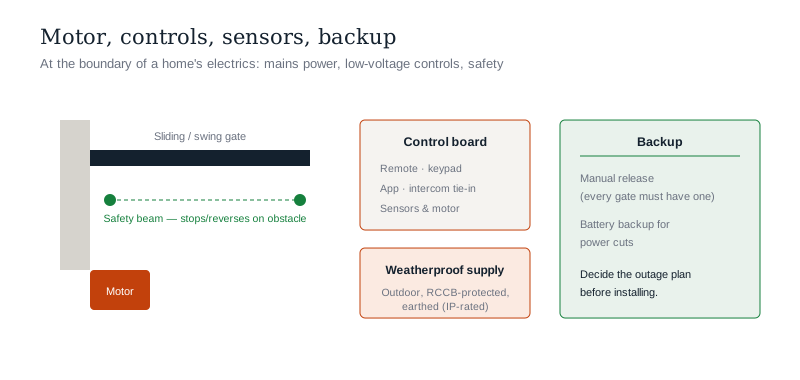
The motor type follows your gate:
- Sliding gate — a sliding-gate motor drives the gate along a track; ideal where there's room to slide sideways, common for wider driveways.
- Swing gate — swing-gate motors (one per leaf) push the gate open like a door; suit gates that swing inward with space to do so.
- Match the motor to the gate's weight and width — an underpowered motor struggles and wears; a professional sizes it to your gate.
The wiring and power
Gate automation needs a proper electrical foundation at the boundary:
- A mains supply to the gate — an outdoor, weatherproof, RCCB-protected, earthed circuit run to the gate motor/controller (see outdoor electrical). Run during construction, this is far tidier than a later cable.
- The control board at the gate, wired to the motor, sensors and controls.
- Low-voltage control cabling for sensors, keypad and any intercom tie-in, separated from mains.
- Conduit from the house so power and control cables reach the gate neatly.
Control and integration
- Remote control — the classic key-fob remote to open from the car.
- Keypad / card at the gate for visitors and family.
- App control — open/monitor the gate from your phone, often via the home network.
- Intercom tie-in — the video door phone opens the gate for a visitor you've verified.
- Automation — the gate can join smart-home routines (e.g. open on arrival).
Safety sensors — a moving gate is a hazard
An automatic gate is heavy and moving, so safety is essential:
- Photocell / safety beams across the opening that stop or reverse the gate if something (a person, car or child) is in the way.
- Obstacle detection so the motor stops on resistance.
- Correct installation away from pinch points, with warning where needed.
- These aren't optional extras — they're what makes an automated gate safe around a family.
Backup: getting in when the power's out
The obvious question: what happens in a power cut?
- A manual release — every automatic gate must have a manual override to open it by hand when there's no power.
- Battery backup — many systems offer a backup battery so the gate keeps working through short outages (useful given Indian power cuts).
- Consider the gate circuit on the home inverter/backup if reliable access matters.
- Decide your outage plan before installing — being locked out (or in) by a dead gate is exactly what backup prevents.
The one-line answer
Gate automation adds a motor and controls to a sliding or swing gate for daily convenience and security, but it sits at the tricky boundary of a home's electrics: match a sliding or swing motor to the gate's size and weight, feed it from an outdoor, weatherproof, RCCB-protected, earthed mains supply with control cabling in conduit, and control it by remote, keypad, app or the intercom. Fit safety sensors that stop or reverse the gate on an obstacle — non-negotiable around a family — and plan the backup every automatic gate needs: a manual release and ideally a battery so a power cut doesn't trap you. Have a competent gate-automation professional and licensed electrician install it.
Where to go next
- The systems it ties to: Video Intercom & Access Control Guide.
- The outdoor supply it needs: Outdoor & Garden Electrical Guide.
- The wider signal network: Home Low-Voltage & ELV Systems Guide.
- Backup for outages: Home Backup Power Guide.
References
- IS 732 : 2019, Code of Practice for Electrical Wiring Installations (outdoor supply, ELV segregation), Bureau of Indian Standards.
- IS/IEC 60529 : 2001, Degrees of Protection Provided by Enclosures (IP Code), BIS.
- IS 3043 : 2018, Code of Practice for Earthing, BIS: https://www.bis.gov.in/
Gate types, motors and controls vary; a moving gate is a mechanical hazard and must be installed with safety sensors and a manual override by a competent professional, with mains work by a licensed electrician. Verify any standard's status via the BIS catalogue before relying on it.
Export this guide
Related Guides — Deep-dive reading
Electrical Safety for Security Systems in India (2026): Powering It Without Peril
A homeowner's guide to the power side of home and RWA security systems, CCTV, alarms, gates, access control and NVRs, done so it protects you instead of quietly becoming a shock or fire hazard. What makes a supply safe, what to insist on, and why the mains work belongs to a licensed electrician.
SecuritySmart Garage Doors & Openers for Indian Homes (2026 Guide)
A garage door is the largest moving object in most homes, and a heavy one. This guide covers smart garage doors and openers for Indian homes end to end — motorised sectional, roller and sliding doors; what a smart opener actually adds; retrofit controllers versus smart openers; the safety sensors you must never skip; rolling-code security; the manual release for power cuts; integration with cameras and your wider smart home; and real brands with ₹ prices.
Smart HomeResidential Electrical Systems: The Complete Guide for Indian Homes
How the electricity in an Indian home actually works — from the utility supply and meter through the distribution board, circuits, wiring, earthing and protection, to lighting, safety, energy efficiency, smart controls, solar and backup — written so a homeowner can understand, plan and judge it, and know exactly where a licensed electrician must take over.
Electrical & WiringRelated Tools — Try Free
Electrical Safety & Load Audit
Home electrical audit — 10 categories, 65+ checkpoints across earthing, RCCB, MCB, wiring, switchboards, appliance circuits, DG/inverter backup.
Safety AuditSecurity Backup Power Calculator
Size a UPS/inverter and battery to keep CCTV, NVR, router and alarm running through a power cut — load, Ah, VA and cost.
Backup PowerAccess-Control Battery-Backup Calculator
Size the standby battery so an access system keeps running through a power cut, with an egress life-safety note.
Battery Backup