
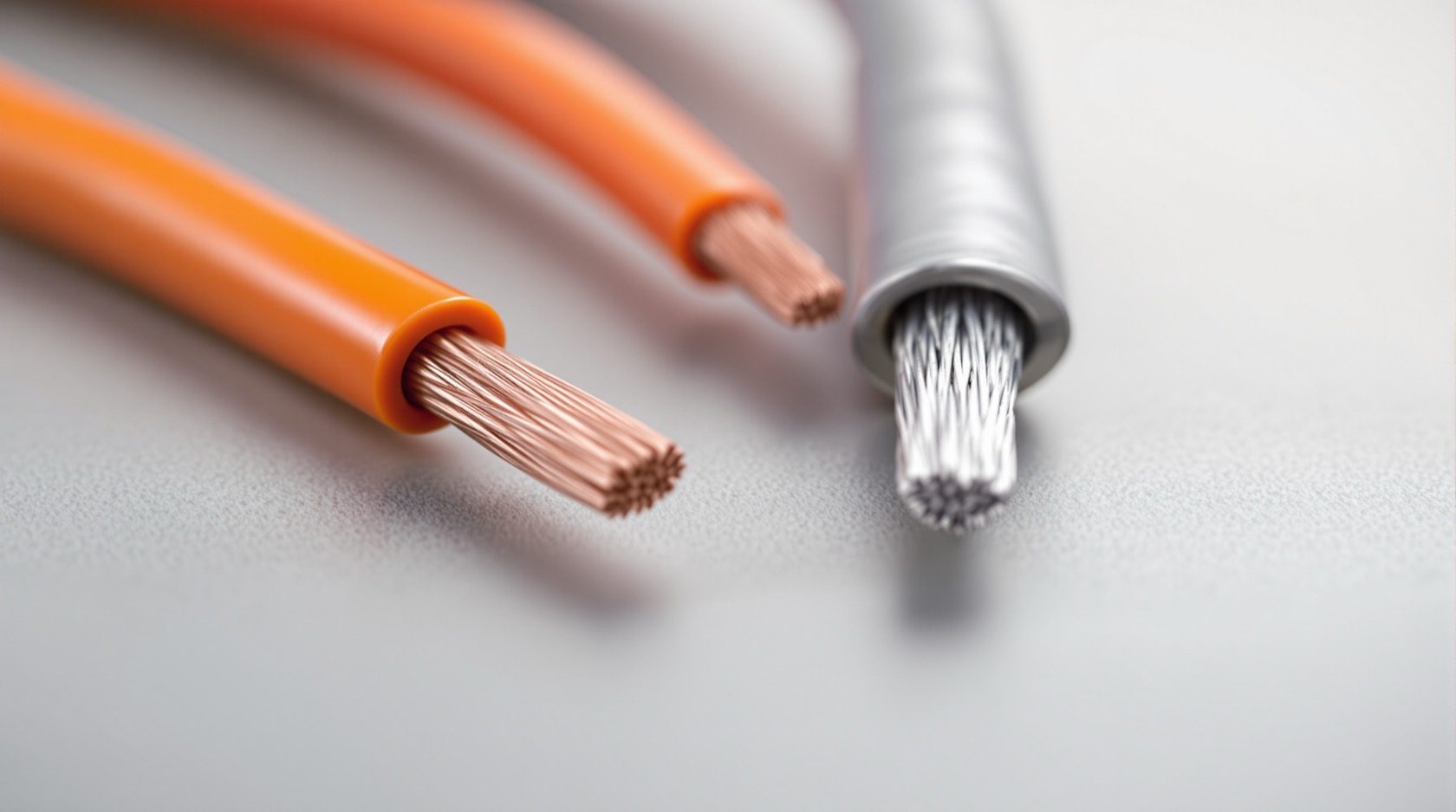
Copper vs Aluminium Wiring: Which Should Your Home Use?
The conductor question every home faces — copper versus aluminium wiring compared on conductivity, safety, durability, cost and where each belongs. Why modern homes wire final circuits in copper, where aluminium still makes sense, and the real risks of the aluminium wiring in older Indian homes.
Every wire in a home is a metal conductor, and there are two candidates: copper and aluminium. The choice is not cosmetic — it affects safety, how thick the cables must be, how long they last, and what they cost. For the final wiring inside a modern home the answer is now settled — copper — but understanding why, and where aluminium still belongs, matters, especially if you live in an older home that may be aluminium-wired. This guide compares the two honestly.
It is a companion to the home electrical wiring guide, and directly relevant to the electrical renovation guide if your home is older.
The safety line. The conductor is chosen and installed by a licensed electrician as part of a wiring design to IS 732 : 2019; conductors are made to IS 8130 : 2013. If you suspect your home has old aluminium wiring, the right action is to have a licensed electrician inspect it — not to open or test it yourself.
The core difference: conductivity
Copper conducts electricity better than aluminium — by a good margin. That single fact drives most of the comparison:
- Because copper carries more current per unit thickness, an aluminium conductor must be noticeably thicker than a copper one to carry the same load safely.
- Copper's better conductivity means less heat and less energy loss in the same-sized cable.
So for the same current, aluminium saves weight and cost but takes up more space; copper is compact and efficient but costs more per metre. For the short, current-dense final circuits of a home, copper's compactness and efficiency win.
Safety and durability: where copper pulls ahead
This is the decisive part for home wiring, and it is why the industry moved to copper for final circuits:
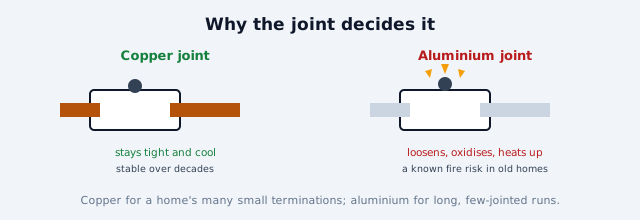
- Joints. Aluminium is softer, expands and contracts more with heat, and forms an insulating oxide layer — so aluminium connections tend to loosen and oxidise over time, and a loose connection heats up. Loose, hot aluminium joints in old homes are a well-documented fire risk. Copper joints are far more stable.
- Durability. Copper is stronger and more resistant to nicking and breaking during installation and over decades of small movements.
- Corrosion. Aluminium's oxide can worsen contact resistance at terminals unless the right connectors and practices are used.
None of this means aluminium is unsafe when correctly specified and terminated — it is used safely and routinely for the right applications. But for the many small terminations of a house's final wiring, copper's forgiving, stable joints make it the safer, lower-maintenance choice.
Head to head
| Factor | Copper | Aluminium |
|---|---|---|
| Conductivity | Higher | Lower (needs a thicker conductor) |
| Size for same load | Slimmer | Bulkier |
| Joint reliability | Excellent — stable | Prone to loosening / oxidation |
| Durability | High | Lower; softer, nicks easily |
| Weight | Heavier | Much lighter |
| Cost per metre | Higher | Lower |
| Best use | Home final circuits, all terminations | Long service mains, overhead lines, large feeders |
So where does aluminium still make sense?
Aluminium is not obsolete — it is the right choice in specific places:
- Utility distribution and overhead lines, where its light weight and low cost over long spans matter more than joint count.
- Large service cables and feeders — the heavy cable from the street or between a substation and a main panel — where the size is large, joints are few and professionally made, and the cost saving is significant.
The rule of thumb: aluminium for long, large, few-jointed runs; copper for the short, small, many-jointed final wiring of a home.
If your older home has aluminium wiring
Many older Indian homes were wired in aluminium for final circuits, back when it was common practice. That wiring is not automatically dangerous, but it deserves attention because of the joint issue above:
- Have a licensed electrician inspect it, especially if you notice warm switch plates, flickering, a faint burning smell, or connections that have worked loose — the warning signs covered in the electrical renovation guide.
- When renovating or rewiring, modern practice is to move final circuits to copper.
- Never mix copper and aluminium at a joint without the correct bi-metal connectors — a common cause of trouble.
The one-line answer
Copper conducts better, joins more reliably and lasts longer, so it is the standard for the short, many-jointed final wiring inside a modern home; aluminium is lighter and cheaper and remains the sensible choice for long, large, few-jointed runs like service mains and overhead lines. If your older home has aluminium final wiring, have a licensed electrician inspect it and plan to move to copper when you rewire — the risk is loose, oxidising joints, not the metal itself.
Where to go next
- The wiring overview: Home Electrical Wiring Guide.
- Fire-safety cables: FR, FRLS & FRLSH Cables.
- Old-home wiring: Electrical Renovation & Rewiring.
- Size a copper cable: Wire Size Calculator.
References
- IS 8130 : 2013, Conductors for Insulated Electric Cables and Flexible Cords, Bureau of Indian Standards.
- IS 694 : 2010, PVC Insulated Cables/Cords up to and including 1100 V, BIS.
- IS 732 : 2019, Code of Practice for Electrical Wiring Installations (Fourth Revision), BIS.
- National Electrical Code of India, SP 30 : 2023, BIS: https://www.bis.gov.in/
Guidance is indicative for typical Indian homes. Conductor selection, sizing and termination must be done by a licensed electrician to the current code. Verify any standard's status via the BIS catalogue before relying on it.
Export this guide
Related Guides — Deep-dive reading
Electrical Fire Safety in India (2026): Overloads, Wiring and the Right Protection
Why electrical faults cause so many Indian building fires, and the fix: correct cable sizing and a properly designed board by a licensed electrician, MCB plus RCCB protection, no overloading, and never water on a live fire.
SecurityResidential Electrical Systems: The Complete Guide for Indian Homes
How the electricity in an Indian home actually works — from the utility supply and meter through the distribution board, circuits, wiring, earthing and protection, to lighting, safety, energy efficiency, smart controls, solar and backup — written so a homeowner can understand, plan and judge it, and know exactly where a licensed electrician must take over.
Electrical & WiringCopper vs CPVC Pipes: Which to Use in India (2026)
A fair, India-first head-to-head: copper is the premium, decades-lasting, heat-proof metal that needs a skilled brazier and costs a fortune; CPVC is the cheaper, corrosion-proof, DIY-friendly plastic that has become the default modern Indian supply pipe. Cost, lifespan, heat, install skill, water quality, theft — and a clear verdict by use-case.
PlumbingRelated Tools — Try Free
Electrical Safety & Load Audit
Home electrical audit — 10 categories, 65+ checkpoints across earthing, RCCB, MCB, wiring, switchboards, appliance circuits, DG/inverter backup.
Safety AuditRenovation vs New Build Calculator
Compare renovating vs building new interiors city-wise across 13 work scopes with GST and per-sqft rates.
Cost ComparisonWire Size Calculator
Find the minimum copper or aluminium cable size for a circuit that satisfies both current-carrying capacity and voltage drop over the run length.
Electrical