
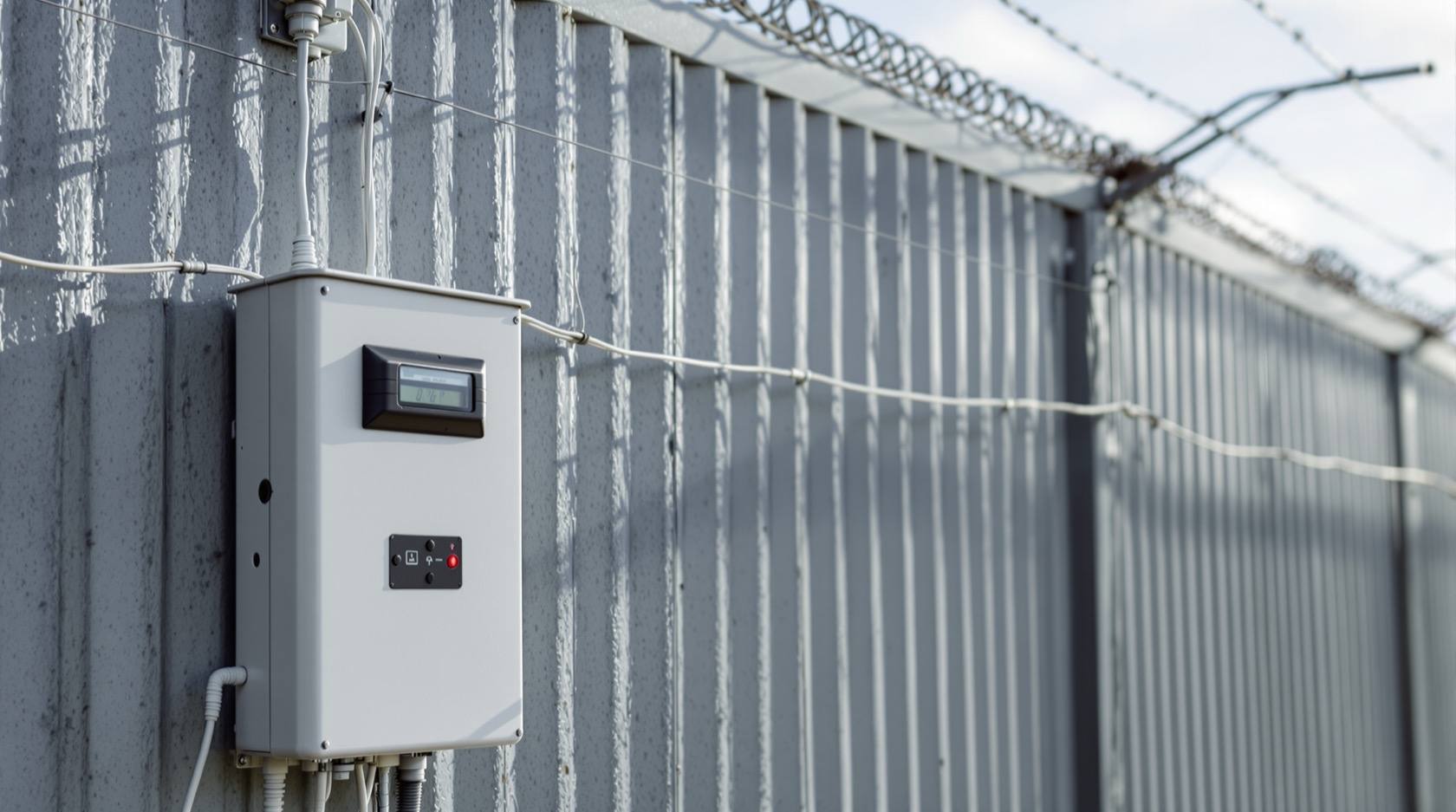
Electric Fencing Legal Requirements in India (2026): Deterrent, Not Deadly
What separates a lawful security electric fence from a dangerous, illegal one. A plain-language guide for homeowners, farmhouses, societies and commercial sites to the safe pulsed energizer, warning signage, earthing, permissions and owner liability that decide whether your fence is legal.
An electric perimeter fence sits on a knife-edge in law. Installed correctly it is a legitimate, widely used security tool: a visible line of wires that gives an intruder a short, sharp, harmless shock and sets off an alarm, so the fence deters and warns rather than wounds. Installed wrongly, the very same line of wires becomes a hidden weapon, and if a person, a child or even a passer-by is seriously hurt or killed by it, the owner can face grave criminal liability. The difference between the two is not luck. It is a set of choices about the equipment, the signage, the earthing and the permissions, and this guide is about making those choices on the right side of the line.
The single idea to hold on to is this. A lawful security electric fence is a deterrent, not a killer. It runs on a certified "energizer" that behaves like a farm or livestock energizer: it stores energy and releases it as a brief pulse, so the shock is startling and memorable but designed to be safe. A fence that instead carries a continuous or mains-level current, rigged to injure or kill, is illegal. This is not a grey area you can argue your way around after the fact. It is the whole point of the rules.
Scope & how to read this. This is practical compliance literacy, not legal advice or authoritative code. Requirements vary by state and city and change over time, and much depends on your local police, municipal body and electrical rules, so always confirm the current position with the Authority Having Jurisdiction and a competent installer before you act. Do not treat any figure here as an exact legal limit.
Deterrent versus deadly: the distinction the law cares about
Security electric fencing borrows its technology from agriculture. For decades farmers have used energizers to keep cattle in and predators out, and the security version works the same way: an energizer feeds a pulsed charge to insulated wires around a boundary. When someone touches the wire, they complete a circuit to earth and receive a short pulse. It hurts enough to make them let go and back off, and a monitored system also raises an alarm at that moment. Nobody is meant to be harmed. That is the design intent, and it is what makes such a fence a lawful deterrent.
Contrast that with a fence someone has wired directly to household or higher voltage to "teach a lesson." That is not a security product at all. It is a lethal trap, and it is illegal. Indian law does not let a property owner set a deadly device that can maim or kill a trespasser, and it makes no difference that the person who touched it should not have been there. A child chasing a ball, a labourer, a drunk leaning on a wall, a stray animal, a neighbour reaching over a shared boundary: none of them deserve death or serious injury for it, and if your fence delivers that, you, the owner, are the one who answers for it.
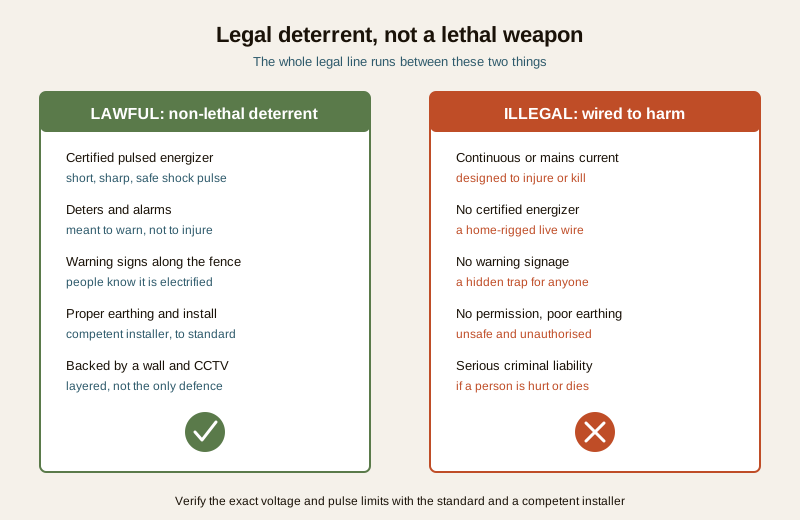
Life-safety, read this twice. A security electric fence must be non-lethal by design. A fence deliberately wired to be lethal, or built so carelessly that it can seriously injure or kill, is illegal, and if someone dies or is badly hurt the owner can face the most serious criminal consequences. There is no version of "but it kept burglars out" that makes a deadly fence acceptable.
What a safe, standards-compliant fence needs
A lawful electric fence is not just about avoiding a lethal current. It is a properly engineered installation, and the expectations are set by the relevant safety standard, which BIS and international standards bodies define for fence energizers and their installation. Do not treat any specific voltage, pulse duration or energy figure you read online as gospel: those precise limits are set by the standard and must be verified for the current edition through a competent installer. What you can hold on to are the essentials every safe fence shares.
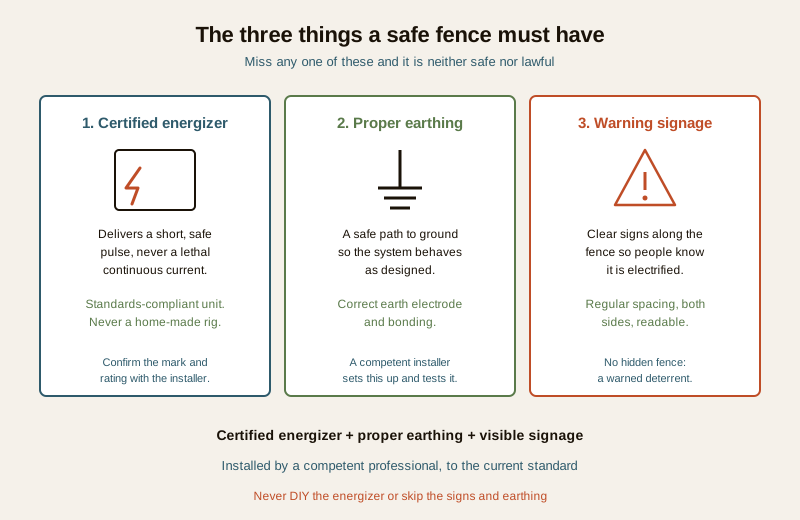
A certified pulsed energizer. The heart of a legal fence is the energizer. It must be a certified unit made to the relevant standard, one that produces a pulsed output within safe limits, not a device someone has cobbled together or a bare wire connected to the mains. The certification is what tells you the pulse is engineered to deter rather than to injure. Buying a proper energizer through a reputable channel, and confirming its mark and rating, is the first safety decision you make. Never DIY this part.
Proper earthing. A fence energizer only works safely if it is correctly earthed, so the pulse follows the intended path to ground. Bad or missing earthing can make the system behave unpredictably. Earthing is not a job to improvise; it is part of what a competent installer sets up and tests, and it is one of the things the standard specifies.
Warning signage along the fence. A lawful electric fence is a warned fence. The expectation is that clear warning signs run along the fence line so that anyone approaching knows it is electrified before they touch it. A hidden live fence is the opposite of a deterrent, because a deterrent works by being seen and understood. Skipping signage does not just breach the norms, it turns the fence into the kind of concealed trap the law treats most harshly.
Competent installation. Correct wire tension, insulation, height, energizer placement and integration with any alarm all matter, and they are the work of an installer who does this properly, not a weekend project. Standards on electric fences exist precisely so that a competent installer has a benchmark to build to.
Permissions: who may need to say yes before you switch it on
Owning a boundary does not automatically give you a free hand to electrify it. Whether, and how, you can install a security electric fence can depend on local rules, and these vary widely across India and change over time. Several authorities may have a say, and the honest answer to "do I need permission" is almost always "check locally before you install."
| Who to ask | Why they may matter |
|---|---|
| Local police | May regulate or expect notification of electrified perimeter security, especially in residential areas |
| Municipal corporation / development authority | Building bye-laws and local rules can restrict boundary treatments and heights |
| Housing society / RWA / association | Society rules and resolutions often govern what individual members and the society may install on shared or facing boundaries |
| Electrical inspectorate / licensed electrician | Electrical safety rules apply to any powered installation; a competent professional works to them |
| A lawyer, for boundary and liability questions | Placement over shared boundaries or public paths, and your exposure if someone is hurt, are legal questions |
Placement is especially sensitive. A fence that overhangs a public footpath, a common passage, a shared party wall or a neighbour's boundary raises the risk that an ordinary person, not an intruder, comes into contact with it, and that is exactly the situation the law worries about most. If your fence faces or reaches over any space the public or a neighbour legitimately uses, treat that as a reason to get explicit clearance and professional advice, not a detail to sort out later. For societies, the rules that govern shared surveillance are a useful parallel; the same "get the association's approval first" logic in the housing society CCTV approval guide applies with even more force to something that can shock a resident or a child.
Liability: the owner carries the risk
Here is the part that too many installations ignore. Once the fence is up, the responsibility for keeping it safe is yours as the owner, and it does not switch off. If the energizer is tampered with, if the earthing degrades, if a sign falls down, if a fault makes the fence more dangerous than designed, and someone is hurt, the questions asked afterwards land on you. Did you use a certified energizer? Was it installed by a competent professional to the standard? Were the warning signs in place? Did you have permission? A fence that fails any of those tests is hard to defend, and a fence deliberately built to injure is indefensible.
This is why the mature approach treats an electric fence as one layer, never the whole strategy. A solid boundary wall stops casual entry and keeps people away from the wires in the first place. Cameras record and deter. The electric fence adds a deterrent shock and an early alarm on top. Used that way, the shock is a last touch that most people never reach, because the wall and the signage have already told them to stay out. Relying on the shock alone, with a low or absent wall, puts people close to a live fence and raises the odds that the wrong person, a child or a passer-by, is the one who touches it. The layered thinking in the complete guide to perimeter security is the right frame: the fence supports the boundary, it does not replace it.
Is my electric fence lawful and safe? A checklist
Before an electric fence goes live, every item below should be a clear yes. If any one is a no, the fence is not ready, and possibly not lawful.
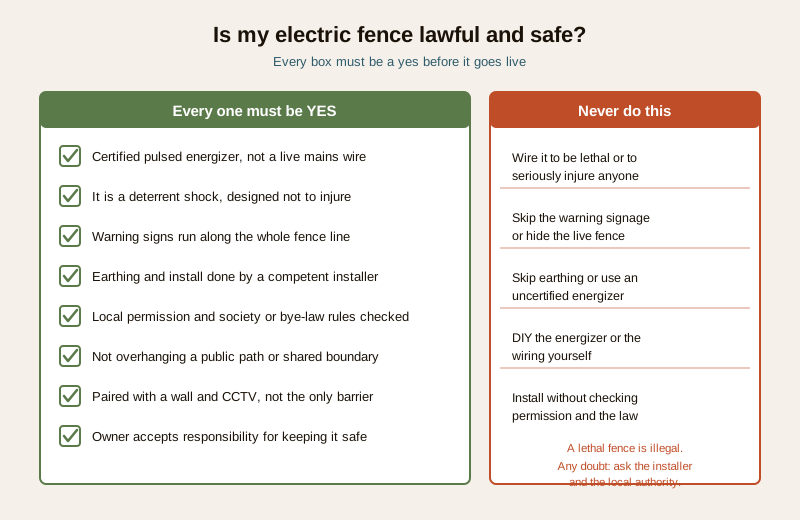
- It is a certified pulsed energizer, not a wire connected to the mains or a home-made device.
- The shock is a deterrent, designed within the safe limits the standard sets, not something meant to injure.
- Warning signs run along the whole fence, so nobody meets it unawares.
- Earthing and installation were done by a competent professional to the current standard.
- You have checked local permission and any society, RWA or municipal bye-law rules that apply.
- The fence does not overhang a public path or shared boundary where an ordinary person could touch it.
- It works alongside a wall and cameras, not as the only barrier.
- You, the owner, accept the ongoing duty to keep it maintained and safe.
Never do this
- Never wire a fence to be lethal or to seriously injure. This is the illegal, criminal case, whatever the provocation.
- Never skip the warning signage or try to conceal that the fence is live. A hidden trap is the worst version in law.
- Never skip earthing or use an uncertified energizer. Both make the system unsafe and unlawful.
- Never DIY the energizer or the wiring. This is a job for a competent installer working to the standard.
- Never install without checking permission and the local position first.
Where to go next
Getting the legality right sits alongside the practical questions of what a compliant fence costs and how it fits your wider security. These guides continue the picture.
- Security regulations overview — the hub for compliance across home and society security in India.
- Security and fire regulations guide — how the broader rulebook, authorities and approvals fit together.
- Electric fence cost in India — what a properly certified, safely installed fence involves, so a suspiciously cheap quote can be questioned.
- BIS standards for security equipment — how to read the marks that show an energizer is a genuine, standards-made unit.
The honest bottom line
A security electric fence can be a legitimate, effective deterrent, but only when it is built and run as one. Use a certified pulsed energizer, earth and install it through a competent professional, sign it clearly, check your local permissions, place it away from where ordinary people move, and treat it as one layer behind a wall and cameras. Do that and you have a lawful deterrent. Cut those corners, and above all wire it to harm, and you have crossed from security into a serious crime, with the liability resting on you.
Confirm before you act. These rules and standards vary by state and city and change over time. Nothing here is legal advice or an exact code limit. Before installing an electric fence, verify the current standard and safe limits with a competent installer, and confirm permissions with your local police, municipal body and society, and where liability is a concern, with a lawyer.
This is educational compliance and safety literacy for homeowners, farmhouses, societies and commercial owners considering perimeter electric fencing, not legal advice, an installation manual or a statement of exact voltages, pulse values or legal provisions. A lawful security fence is a non-lethal deterrent; a fence built to injure or kill is illegal. Requirements and standards change, so always verify the current local position with the Authority Having Jurisdiction and engage a competent, certified installer.
Export this guide
Related Guides — Deep-dive reading
Electric Fencing for Security in India (2026): The Legal, Non-Lethal Way to Deter & Alert
How a certified, pulsed, non-lethal electric fence lawfully deters and alarms at your perimeter, why a mains-electrified lethal fence is illegal and deadly, and the compliance every installation must meet.
SecuritySecurity and Fire Regulations Guide for India (2026): Know the Rules and How to Navigate Them
There is no single national rulebook you can read off. This is the map of the whole regulatory landscape for home, housing-society and commercial security and fire systems in India, and a calm way to navigate it: who sets the rules, who approves what, and how to stay on the right side of them.
SecurityHow to Choose a Fire Alarm in India (2026): A Life-Safety, Code-Governed Buying Guide
A fire alarm is not shopped on price or looks. It is specified to the National Building Code and the local fire officer, built from listed and certified parts, and installed by a licensed contractor. This guide shows a homeowner, manager or architect how to choose and verify one correctly.
SecurityRelated Tools — Try Free
CCTV Placement Compliance Checker
A quick DPDP-grounded privacy and safety self-check for where a camera is pointed — flags the items to fix.
ComplianceElectrical Safety & Load Audit
Home electrical audit — 10 categories, 65+ checkpoints across earthing, RCCB, MCB, wiring, switchboards, appliance circuits, DG/inverter backup.
Safety AuditStructural Modification Approval Checklist
41 items across structural assessment, society approval, municipal compliance, and safety.
Approval Checklist