
Bathroom Condensation and Mould India: Stop Damp, Black Mould & Musty Smell for Good
Why warm, wet shower air keeps fogging your tiles, ceiling and walls with black mould — and the full Indian playbook to stop it: exhaust run-on, anti-fungal paint, wet-dry separation, wiping down, a dehumidifier, and safely cleaning the mould you already have.
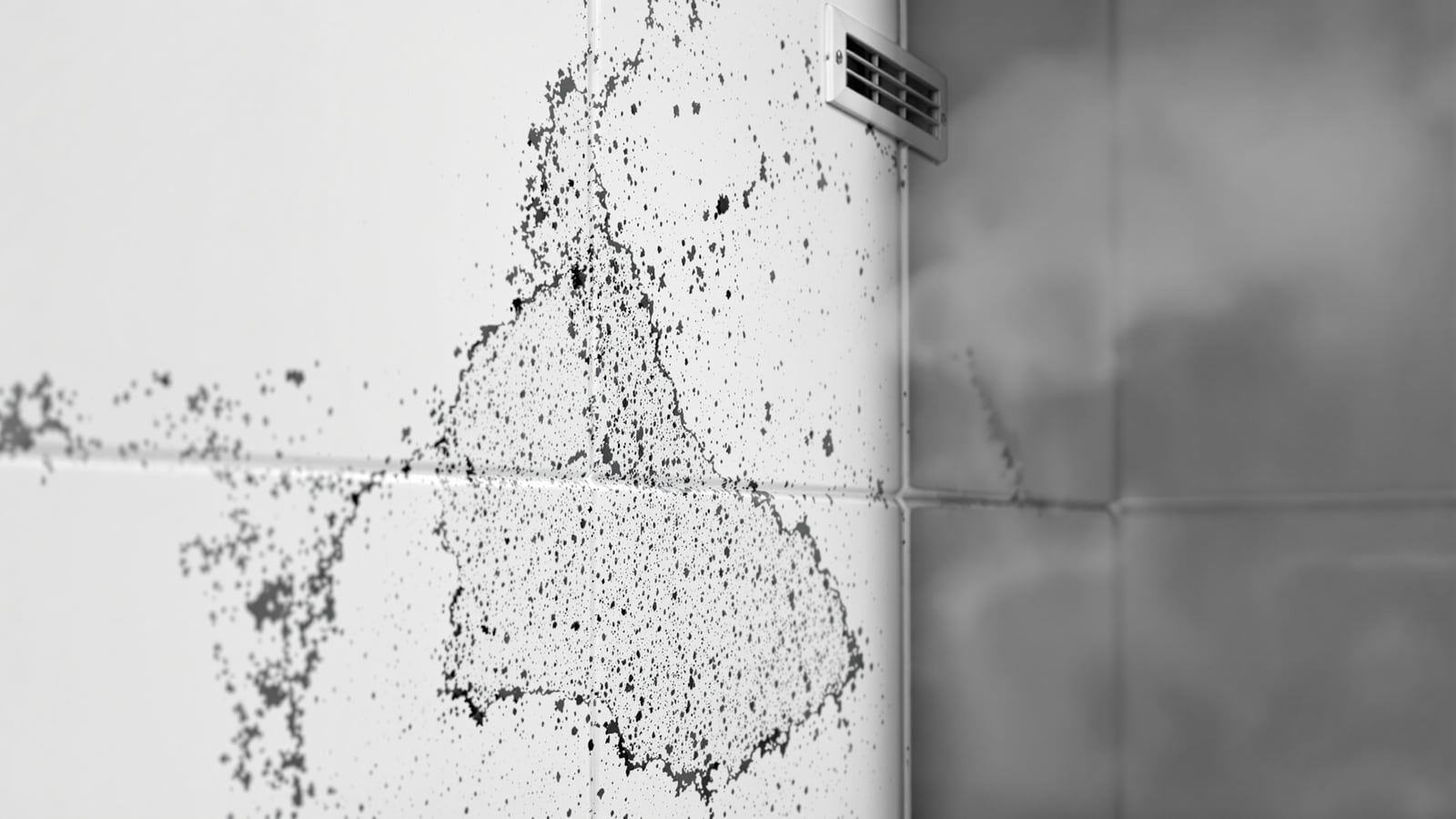
Run a hot shower in a closed Indian bathroom and you can watch the problem form. The mirror greys over, the wall tiles bead with water, and a cold film settles on the ceiling. Do that twice a day for a monsoon month with nowhere for the moisture to go, and the corners bloom black. That fuzzy, musty, dark speckling along the ceiling edge and the grout lines is mould — and it is not a cleaning failure so much as a condensation and ventilation failure. Kill the condensation and the mould has nothing to grow on.
This guide explains exactly why the damp forms, then walks through every fix that actually works in an Indian home — from running the exhaust fan a few minutes past your shower, to anti-fungal paint, to keeping the wet and dry halves of the room apart. It sits inside the Studio Matrx bathroom hub: read it alongside the complete bathroom ventilation guide for India, which is the pillar this page supports.
Mould does not need dirt to grow — it needs water. A bathroom that dries out within an hour of every shower will not grow mould even if you never scrub it. Control the moisture and you have controlled the mould.
Why condensation and mould form in Indian bathrooms
Condensation is simple physics. Warm air holds far more water vapour than cold air. When your hot shower saturates the room, that warm, wet air touches any surface colder than its dew point — a tile, the ceiling, the cistern, the mirror — and instantly gives up its moisture as a film of water. Those surfaces stay wet. Mould spores, which float in every home's air, land on that persistent dampness, and within 24 to 48 hours they germinate. The black-green speckle you see is a mature colony.
Three Indian realities make this worse than in a cooler, drier climate:
- Very hot geyser showers in a small, sealed, hard-tiled room. Ceramic, stone and concrete surfaces stay cool while the air saturates in seconds. Every cold surface becomes a condensation trap.
- Monsoon and coastal humidity. For months the outside air is already near saturation, so opening a window barely helps — you are just swapping saturated indoor air for saturated outdoor air. The margin between room temperature and dew point almost vanishes, so even a mildly warm shower fogs everything.
- Weak or absent ventilation. Many bathrooms have only a small openable window or an undersized exhaust fan, and the fan is switched off the instant the shower ends — long before the room has dried. The moisture simply dwells on cold surfaces for hours.
The cure, then, is any combination of three moves: get the wet air out (ventilation), keep surfaces warmer or drier (heat, wiping, separation), and make the surfaces themselves hostile to mould (the right paint and finishes).
Fix 1: Ventilation and exhaust run-on
The single biggest lever is getting the wet air out of the room before it can condense and dwell. An exhaust fan that runs only while you shower is doing half the job — the air is most saturated in the minutes after you finish, when the hot water on the walls and floor is still evaporating.
- Size the fan properly. A domestic bathroom needs roughly 6 to 8 full air changes per hour. For a typical 1.5 m x 2.1 m x 3 m bathroom (about 9.5 cubic metres), that is a fan rated near 60 to 80 cubic metres per hour. Undersized fans are the commonest reason a "ventilated" bathroom still fogs. Sizing details are in the bathroom exhaust fan guide for India.
- Run it on for 15 to 20 minutes after the shower. This is the trick most Indian homes miss. Either fit a run-on timer switch, or simply leave the fan on until the mirror clears. A timer that keeps the fan going 15 minutes past the light being switched off pays for itself in avoided repainting.
- Give it make-up air. A sealed door starves the fan. A 10 to 15 mm undercut on the door, or a small louvre, lets replacement air in so the fan can actually pull the moist air out.
- Vent to the outside, not the ceiling void. A fan that just dumps humid air into a false ceiling grows mould above your head instead of on the wall. The duct must reach an external wall or shaft.
The full pillar on all of this — natural vs mechanical, window sizing, duct runs — is the bathroom ventilation guide for India.
Fix 2: Keep surfaces dry — wipe down, separate wet and dry
Condensation only becomes mould if the surface stays wet. Two low-tech habits remove that standing water.
- Squeegee and wipe down. Thirty seconds with a rubber squeegee on the glass and tiles, and a quick wipe of the cistern and any horizontal ledge, removes most of the water the fan would otherwise have to evaporate. In a hard-water city it also stops the white scale that mould loves to colonise.
- Separate the wet zone from the dry zone. A shower enclosure or even a simple glass partition and shower curtain keeps the spray and steam in one corner instead of coating the whole room. A wet-and-dry bathroom dries faster because only the shower zone gets soaked. This is one of the highest-value moves for a mould-prone bathroom.
- Leave the door open after. Once you have left, prop the bathroom door open so the drier air of the rest of the home mixes in. A closed, dark, wet room is a mould incubator.
- Fix drips and leaks. A weeping tap, a leaking health-faucet hose or a slow cistern leak keeps a patch permanently wet — the reliable seed point for a colony. Leak-proofing is covered in the bathroom leak prevention guide.
Fix 3: Anti-fungal paint and mould-resistant finishes
If a surface is going to get damp anyway, make it a surface mould struggles to grip. This is where finishes matter.
- Use a washable, anti-fungal bathroom paint. Ordinary distemper and cheap emulsion feed mould. A proper anti-fungal / anti-microbial acrylic paint (Asian Paints, Berger, Dulux and Dr. Fixit all sell bathroom-grade lines) resists colonisation and wipes clean. Full selection guidance is in the waterproof bathroom paint guide for India.
- Protect the ceiling specifically. The ceiling is the coldest, hardest-to-wipe surface and the first to spot black. A moisture-resistant ceiling — a well-vented false ceiling or an anti-fungal painted slab — is worth the spend. See the moisture-resistant ceiling guide for India.
- Seal the grout. Cement grout is porous and holds water. A grout sealer, or epoxy grout in new work, denies mould the damp lines it prefers.
- Prime before you paint. An anti-fungal primer on a previously mouldy wall stops the colony bleeding back through the new coat.
| Finish / surface | Mould resistance | Notes for Indian bathrooms |
|---|---|---|
| Distemper / cheap emulsion | Poor | Feeds mould, cannot be scrubbed — avoid in wet rooms |
| Anti-fungal acrylic emulsion | Good | Washable, standard choice for bathroom walls/ceiling |
| Enamel / oil-based | Good | Very wipeable but can trap moisture behind it if unvented |
| Full-height ceramic/vitrified tile | Excellent | The substrate itself will not grow mould; watch the grout |
| Sealed or epoxy grout | Excellent | Removes the porous line where mould usually starts |
Fix 4: Dehumidifier and heat for the monsoon
When the outside air is saturated for weeks, ventilation alone cannot dry the room — you are venting damp air in. That is when active drying earns its place.
- A dehumidifier is the monsoon workhorse. A small 10 to 20 litre-per-day domestic dehumidifier run in or near a persistently damp bathroom pulls the humidity below the level mould needs (keep relative humidity under about 60 percent). It is the most effective single device for a coastal or monsoon-belt home.
- Gentle heat lifts surfaces above dew point. A heated towel rail, or simply the warmth of a running geyser, keeps tiles and metalwork a few degrees warmer so condensation forms less readily. This is the same principle a demister uses on a mirror.
- Moisture absorbers as a stop-gap. Calcium-chloride tub absorbers (sold as damp-rid pouches) are cheap and useful in a small closed bathroom or a cupboard, though they cannot match a powered dehumidifier.
- Load-shedding reality. If power cuts are common in your area, do not rely solely on an electric fan or dehumidifier — pair them with the passive measures (wiping, separation, an openable window) so the room still dries when the power is off.
Health and indoor air quality
This is not only a cosmetic problem. Persistent bathroom mould degrades the indoor air quality of the whole home, because the bathroom shares air with adjoining rooms every time the door opens.
- Respiratory effects. Mould releases spores and, in some species, irritants that can trigger or worsen allergies, asthma, coughing, a blocked nose and eye irritation — a real concern for children, the elderly and anyone with a respiratory condition.
- The musty smell is a warning. That damp, earthy odour is microbial activity releasing volatile compounds. If a freshly cleaned bathroom still smells musty, there is hidden dampness — behind tiles, above a false ceiling, or in the grout — still feeding mould.
- It signals a building problem. Recurring mould in the same spot often means a genuine defect — failed waterproofing, a leaking pipe, a cold bridge — not just poor housekeeping. Chronic damp on a shared wall can spread to the bedroom side.
If mould keeps returning to the exact same patch within days of cleaning, stop scrubbing and start investigating. There is a source of water there — a leak, a cold bridge or a ventilation dead-spot — and until you fix it, no amount of cleaning will hold.
Cleaning mould you already have — safely
Prevention stops new mould; you still have to remove what is there. Do it safely — disturbing a colony releases a burst of spores.
Practical cleaning notes:
- Protect yourself. Wear a mask and gloves, open the window and run the fan. Never dry-brush — spray the mould first so it does not aerosolise.
- Grout and silicone. Scrub grout lines with a stiff brush and a mould cleaner or a diluted household bleach solution (well ventilated, never mixed with any acid or ammonia cleaner). Badly mouldy silicone sealant is best cut out and re-applied — the mould grows into it and will not scrub out.
- Painted walls. Wipe with a mould cleaner, let dry completely, then repaint with anti-fungal primer and paint. If mould has gone into the plaster over a wide area, the plaster may need to come off.
- Know when to stop. Large areas (more than roughly a square metre or so), or mould that returns within days, mean a building defect — waterproofing, a leak, a cold bridge — and warrant a professional and the bathroom waterproofing guide.
Your monsoon strategy, in order of priority
If you do nothing else, do these, in this order:
1. Run the exhaust fan for 15–20 minutes after every shower — a run-on timer makes it automatic.
2. Squeegee the glass and tiles, and prop the door open so the room dries.
3. Repaint walls and ceiling in anti-fungal bathroom paint and seal the grout.
4. Add a dehumidifier for the peak monsoon weeks in humid regions.
5. Separate wet and dry zones so only the shower corner gets soaked.
Get the first two habits right and most bathrooms stop growing mould entirely. The paint, dehumidifier and separation turn a chronically damp, musty room into one that is simply dry — which is the whole point.
References
- National Building Code of India (NBC) 2016, Part 8 (Building Services), Section 1 — natural and mechanical ventilation requirements for bathrooms and wet areas, including air-change guidance.
- IS 732: Code of Practice for Electrical Wiring Installations — safe wiring and residual current device (RCD/RCCB) protection for exhaust fans, dehumidifiers and heated fittings in wet rooms.
- CPHEEO Manual on Water Supply and Sanitation / Building Drainage — ventilation and moisture-control practice for domestic sanitary spaces.
- Bureau of Indian Standards (BIS) — standards for emulsion and exterior/interior paints and surface coatings relevant to washable, anti-fungal bathroom finishes.
- IGBC / GRIHA residential green building criteria — indoor environmental quality and moisture-management provisions for healthy homes.
Export this guide
Related Guides — Deep-dive reading
How to Remove Bathroom Mould India: Kill Black Mould on Silicone, Grout & Ceilings for Good
A safe, practical Indian playbook for getting rid of black mould and mildew — where it hides, how to scrub it off grout and tiles with diluted bleach or vinegar, when to cut out mouldy silicone instead, and how to stop it coming back through the monsoon.
BathroomsBathroom Leak Repair in India: Find & Fix Common Leaks (2026)
A practical, India-first guide to finding and fixing the everyday bathroom leaks — dripping taps, weeping traps and angle valves, a running cistern, failed silicone seals — plus how to tell a simple fixture leak from a waterproofing failure that needs a professional.
BathroomsWaterproof Bathroom Paint in India: Anti-Fungal, Washable Emulsions for Walls & Ceilings
Which paint survives above the tile line — the moisture-resistant, anti-fungal, washable emulsions that stop peeling and black mould on Indian bathroom walls and ceilings. Sheen, prep, low-VOC and ₹/litre, brand-neutral.
BathroomsRelated Tools — Try Free
Cross-Ventilation Analyzer
Estimate airflow and air changes per hour (ACH) from room size, window areas, layout, and local wind — with NBC 2016 Part 8 compliance check.
Ventilation CalculatorPainting Prep & Quality Checklist
Painting audit — 10 categories, 65+ checkpoints across surface prep, putty, primer, emulsion coats, enamel, external, ceilings, defects, final QC.
Painting QCMonsoon-Readiness Checklist
Pre-rain home audit across 9 categories — terrace, drains, waterproofing, electrical, HVAC, pest, vehicles, documents.
Seasonal Audit