
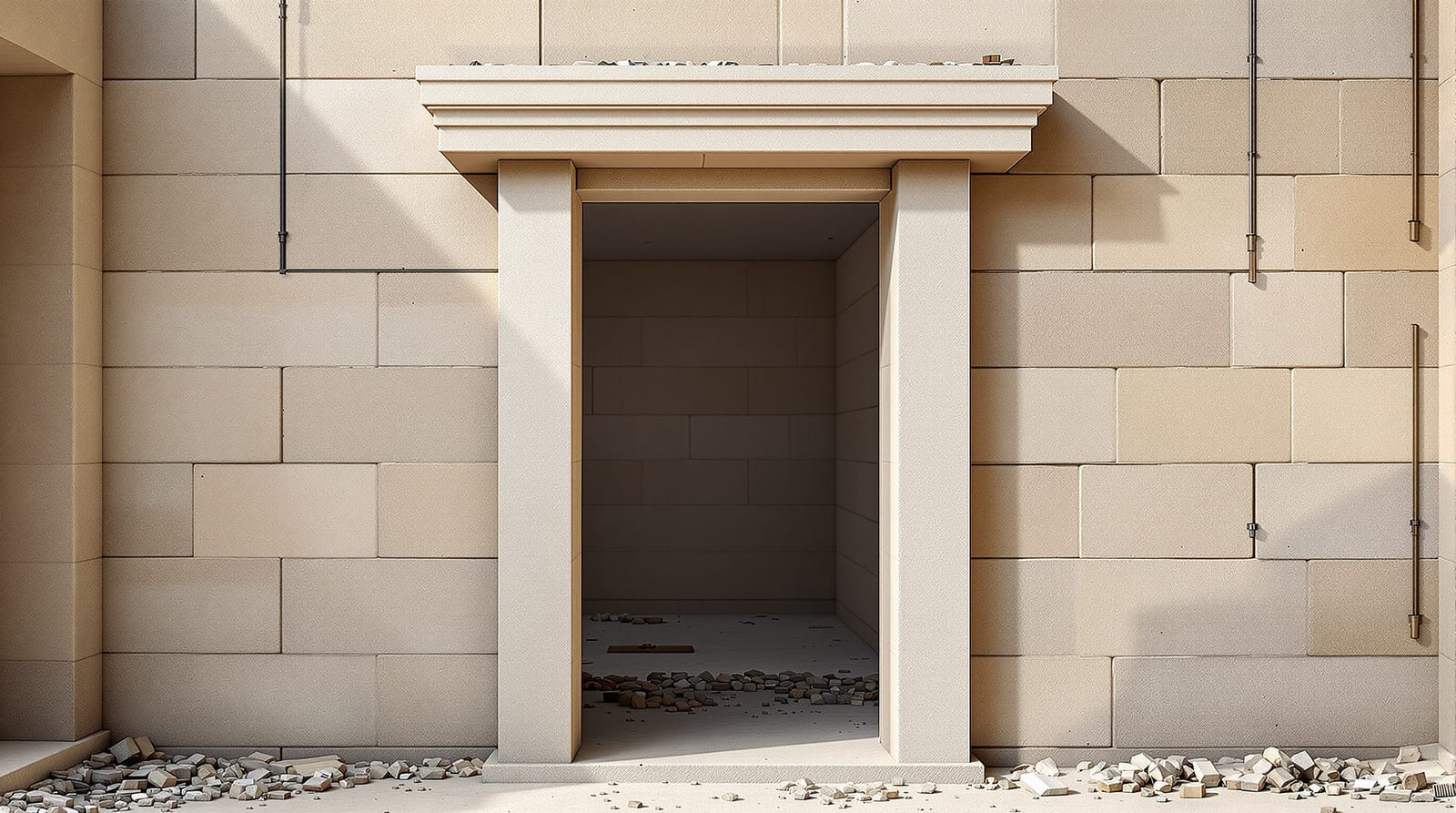
Door Rough Opening in India: Set Out the Opening (India 2026)
How to size a door's structural opening — finished leaf size, frame outer size, the 10-12mm gap each side and the lintel above.
Get the door rough opening right and the rest of the fit is easy: the frame drops in plumb, you grout or foam an even gap all round, and the leaf swings true. Get it wrong and you are either chiselling masonry on a fresh wall or packing a frame so far out that it bows and the leaf never latches. The rough (or structural) opening is the hole you build in the brickwork or block before the chowkhat goes in. It is deliberately larger than the frame: you need a working gap each side to set the frame level, plumb and square, and a tolerance for masonry that is never perfectly true. This guide shows how the three nested sizes — finished leaf, frame outer, rough opening — relate, the 10-12mm packing gap convention, the lintel that must sit over the opening, and worked examples by door size so site engineers and masons can set out before a single brick is laid. For the wider frame story start at the phase pillar, door frames, or the cluster's complete door guide.
The three nested sizes
The single most common measuring error in India is confusing leaf size, frame size and opening size. They nest one inside the other, and each is derived from the one before:
1. Finished leaf (shutter) size — what you actually want to walk through. A standard internal leaf is 750-825mm wide; a main door 900-1200mm.
2. Frame outer size — the chowkhat's overall height and width. The leaf sits inside the frame's rebate, so the frame inner is the leaf plus working clearances (about 3mm at head and stiles, an undercut at the bottom); the frame outer is that plus the timber/profile section on each side.
3. Rough / structural opening — the masonry hole. It equals the frame outer size plus a packing/grout gap of about 10-12mm on each side (so 20-24mm added to the total width, and 10-12mm added at the head where a sill is omitted).
So the chain runs leaf -> frame inner -> frame outer -> rough opening, adding material at each step. Build the opening first and reverse-engineer a frame to fit, and you will always be packing or trimming. The clean way is to fix the leaf size, derive the frame from the door frame sizes chart, then add the gap. The clearances that set the leaf-to-frame margins live in door clearances and tolerances, and the floor margin in door undercut clearance.
Why the gap each side
The 10-12mm packing gap is not slack to be avoided — it is the working space that lets a frame be set true inside a wall that is not. Masonry openings are rarely plumb, level or square to the millimetre, so you set the frame independently with wedges and packers, then fill the gap. Specifically the gap lets you:
- Plumb the jambs and level the head even when the brickwork leans.
- Pack behind the hinge and lock points so the frame does not bow when screwed or grouted.
- Absorb plaster thickness lapping onto the frame edge.
- Give the grout or PU foam something to key into.
For a timber chowkhat the gap is filled with packers plus low-expansion PU foam, or grouted; for a steel frame it is back-filled (grouted) with 1:3 cement mortar or concrete. Larger or out-of-true walls may need 15mm a side; tight, accurate block walls can run 8-10mm. As a rule of thumb, design to 10-12mm a side and let the site take up the rest in packing. How the frame is held while you grout is covered in door frame fixing methods and the back-fill in door frame grouting.
| Element | Rule of thumb | Why |
|---|---|---|
| Packing gap each side (jambs) | 10-12 mm | Plumb & square the frame; pack behind fixings |
| Gap at head | 10-12 mm | Level the head; absorb masonry tolerance |
| Gap at sill / floor | 0 (frame sits on DPC/floor) | Frame foot bears on stone/DPC base block |
| Tight true blockwork | 8-10 mm | Less correction needed |
| Rough / leaning masonry | 12-15 mm | More room to true the frame |
How to set out the opening before building
The opening is set out as the wall is built, not chased afterwards. The mason needs the rough opening width and height and the sill level marked from the finished-floor datum. The sequence:
1. Fix the leaf size, derive the frame outer size, then compute the rough opening = frame outer + 10-12mm each side and + 10-12mm at the head.
2. Mark the sill / floor datum. The frame foot sits on a DPC or a stone/RCC base block, not bare floor — so set the opening height from the finished floor level, allowing for the floor finish (tile/marble) thickness.
3. Build the jambs plumb to the marked width, checking with a plumb line each course. Leave the opening, do not infill.
4. Cast or place the lintel over the opening before building above it (see below).
5. Check diagonals for square and the head for level once the lintel is set.
Doing this with the frame on hand is ideal: many sites build the masonry around a temporary or actual frame propped plumb, which guarantees fit. Where the frame comes later, hold the rough-opening dimensions tightly. For the full on-site set-out walk through measuring for a door and the prep checklist in door opening prep.
The lintel over the opening
Never leave a door opening without a lintel (RCC header) carrying the masonry above it. The lintel must bear on solid masonry 150-200mm each side of the opening — so the wall length needs to accommodate the rough opening plus the bearing on both sides. A common mistake is a lintel cast exactly to the opening width with no bearing, which cracks the wall over the door. The lintel depth follows the structural design and span, but for ordinary residential doors a 100-150mm RCC band lintel is typical. The full sizing and bearing rules are in door lintel requirements; set-out plumb and level checks in door frame plumb and level.
Worked examples by door size
Using a 100x62mm timber section (62mm face each jamb is inside the rough opening) and a 10-12mm packing gap each side, here is how finished sizes convert. Note: the frame outer width = leaf + clearances + two jamb faces; in practice for a single-rebate timber chowkhat the frame outer is roughly the nominal opening size, so the rough opening = nominal size + ~24mm width / + ~12mm height as a working rule.
| Door | Finished leaf (mm) | Frame outer (mm) | Rough opening W x H (mm) | Wall length incl. lintel bearing |
|---|---|---|---|---|
| Bathroom | 700 x 1980 | 700 x 1980 | 724 x 1992 | ~1024-1124 mm |
| Internal bedroom | 800 x 2050 | 800 x 2050 | 824 x 2062 | ~1124-1224 mm |
| Single main | 900 x 2100 | 900 x 2100 | 924 x 2112 | ~1224-1324 mm |
| Wide / double main | 1200 x 2100 | 1200 x 2100 | 1224 x 2112 | ~1524-1624 mm |
These assume the modular/frame number already describes the opening size (common in Indian catalogues, where 9 x 21 means a 900 x 2100mm opening). Always confirm whether your supplier quotes the leaf or the frame/opening size before setting out — a 24mm error compounds into a packing or trimming problem. Let the arithmetic be done for you with the door rough opening calculator, and check the working margins with the door clearance checker.
Finally, India's realities still apply at the opening stage: provide a DPC under the frame foot, anti-termite treat any timber in ground contact, and prefer WPC, PVC, RCC or aluminium frames in bathrooms and wet zones. A true opening, set out plumb and square with a properly borne lintel, is what lets a skilled carpenter hang a leaf that swings sweetly for decades.
Frequently asked questions
How much bigger should the rough opening be than the door frame?
Leave about 10-12mm of packing/grout gap on each side — roughly 20-24mm added to the total width and 10-12mm at the head. So a 900mm-wide frame needs a rough opening around 924mm wide. The gap lets you set the frame plumb, level and square before grouting or foaming it in.
What is the rough opening for a standard 900x2100 door?
For a single main door with a 900 x 2100mm frame, set a rough opening of about 924 x 2112mm (frame outer + 10-12mm each side and at the head). Confirm whether your supplier quotes the leaf or the frame size first — they differ.
Do I need a lintel over every door opening?
Yes. Every door opening needs a lintel (RCC header) to carry the masonry above, and it must bear 150-200mm on solid masonry each side. A lintel cast exactly to the opening width with no bearing will crack the wall over the door.
Should I build the wall opening first or fit the frame first?
The cleanest method is to set out the opening from the frame size and ideally build the masonry around the actual or a temporary frame propped plumb. Building the opening blind and reverse-fitting a frame usually leads to packing or trimming.
What is the difference between rough opening and finished size?
The finished (leaf) size is what you walk through; the frame outer wraps the leaf with its rebate and section; the rough/structural opening is the masonry hole, equal to the frame outer plus the 10-12mm packing gap each side. They nest leaf -> frame -> opening, growing at each step.
Export this guide
Related Guides — Deep-dive reading
Measuring for a Door: Opening Sizes & Checks (India 2026)
How to measure a door opening in India — three width and height points, diagonals, plumb and level — so the carpenter cuts it right the first time.
Home Doors & EntrancesDoor Opening Preparation Before Fitting (India 2026)
How to prep a door opening before the chowkhat goes in — checking size, plumb and square, confirming the lintel, laying DPC and marking holdfasts.
Home Doors & EntrancesDoor Frame Anchoring to Masonry: Holdfasts (India 2026)
How to anchor timber, steel and WPC door frames into brick, concrete block, AAC and RCC walls — fixings, edge distance, loads and India site realities.
Home Doors & EntrancesRelated Tools — Try Free
Door Rough Opening Calculator
Work out the frame outer size and rough/structural opening for any finished door, with the packing gap and lintel.
Opening CalculatorDoor Size Calculator
Get the standard door and frame size by room, with swing clearance and the accessible clear-width check.
Door ToolDoor Clearance Checker
Check your door's measured gaps and undercut against the recommended margins for normal, fire, bathroom and external doors.
Clearance Checker