
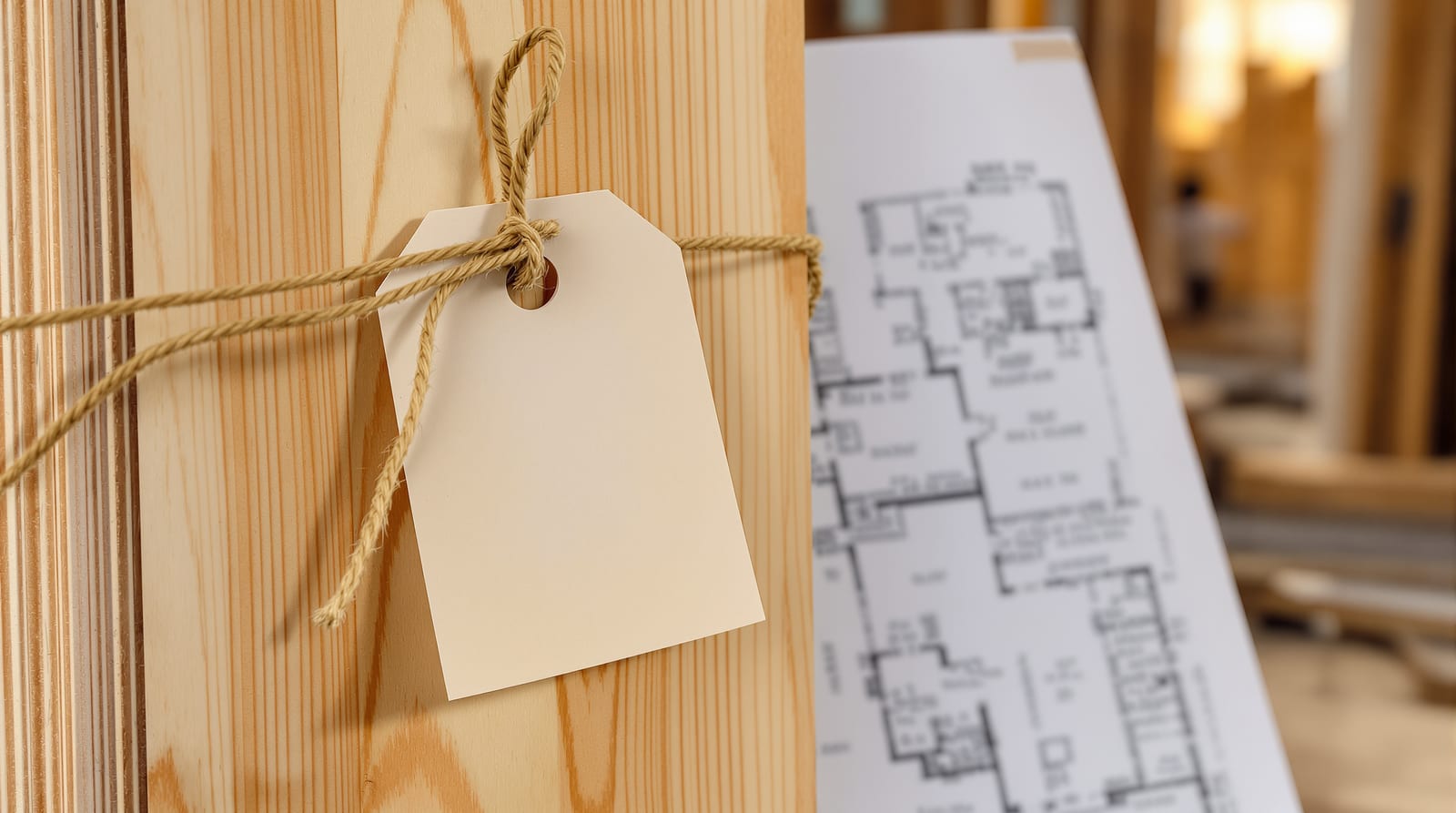
Door Numbering & Tagging on Site: A Project Guide (India 2026)
How to reference, number and tag every door (D01, D02…), key the schedule to the floor plan and avoid mix-ups on an Indian project.
A door schedule is only as reliable as the numbers that link it to the building. Door numbering and tagging is the unglamorous system that lets a drawing say "D-1-04 is a 90-minute fire-door set, right-hand, with closer and seals," the storekeeper find the right leaf in a stack of forty, and the carpenter hang it in the correct opening. Get the numbering convention right at the drawing stage and tag the physical leaves and frames on delivery, and a chaotic Indian site — mixed-skill labour, doors arriving in batches, openings that look identical from the corridor — stays under control. Get it wrong and you fit an external-grade door internally, hang the fire door in a non-rated opening, or hand over a building whose keys nobody can match to a room.
This guide covers the conventions, the tagging discipline on delivery, keying the door schedule to the floor plan, and carrying the numbers through to facilities asset tags. It complements the schedule itself — the schedule is the what; numbering is the which.
Why door numbering and tagging earns its own discipline
On a small flat you can point at a door. On a villa, an apartment block or a commercial fit-out with dozens of openings, you cannot. Door numbering and tagging gives every opening a unique, unambiguous identity that follows it from drawing board to delivery lorry to opening to the facilities register years later. Three things break without it: deliveries get mixed up (similar flush leaves are near-impossible to tell apart by eye), the wrong specification lands in an opening (an internal leaf where a fire or external set was scheduled), and handover documentation cannot be reconciled — the as-built schedule, the key handover register and the physical building disagree.
The single rule that prevents all of this: one opening, one number, used everywhere. The same reference appears on the floor plan, in the door schedule, in the ironmongery schedule, on the physical tag, on the key fob and in the facilities asset register. When all five agree, mix-ups have nowhere to hide. CPWD specifications and IS 1200 govern measurement and workmanship on contract works; a clean numbering scheme is what makes that measurement auditable door by door.
Choosing a numbering convention
There is no single Indian standard for door numbers, so pick a convention, write it into the drawing notes, and apply it without exception. The goal is a reference that is unique, sortable and human-readable — ideally one that tells you the floor at a glance.
| Convention | Example | Best for | Trade-off |
|---|---|---|---|
| Simple sequential | D01, D02, D03… | Small homes, single floor | No floor/zone information; renumbering pain if doors added |
| Floor-coded | 1-D-04 (floor 1, door 04) | Multi-storey, apartments | Slightly longer; needs a floor convention |
| Room-derived | D-LR (living), D-MBR | Small bespoke villas | Breaks when two doors serve one room |
| Grid / zone coded | A3-D02 (zone A3) | Large commercial, campuses | Needs a zone plan everyone shares |
| Type-prefixed | FD-01 (fire), ED-02 (external) | Fire/compliance audits | Mixes type into the ID; harder to renumber |
For most Indian residential and small-commercial projects, a floor-coded sequential scheme (for example '0-D-01' for ground floor, '1-D-01' for the first floor) is the sweet spot: it is short, sorts cleanly, and a glance tells you where the door lives. Reserve type prefixes for separate registers rather than the primary number — keep a fire-door register that lists which numbered doors are FD30/FD60, but let the door itself carry its plain sequential number so renumbering never disturbs it. Decide and record the handing alongside the number using door handing and swing so the schedule's handing column and the tag never contradict.
Rules that keep a scheme robust
- Number every opening, including cupboards, ducts and risers — a missing number is where mistakes breed.
- Never reuse a retired number within the project; if a door is deleted, leave the gap.
- Zero-pad (D01, not D1) so numbers sort correctly in spreadsheets and on site.
- Fix the convention before the first schedule issue — renumbering mid-project is the most common cause of drawing-to-site drift.
- Show the number on the plan inside or beside the door swing, not floating in the room where it could belong to either of two doors.
Keying the schedule to the floor plan
The number is the hinge between the drawing and the table. On the architectural plan, each door swing carries its reference in a small symbol — a circle, hexagon or rectangle tag — placed at the opening. The door schedule then lists that exact reference as its first column, so a reader can move from plan to table and back without ambiguity.
Produce a door key plan — the floor plan stripped back to walls, door swings and number tags — as a one-page reference everyone uses: the storekeeper, the carpenter and the inspector. When the plan tag, the schedule's first column and the physical tag all read 'D03', there is no room for a mix-up. This key plan also drives trades coordination, because the electrician fitting a smart lock and the painter doing final coats can both call out the same reference.
Tagging the physical doors and frames on delivery
Numbering on paper is half the job; the other half is putting the number on the timber. Doors arrive from the factory or joinery in batches, and a stack of forty primed flush leaves is genuinely indistinguishable by eye. Tag them the moment they are received — this is the receiving discipline that ties into door delivery and storage.
| What to tag | Method | Place it |
|---|---|---|
| Leaf | Adhesive label + indelible marker on a protected face | Top edge or hinge edge, never the show face |
| Frame / lining | Marker or tied tag | Head of the frame |
| Fire-door set | Durable label + entry in fire-door register | Top edge; keep factory cert label intact |
| Ironmongery pack | Bagged & labelled with the door number | Stored with or near the leaf |
| Glazing / vision panel | Note on the leaf tag | — |
Tag the leaf and its matching frame with the same number so the set stays together — a tested fire-door set must not be split, and mixing a leaf with the wrong frame can void its rating. Write the number where it will survive handling but not show after finishing: the top edge is ideal, as it is trimmed minimally and hidden once hung. For fire doors, never remove or paint over the factory certification label on the leaf edge — it is the evidence of the rating and is required at inspection per IS 3614 and NBC 2016 life-safety provisions. Bag and label each door's ironmongery set with its number too, so the right closer, lever and hinges follow the right leaf. Use the door fitting tool kit builder to make sure the gang has marking and labelling supplies on site before the first delivery lands.
Avoiding mix-ups on site
- Receive against the schedule — tick each numbered door off the delivery note; flag shortfalls or wrong specs before signing.
- Store by number, grouped by floor/zone so leaves go to the right area in one trip.
- Re-tag after primer/paint if a label is lost — never let an untagged leaf sit in the stack.
- Match the ironmongery bag to the leaf number before the fitter starts — wrong hardware is a classic, avoidable swap.
- Verify the opening before hanging — read the plan tag and the leaf tag aloud; for fire and external doors this check is a life-safety must.
Carrying numbers into facilities asset tags
The number does not retire at handover. A well-numbered project hands the facilities team an asset register in which each door's reference unlocks its history: specification, fire rating, ironmongery set, keying, warranty and maintenance schedule. Carry the construction number straight into the facilities asset tag — a durable plate or QR/barcode label fixed discreetly (often the top of the frame or the hinge edge) — so a maintenance request for "door D-1-04 won't latch" maps instantly to its as-built record.
This is where numbering pays off for the building's whole life: the as-built documentation records the final, deviation-corrected schedule against each number; the key handover register keys master and sub-master keys to the same references; and during the defect liability period (commonly 6-12 months in India) every snag is logged against a door number so rectification is traceable. For fire doors, the numbered register is what makes the statutory periodic inspections in fire-door maintenance and inspection auditable. Generate the keying side of this with the door key schedule builder, and keep the whole numbering logic consistent with the complete door guide.
Frequently asked questions
How should I number doors on a building plan?
Adopt one convention and apply it to every opening. For multi-storey work, a floor-coded sequential scheme such as '1-D-04' (first floor, door 04) is robust — it is short, sorts cleanly and tells you the floor at a glance. Zero-pad the numbers (D01, not D1), number cupboards and risers too, and never reuse a retired number.
What does D01, D02 mean on a door schedule?
They are simple door reference numbers — D for door, then a sequential count. 'D01' is the first door, 'D02' the second, and so on. The same reference appears on the floor-plan tag, the schedule row and the physical leaf, so a reader can move from drawing to table to building without ambiguity. Larger projects add a floor or zone code in front.
Where do I physically tag a door so the mark doesn't show?
Write the number on the top edge of the leaf, which is trimmed minimally and hidden once the door is hung, or on the hinge edge — never the show face. Tag the matching frame at its head with the same number. For fire doors, leave the factory certification label intact and never paint over it.
How do I stop doors getting mixed up on site?
Tag every leaf and frame on delivery, store them grouped by floor and number, match each door's bagged ironmongery to its number, and verify the opening before hanging by reading the plan tag and leaf tag together. Receiving each numbered door against the schedule on delivery catches wrong specifications before they reach an opening.
Do door numbers carry through to the finished building?
They should. Carry the construction reference into the facilities asset tag — often a QR or barcode plate at the top of the frame — so the door's as-built specification, fire rating, keying and warranty stay linked to one number for the building's life. This also keys the defect-liability snag log and statutory fire-door inspections to the same reference.
Is there an Indian standard for door numbering?
There is no single mandatory format; conventions are set per project and recorded in the drawing notes. CPWD specifications and IS 1200 govern measurement and workmanship on contracts, and a clean, consistent numbering scheme is what makes that measurement and the fire-door register auditable. Fix your convention before the first schedule issue and apply it without exception.
Export this guide
Related Guides — Deep-dive reading
Door Trades Coordination: Fitting Sequence on Site (India 2026)
How carpenter, mason, electrician and painter hand off work in the right order so doors fit without rework on an Indian site.
Home Doors & EntrancesDoor Delivery & Storage on Site: A Fitter's Guide (India 2026)
Receive, check and store doors flat, dry and acclimatised on an Indian site so leaves never warp, swell or arrive damaged before fitting.
Home Doors & EntrancesDoor Schedule Guide: Reading & Preparing One (India 2026)
What a door schedule is, every column explained, and how this single table controls door procurement, fitting and snagging across an Indian project.
Home Doors & EntrancesRelated Tools — Try Free
Fire Door Rating Checker
See the likely fire-door rating (30/60/90/120 min) and components a location needs per IS 3614 / NBC — guidance, confirm with your architect.
Compliance ToolFull-Room BOQ — Living, Bedroom, Kitchen, Bath
Room-wise BOQ across living, bedrooms, kitchen, utility, and bathrooms with line-item pricing.
Full-Room BOQElectrical Safety & Load Audit
Home electrical audit — 10 categories, 65+ checkpoints across earthing, RCCB, MCB, wiring, switchboards, appliance circuits, DG/inverter backup.
Safety Audit