
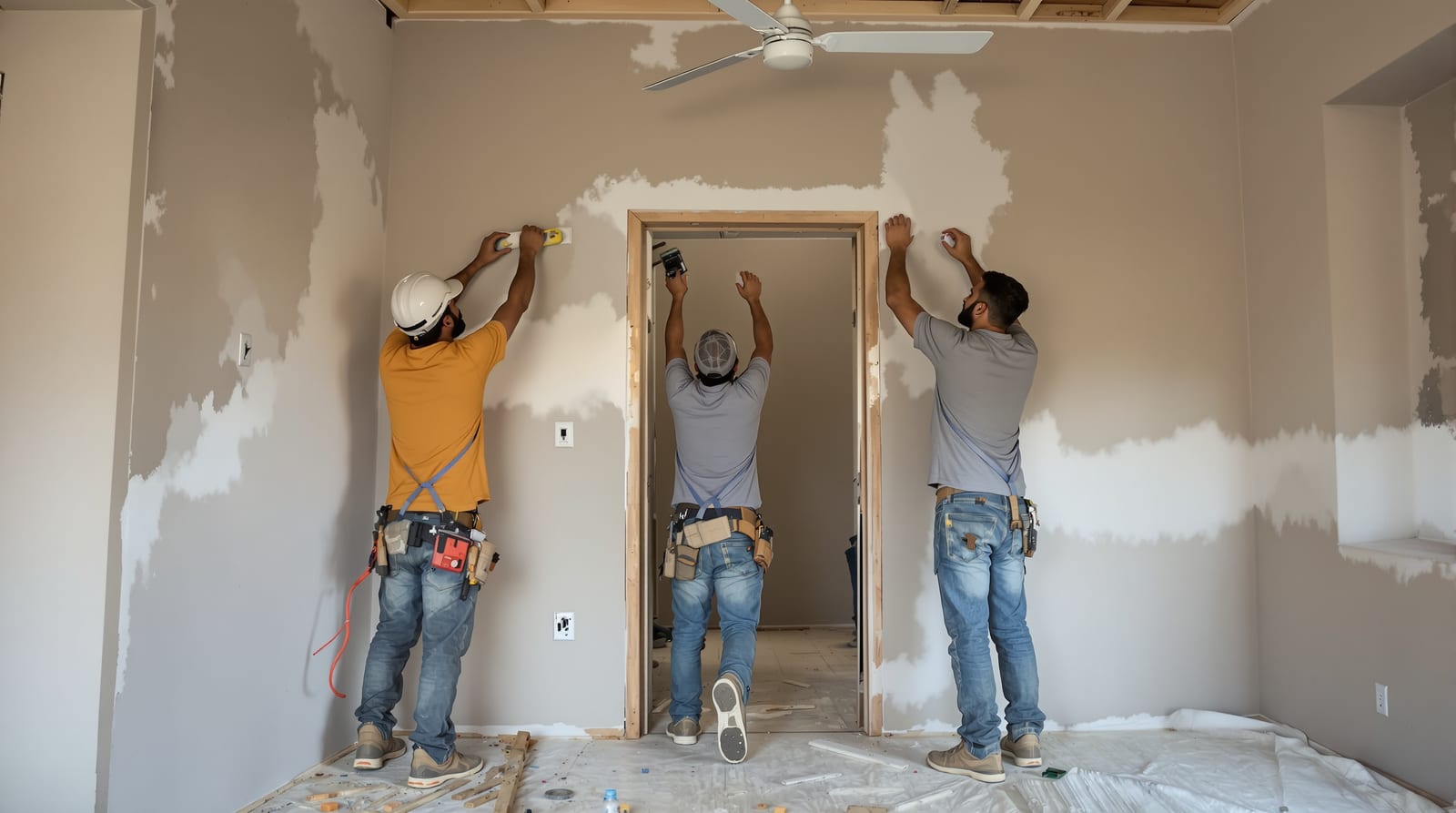
Door Trades Coordination: Fitting Sequence on Site (India 2026)
How carpenter, mason, electrician and painter hand off work in the right order so doors fit without rework on an Indian site.
Most door rework on an Indian site is not a craft failure — it is a sequencing failure. A leaf hung before the plaster dries swells and binds; a smart lock fitted before the electrician runs the cable means a chased-out leaf or surface trunking; a closer mounted before the final coat traps paint runs around the arm. Door trades coordination is the discipline of getting the carpenter, mason, electrician and painter to hand off in the right order, at the right time, so each door reaches snagging clean and first-time. This guide sets out the proven trade sequence — frame → plaster/paint primer → hang leaf → ironmongery → final finish → snag — who owns each step, where the handoffs go wrong, and how to programme it on a real site with mixed-skill labour, dust, monsoon humidity and power cuts.
This is the site-management layer above the craft of fitting door hardware and setting out doors: the order and timing that let those skilled tasks succeed.
Why door trades coordination decides the snag list
A door touches four trades and two wet processes. The carpenter fixes the frame and hangs the leaf; the mason plasters around the frame and makes good; the electrician brings power to powered hardware — smart locks, electric strikes, maglocks, door closers with hold-open, access control; the painter primes, fills and finishes. Each works on the same opening, and the order they arrive in determines whether the door is right or has to be lifted off and re-cut. Good door trades coordination front-loads the decisions — cable routes, hardware schedule, finish spec — so nobody works blind and nobody undoes another trade's work.
The single most expensive mistake is hanging or hardware-fitting a leaf into a wet opening. India's wet trades — plaster, screed, masonry — release a lot of moisture, and a flush or solid leaf hung against drying plaster will swell, bow or bind within days. The rule is simple: fit doors after the wet trades are complete and the building has dried, and store leaves flat, off the floor and acclimatised in the meantime, as covered in door delivery and storage on site. Get the timing wrong and no amount of planing fixes a leaf that keeps moving.
The standard trade sequence
The sequence below is the backbone. Read down the column: each step must substantially finish before the next begins for that opening, though across a building the gangs overlap (carpenter framing room 10 while the painter primes room 4).
| Step | Lead trade | Key task | Handoff out | Common rework if skipped |
|---|---|---|---|---|
| 1. Frame fix | Carpenter | Fix frame plumb, level, square; correct backset to wall | To mason | Out-of-plumb frame → leaf binds, gaps uneven |
| 2. Make good | Mason | Plaster/render around frame; fill packing gaps | To electrician | Frame moves under plaster pressure |
| 3. First fix wiring | Electrician | Run cable for smart lock / maglock / powered closer to frame head or hinge stile | To painter | Surface trunking or chased leaf later |
| 4. Dry-out + prime | Painter / mason | Building dries; prime frame and leaf | To carpenter | Leaf swells if hung wet |
| 5. Hang leaf | Carpenter | Hang on hinges; set clearances and reveal | To carpenter (hardware) | — |
| 6. Ironmongery | Carpenter + Electrician | Fit lock, lever, closer, bolts; terminate powered hardware | To painter | Powered hardware re-cut if cable wrong |
| 7. Final finish | Painter | Final coat / polish; mask hardware | To carpenter (snag) | Paint runs around closer arm, lever |
| 8. Snag | Site engineer | Punch list; rectify defects | To handover | Defects reach the client |
Where the wet trades sit
The golden line is between steps 4 and 5. All wet trades — plaster, screed, masonry — must be complete and the opening dry before the leaf is hung. Priming the leaf and frame seals them against residual moisture. CPWD and IS 1200 govern measurement and workmanship on contracts; on a programme they translate to: don't measure-up or hang against fresh plaster.
Who does what: the handoff map
The diagram shows the four trades on a timeline and where each hands off. The dependencies — not the calendar — drive the order.
Carpenter
Owns the frame, the leaf and most mechanical ironmongery. The carpenter fixes the frame plumb and square (see door frame plumb and level), hangs the leaf after dry-out, sets clearances, and fits hinges, lock, lever and bolts. On powered hardware the carpenter cuts the mortise and mounts the case but coordinates the wiring with the electrician.
Mason
Plasters and makes good around the fixed frame, fills packing gaps behind the jambs, and forms the threshold. The mason's risk is pressing a frame out of plumb while plastering, so the frame must be braced. After this trade, no wet work should touch the opening.
Electrician
The critical early dependency for any smart lock, electric strike, maglock or powered closer. The cable run — to the frame head for a maglock, to the hinge stile via a power transfer hinge for a mortise smart lock — must be set out at first fix, before plaster closes the wall and long before the leaf is hung. If the electrician arrives after the carpenter, the result is surface trunking or a chased leaf. For maglocks and access control on escape routes, the install must preserve NBC 2016 free egress — fail-safe (power-to-lock) devices that release on alarm or power loss, with a clearly marked manual release.
Painter
Primes frame and leaf before hanging (sealing against moisture), then returns for the final coat or polish after the ironmongery is fitted and masked. Painting before hardware risks the hinge knuckles and lock case being painted shut; final-coating before hardware means masking around a fitted lever and closer arm — fiddly but correct, because the finish must be last.
Coordinating powered and fire-rated hardware
Two categories break the simple sequence and need extra coordination meetings.
Powered hardware (smart locks, electric strikes, maglocks, hold-open closers) couples the carpenter and electrician. Agree at first fix: cable type and route, power-transfer method (transfer hinge vs concealed loop), the controller location, and the fail-safe/fail-secure behaviour. On any escape door the device must fail-safe (release on power loss) to satisfy NBC free egress; a maglock that fails locked on a fire escape is a life-safety defect, not a snag.
Fire-door sets must be installed as a tested set — leaf, frame and ironmongery as certified — with gaps ≤3mm (4mm max) around the leaf, continuous intumescent and smoke seals in the rebate, fire-rated hinges, self-closing, and "Fire door — keep shut" signage. Coordinate so no trade compromises the set: the mason must not over-fill and breach the frame seal, the electrician must not bore an oversize cut-out through the core, and the painter must not paint over the intumescent. See fire-door installation compliance and IS 3614 / NBC 2016.
Programming it on site: timing and rework prevention
A skilled carpenter hangs and fits roughly 4-6 simple flush doors a day, fewer for heavy, fire or glazed leaves — use this to phase the gangs so trades flow without colliding. The table is a coordination checklist for the site engineer.
| Coordination control | Action | Prevents |
|---|---|---|
| Pre-start trade meeting | Walk the door schedule with all four trades | Blind work, wrong cable routes |
| Issue door + ironmongery schedule | Every door numbered, hardware listed | Wrong leaf, wrong handing |
| Hold the dry-out gate | No hang until plaster/screed dry | Swollen, binding leaves |
| First-fix wiring before plaster | Electrician sets cable routes early | Surface trunking, chased leaves |
| Hardware before final finish | Fit and mask, then final coat | Paint runs, painted-shut hinges |
| Protect hung leaves | Edge protection, no leaning materials | Chips, scratches, bows |
| Sample door sign-off | Approve one opening end-to-end | Repeating a defect across the batch |
| Stage snagging | Snag each floor as it completes | Defects reaching handover |
Use the door fitting time estimator to size the carpenter gang against the door count, and the ironmongery schedule builder to issue every trade the same hardware reference. Keep the whole sequence aligned with the complete door guide, and where mixed-skill labour needs supervision, bring in an experienced lead carpenter for the first openings. When the sequence holds, door snagging becomes a short punch list rather than a rebuild.
Frequently asked questions
What is the correct sequence for fitting doors on site?
Frame fix → plaster and make good → first-fix wiring for powered hardware → dry-out and prime → hang leaf → fit ironmongery → final paint or polish → snag. The non-negotiable rule is that all wet trades must be complete and the opening dry before the leaf is hung, or the leaf will swell and bind.
When should the electrician be involved in door fitting?
At first fix, before plastering closes the walls. Smart locks, electric strikes, maglocks and powered closers all need cable routed to the frame head or hinge stile, planned with the carpenter. Bringing the electrician in after the leaf is hung forces surface trunking or a chased leaf — avoidable rework.
Should doors be painted before or after the hardware is fitted?
Prime the frame and leaf before hanging to seal against moisture, then apply the final coat or polish after the ironmongery is fitted and masked. Painting hardware before fitting risks hinges and lock cases being painted shut; the visible finish must always be the last operation.
How do I stop doors swelling and binding on a humid Indian site?
Finish the wet trades first, let the building dry, store leaves flat and acclimatised off the floor, and prime all faces and edges before hanging. Never hang a leaf against fresh plaster. In monsoon conditions allow extra dry-out time and check the leaf is flat before fitting hardware.
Who is responsible for coordinating door trades on site?
The site engineer or contractor owns the programme, but coordination starts with a pre-start meeting walking the door and ironmongery schedule with the carpenter, mason, electrician and painter. The schedule keys every door, so each trade knows the leaf, handing, hardware and finish before starting.
How does trade coordination affect fire-door and egress compliance?
A fire-door set must be installed as a tested set with no trade compromising it — no over-filled seals, oversize cut-outs or painted-over intumescent. Powered locks and maglocks on escape doors must fail-safe and release on power loss for NBC free egress. Coordinating these at first fix keeps them as life-safety items, not afterthoughts.
Export this guide
Related Guides — Deep-dive reading
Fail-Safe vs Fail-Secure Locks: The Guide (India 2026)
Why fail-safe vs fail-secure is the single most important access-control decision, and how to get it right for every door.
Home Doors & EntrancesFire-Door Installation Compliance: India 2026 Fitting Guide
Getting a fire door right at fitting — certified set, gaps under 3mm, continuous seals, fire-rated hinges, self-closing and signage to NBC 2016 and IS 3614.
Home Doors & EntrancesDoor Delivery & Storage on Site: A Fitter's Guide (India 2026)
Receive, check and store doors flat, dry and acclimatised on an Indian site so leaves never warp, swell or arrive damaged before fitting.
Home Doors & EntrancesRelated Tools — Try Free
Emergency-Egress Checker
A life-safety self-check that access-controlled doors on escape routes still let people out in an emergency.
Egress CheckFire Door Rating Checker
See the likely fire-door rating (30/60/90/120 min) and components a location needs per IS 3614 / NBC — guidance, confirm with your architect.
Compliance ToolHandover Punch List
Room-by-room defect tracker for final handover with severity, owner, and close-out date.
Punch List