
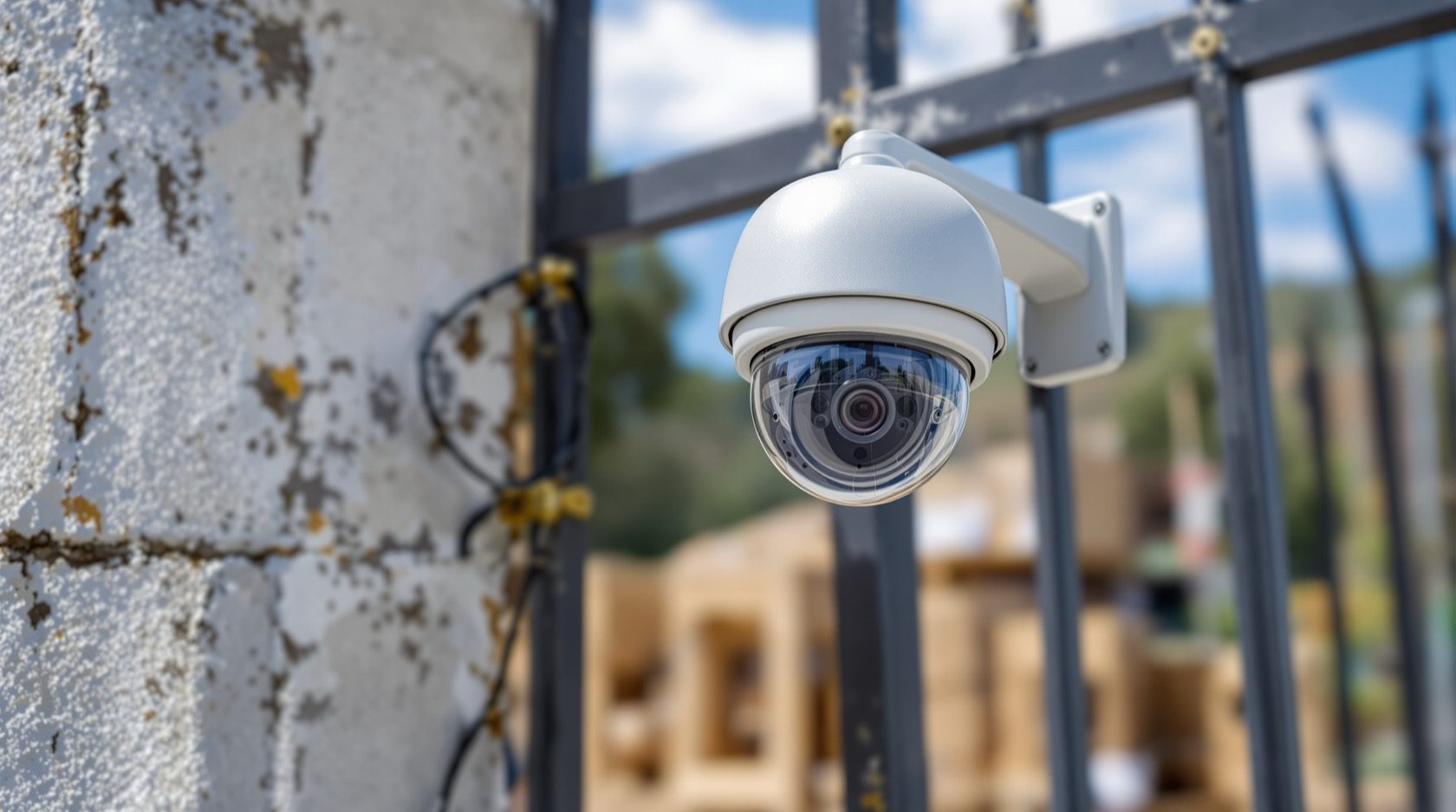
CCTV Vandal Proof IK Rating in India (2026): What IK08 and IK10 Really Mean
Decode the IK impact-energy scale, learn where a vandal-resistant camera actually earns its cost, and how metal housing, polycarbonate bubbles and tamper-proof mounting keep a reachable camera working.
A camera can have a razor-sharp sensor and perfect night vision and still be useless if someone can walk up and knock it off the wall. That is what the cctv vandal proof ik rating is about: not the picture, but the housing around it, and how much of a kick, a thrown stone or a swung tool it can take and keep working. This guide decodes the IK scale, shows where it genuinely matters on an Indian plot, and where paying for it is money you could spend better elsewhere.
This is the impact-and-tamper companion in Studio Matrx's CCTV hub. It sits alongside the weather side of the same coin — see the weatherproof / IP rating guide for the water and dust code — and the software side of protection in the tamper detection guide, which alerts you when a camera is blocked, sprayed or moved. IK is the physical toughness of the shell; those two are its natural partners.
Scope & safety. This guide helps you choose and brief an installer. Mounting cameras at height, drilling into masonry, running cabling and any mains-electrical work belong to licensed professionals. A camera housing must never obstruct a window, door or fire-escape route, and cameras belong only on your own property and shared areas — never bathrooms, bedrooms or changing areas, and positioned to respect neighbours and the spirit of the Digital Personal Data Protection Act, 2023.
What the IK rating actually measures
IK stands for impact protection. It is part of the same international (IEC) family of codes as the IP weatherproofing rating, and it answers one narrow question: how much impact energy can this enclosure absorb without failing? The scale runs from IK00 (no rating) up to IK10, and each step maps to a defined amount of impact energy, measured in joules (J) — roughly, mass dropped from a height onto the housing under lab conditions.
The three numbers worth memorising for cameras:
- IK08 — about 5 J. Withstands a firm knock or a thrown object. Fine for a camera that is near people but not an obvious target.
- IK09 — about 10 J. A meaningful step up — shrugs off a hard strike from a tool or a heavy object.
- IK10 — about 20 J. The top of the standard scale and the real "vandal-proof" grade: it takes the equivalent of a hammer blow. This is what marketing means when it stamps vandal dome on a camera.
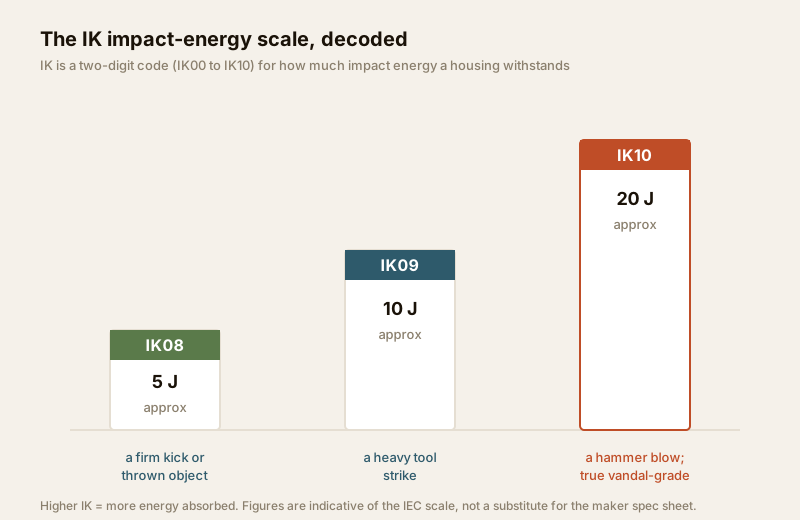
Two honest caveats. First, the numbers above are the IEC scale in general terms — always confirm the exact rating on the manufacturer's specification sheet, not the box art. Second, a rating is a lab result on a new housing. Do not treat IK10 as invincible; treat it as "designed to survive a determined blow", which is exactly what you want and no more.
IK is not the same as IP
People conflate the two because both are two-digit IEC codes on the same label. They are unrelated:
| Code | Answers | Scale | Guards against |
|---|---|---|---|
| IP (e.g. IP66) | Dust and water sealing | 1st digit solids 0-6, 2nd digit water 0-9K | Monsoon, dust storms, coastal salt-air |
| IK (e.g. IK10) | Physical impact | IK00 to IK10 (joules) | Kicks, thrown objects, tools, vandalism |
A rooftop camera might be IP66 / IK08 — well sealed against rain, only lightly armoured, because nobody can reach it. A gate-height camera wants IP66 / IK10 — both. The full breakdown of the water-and-dust side lives in the weatherproof / IP rating guide, and you can decode any camera's stamped codes with the IP/IK rating decoder.
Where IK rating actually matters
Here is the single most useful idea in this guide: IK matters in proportion to how reachable the camera is. Impact protection is for cameras a person, a stick, or a thrown object can touch. Above roughly 2.5 metres, out of reach, the threat drops away and weatherproofing and clear sightlines matter far more than armour.
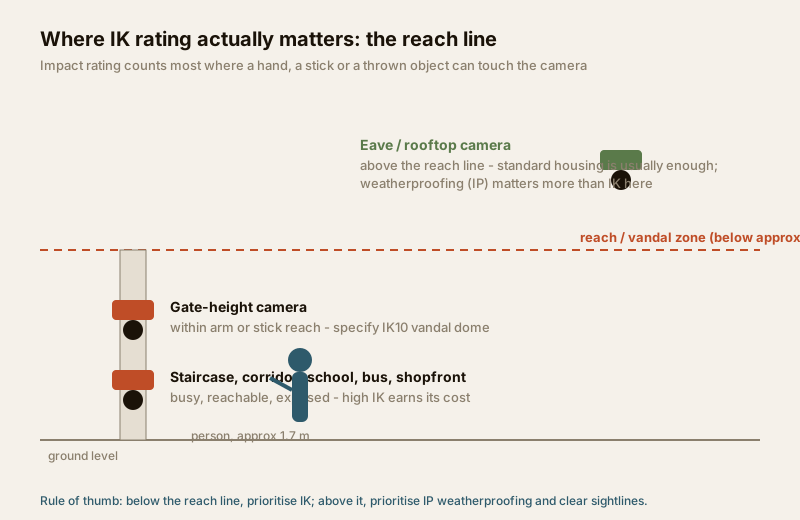
The places on an Indian property where a high IK rating earns its cost:
- Gate posts and boundary walls at head height. The classic vandal target — the first camera an intruder sees and the easiest to reach. Specify IK10 here.
- Staircases, corridors and lift lobbies in apartment blocks and society common areas, where the camera is close to a stream of people, some careless, a few hostile.
- Schools, colleges and hostels. High footfall, young occupants, and a camera that must survive the occasional thrown bag or deliberate poke. Impact grade is standard practice here.
- Public shopfronts, ATMs and buses. Anywhere the public passes within arm's reach of the camera, IK10 is close to mandatory in the real world.
- Reachable parking bays and basement pillars, where a car door or a bumped trolley can catch a low camera.
And where IK is largely wasted money:
- Eave-mounted and rooftop cameras, well above reach. Here, put the budget into weatherproofing and lens quality. A dome or bullet in a standard housing is fine.
- Indoor cameras in a private, low-traffic home, where the only people near them are the residents.
For a whole-plot view of which camera type suits each position — and therefore where a vandal dome versus a discreet fixed dome belongs — the camera type selector and the camera coverage calculator walk you through it view by view.
What makes a camera vandal-resistant
A high IK rating is the result of several design choices working together. Understanding them helps you read a spec sheet and, just as importantly, avoid paying for "IK10" that is undone by a bad install.
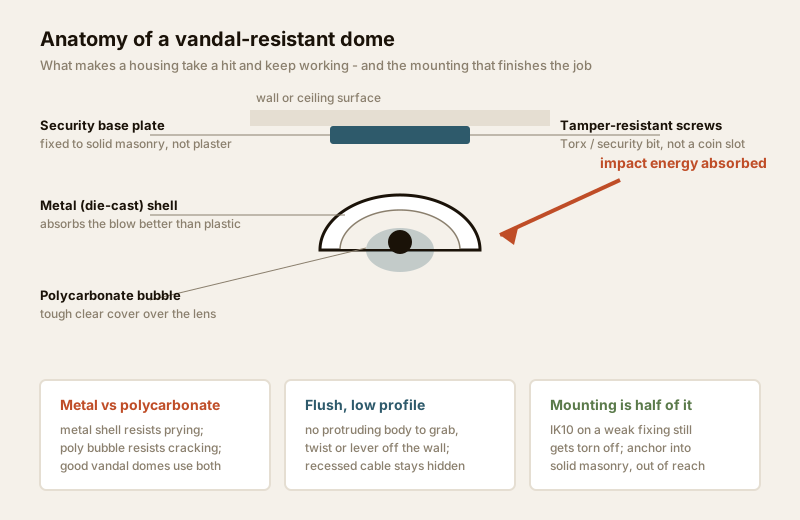
The vandal dome shape
The classic vandal-proof form is the dome, and for a physical reason: a low, flush half-ball has nothing to grab, twist or lever. Compare that with a standard bullet camera, whose protruding body on a bracket is easy to shove out of alignment. That is why "vandal dome" is a near-standard phrase while "vandal bullet" is rare. The dome hides its aim too, so a would-be tamperer cannot even tell which way it looks — a useful overlap with the discretion covered in the dome camera guide.
Metal vs polycarbonate
Two materials do the heavy lifting, and good vandal cameras use both:
| Part | Material | What it resists |
|---|---|---|
| Outer shell / base | Die-cast metal (aluminium alloy) | Prying, levering, sustained force; absorbs blunt impact |
| Lens cover / bubble | Polycarbonate (impact-grade clear plastic) | Cracking and shattering from a strike; stays optically clear |
| Cheap alternative | ABS plastic shell | Little — fine for a sheltered indoor camera, poor for a target |
A metal shell resists someone trying to bend or pry the camera off; the polycarbonate bubble resists the lens cover shattering. An all-plastic (ABS) camera can still carry a modest IK rating but is the wrong choice for a genuine target. When you read "IK10 metal vandal dome", both parts are doing their job.
Tamper-resistant screws and mounting
This is where most of the value is either kept or thrown away. A brilliant IK10 housing screwed to plaster with a standard cross-head screw is trivial to unbolt. Two details finish the job:
- Security screws. Vandal cameras ship with Torx or pin-in-star (tamper-resistant) fasteners that a coin, flat-head or ordinary screwdriver will not turn. Insist the installer actually uses the supplied security bit, not a substituted normal screw.
- A solid fixing into masonry. The housing is only as tough as what holds it. Anchor into solid brick, concrete or a proper backing plate — never hollow plasterboard or crumbling plaster — and, wherever the sightline allows, mount it out of reach so the armour is a backstop, not the front line.
The lesson: IK10 on a weak fixing is not vandal-proof. Height plus a solid anchor plus security screws plus the rated housing is the complete package. Detection closes the loop — pair the physical hardening with software tamper detection so that if someone does cover, spray or shift the camera, you get an alert instead of a silent blind spot.
The trade-off: cost, appearance and when to skip it
Vandal grade is not free. Weigh three things:
- Cost. A metal IK10 vandal dome typically runs meaningfully more than a plastic indoor dome of the same resolution. On a whole-house system you rarely need every camera to be vandal grade — spend it where the reach line says it counts.
- Appearance. A chunky metal dome is more industrial-looking than a slim indoor camera. On a heritage or design-led facade that can matter; there, keep vandal domes to the exposed gate and perimeter and use tidier housings up high.
- Diminishing returns above reach. Money spent armouring an out-of-reach eave camera is money not spent on better low-light performance or an extra angle. Match the spec to the exposure, not to a blanket "buy the toughest everywhere".
Indicative Indian price bands, to sanity-check a quote rather than as fixed rates (camera only, brand and resolution dependent):
| Camera | Typical range (₹) | Notes |
|---|---|---|
| Plastic (ABS) indoor dome, 2-4MP | ₹1,000 - ₹2,500 | No real impact grade; fine indoors, out of reach |
| Metal vandal dome IK08-IK09, 4MP | ₹2,500 - ₹5,500 | The society-common-area workhorse |
| Metal vandal dome IK10, 4-5MP | ₹4,000 - ₹9,000 | Gate, staircase, school, shopfront |
| IK10 anti-ligature / heavy public-space dome | ₹8,000 - ₹18,000 | Buses, high-abuse public sites |
| Tamper-proof screw set / security base plate | ₹150 - ₹600 | Do not let the installer skip it |
Prices move with brand, sensor and season — treat them as ballparks. Cost the whole scheme, not one camera, and lean on the camera coverage calculator.
When to bring in a professional. Decide the positions, the reach line and which cameras need vandal grade yourself. Then hand the drilling and anchoring into masonry, mounting at height, weatherproof cable termination and recorder commissioning to a licensed installer — a vandal dome is only as good as the fixing behind it, and a bad anchor undoes an IK10 rating. Any work at the mains board is a licensed electrician's job; see the electrical hub. Position hardware so it never obstructs a fire-escape route.
Key takeaways
- The cctv vandal proof ik rating measures physical impact resistance in joules, on the IEC scale from IK00 to IK10 — IK08 approx 5 J, IK09 approx 10 J, IK10 approx 20 J (a hammer-blow grade). Always confirm the exact figure on the maker's spec sheet.
- IK is not IP. IK is impact; IP is dust and water. A reachable camera often wants both (e.g. IP66 / IK10) — decode any stamped code with the IP/IK rating decoder.
- IK matters in proportion to reach. Prioritise it at gates, staircases, corridors, schools, shopfronts and buses — below the roughly 2.5 m reach line. Above it, spend on weatherproofing and lens quality instead.
- A true vandal camera combines a metal shell, a polycarbonate bubble, the flush dome shape, and — critically — tamper-resistant screws and a solid masonry fixing. IK10 on a weak mount is not vandal-proof.
- Pair the physical hardening with software tamper detection and route mounting, drilling and cabling to a licensed professional.
References
- Impact Protection (IK) ratings — the IEC scheme grades enclosures IK00 to IK10 by impact energy in joules; verify a camera's exact IK figure on the manufacturer's specification sheet before ordering.
- Ingress Protection (IP) ratings — the separate weatherproofing code; confirm at least IP66 for outdoor cameras. See the weatherproof / IP rating guide.
- Digital Personal Data Protection Act, 2023 — position cameras to cover only your own property and shared areas with a legitimate purpose; avoid capturing neighbours' private spaces.
- National Building Code of India (SP 7), Bureau of Indian Standards, and local municipal bye-laws for any structural, electrical or life-safety aspect of an install; verify the current edition via the BIS catalogue: https://www.services.bis.gov.in/
This is an educational overview, not legal or engineering advice. Mounting at height, drilling into masonry, cabling and any electrical work are qualified professional tasks — engage licensed installers and verify any standard's current status via the BIS catalogue before relying on it.
Export this guide
Related Guides — Deep-dive reading
How to Choose a CCTV Camera (2026): The Homeowner's Decision Guide for India
Cut through the spec-sheet noise and choose the right CCTV camera for each spot around an Indian home. What actually matters — sensor and low-light performance, lens and field of view, form factor, IP and IK ratings, honest smart features — and the marketing claims to ignore.
SecuritySecurity for People Living Alone in India (2026): Calm, Practical Habits When There Is No Second Person to Notice
Living alone is an ordinary and growing part of Indian life - the student in a new city, the working single, the elder whose children are abroad, the person after a separation. It does not call for fear. It calls for a few deliberate habits, because there is no second person in the home to notice trouble, raise the alarm, or catch an accident. This is calm self-reliance, layer by layer.
SecurityVisitor Vehicle Management in India: A Professional Guide
The everyday weak point of every society and office gate is not the resident's car — it is the visitor, the cab, the delivery rider and the contractor who must be let in without opening the whole park to anyone. This is the process, not just the hardware: verify at the gate before the boom lifts, park visitors away from resident bays, and never jam the gate a fire tender needs.
SecurityRelated Tools — Try Free
CCTV IP & IK Rating Decoder
Decode weatherproof (IP) and vandal-proof (IK) ratings and get the minimum you need for each mounting spot in Indian weather.
IP & IK RatingsWindow Hardware Cost Calculator
Estimate window hardware cost — hinges, handles, locks, rollers and multipoint gears.
Window CalculatorCCTV Camera Coverage & Count Calculator
Estimate how many CCTV cameras you need, the NVR channels, storage in TB for your retention period, and an indicative all-in cost with GST.
CCTV Calculator