
Cable Fire-Performance Requirements in India (2026): The Wiring That Behaves in a Fire
Ordinary PVC cable is fuel: it spreads flame and fills a building with dense, choking, blinding smoke. This is a plain-language guide to flame-retardant, low-smoke and fire-survival cable, where each belongs, and how to make sure the cable specified is the cable installed.
When people picture the danger in a building fire, they picture flames. But most people who die in fires are not burned; they are overcome by smoke long before the fire reaches them. And one of the quiet, overlooked sources of that smoke is the wiring itself. A building is threaded with kilometres of cable, and ordinary PVC-insulated cable is, in fire terms, fuel. It ignites, it carries flame from one floor to the next along the very trunking meant to be safe, and as it burns it gives off thick black smoke that blinds and chokes the people trying to escape. The cable in the wall is not a neutral bystander in a fire. It is a life-safety factor in its own right.
This guide explains, in plain language, the family of fire-performance cables used in Indian buildings, security systems and fire systems, what each type is actually for, and where each tends to belong. It is written so that a designer, a facilities manager or an informed client can understand what "FRLS" or "fire-survival" on a specification really means, and make sure the cable the fire scheme calls for is the cable that actually gets pulled through the conduit. It is not a substitute for the project's fire strategy or its electrical design.
Scope & how to read this. This is practical compliance literacy, not legal advice or authoritative code. Cable requirements are set by the National Building Code of India, the project's electrical and fire design, and the fire consultant, and they vary by building type and change over time. Always confirm the current position with the Authority Having Jurisdiction (the fire service, the municipal body, or a licensed fire or electrical engineer) before you act. Do not treat any cable type named here as automatically sufficient for your project.
Why the cable itself is a fire-safety factor
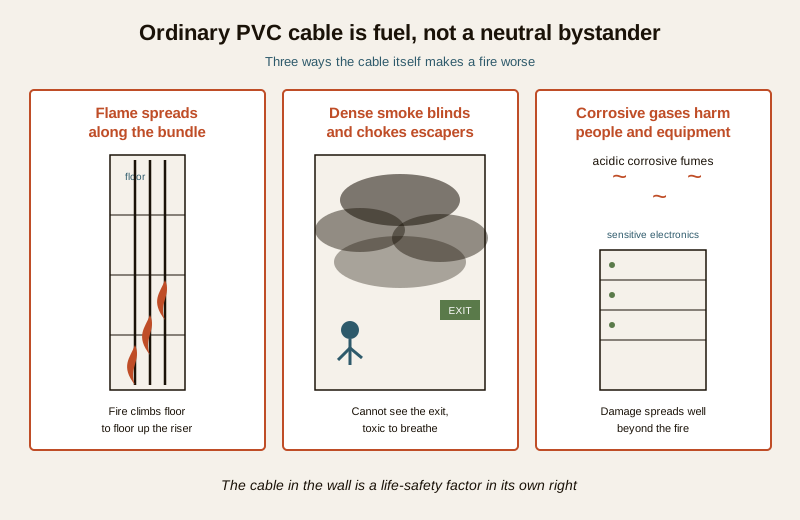
It is easy to think of cable as inert plumbing for electricity, but its behaviour in a fire matters enormously, and in three distinct ways.
The first is flame spread. Ordinary thermoplastic insulation burns, and cables run in continuous bundles through risers, ceilings and cable trays. A fire that reaches one cable can travel along the bundle, carrying flame vertically up a riser or horizontally across a floor, turning the building's own services routes into a path for the fire. Cable is often the thing that lets a small, contained fire become a spreading one.
The second, and the one that kills, is smoke. Burning PVC produces a large volume of dense, dark smoke very quickly. In an escape corridor that smoke does two things at once: it reduces visibility to almost nothing, so people cannot find the exit they know is there, and it is toxic to breathe. In an occupied high-rise or a public building where many people must move down a few staircases, smoke from burning cable is central to whether people get out.
The third is corrosivity. When PVC and other halogen-containing plastics burn, they give off acidic, corrosive gases that harm people to breathe and also damage electronic equipment and metal well beyond the seat of the fire, which matters in a server room, a control room or anywhere sensitive systems must keep working.
The cable is a life-safety factor, not a commodity. In an occupied building, and above all in a high-rise or a public building, the choice of cable affects how far a fire spreads, how much smoke fills the escape routes, and whether the systems that save lives keep running. Treat cable fire performance as a safety decision governed by the fire scheme, not as a line item to be value-engineered down to the cheapest reel.
The family of fire-performance cables, in plain language
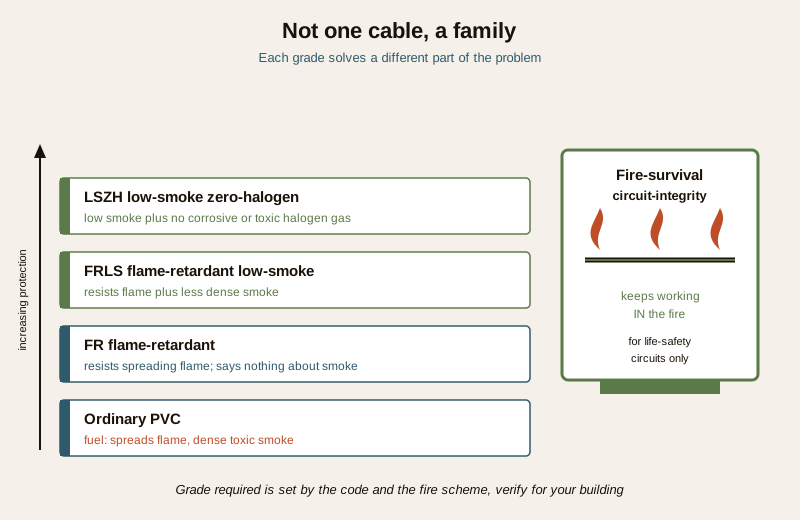
There is no single "fireproof cable". Instead there is a family of cable types, each solving a different part of the problem. Understanding the family in plain words is the key to reading any specification.
Flame-retardant (FR)
A flame-retardant cable is formulated so that it resists igniting and does not readily carry flame along its length. If the flame source is taken away, it tends to self-extinguish rather than keep the fire travelling down the bundle. FR is the most basic step up from ordinary cable: it is still fundamentally about limiting flame spread, and on its own it says nothing about how much smoke the cable gives off. It is the baseline "does not actively help the fire spread" grade.
Flame-retardant low-smoke (FR-LS or FRLS)
FRLS cable adds a second property to flame retardance: it is formulated to give off less smoke, and smoke that is less dense, when it does burn. The reasoning is exactly the visibility-and-toxicity problem described above. A cable that resists flame but still pours out black smoke has only solved half the problem in an occupied building, so FRLS aims at both flame spread and smoke density. FRLS is very widely specified in India for general wiring in buildings where people need to see their way out.
Low-smoke zero-halogen (LSZH or LS0H)
LSZH cable goes a step further on the emissions side. Its insulation and sheath are made from materials that contain no halogens, so when the cable burns it produces both low smoke and, crucially, no corrosive or acid halogen gases. This tackles all three of the smoke problems at once: low smoke density for visibility, much lower toxicity, and no corrosive gas to injure people or destroy equipment. LSZH is the type reached for where large numbers of people gather or escape and where sensitive equipment must be protected: crowded public buildings, transit spaces, data and control rooms, and similar high-consequence areas. The exact places it is required are set by the code and the fire scheme, so this is guidance on intent, not a rule you can apply blindly.
Fire-survival or circuit-integrity cable
The types above are about not making the fire worse. Fire-survival cable, also called fire-resistant or circuit-integrity cable, does something different: it is built to keep carrying current for a period while it is actually in the fire. That is the whole point. The circuits that must keep working during a fire, the fire alarm, the fire pumps, the smoke-control fans, the emergency lighting, the fire lifts and public-address systems, are useless if their wiring fails in the first minutes of the blaze. Fire-survival cable is designed so those circuits stay alive long enough for the safety systems to do their job and for people to escape. It is not for general wiring; it is specifically for the life-safety circuits identified in the fire strategy, and how long it must survive is defined by that strategy and the code, never assumed.
Where each type tends to be used
The types map, broadly, onto the job the cable is doing and the consequence if it misbehaves in a fire. The mapping below is the intent behind the family, not a specification you can lift; the actual requirement for any given circuit in any given building is set by the code and the fire scheme and must be verified.
General wiring in ordinary buildings is where flame-retardant, and very commonly FRLS, cable lives. The goal is that the wiring does not help a fire spread and does not blind an escaping household with smoke. This is the workhorse grade for a great deal of building wiring, including much of the low-voltage cabling for security systems that runs through a home or office. Related choices for signal and data runs are covered in the security cabling requirements guide.
Escape routes, public buildings and high-occupancy or equipment-sensitive spaces are where the low-smoke and zero-halogen grades come into their own. Where many people share a few exits, or where corrosive smoke would wreck critical equipment, the case for LSZH is strongest. Again, exactly where the line is drawn is a code and fire-scheme decision.
Life-safety circuits that must keep operating during the fire are the domain of fire-survival cable: fire alarm and detection wiring, the supply to fire pumps and pressurisation fans, emergency lighting on escape routes, and similar systems. If you are cabling a system whose entire purpose is to function while the building is burning, ordinary or even low-smoke cable is not enough. The systems this protects are exactly the ones discussed in the fire alarm panels guide and the emergency lighting guide.
| Where the cable runs | Cable grade the fire scheme typically calls for | Why, in one line |
|---|---|---|
| General wiring, ordinary occupancy | Flame-retardant, commonly FRLS | Should not spread flame or blind escapers with smoke |
| Escape routes, crowded and public buildings | Low-smoke, often LSZH | Many people share few exits; visibility and low toxicity are critical |
| Server, control and equipment-critical rooms | LSZH (zero-halogen) | Corrosive smoke would injure people and destroy sensitive equipment |
| Fire alarm and detection circuits | Fire-survival / circuit-integrity | Must keep signalling while the fire is in progress |
| Fire pumps, smoke fans, pressurisation | Fire-survival / circuit-integrity | Must keep running to control the fire and clear smoke |
| Emergency lighting, fire lifts, public address | Fire-survival / circuit-integrity | Must keep working to get people out safely |
The grades in that table describe intent, not a rating you can specify without checking. Treat every row as "as required by the code and the fire scheme, verify" rather than as a fixed rule.
Who sets the requirement, and the BIS mark
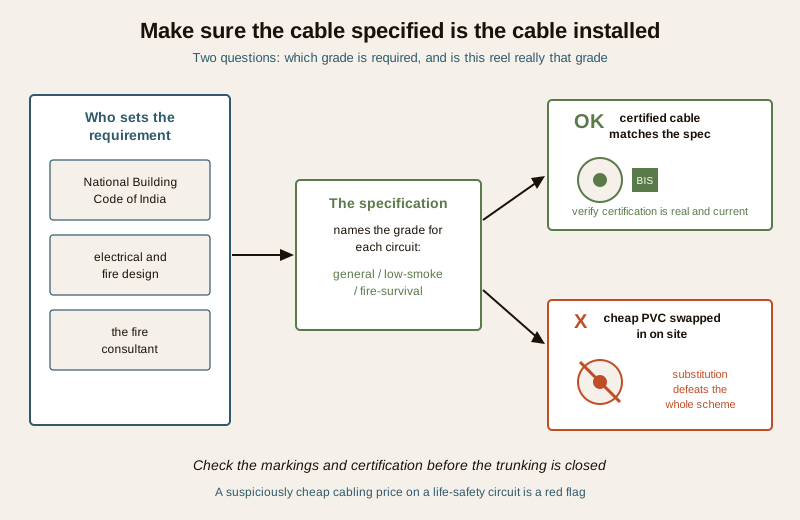
Nobody should be choosing cable fire performance from a table on a website, including this one. The requirement is set by the design and by the code.
The National Building Code of India and the project's electrical and fire design establish which parts of the building need which fire-performance grade, and the fire consultant translates the building's fire strategy into specific cable requirements for the life-safety circuits. On any project of consequence, that is where the answer comes from. The NBC security and fire-safety requirements guide gives the bigger picture of how the code drives these decisions.
Separately from where the cable is required, the cable itself should be genuine, certified product. Fire-performance cable is manufactured to defined Indian Standards, and the cable and its maker should be BIS-certified to the relevant standard for the grade claimed. Rather than quote a standard number here, the right habit is to confirm, for the specific cable being supplied, that it carries the correct certification for the grade specified, and to verify that certification is real and current through the Bureau of Indian Standards. The general approach to checking a mark is covered in the BIS standards for security equipment guide. Do not accept a claim of "FRLS" or "fire-survival" on a datasheet or a reel print as proof; the claim is only worth what its certification, checked against the standard, supports.
The requirement comes from the code and the fire scheme, the cable comes with certification. Two separate questions. First, which grade does this circuit need? That is answered by the NBC, the electrical design and the fire consultant, and it must be verified for your building, not copied from a general table. Second, is this actual reel of cable the certified grade it claims to be? That is answered by the BIS certification for the specific product, checked and confirmed rather than believed.
The substitution trap, and how to avoid it
The single most common way a good cable specification is defeated is on site, quietly, after the design is signed off. Fire-performance cable costs more than ordinary PVC. A contractor under price pressure, or simply short of the specified reel on the day, can pull ordinary cable through the conduit where FRLS or fire-survival was called for, and once it is buried in the wall and the trunking is closed, nobody sees the difference until there is a fire. At that point the building has the fire behaviour of cheap cable while everyone believes it has the fire scheme they paid for. Cable substitution is one of the most preventable causes of electrical-fire risk, covered more widely in the electrical fire safety guide.
Avoiding this is not complicated, but it has to be deliberate.
- Specify the grade explicitly, circuit by circuit. The drawings and schedules should state the fire-performance grade required for each part of the installation, so there is no ambiguity for anyone to exploit. "Cable" is not a specification; "the grade the fire scheme requires for this circuit" is.
- Insist the certified grade is what is delivered and installed. Fire-performance cable carries markings printed along its length identifying the type and standard, and the delivery should come with certification for that specific product. Check the markings on the reel and confirm the certification is genuine, rather than accepting a verbal assurance.
- Check the markings before the trunking is closed. The one moment substitution is easy to catch is during installation, while the cable is still visible. Once it is concealed, catching it means opening walls. Inspection at the right stage is worth far more than inspection after handover.
- Be suspicious of a price that undercuts the specified cable. If a quotation for the cabling comes in well below what the specified fire-performance grade should cost, the likely explanation is that the fire performance has been quietly removed. A price that is too good on a life-safety element is a warning, not a win.
- Keep the life-safety circuits sacrosanct. Wherever the fire scheme calls for fire-survival cable, that is a circuit designed to keep people alive during a fire. It is the last place any substitution should ever be tolerated, and the first place to inspect.
Who to ask
Because the requirement is set by design and code rather than by a shopping list, the people to ask are the professionals who own that design.
The fire consultant or fire engineer for the project defines which circuits need fire-survival cable and translates the fire strategy into cable requirements. The electrical consultant or the project's electrical designer specifies the grade for the general installation and the life-safety circuits together. The architect and the Authority Having Jurisdiction, the state or city fire service and the municipal body, sit above both, since the fire officer signs off the building's fire installation and can reject work that does not meet the approved scheme. For confirming that a specific cable is genuinely certified, the Bureau of Indian Standards is the authority. When any of these requirements is unclear for your building, the answer is to ask the relevant professional, not to guess from a general guide.
Key takeaways
- Ordinary PVC cable is fuel. It spreads flame along bundles and risers and gives off dense, toxic smoke that blinds and chokes people escaping, so in an occupied building the cable itself is a life-safety factor.
- The fire-performance family solves different problems. Flame-retardant resists spreading flame; FRLS adds less dense smoke; LSZH adds no corrosive, toxic halogen gas; fire-survival cable keeps a circuit working while it is in the fire.
- Match the grade to the job, but verify it. General wiring, escape routes and public buildings, and life-safety circuits each call for different grades, always as required by the code and the fire scheme rather than a fixed rule.
- The requirement is set by the code and the fire consultant, and the cable should be BIS-certified. Confirm the grade for your building from the design, and confirm the specific cable's certification through BIS, without relying on a fabricated standard number.
- Guard against substitution. Specify the grade explicitly, check markings and certification before the trunking is closed, and treat a suspiciously cheap cabling price on a life-safety element as a red flag.
Where to go next
- Security cabling requirements — how cabling for security and detection systems is planned and run.
- Fire alarm panels and emergency lighting — the life-safety systems whose circuits fire-survival cable protects.
- Electrical fire safety — the wider picture of fire risk in a building's wiring.
- BIS standards for security equipment — how to check that a product's certification is genuine.
- NBC security and fire-safety requirements — where these cable requirements come from.
References
- National Building Code of India (published by the Bureau of Indian Standards as SP 7, current edition) and the project's fire strategy — govern which parts of a building require which fire-performance cable grade, and the acceptance of the fire installation by the fire authority. Verify the current edition and the specific requirement for your building via the BIS catalogue.
- Bureau of Indian Standards (BIS) — fire-performance cables are manufactured to Indian Standards; confirm that the specific cable and its maker carry the correct, current certification for the grade claimed, and verify it via the BIS portal: https://www.services.bis.gov.in/
- The project's fire consultant and electrical designer — the professionals who translate the code and the building's fire strategy into the specific cable requirements for each circuit, including which circuits require fire-survival cable.
This is an educational compliance-literacy guide to the fire performance of cables, not legal advice, an electrical design, or a catalogue of standard numbers. Cable fire-performance requirements are set by the code, the electrical design and the fire scheme, vary by building type, and change over time; always verify the current requirement for your building with a licensed fire or electrical engineer and the Authority Having Jurisdiction, and confirm any cable's certification through the official BIS portal.
Export this guide
Related Guides — Deep-dive reading
Security for People Living Alone in India (2026): Calm, Practical Habits When There Is No Second Person to Notice
Living alone is an ordinary and growing part of Indian life - the student in a new city, the working single, the elder whose children are abroad, the person after a separation. It does not call for fear. It calls for a few deliberate habits, because there is no second person in the home to notice trouble, raise the alarm, or catch an accident. This is calm self-reliance, layer by layer.
SecurityHow to Choose a Fire Alarm in India (2026): A Life-Safety, Code-Governed Buying Guide
A fire alarm is not shopped on price or looks. It is specified to the National Building Code and the local fire officer, built from listed and certified parts, and installed by a licensed contractor. This guide shows a homeowner, manager or architect how to choose and verify one correctly.
SecuritySecurity and Fire Regulations Guide for India (2026): Know the Rules and How to Navigate Them
There is no single national rulebook you can read off. This is the map of the whole regulatory landscape for home, housing-society and commercial security and fire systems in India, and a calm way to navigate it: who sets the rules, who approves what, and how to stay on the right side of them.
SecurityRelated Tools — Try Free
False Ceiling Cost Estimator
Live ₹/sqft across 8 ceiling types — POP, gypsum, designer, metal, PVC, wooden — with cove and spot lighting for 20 Indian cities.
Cost CalculatorElectrical Safety & Load Audit
Home electrical audit — 10 categories, 65+ checkpoints across earthing, RCCB, MCB, wiring, switchboards, appliance circuits, DG/inverter backup.
Safety AuditMaterial Schedule Generator
Generate a room-wise finish schedule — walls, floors, ceilings, trim, and joinery by location.
Material Schedule