
BIS Standards for Security Equipment in India (2026): The Marks That Matter
What the Bureau of Indian Standards actually certifies, the ISI mark and the CRS registration you will meet on cameras, alarms, cables and extinguishers, and how a homeowner checks a mark is real on the BIS portal, without memorising a single standard number.
Two cameras on the same shelf can look identical and cost nearly the same, yet one carries a mark backed by a licence you can look up and the other carries a printed logo that means nothing. The Bureau of Indian Standards, or BIS, is the body that draws the line between them. Its marks are the closest thing a buyer of security and fire equipment has to a promise that can be checked rather than merely believed, and learning to read them is the single most useful habit when you are spending on the devices your family's safety depends on.
This guide explains, in plain language, what BIS is, the two marks you will actually meet, the ISI mark and the CRS registration, which products must carry certification and which need not, and how you verify a mark before you pay. It deliberately does not hand you standard numbers to memorise, because the precise number and its status change by product and over time. The skill worth having is not a list, it is the habit of recognising the mark, asking the vendor which standard applies, and confirming the licence on the official BIS channel.
Scope & how to read this. This is practical compliance literacy, not legal advice or authoritative code. Which products require certification, and the exact Indian Standard and its current status, are set by BIS and by law, vary by product category, and change over time. Always confirm the current position on the official BIS portal or app, and treat any specific standard number a seller quotes as something to verify, not to trust.
What BIS is and why a mark matters
BIS is India's national standards body. It writes and maintains Indian Standards, the published benchmarks that define what a safe, good-quality product of a given kind should do, and it runs the certification schemes that let a maker put a mark on a product to say it meets one. When you see a genuine BIS mark, an independent system, not the seller, stands behind the claim, and the maker holds a licence or registration that can be withdrawn if it cheats.
That matters for four practical reasons. It is about safety, because a badly made electrical device or a silent smoke detector is a hazard, not a bargain. It is about quality, because a standard defines a floor the product cannot legally drop below. It is about interoperability, because gear built to common standards works together and with the mains, the cabling and the alarm panel it plugs into. And it is about approvals and insurance, because fire officers, building sign-offs and many insurers expect certified equipment, and uncertified gear can quietly void an approval or a claim precisely when you need it to hold.
The point buyers forget is that a mark is only worth what you can verify. A genuine BIS mark comes with a licence or registration number that exists in a database you can check. A mark you cannot look up is just ink, and that is exactly the gap a fake cannot close.
The two marks you will actually meet
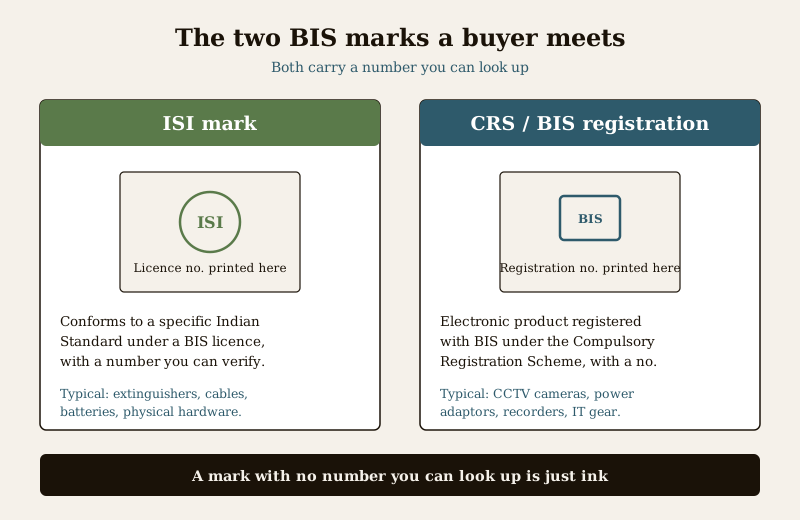
You do not need to know every scheme BIS runs. For home and building security, two marks cover almost everything you will hold in a shop.
The ISI mark
The ISI mark is the classic mark of product conformity to an Indian Standard under BIS certification. When a product is made to a specific Indian Standard and the maker holds a BIS licence to say so, the product may carry the ISI mark. For a buyer, it means the item was built to a national benchmark and the maker is licensed and accountable for that claim. You will meet it on things like fire extinguishers, certain cables and wiring accessories, batteries, and various pieces of physical security hardware. Do not try to memorise which Indian Standard applies; recognise the mark, ask the vendor which standard the product is certified to, and confirm the licence is real.
The CRS registration
Many electronic products fall under a separate route called the Compulsory Registration Scheme, usually shortened to CRS. Under it, covered electronics must be registered with BIS and must carry a BIS registration mark and number before they can legally be sold. This is the scheme that reaches most of the connected security world: CCTV cameras and recorders, power supplies and adaptors, and a wide range of IT and electronic gear. For a buyer, the takeaway is simple. For mainstream electronics there should be a BIS registration, that registration carries a number, and the number can be checked. An imported electronic gadget with no Indian registration at all is a warning sign, not a mark of sophistication.
Mandatory versus voluntary
Here is a nuance worth holding on to. Some products fall under mandatory certification, meaning it is illegal to sell them without the mark, while for others certification is voluntary, a quality signal the maker chose to earn. Which category a product sits in is decided by BIS and by government notification, differs by product type, and changes as new categories are brought in, so the honest answer to "must this have a BIS mark" is often "it depends, check the current position." Where a category is mandatory, the absence of a mark is not a discount, it is a product that should not be on the shelf. Where it is voluntary, a genuine mark is a real plus and its absence is a question to ask, not an automatic disqualification.
The honest truth about IS numbers
You will be tempted to want a tidy list: this device needs that Indian Standard number. Resist it, and be wary of anyone who hands you one as gospel. There genuinely are specific Indian Standards for cameras, alarm and detection equipment, cables, fire extinguishers, batteries and much else. But the exact number, and whether it is current, superseded or withdrawn, varies by product and is revised over time. Quoting a fixed number as fact is how guides go stale and how buyers get misled.
So the reliable method is not to memorise numbers, it is this: ask the vendor which Indian Standard the product is certified to, get the licence or registration number, and then verify both the number and its current status on the BIS portal. That way you are always reading the live record rather than trusting a figure that may have moved. For related categories, the security product certification guide explains how the same verify-do-not-trust habit applies across every mark, and the weatherproofing and IP rating guide and the vandal resistance and IK rating guide cover the international rating marks that sit alongside the BIS ones on outdoor and reachable gear.
How to check a mark is genuine
A sticker is easy to print. The habit that actually protects you is treating every important mark as something to confirm. The good news is that BIS publishes public ways to do exactly that, through the BIS portal and the BIS Care app.
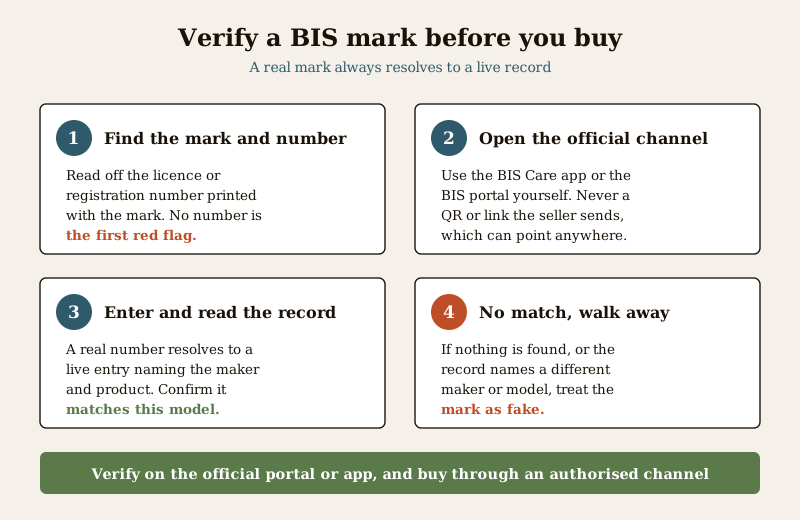
The flow is short and worth doing every time on anything that matters:
- Find the mark and the number. A genuine ISI mark or CRS registration is printed with a licence or registration number. No number is the first red flag.
- Verify on the official channel. Use the BIS Care app or the BIS portal directly, not a QR code or link the seller gives you. A real number resolves to a live entry naming the maker and product; nothing found, or a different model, means a fake.
- Match the mark to this exact model, and buy authorised. Certification is issued for a specific product, so a certificate for another model or a generic "our factory is certified" letter proves nothing. Authorised dealers sell genuine, India-certified stock; grey-market and "export surplus" routes are where fake-marked goods flow in.
Where this ties to fire and life-safety
Certification matters least on a decorative gadget and most on the devices your safety depends on, and fire equipment is the sharpest example. A fire extinguisher, a smoke or heat detector, an alarm panel, these exist to work in the worst moment, and an uncertified unit that looks identical can do nothing when it counts. Fire equipment is expected to carry the appropriate Indian Standard conformity, and the building's fire installation is separately signed off by the local fire officer. Using non-listed or uncertified devices can invalidate that approval as well as your safety, which is why on a life-safety product certification is a pass-or-fail filter, never a place to save money.
This is also where BIS marks meet the wider rulebook. What the fire officer accepts, and what a building bye-law or an insurer expects, sits on top of the product mark. The broader picture of who approves what, and how product certification connects to fire and building approvals, is covered in the security and fire regulations guide and the regulatory environment sub-hub. For the two categories where the mark is the whole point, see the fire extinguishers guide and the cable fire-performance requirements guide.
On life-safety and electrical gear, do not compromise. For a fire device, an extinguisher, or anything wired into your walls, an uncertified product is not a cheaper version of the same thing, it is an untested one you are trusting with your family and your wiring. If it should carry a mandatory mark and does not, or the number will not verify, it is off the list, whatever it costs or however it looks.
A checklist and the red flags
Run the same short check before you pay for any security or fire product.
Checking certification, step by step
- Is this a fire, electrical or mandatory-category product? If yes, certification is a pass-or-fail filter you apply before price or features.
- Does it carry the right BIS mark? An ISI mark for products certified to an Indian Standard, a CRS registration for covered electronics like cameras and adaptors.
- Is there a licence or registration number? Printed with the mark, not just a bare logo.
- Does the number verify on the BIS portal or BIS Care app? Resolving to a live record that matches this maker and model.
- Am I buying through an authorised channel? Authorised dealer or official store, not a grey-market or "export surplus" deal.
- Did I ask the vendor which standard applies? And treat any number they quote as something to confirm, not accept.
Red flags that end a purchase
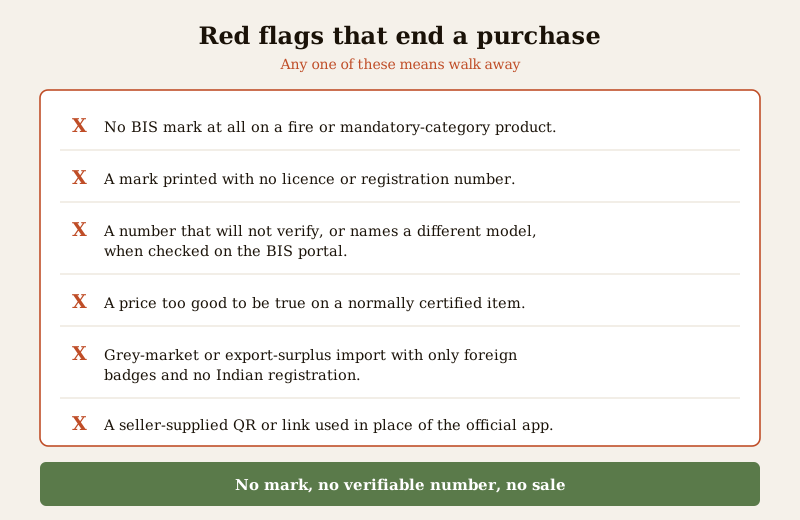
- No mark where one is expected, especially on a mandatory-category electronic or fire product.
- A mark with no number, or a number that will not verify on the official BIS channel.
- A price too good to be true, which on a normally certified item usually means the certification is what was removed to get there.
- Grey-market and "export surplus" imports carrying only foreign badges and no Indian registration, which by definition skipped the Indian requirement.
- A seller-supplied QR or link used in place of you opening the BIS Care app or portal yourself.
Who to ask, and the honest caveat
For anything important, ask two people. Ask the vendor to tell you, in writing, which Indian Standard the product is certified to and to give you the licence or registration number, then verify it yourself. And for products that touch building approvals, the fire officer or a licensed fire and electrical professional is the authority on what is acceptable in your building, because that sits above the product mark and varies locally.
Remember what this guide is and is not. It is compliance literacy to help you buy well and ask the right questions, not legal advice or a fixed list of standard numbers. Which products need certification, and the exact Indian Standard and its status, are decided by BIS and by law, differ by product, and change. Recognise the mark, demand the number, and verify it on the official BIS portal or BIS Care app before you rely on it.
Key takeaways
- BIS is the body that makes a mark checkable — it writes Indian Standards and licenses the marks, so a genuine mark means an independent system, not the seller, stands behind the claim.
- Two marks cover most of it — the ISI mark for products certified to an Indian Standard, and the CRS registration for covered electronics like cameras, adaptors and IT gear.
- Mandatory or voluntary depends on the product and changes — where a category is mandatory a missing mark is disqualifying, so check the current position rather than assuming.
- Do not memorise IS numbers — ask the vendor which standard applies and verify the number and its current status on the BIS portal, because the exact number moves over time.
- Verify, do not trust the sticker — a real mark resolves to a live record on the BIS portal or BIS Care app; no number, no verification, or a grey-market import with only foreign badges, means walk away.
Where to go next
- Security product certification guide — the wider set of marks beyond BIS and the same verify-first habit applied across them.
- Security and fire regulations guide and the regulatory environment sub-hub — how product certification fits the bigger picture of approvals and the authorities.
- Fire extinguishers guide and the cable fire-performance requirements guide — where the mark is the entire point of the product.
- How to choose a CCTV camera — buying a camera where the CRS registration, the weather rating and the impact rating all apply at once.
References
- Bureau of Indian Standards (BIS) — India's national standards body, responsible for Indian Standards, the ISI mark, and the registration of covered electronic products under the Compulsory Registration Scheme; BIS provides public ways to verify whether a licence or registration is genuine and current. Confirm the specific mark and number for your product on the official BIS portal: https://www.services.bis.gov.in/
- BIS Care app — the official mobile application from BIS for the public to verify ISI-marked licences and CRS registration numbers; use it, or the official portal, rather than any link or QR code supplied by a seller.
- National Building Code of India (published as SP 7) and the local fire authority — govern which fire-safety devices are acceptable in a building and the sign-off of the fire installation; using non-listed or uncertified devices can invalidate approval as well as safety. Verify the current edition and requirements with the fire officer and the BIS catalogue.
This is an educational compliance-literacy guide to BIS certification for security and fire equipment, not legal advice or a catalogue of standard numbers. Which products require certification, and the exact Indian Standard and its current status, are set by BIS and by law and change over time; always verify a specific mark, licence or registration on the official BIS portal or BIS Care app, buy through authorised channels, and engage a licensed professional for fire and electrical installation.
Export this guide
Related Guides — Deep-dive reading
Security Product Certification Guide (2026): Reading the Marks That Prove a Device Is Safe and Genuine
How a homeowner tells a genuinely certified, fit-for-purpose security product from an uncertified one, and why it matters most for life-safety and anything electrical or outdoor. A plain-language buyer's guide to the marks and standards you will actually meet in India, and how to verify one is real.
SecurityHow to Choose a Fire Alarm in India (2026): A Life-Safety, Code-Governed Buying Guide
A fire alarm is not shopped on price or looks. It is specified to the National Building Code and the local fire officer, built from listed and certified parts, and installed by a licensed contractor. This guide shows a homeowner, manager or architect how to choose and verify one correctly.
SecuritySecurity and Fire Regulations Guide for India (2026): Know the Rules and How to Navigate Them
There is no single national rulebook you can read off. This is the map of the whole regulatory landscape for home, housing-society and commercial security and fire systems in India, and a calm way to navigate it: who sets the rules, who approves what, and how to stay on the right side of them.
SecurityRelated Tools — Try Free
Security System Cost Estimator
Estimate the all-in capex with GST, annual running cost and 5-year total cost of ownership of a home or building security system.
Cost EstimatorCCTV Camera Coverage & Count Calculator
Estimate how many CCTV cameras you need, the NVR channels, storage in TB for your retention period, and an indicative all-in cost with GST.
CCTV CalculatorCCTV Cable-Length Calculator
Total cable to buy for a CCTV job and a warning when a run exceeds the cable's maximum length.
Cable Length