
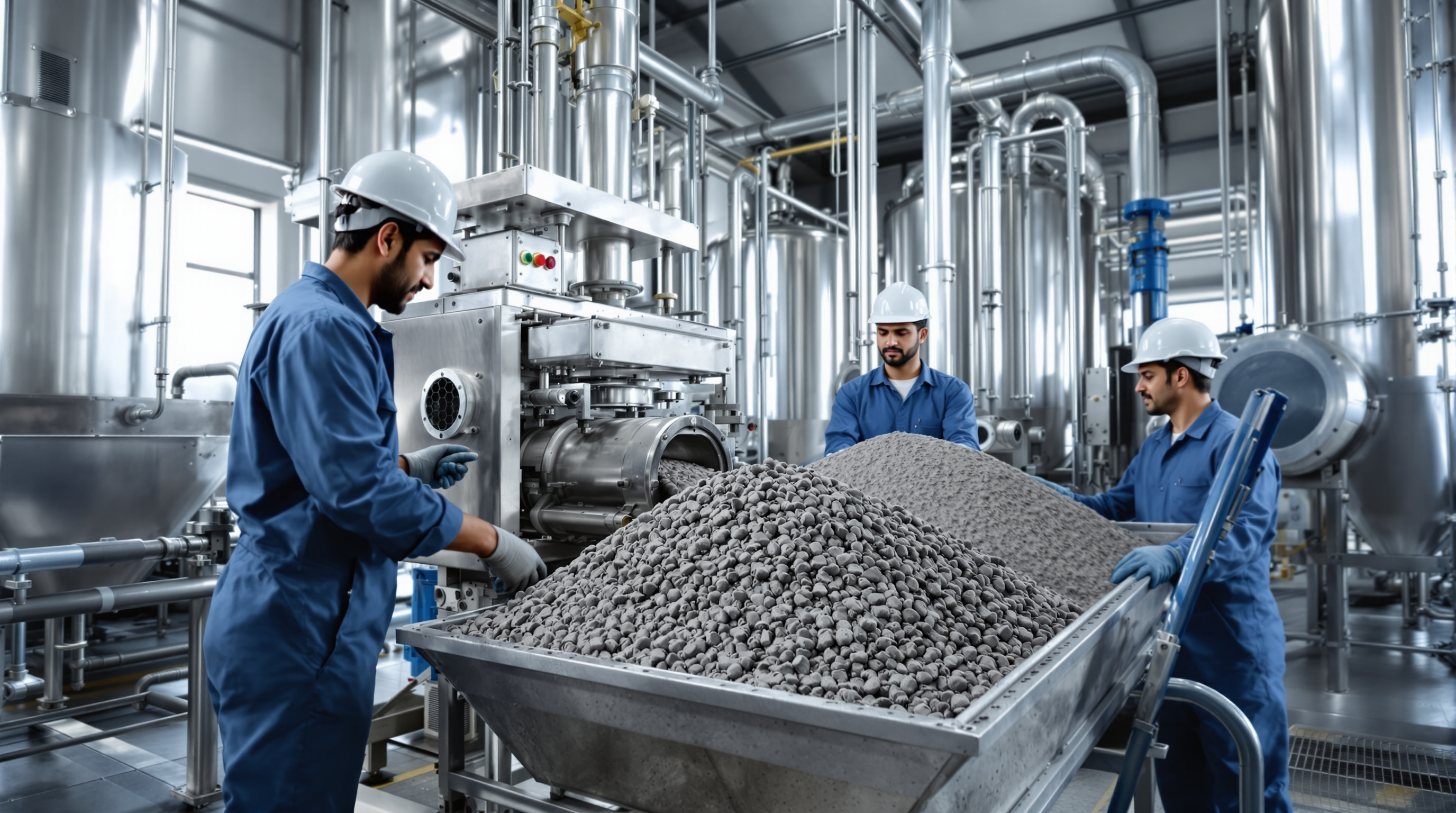
Sludge Dewatering Methods for STPs: Filter Press, Centrifuge, Screw Press & Geobags Compared
Every STP produces sludge, and getting the water out of it is the messiest, most underestimated part of running one. Here is how filter presses, centrifuges, screw presses and geobags actually dewater sludge — with honest pros, cons and a way to choose by scale.
Every sewage treatment plant has a dirty secret, and it is not the sewage — it is the sludge. Once the microbes have eaten the pollution and the clean water has been reused, what is left behind is a thick, wet, biologically active slurry that is roughly 97–99% water by weight. That slurry has to go somewhere. Trucking away water-logged sludge is expensive, illegal to dump, and quietly the single most neglected line item in Indian STP operation. Sludge dewatering is the step that fixes this: it squeezes the water out until the sludge becomes a stackable, transportable "cake" — cutting its volume, weight and disposal cost dramatically.
This guide goes beyond the humble drying bed to compare the four mechanical and semi-mechanical sludge dewatering methods you will actually be asked to choose between — filter press, centrifuge, screw press and geobags — and shows how to pick one by plant scale.
Dewatering does not destroy sludge; it concentrates it. Taking sludge from 1% dry solids to 20% dry solids removes about 95% of its volume — the difference between one tanker a day and one trolley a week.
Why dewatering matters more than owners think
Before the mechanics, the money. Sludge fresh out of a sludge holding tank is typically only 1–3% solids. At that consistency it is essentially water you are paying to transport. Every percentage point of dry solids you add shrinks the volume you have to store, cart and pay to dispose of.
- Disposal cost scales almost linearly with wet weight — halve the water, halve the tanker bills.
- Storage footprint shrinks, freeing tank volume and site area.
- Handling becomes safe and odour-controlled: a firm cake can be bagged, a liquid slurry cannot.
- Compliance — CPCB and state boards expect a documented sludge-management route, not overflowing beds.
The goal number to remember is dry solids percentage (% DS): raw sludge sits near 1–2%, and good dewatering lifts it to anywhere from 18% to 35% depending on the method.
The starting point: sludge drying beds
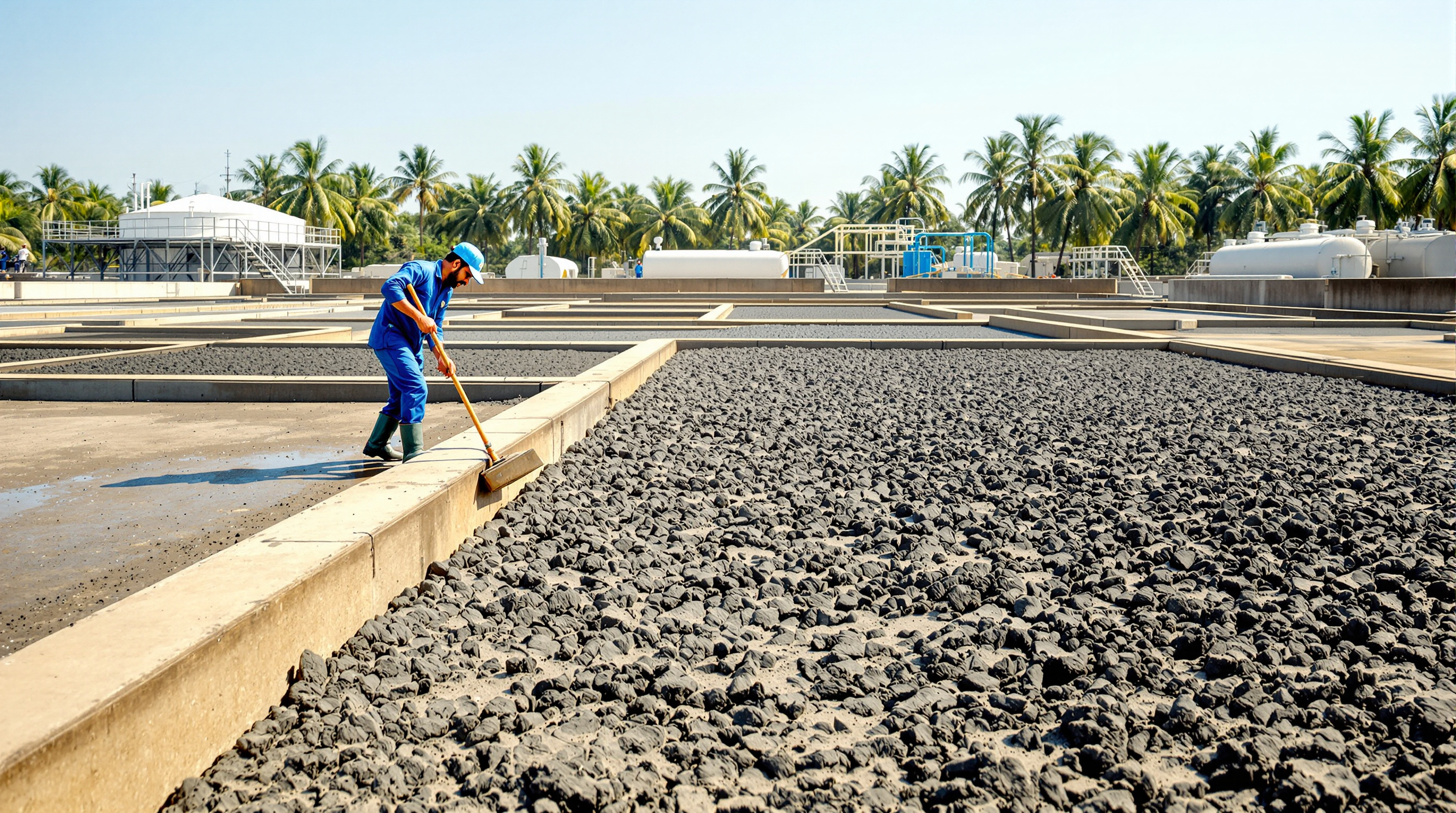
The oldest and cheapest method is the open sludge drying bed — a shallow sand-and-gravel bed where sludge is spread and left for sun and drainage to do the work. It has no moving parts, negligible power cost, and for a small plant in a dry climate it is genuinely hard to beat. We cover it in full in the dedicated guide on sludge drying beds.
But drying beds have real limits: they are slow (days to weeks), land-hungry, weather-dependent, and turn into a smelly, fly-breeding liability during the monsoon. Once a plant's sludge output outgrows the bed area — or the site simply has no spare land — you move to a mechanical dewatering method. That is where the next three options come in.
Filter press (plate-and-frame)
A filter press clamps a stack of plates lined with filter cloth together, then pumps sludge into the chambers between them under high pressure (typically 7–15 bar). Water passes through the cloth as clear filtrate; the solids stay behind and build into a dense cake. When the chambers are full, the press opens and the cakes drop out.
- Strengths: the highest cake dryness of the common methods — often 30–40% DS. Simplest principle, robust, low skill to operate.
- Weaknesses: it is a batch process, not continuous — fill, press, open, clean, repeat. Cloths need regular washing, cycle times are long, and it needs conditioning chemicals (lime or polymer). Labour-intensive at scale.
Filter presses suit plants that want maximum dryness and can live with batch operation — mid-sized institutional and industrial STPs.
Decanter centrifuge
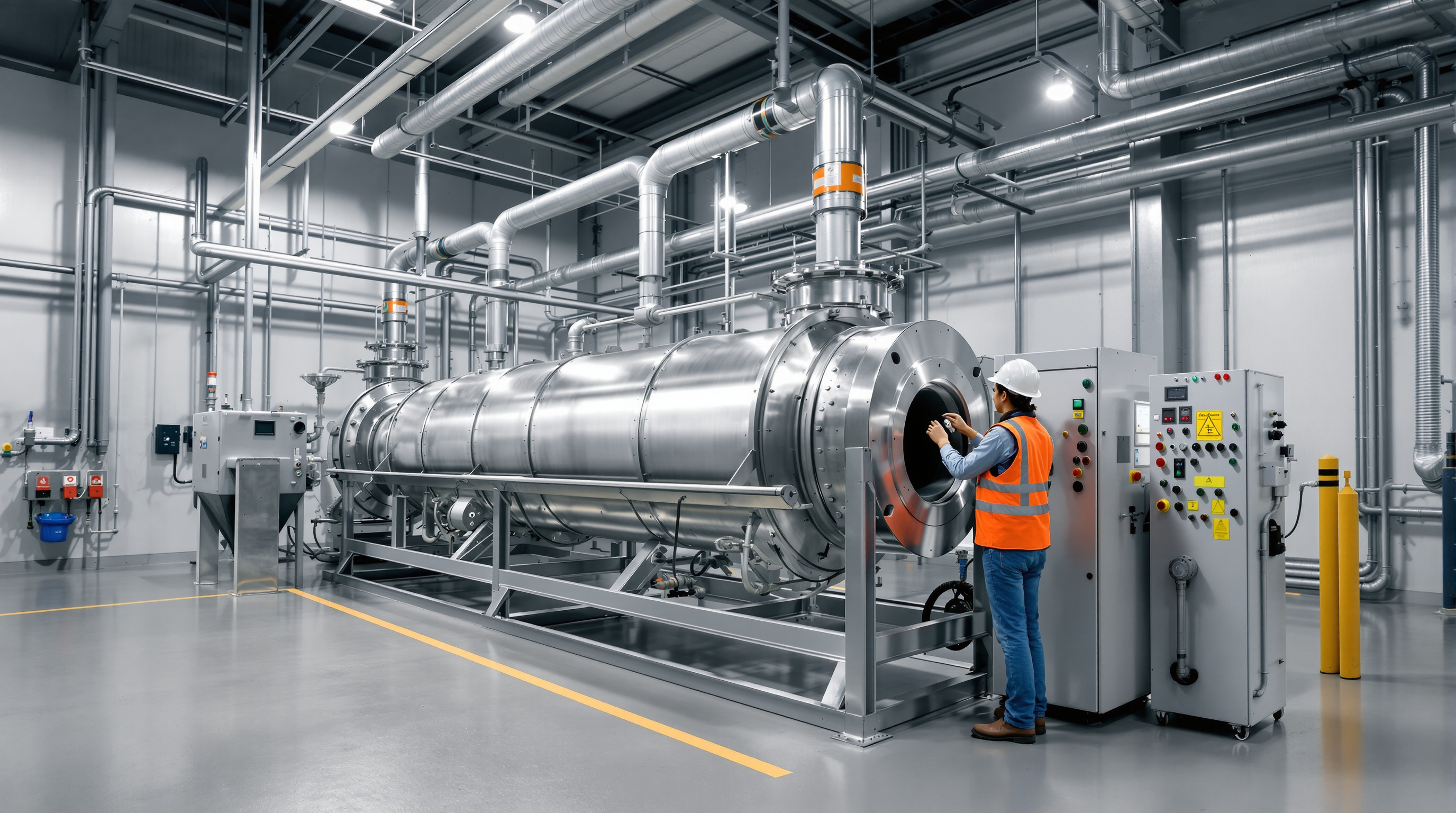
A decanter centrifuge spins sludge in a horizontal bowl at very high speed (2,000–4,000 g). The dense solids are flung to the bowl wall and scraped forward by an internal scroll, while the separated water overflows out the other end. It runs continuously and in a remarkably small footprint.
- Strengths: fully automatic, continuous, compact, enclosed (so odour is contained). Handles high throughput. Cake around 18–25% DS.
- Weaknesses: the highest power draw of all methods and real mechanical complexity — high-speed bearings and scrolls that wear and need skilled maintenance. Polymer dosing is essential and the capital cost is steep.
Centrifuges are the workhorse for large STPs — big residential townships, IT campuses, municipal-scale plants — where continuous, hands-off operation justifies the energy bill. If power is your concern, weigh it against the plant's overall load using the Energy Benchmark Calculator; dewatering is a smaller draw than aeration but a centrifuge still moves the needle. See also reducing STP electricity consumption.
Screw press (multi-disc / volumetric)
The screw press is the quiet favourite for small and medium Indian STPs. A slowly rotating screw pushes polymer-conditioned sludge through a gradually narrowing cylindrical screen; water drains through the gaps while the tightening geometry squeezes the cake out the end. "Slowly" is the key word — it turns at a few RPM.
- Strengths: very low power (a fraction of a centrifuge), continuous, quiet, self-cleaning, compact, low maintenance, easy to automate for unmanned operation. Cake around 15–22% DS.
- Weaknesses: lower throughput per unit than a centrifuge and moderate cake dryness. Relies on good polymer dosing to perform.
For most package and mid-sized STPs built today, the screw press hits the sweet spot of low energy, low labour and small footprint — which is why it increasingly ships as standard on prefabricated packaged STPs.
Geobags (geotextile dewatering tubes)
Geobags — large woven geotextile tubes — are the newest and simplest mechanical-adjacent option. Polymer-conditioned sludge is pumped in; the fabric retains the solids while water seeps out through the weave under the sludge's own hydrostatic pressure. No motor, no press. Over weeks the retained solids consolidate; the whole bag is eventually cut open and the dried material removed.
- Strengths: extremely low capital and power cost, no moving parts, simple to deploy, good for intermittent or remote sites and for desilting.
- Weaknesses: slow (weeks per fill-and-consolidate cycle), needs lay-down land, single-use bags become a consumable, and cake dryness is variable. It is an emerging, still-maturing approach for routine municipal sludge — proven for dredging and lagoon clean-outs, less established as a plant's day-to-day workhorse. Treat vendor dryness claims with healthy scepticism.
Geobags earn their place at very small, remote or budget-constrained plants, and as a temporary or supplementary solution rather than the backbone of a large plant.
Choosing by scale: a quick comparison
| Method | Typical cake dryness | Operation | Power | Footprint | Best fit |
|---|---|---|---|---|---|
| Drying beds | 20–30% (weather-dependent) | Manual batch | Negligible | Large (land) | Small plants, dry climate, spare land |
| Geobags | Variable, ~18–25% | Passive batch | Very low | Medium (lay-down area) | Very small / remote / temporary |
| Screw press | 15–22% | Continuous | Low | Small | Small–mid package STPs |
| Filter press | 30–40% | Batch | Medium | Medium | Mid plants needing max dryness |
| Centrifuge | 18–25% | Continuous | High | Small | Large / municipal / townships |
A rough rule of thumb for Indian projects:
- Below ~100 KLD: drying beds if land allows, else a screw press or geobags.
- ~100–500 KLD: screw press is usually the balanced default; filter press where dryness is critical.
- Above ~500 KLD: decanter centrifuge for continuous, hands-off throughput.
Sizing all of this starts from how much sludge the plant actually makes, which flows from its treatment load — estimate the plant capacity first with the STP Capacity Calculator, and factor dewatering equipment and disposal into the STP Cost Estimator.
Getting the most from any method
Whichever route you pick, three things decide whether it works:
- Polymer conditioning. Every mechanical method depends on the right flocculant dose. Under-dose and the cloth blinds or the cake runs wet; over-dose and you burn money.
- Consistent feed. A well-managed sludge holding tank that delivers uniform, thickened sludge is worth more than a bigger press.
- Honest disposal planning. Dewatered cake still has to go to co-composting, cement kilns, secure landfill or approved reuse — decide the route before you buy the machine.
The bottom line
There is no single best dewatering method — only the right one for your plant's size, site, power budget and disposal route. Drying beds and geobags win on simplicity and cost; screw presses win on low-energy continuous operation for the average building STP; filter presses win on cake dryness; centrifuges win on throughput. Match the method to the scale, condition the sludge properly, and dewatering turns your STP's dirtiest problem into a manageable weekly trolley. To go deeper on the process feeding it, continue with the full Sewage Treatment Plants guide library.
Export this guide
Related Guides — Deep-dive reading
STP Sludge Removal & Disposal: A Practical O&M Guide for Operators
How to waste sludge on schedule, dewater it on drying beds or a filter press, dispose of or reuse it safely, and keep the compliance records that inspectors ask for — written for the people who actually run building STPs in India.
Sewage Treatment PlantsSludge Drying Beds: How STP Sludge Is Dewatered for Disposal
Every STP produces wet sludge that has to be dried before it can leave the site. This guide explains how sand-and-gravel drying beds use drainage and evaporation to do it, how much area they need, and when a filter press or centrifuge makes more sense.
Sewage Treatment PlantsSludge Generation Estimation in STPs: How Much Sludge Will Your Plant Produce?
Every STP that cleans water also makes sludge — and the biosolids you forget to plan for become the operating headache you cannot ignore. Here is how to estimate sludge generation, understand the yield concept, and size dewatering before you build.
Sewage Treatment PlantsRelated Tools — Try Free
STP Compliance Checklist Tool
Interactive self-audit that ticks off STP consents, discharge norms, reuse metering, online monitoring and O&M records to give a live compliance readiness score.
ChecklistApartment STP Planner
Plan an apartment complex sewage treatment plant from flats and occupancy — get population load, sewage flow, recommended STP capacity in KLD, treatment technology and approximate space.
PlannerRainwater Tank Sizer
How big should your rainwater tank be? Computes annual harvest, recommended tank capacity in litres, water-bill savings, and payback — for 10 Indian cities.
RWH Calculator