
Art Deco Architecture in India
Bombay Deco and the glamour of India's machine-age modernism
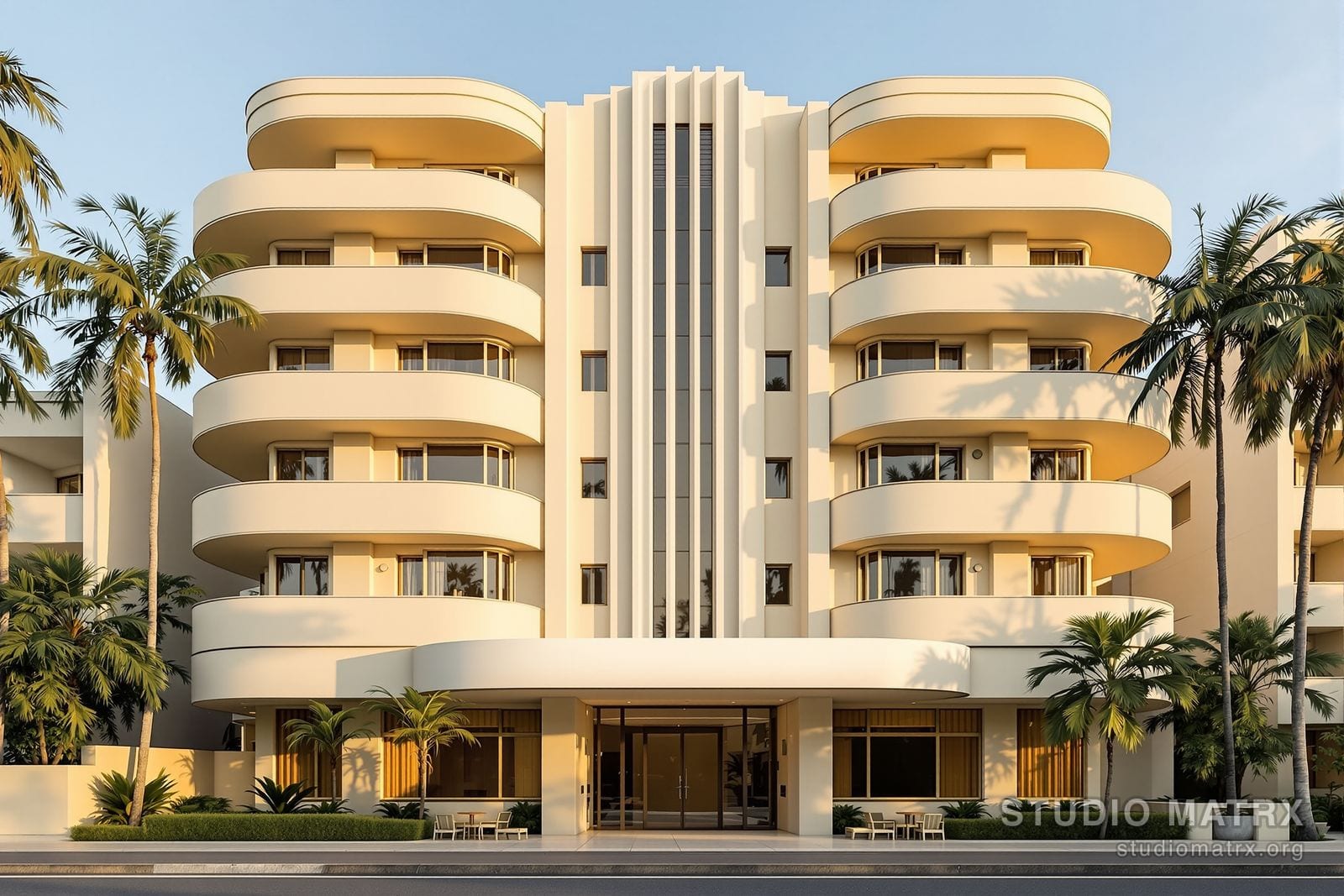
Walk the curve of Mumbai's Marine Drive at dusk and you are looking at the second-largest collection of Art Deco buildings in the world, after Miami Beach. The sweep of cream-and-pastel apartment blocks along the Oval Maidan and the seafront - rounded corners, racing horizontal lines, sunbursts over the doorways - earned the city a UNESCO World Heritage listing in 2018. Art Deco is not a borrowed curiosity in India; it is one of the country's great modern building traditions, and it remains one of the most loved looks for a glamorous home.
The style arrived in the 1930s, when a newly confident Bombay middle class wanted buildings that felt modern, optimistic and worldly. Indian architects took the global Deco language - all speed, geometry and machine-age sparkle - and gave it a local accent, adding shading eyebrows for the sun and motifs of Indian flora and deities. The result is often called Bombay Deco or Indo-Deco: a genuinely Indian Art Deco.
What defines it
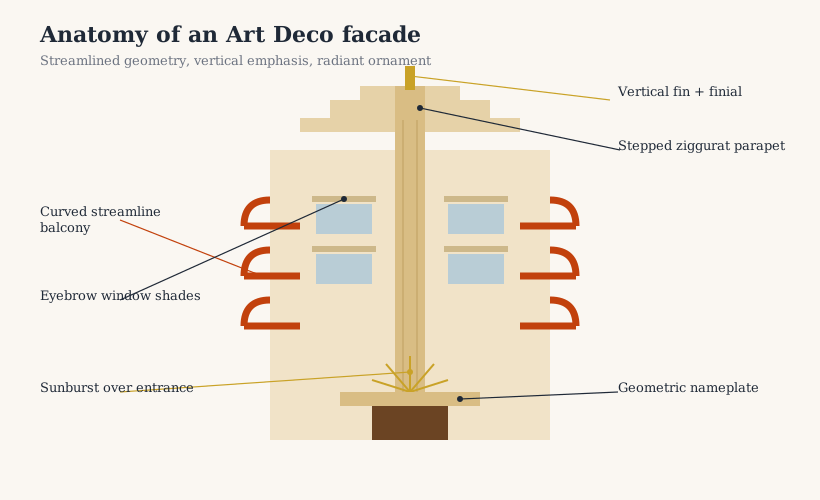
Art Deco is a style of controlled glamour - geometry made decorative, modernity made warm.
| Trait | What it looks like | The idea behind it |
|---|---|---|
| Streamlined geometry | Rounded corners, curved balconies, bold horizontal banding | The machine-age love of speed and aerodynamic form |
| Vertical emphasis | Central fins, stepped towers, flagpole finials | Optimism and aspiration - the building reaching upward |
| Decorative motifs | Sunbursts, fountains, chevrons, florals, ziggurats | Ornament that is geometric, not historical |
| Warm materials and colour | Pastel render, terrazzo, etched glass, chrome, wood | Glamour you can actually live in, not cold minimalism |
What separates real Art Deco from a Deco-flavoured pastiche is discipline: every curve, fin and sunburst belongs to one taut geometric system. Strip the system and the ornament looks merely applied.
The design elements
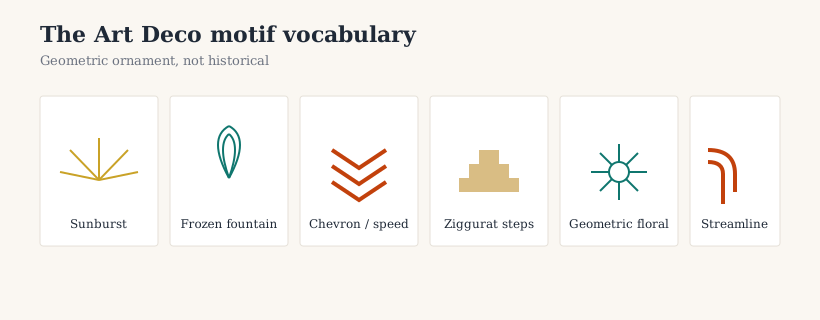
The vocabulary is unmistakable, and much of it does quiet practical work in the Indian climate.
| Element | Where it appears | What it does |
|---|---|---|
| Streamline balconies | Curved, cantilevered, wrapping the corner | The signature Deco gesture - movement frozen in concrete |
| Eyebrows (chajjas) | Horizontal hoods over windows | Ornament that doubles as sun and monsoon shading - the Indian adaptation |
| Sunburst and fountain motifs | Over entrances, on grilles, gates and lift cages | The optimistic, radiant Deco emblem |
| Stepped or ziggurat massing | Setbacks and tiered parapets | Vertical drama and a play of light and shadow |
| Nameplates and typography | Bold geometric building names in stone or metal | Deco treated lettering as architecture |
| Terrazzo and mosaic floors | Patterned lobbies and stairs | Hard-wearing glamour underfoot |
Where you'll find it
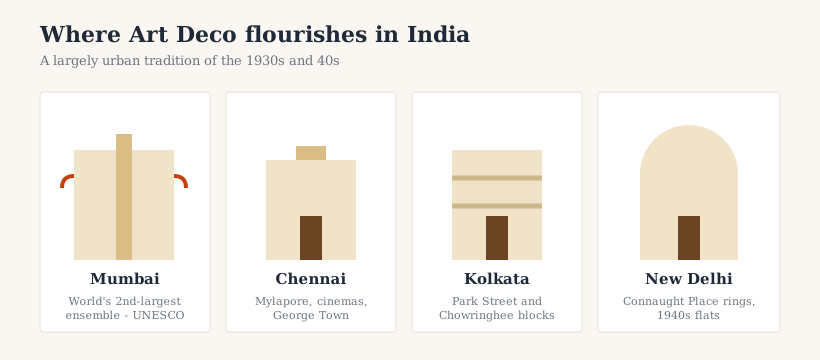
India's Deco is mostly urban, clustering in the cities that boomed in the 1930s and 40s.
| City | The Deco story | What to look for |
|---|---|---|
| Mumbai | The world's second-largest ensemble, UNESCO-listed | Marine Drive, the Oval Maidan flats, cinemas like Eros and Regal |
| Chennai | A quieter but rich Deco fabric | Residences and cinemas in Mylapore and George Town |
| Kolkata | Deco grafted onto the colonial city | Park Street and Chowringhee blocks |
| New Delhi | Deco in Connaught Place's rings and 1940s flats | Curved frontages and streamlined shopfronts |
Because Deco is so tied to its facade and front elevation, it is one of the easiest historic styles to evoke in a new home - the geometry lives mostly on the outside.
Best for
Art Deco rewards the homeowner who wants glamour and identity without heavy traditional ornament. It sits well on:
- Premium apartments and standalone homes that want a distinctive, optimistic face to the street.
- Restorations of genuine Deco buildings - a growing, specialised field that begins with careful heritage documentation.
- Boutique hotels, cafes and lobbies, where Deco's theatricality and terrazzo glamour shine.
It is harder to pull off on a tight budget - the curves, terrazzo and metalwork are craft-intensive - and it tips into pastiche the moment motifs are applied without the underlying geometric discipline. A confident colour palette is half the battle.
Notable architects and landmarks
Bombay's Deco was largely designed by a pioneering generation of Indian architects in the 1930s and 40s - among them Merwanji Bana, Gajanan Mhatre and the firm of Master, Sathe and Bhuta - working for Indian developers and cinema owners. Their collective achievement, the Marine Drive and Oval Maidan ensemble, is now protected as part of the Victorian Gothic and Art Deco Ensembles of Mumbai, a UNESCO World Heritage Site inscribed in 2018. The cinemas - Eros, Regal, Liberty - remain the style's most theatrical survivors.
For where this sits in the wider story, see our Neo-Traditional Indian Architecture profile and the deeper Contemporary Indian Architecture guide; if you are still choosing, the right style for your home and modern versus traditional reads are good companions.
Art Deco endures in India because it was never only decoration. Under the sunbursts and curves is a disciplined modern geometry, adapted for the sun and the monsoon, and built with a confidence the country has not lost. Restored or reinterpreted, it remains the most joyful way to make a modern home feel like an event.
This profile refreshes every 12 months. Last verified: June 2026 · Next verify: June 2027.
Export this guide
Related Guides — Deep-dive reading
Main Door Design Ideas for Indian Homes 2026: Styles, Proportions, Materials and Vastu
From traditional carved teak to modern minimalist and pivot statement entrances - how to design a main door that reads as grand, ages well in the Indian climate, and respects Vastu, with real 2026 costs.
Home Doors & EntrancesModern Farmhouse Architecture in India
The clean gable, the deep verandah and the weekend home reimagined
Design StylesIndo-Saracenic Architecture in India
The Raj-era revival that gave India its grandest landmarks
Design StylesRelated Tools — Try Free
Cross-Ventilation Analyzer
Estimate airflow and air changes per hour (ACH) from room size, window areas, layout, and local wind — with NBC 2016 Part 8 compliance check.
Ventilation CalculatorWindow Grill Design Selector
Pick a window grille style and material by priority — security, looks, budget, view — and estimate cost.
Window ToolConcept Generator
Get 3 AI-generated design concepts for any room with style, materials, and cost estimate.
DesignAI