

Piet Oudolf
The painter of perennials who made grasses beautiful
Movements
Signature works
- The High Line, New York
- Lurie Garden, Chicago
- Hauser & Wirth, Somerset
- Battery Gardens, New York
- Hummelo trial garden
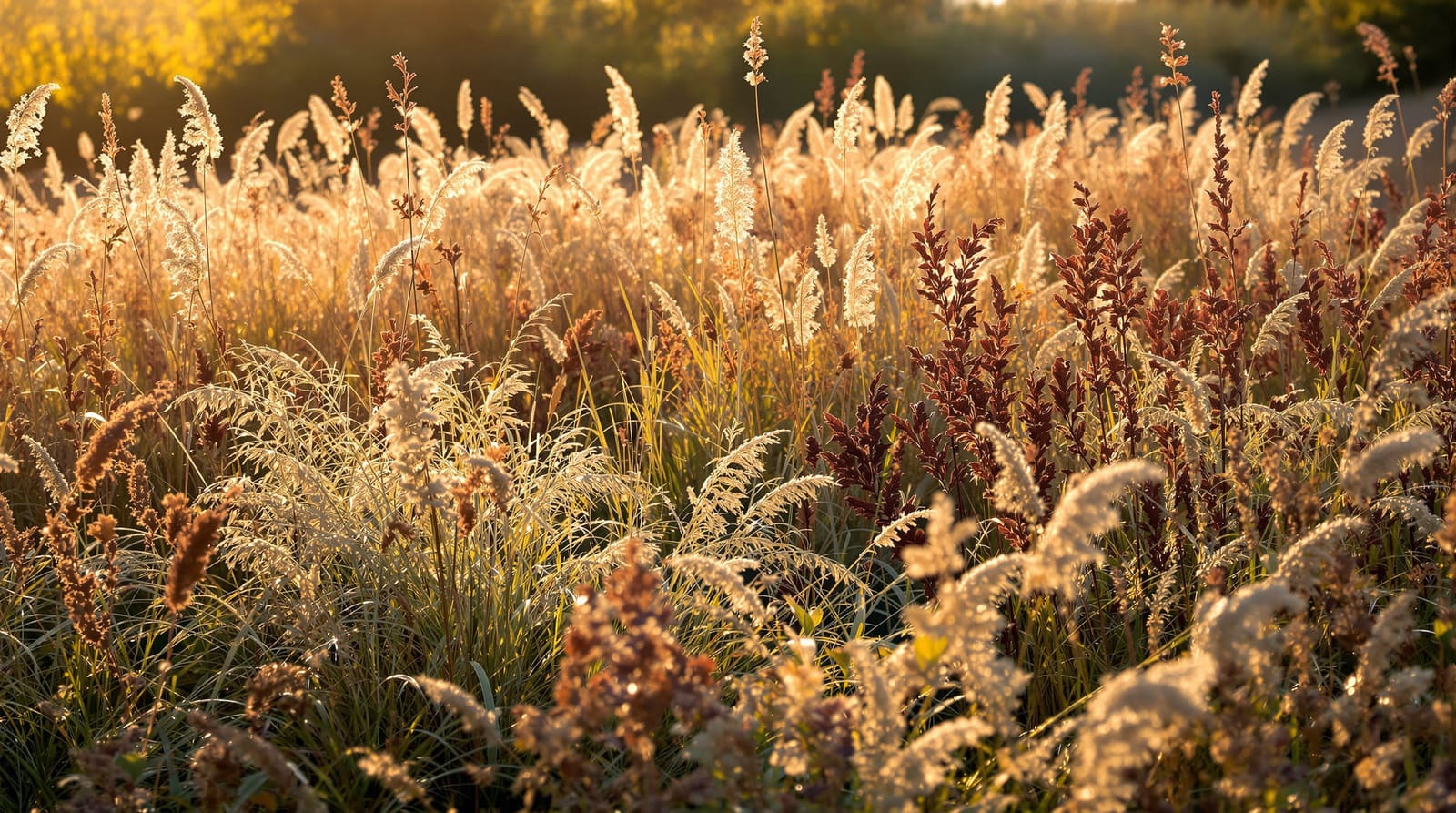
In late autumn the High Line in New York turns the colour of a lion's pelt. The crowds still come, phones raised, but what they photograph would strike a tidy gardener as a failure: tall grasses bleached to bronze and straw, the blackened seedheads of echinacea and eryngium standing stiff against the Manhattan skyline, whole beds gone over to skeletons and rattling stems. Most people would call it dead. To the man who planted it, that is the entire point.
That man is Piet Oudolf, the Dutch garden and planting designer who, more than anyone alive, taught the world to see beauty in the going-over. Born in 1944, the quiet leading figure of the "New Perennial" or Dutch Wave movement, he is the planting designer behind some of the most-visited public landscapes on earth — yet his real subject is smaller and stranger than any park: the whole life of a plant, from the first green spear of spring to the brown architecture of January.
Oudolf's central idea is to design with the structure, habit and complete life-cycle of herbaceous perennials and grasses — not just their flower colour — so that a planting is composed to be beautiful across every season, including, and especially, when it has gone over.
The idea: the whole life of a plant
For most of the twentieth century, the great English flower border was about colour. Gertrude Jekyll painted with blooms; the bed peaked in high summer and was, by tacit agreement, not to be looked at much before or after. Oudolf inverted the priorities. He chooses plants first for their structure — the shape of a flower spike, the silhouette of a seedhead, the see-through veil of a grass — and treats colour as the most fleeting and least reliable of a plant's gifts.
This is why his most quoted instruction sounds almost like a provocation: a plant must look good when it is dead. The faded seedheads, the standing skeletons and the tawny grasses of autumn and winter are not the wreckage of the display — they are a separate, slower act of it. A good Oudolf perennial earns its place by aging well: by holding its form, by catching frost and low light, by giving the bed a legible structure for months after the petals have dropped.
Out of this comes a way of planting that looks wild but is anything but. He works in naturalistic drifts and in the matrix — a repeated, mingled groundwork of a few reliable species through which other plants recur and intermingle, so the eye reads a flowing meadow rather than a catalogue of specimens. Bloom is choreographed as seasonal succession, one wave handing off to the next, so the planting is never empty and never static. It evokes a wild grassland, but every species is chosen for form, longevity and how it behaves over years. It is composed naturalism: the appearance of nature, achieved by design.
Life and path
Oudolf was born in Haarlem in 1944 and came to gardening sideways, not through a grand academy but through nurseries and a growing conviction that the plants then on offer were the wrong ones. In 1982 he and his wife Anja made the decisive move: out of the western Randstad and into the quiet farmland of the east, to a place called Hummelo. There they founded a nursery and laid out a private garden that doubled as a trial ground — rows and beds where Oudolf could grow perennials and grasses for years and watch, with a breeder's patience, which ones held their structure, seeded well, aged with dignity and lived long enough to matter.
Hummelo became the laboratory of a movement. Through the 1980s and 1990s Oudolf and a loose Dutch and German circle of nurserymen and designers pushed perennials and grasses to the centre of the garden, and the New Perennial idea spread from a private obsession to an international style. Commissions grew in scale. Then, in the years around 2009 to 2014, came the project that made him a household name far beyond horticulture: the planting of the High Line, the disused elevated freight railway on Manhattan's West Side reborn as a linear park. The self-sown grasses and weeds that had colonised the old tracks became the brief, and Oudolf's drifts turned a piece of industrial salvage into one of the most beloved public spaces in the world.
Alongside the gardens came the words and the films. With the writer Noel Kingsbury, Oudolf produced the books that codified the approach — Designing with Plants, Planting Design: Gardens in Time and Space, and Planting: A New Perspective — and in 2018 the documentary Five Seasons: The Gardens of Piet Oudolf, directed by Thomas Piper, carried his thinking, and his gardens through the year, to a far wider audience.
The signature works
| Work | Place & dates | Why it matters |
|---|---|---|
| Hummelo garden & nursery | Gelderland, Netherlands, from 1982 | The trial ground where the New Perennial palette and method were worked out |
| Lurie Garden | Millennium Park, Chicago, 2004 | A 2.5-acre public perennial garden over a car park — proof the style works at city scale |
| The High Line | New York, planted 2009–2014 | The disused-rail park whose drifts and grasses made Oudolf globally famous |
| Hauser & Wirth Somerset | Durslade Farm, England, 2014 | The Oudolf Field — a large naturalistic perennial meadow beside an art gallery |
| Battery / Gardens of Remembrance | Lower Manhattan, New York | The "Battery Bosque" and memorial plantings at the island's tip |
| Trentham Estate / Pensthorpe | Staffordshire & Norfolk, England | The Floral Labyrinth and the Millennium Garden — early UK showcases of the matrix |
The High Line and the Lurie Garden are the works most people meet first, and they show what the method can do in public. On the High Line, Oudolf had to honour a romantic accident — the wildflowers and grasses that had seeded themselves into ballast and gravel during the railway's abandonment — and he answered with planting that reads as feral but performs reliably under brutal urban conditions, drought, wind and millions of feet a year. The Lurie Garden in Chicago, sitting on the roof of a car park in Millennium Park, proved the same point in a more formal setting: a great public perennial garden that peaks in waves from spring to frost and then carries on, structurally, deep into a Midwestern winter.
There is a second body of work that hangs on gallery walls. Oudolf's planting plans — drawn by hand, with species mapped as soft amoeboid blocks and interlocking drifts in coloured pencil and ink — are studied and exhibited as artworks in their own right. They are working documents, the genome of a garden, but they are also beautiful objects, and they make visible the thing that distinguishes him: this is composition, plant by plant and block by block, not a scattering of seed.
It is worth being precise about what he is and is not. Oudolf is the plantsman-composer. His subject is the planting itself — the structure, the four-season life-cycle, the matrix and the drift, the hand-drawn plan, the great public set-piece. He is not, in the main, a designer of soil regimes, productive gardens or whole-site ecological management. His genius is concentrated, almost fiercely, on the arrangement of perennials and grasses and on the idea that they are beautiful when they are dead.
The philosophy
The philosophy is easy to state and hard to do. Choose plants for form, habit and longevity. Repeat a few of them as a matrix so the planting holds together. Let bloom move through the bed in succession rather than a single peak. And design for the whole year — accept, even celebrate, the brown season, because brown is also a colour and a seedhead is a form. The result is a planting that feels like a remembered meadow but performs like a designed one.
These instincts sit very close to ideas Studio Matrx returns to again and again. The naturalistic, layered, life-supporting planting that Oudolf made fashionable is the aesthetic engine of biophilic landscape design, and his seedhead-rich, never-quite-tidied beds are exactly what make wildlife-friendly home landscapes function — standing stems shelter insects, seedheads feed birds. The slow, structural, all-season legibility of his gardens is also a large part of why some gardens feel peaceful: the eye is given form and rhythm to rest on, not a fireworks display that fades.

A plant should look as good when it is dead as when it is alive. The seedheads, the skeletons, the bleached grasses of winter are not the end of the garden — they are part of it, because brown is also a colour and form outlasts flower.
India
Oudolf never worked in India, and it would be dishonest to pretend his palette can simply be shipped here. A literal North-European perennial meadow — the echinaceas, the salvias, the Molinia and Calamagrostis grasses tuned to a cool, evenly-watered, frost-marked year — will not survive an Indian summer or a monsoon. Forty-five degree heat, a deluge in July, a long bone-dry stretch and pests his Dutch trial beds never met would defeat the species list within a season or two. The plants do not translate.
The principle, however, translates beautifully. Everything that makes an Oudolf garden work is climate-neutral: design with structure and form, not just colour; build a matrix from a few reliable species; choreograph bloom as succession; and find the beauty in the whole life-cycle — including the dry, brown, gone-over season that India has in abundance. India has its own ornamental grasses, sedges and hardy native perennials that hold their form, catch the light and stand through the lean months. Composed the Oudolf way, in repeated drifts that read as a remembered grassland, they can do here exactly what his plants do there.
That is the honest lesson: take the method, choose the plants from your own ground. A garden built this way is far better suited to the realities of climate-resilient gardens, it does the ecological work of wildlife-friendly home landscapes, and it pairs naturally with the structural backbone of the best trees for Indian homes. For the translation itself, look to sibling masters: Dan Pearson, the ecological gardener whose work shows how a naturalistic palette can be rooted in a specific place, and Roberto Burle Marx, who proved that bold massing and drifts can be built entirely from a hot-climate, native flora.
Legacy and what we can learn
Oudolf did not invent the perennial, but he changed what planting design is for. He moved the centre of gravity away from the colour border and towards a structural, ecological, year-round naturalism, and he gave a generation of designers permission to leave the garden standing through winter rather than cutting it to the ground in October. The "dead" season acquired dignity. The seedhead and the grass became as worth designing as the bloom. You can trace his influence in public parks, private gardens and the very idea of the planting plan as a composed artwork across the world.
The takeaway for an Indian gardener is liberating and practical. Stop chasing the single midsummer peak and the constant tidy. Choose plants that hold their shape, plant a few of them in repeated drifts, let one wave of flower hand off to the next, and let the dry-season skeletons stand. The seven structural fundamentals behind any such scheme are worth grounding in the seven elements of landscape design. And when you want to test a naturalistic, four-season planting against your own plot, light and climate before a single plant goes in the ground, DesignAI lets you compose and visualise the idea first.
References
- Piet Oudolf & Noel Kingsbury, Planting: A New Perspective (Timber Press, 2013).
- Piet Oudolf & Noel Kingsbury, Planting Design: Gardens in Time and Space (Timber Press, 2005).
- Piet Oudolf & Noel Kingsbury, Designing with Plants (Conran Octopus, 1999).
- Rick Darke, The American Woodland Garden and related writing on naturalistic and grass-led planting.
- Five Seasons: The Gardens of Piet Oudolf, documentary film directed by Thomas Piper (2018).
- The Lurie Garden and Friends of the High Line, public records and planting documentation for the Chicago and New York gardens.
Explore the ideas Oudolf championed — structure over colour, the matrix and the drift, and the quiet beauty of a planting that looks good even when it has gone over — alongside fellow masters Dan Pearson and Roberto Burle Marx, and plan a naturalistic planting of your own with DesignAI.
Philosophies they championed