
Venetian Plaster Walls: The Complete Guide for Indian Homes
The luxury lime-and-marble finish burnished to a stone-like glow — what Venetian plaster is, the matte-to-mirror look, how it's applied, where it belongs, and the cost, skill and care it demands.
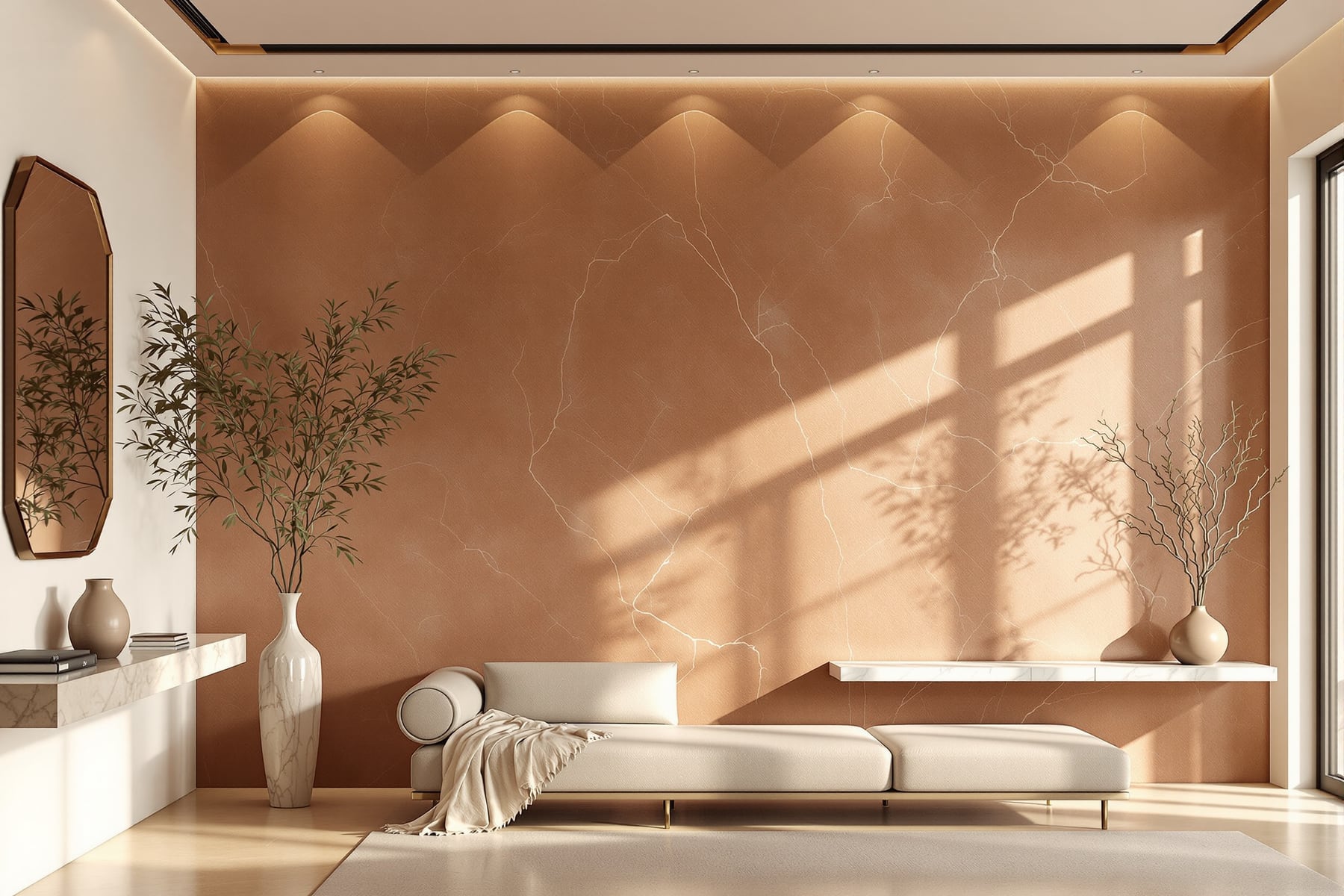
Of all the finishes a wall can wear, Venetian plaster is the one that most convincingly imitates polished stone — because, in a sense, it is stone. Made from slaked lime and fine marble dust, troweled on in whisper-thin coats and burnished by hand, it develops a depth and a soft glow that flat paint cannot fake: light passes into its translucent layers and bounces back, so the wall seems lit from within. It is the classic luxury wall finish, the one that turns a living room or a hotel lobby into something that feels quietly expensive — and it has a long, genuine history behind the glamour.
This is the complete guide to Venetian plaster walls for Indian homes — a deep dive under the decorative wall finishes guide and the master wall-finishes guide into the most luxurious of the artisan plasters. We will explain what Venetian plaster actually is, show the range from soft matte to mirror-polish, walk through how it is applied, map where it belongs (and where it does not), and be honest about the cost, the skill and the care it asks of you.
What Venetian plaster is
The name covers a family of lime-based finishes, and knowing the material demystifies both the look and the price.
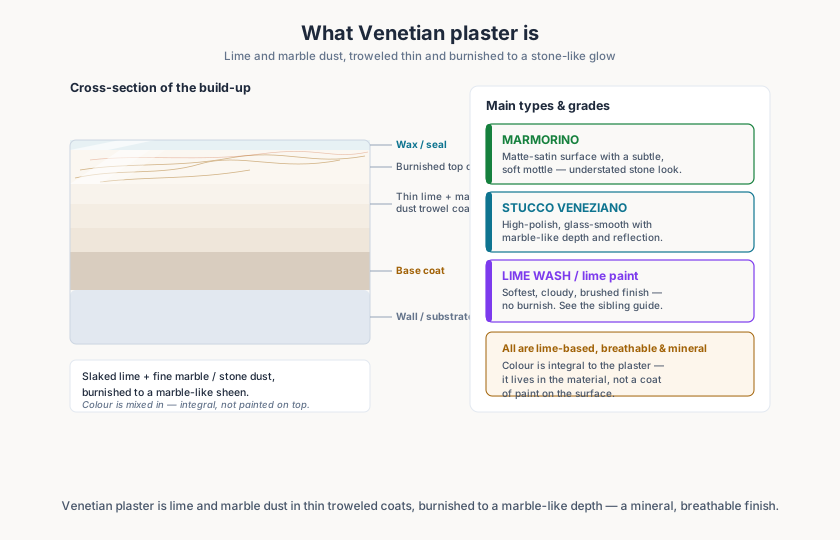
At its core, Venetian plaster is slaked lime mixed with fine marble or stone dust, applied in thin troweled coats over a base and then burnished to a marble-like sheen. It is a family, not a single product: marmorino gives a soft matte-satin surface with a subtle mottle; stucco veneziano is polished to a high, marble-like depth; and the softest relative, lime wash, is a cloudy matte cousin (with its own dedicated approach). All of them are lime-based, breathable and mineral, and the colour is integral to the plaster rather than a coat on top — which is part of why the colour has such depth.
The look: matte to mirror-polish
Venetian plaster is really a spectrum of sheen, and where you land on it sets the entire mood of the wall.
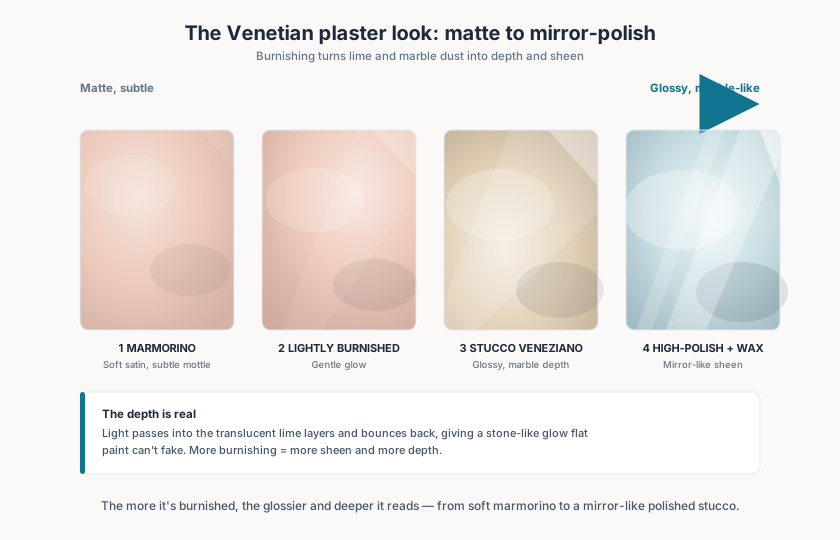
At the matte end, marmorino reads as a soft, subtly mottled stone. A light burnish adds a gentle glow. Stucco veneziano is glossy, with real marble-like depth. And a high polish finished with wax approaches a mirror-like sheen. The crucial thing is that the depth is real: because the thin lime layers are slightly translucent, light enters and bounces back, giving a stone-like glow that no flat paint can imitate — and the more it is burnished, the more sheen and depth it shows. Choose the sheen for the mood: matte to recede and calm, high-polish to make the wall a jewel.
How Venetian plaster is applied
The magic is entirely in the hand, and understanding the process tells you why the applicator is the thing you are really paying for.
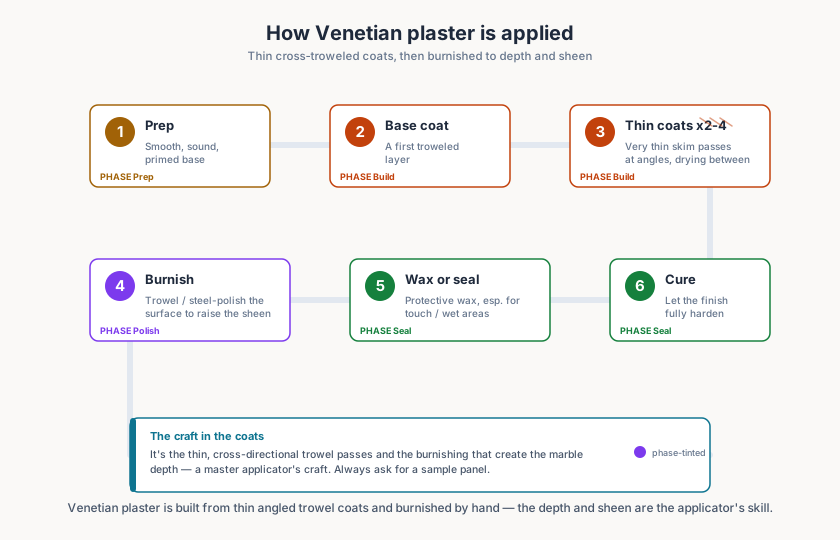
Over a smooth, sound, primed base, the applicator lays a base coat, then two to four very thin skim coats worked at changing angles so the translucent layers build depth (each drying before the next), then burnishes the surface with a trowel or steel to raise the sheen, and finally applies a wax or seal for protection — essential for touch and for any damp-adjacent area — before it cures. It is those thin, cross-directional trowel passes and the burnishing that create the marble depth, and it is unmistakably a master's craft: always ask to see a finished sample wall before you commit.
Where Venetian plaster belongs
Venetian plaster is a luxury for the right wall, and putting it in the wrong place wastes both its beauty and your money.
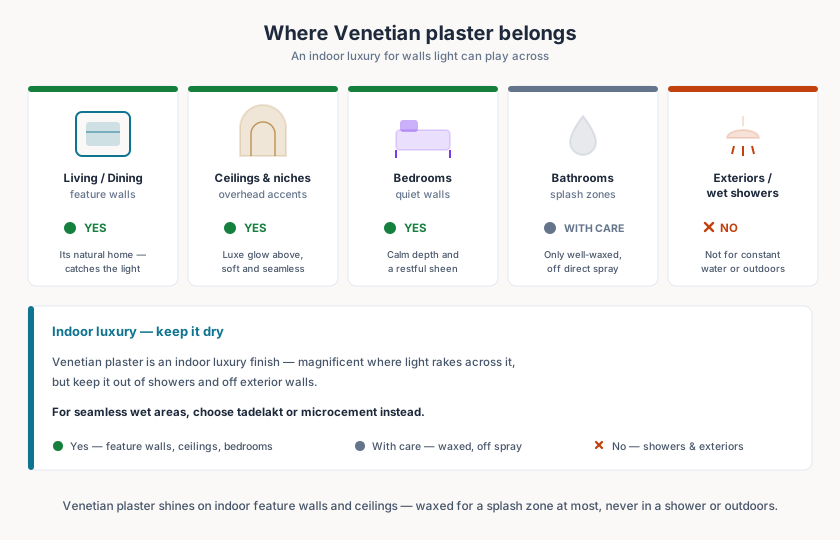
Its natural home is an indoor feature wall where light can rake across it — living and dining rooms, ceilings and niches, bedrooms — anywhere the glow can be admired. It can go in a bathroom only with care: well-waxed and kept off direct spray. It does not belong in a shower or on exterior walls, where constant water and weather defeat it — for a seamless wet area choose tadelakt or microcement instead. Get the location right and it rewards you; put it where water lives and it will not last.
Cost, skill and care
Venetian plaster sits at the top of the finish ladder, and it is worth being clear-eyed about what that means.

Expect roughly ₹450–800/sq ft installed — a premium price of which most is skilled labour, not material. It demands a master applicator, because results vary enormously by hand; insisting on a finished sample wall is non-negotiable. In return it is durable and ages beautifully — 20-plus years — asking only that you dust and wipe it gently and re-wax touch areas occasionally, with a deep chip being a specialist repair. It is dearer and more skill-dependent than microcement or paint, but unmatched for depth and the way it holds light. Budget for the artisan, not just the material.
Venetian plaster is the most luxurious wall a home can wear — mineral, breathable, and lit from within by its own translucent depth. Give it the right indoor wall, the right master hand and a little care, and it becomes the finish the whole room is arranged around. For its wider artisan family and the seamless wet-room cousins, return to the decorative wall finishes guide and microcement walls.
Export this guide
Related Guides — Deep-dive reading
Decorative Wall Finishes: The Complete Guide for Indian Homes
The artisan tier — microcement, Venetian plaster, lime wash, tadelakt and more. The whole family of hand-troweled finishes, the look each one gives, where they work (including wet rooms), what they cost in skill and money, and how they're built up by hand.
Wall FinishesLime Wash Walls: The Complete Guide for Indian Homes
The breathable mineral wash with a soft cloudy matte — what lime wash is, its weathered look, how it's brushed on, where it works indoors and out, and its honest cost, care and trade-offs.
Wall FinishesMicrocement Walls: The Complete Guide for Indian Homes
The thin, seamless cement skin that goes over almost anything — what microcement is, where it works including wet rooms, how it's applied by hand, the look and colours, and how it compares with tile.
Wall FinishesRelated Tools — Try Free
Cross-Ventilation Analyzer
Estimate airflow and air changes per hour (ACH) from room size, window areas, layout, and local wind — with NBC 2016 Part 8 compliance check.
Ventilation CalculatorFull-Room BOQ — Living, Bedroom, Kitchen, Bath
Room-wise BOQ across living, bedrooms, kitchen, utility, and bathrooms with line-item pricing.
Full-Room BOQHome Colour Studio
Colour every room — living, bedroom, dining, kitchen, bathroom — surface by surface in any HEX/RGB/CMYK colour, or from 80+ curated Indian shades.
Colour Studio